Showing posts with label Israel Galili. Show all posts

14 April 2019

Israel’s General Election – The Death of the Zionist Left


The Israeli Labour Party Slumps to a Record Low and the Arabs Save Meretz from Oblivion!


Cast your mind back, if you can, to 1949, when the State of Israel held its first elections. A mere year after the Nakba, when ¾ million Palestinians had been expelled thus allowing Israel the ability to call itself both democratic and Jewish.
How a Labour Kibbutz shifted its votes since the 2015 general election
In that election Mapai, the Israeli Labour Party, gained 46 out of 120 seats in the Knesset. In second place was Mapam, the United Workers Party, then in an alliance with Ahdut Ha’avodah, a militaristic left-Zionist party with 19 seats giving the parties of Labour Zionism an absolute majority.  20 years later the leadership of Ahdut, Israel Galili, Yitzhak Tabenkin and Yigal Allon, would form the basis of the Greater Israel movement Gush Emunim and abandon Labour Zionism for messianic colonisalism.
However the leader of Mapai, David Ben Gurion preferred to form a coalition with the religious parties since the definition of Jewish could not be a secular one and had to be in the hands of the Orthodox.
Avi Gabbay of Israel's Labor Party and Yair Lapid of the 'centrist' Yesh Atid
In the 1951 elections Mapai and Mapam lost 5 seats but they still had exactly half the seats in the Knesset and in practice, with client Arab parties, an overall majority. In 1955, after Ahdut had split with Mapam, the parties of Labour Zionism had lost a further seat. In 1959 the Labour Zionist parties gained 63 seats giving them an overall majority again.  In 1961 the Labour Zionist parties achieved 59 seats and in 1965 the three Labour Zionist parties, which now included Rafi, Ben Gurion’s right-wing breakaway from Mapai, totalled 63 seats. In 1969 the Israeli Labour Alignment, a merger of all the Labour Zionist parties gained 56 seats, the highest number any party has ever achieved in an Israeli election.
In 1973 the Labour Alignment gained 51 seats to Likud’s 39 seats but in 1977, in the wake of the Yom Kippur war, when Israel was taken by surprise by the joint attack of Egypt and Syria, Likud gained 43 seats to Labour’s 32 and Menachem Begin formed the first Likud government. Since then the Israeli Labour Party has only twice formed a government on its own.
The first such time was in 1992 when Yitzhak Rabin became Prime Minister. The Israeli Labour Party gained 44 seats and Meretz (which included Mapam and other parties) gained 12 seats. The government rested on the tacit backing of the Arab parties.
Contrast this with the recent election. The Israeli Labour Party gained just 6 seats in the recent elections in comparison to the 24 seats it held as the Zionist Union (with Tzipi Livini’s Hatnuah) in the 2015 Knesset. Meretz declined from 5 to four seats. 
The morning after - shell shocked Israeli Labor Party leaders gather
So from a high point of 65 seats in 1949, the parties of Labour Zionism have now slumped to just 10 seats between them. What makes this even worse is that although Meretz is a Zionist party, it relied heavily on Arab votes, about a quarter of its total, in order to retain any seats in the Knesset. Meretz lost significant support to Benjamin Gantz’s Kahol Lavan (Blue and White) Party. A Zionist party that relies on Arab votes does not have a healthy or promising future
If it had not been for a very significant increase in votes from Israel’s Druze population in particular, which previously voted for Likud and parties of the Zionist Right, Meretz would not have gained any seats. This switch to Meretz was a consequence of Netanyahu’s decision to introduce the Jewish Nation State Law last summer. In Kafr Qasem, the site of a famous massacre in 1956, Meretz gained 39% of the vote.
It wasn't  Herut/Likud militias who perpetrated this massacre but those of the Labour Zionist militias
Even members of the Kibbutzim, the last reservoir of support for Labour Zionism in Israel voted predominantly for Kahol Lavan on the basis of wanting to see Netanyahu removed. Ideologically there is little or nothing now to distinguish Labour Zionism from its centrist rivals.
What is the explanation for this collapse in support for Labour Zionist parties? I suggest it is a culmination of a series of factors. The Labour Zionist parties were never socialist or even left-wing in the sense that is understood in the West.  Meretz is, at best, a party of civil liberties but it doesn’t challenge the Zionist basis of the Israeli state. It doesn’t like its more overt racist character but it signs up to Israel as a Jewish state.
The Israeli Labour Party today has no social base. Where once the major organisation of Labour Zionism, Histadrut, a trade union which was also Israel’s second largest employer, provided a comprehensive series of services such as a national health service, today it is merely a conglomeration of individual unions.  It’s industry has long been privatised.
The lack of any socialist or left-wing ideology and any economic or social base has left it rudderless, without a purpose. The ILP is not seen to stand for anything.  This was one reason that in 2017 it elected as its new leader, Avi Gabbay, the ex-CEO of Bezeq, Israel’s largest telecommunications firm and a former Minister in Netanyahu’s government! Gabbay had only joined the ILP three months before.
Gabbay’s strategy was simple.  To move the ILP further to the right in order to compete with Likud.  He even took advice on this from Tony Blair! Gabbay announced that he was opposed to dismantling any settlements in the Occupied Territories and he supported Netanyahu’s attempts to deport Israel’s 40,000 Black African refugees because they constituted a ‘threat’ to Israel’s national identity, not being Jewish.
This strategy has failed dismally. Netanyahu has demonstrated that when it comes to staking out a position on the Right no one can beat him.  Netanyahu was even responsible for the election merger of Jewish Home and Otzma Yehudit, an openly racist party of the late Meir Kahane, into the United Right party. This gave secular Israelis even less reason to vote for the ILP, especially since Gabbay had told his own party that the Left had forgotten what it is to be Jewish!
Gantz’s Blue and White Party, led by former generals and Yair Lapid, leader of the ‘centrist’ Yesh Atid (in practice firmly on the right), was held together by only one thing – opposition to Netanyahu.  I predict that it will not be long before this wholly artificial and unprincipled alliance will haemorrhage members.
Avi Gabbay will no doubt be despatched back to Bezeq but for the Israeli Labour Party the problem still remain. What exactly does the Israeli Labour Party stand for? As Israel moves further to the nationalist Right with a plurality of Israeli Jews wanting to see Israel’s Arab citizens expelled, a sentiment shared by Likud’s partners, Yisrael Beteinu and the United Right Party of Bezalel Smotrich and Rafi Peretz, the old Labour Zionist ideals, which represented collective colonialism, are now only of interest to historians.
Meretz also faces a dilemma.  A Zionist party relying on the support of Israel’s Palestinians is a living contradiction!  Meretz has never been a party of left activism and it has never, for example supported Israel’s teenage refuseniks who refuse to serve in the Occupied Territories. Merertz should consider the votes it received in this election as being on loan only.
What Meretz, which is committed to a two state solution will not face up to is that Israel is now one state, from the Jordan to the sea. With nearly 5 million Palestinians living under occupation it is an apartheid state. In these elections we had the obscenity of 400 settlers in Hebron having the right to vote whilst the 200,000 Palestinians in Hebron had no vote.  Meretz has no answer to this or the fact that two legal systems operate in the same area of land.
Meretz’s problem stems from its desire to see a non-racist Zionism. A democratic Jewish state.  These are impossible contradictions.
As Israel races to the nationalist right its defenders in the West, from Donald Trump in the United States to Theresa May and Tom Watson in Britain’s Labour Party have only one answer – to accuse Israel’s critics of ‘anti-Semitism’.
Tony Greenstein

4 April 2019

There is nothing that Netanyahu has done that Labour Zionism didn’t do before him

The Contradiction at the heart of secular Zionism is the God given right to Palestine

A ceremony on an Israeli kibbutz in July 1951. Wikimedia Commons. These members of a Jewish only settlement carried red flags but lived and settled the land of the Palestinians who had been expelled
As the Israeli Labour Party heads for its worst election result ever in Israel’s General Election, Amira Hass has written an important article reminding us of the unbroken line that connects Likud and the settler movement to Labour Zionism and the Israeli Labour Party. Amira Hass, along with Gideon Levy is one of only two non-Zionist journalists in Israel. She lives in the West Bank and unlike other Jews there, she is not a settler.
The Israeli Labour Party, until 1977, continuously formed Israel’s governing coalitions. As late as 1969, the Israeli Labor Alignment, together with Mapam, a left-Zionist party, won 56 out of 120 Knesset seats. The latest opinion polls suggest it will gain just 10 seats (or 15 combined with Mapam's successor Meretz). A historic low. The ILP has been out of government since 2011 and it hasn’t formed a government since 1999.
It is always tempting to believe that the ILP represents an alternative to Netanyahu, even that it is a social democratic or left-wing party. That is the illusion that Zionist groups such as the Jewish Labour Movement and Labour Friends of Israel foster. However it is an act of deception.
As former leader Shelly Yacimovich declared it was a ‘historic injustice’ to characterise the ILP as a left-wing party. The ILP ‘"has always drawn its power from being a centrist party. There have been both hawks and doves within its ranks.’
This is true.  It would be a terrible injustice to paint the Israeli Labor Party in socialist colours. As Professor Ze’ev Sternhell showed in The Founding Myths of Israel the ILP and Mapai, which was formed in 1930 from two Labour Zionist parties – Ahdut Ha’avodah and Hapoel Hatzair – was never socialist.  Indeed it was not until Hapoel Hatzair was satisfied that the ‘socialist’ rhetoric of Ahdut was purely verbal and that its socialism meant nothing more than Jewish working class solidarity against the native Arabs that it agreed to a merger.
Labour Zionism and its institutions, in particular its ‘union’ Histadrut (which was also Israel’s second largest employer until the 1980’s) built the Israeli state and constructed its racist, Zionist and Jewish supremacist nature. All the institutions of Israeli apartheid, such as the Jewish National Fund and Jewish Agency, were made into partners of the Israeli state under Israeli Labour governments. 

What Labour's Shimon Peres dispensed with in 1985 was the pseudo-socialist, collectivised forms of colonialism. State capitalism gave way under the Stabilisation Pact to monetarism, a slashing of the government budget and food subsidies, a hike in interest rates and all the other remedies favoured by the Chicago economists. Zionism however did not change its settler colonial colours merely its internal social and economic forms.
It is often forgotten that it wasn’t Likud but the Israeli Labour Alignment which helped to launch the settler movement. The pioneers of the settler movement came from the Israeli Labour Party and in particular the militaristic Ahdut Ha'avodah party which reunited with Mapai (Israeli Labor Party) in 1965.  Sponsored by Deputy Prime Minister Yigal Allon, Labour Zionist stalwarts such as Yitzhak Tabenkin and Yisrael Galili made an effortless transition from the Israeli labour movement to the Greater Israel Movement, Gush Emmunim and the settler movement.
Gush Emunim settlers establishing the West Bank settlement of Elkana in 1979
The contradiction at the heart of Labour Zionism has always been that its secularism rested on a biblical foundation. That is why there can be neither a secular nor a socialist Zionism. Historically secularism in Israel, be it of the Zionist left or right, either foundered or gave way to religious Zionism and Jewish Orthodoxy. Even Zionism's atheists base their right to the Land of Israel on the god they deny! Even the most ardent non-believers quote the Bible as their foundational land deeds! 
This was the imagery of the Zionist labour movement until it ran out of excuses for its nepotism and corruption
Amira Hass, quite correctly, described the expansionism of Zionism as lebensraum’. For those unfamiliar with the term, this was the Nazi term ‘living space’. It described Hitler's quest for territory in Russia and Eastern Europe and was an essential component of volkish ideology. ‘Living space’ was how the Nazis and German nationalists before them expressed their imperialist desires and it is appropriate to describe Israel’s thirst for land in similar terms.

Of course according to the IHRA definition of anti-Semitism this is ‘anti-Semitic’, which is but one demonstration of the attempt to close down debate today since Israelis themselves continually use Nazi metaphors to describe Israel’s behaviour.
Tony Greenstein
When Israeli governments in the 1960s and 1970s worked hard to steal Palestinian land while quoting God’s promises to atheists, they paved the way for parties promoting Jewish supremacy
Amira Hass Mar 11, 2019 11:28 PM
A twisted but single line stretches between Israel Galili and Bezalel Smotrich, between Yigal Allon and Levi Eshkol and Moshe Feiglin, and between Golda Meir and Yitzhak Rabin and Ayelet Shaked.
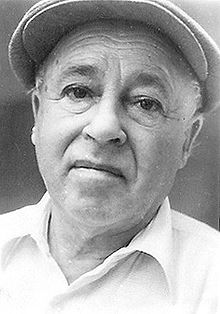
Israel Galili - one of the Labour militarists who after the 1967 war became supporters of the Greater Israel movement
We, the Arabs and the leftists, were right when we warned during the 1960s and 1970s that the settlement enterprise was a disaster. We erred in believing that the world would intervene in time and preempt the Lebensraum impulses, the urge to create “living space.” We thought that in the end, the heads of the Labor movement would learn from the expansionist impulses of other nations. After all, they were the sons and brothers of the victims of Lebensraum. But we were wrong. So now we’ll have Feiglin, the latest hot name in the gallery of those preaching to expel the Palestinians, sitting in the next Knesset.
Racism is an ideology that evolves in order to justify and protect the excessive material and social rights that a certain group of people has acquired, due to years of historical circumstances. Like men, conquering nations find it hard to give up their accumulated spoils and profits and will do anything to hold onto them.
Yitzhak Tabenkin - one of the most important figures in Labour Zionist history who became an ardent supporter of settling the West Bank
Immediately after June 1967, the Labor Alignment government cynically manipulated international law, ravaged the occupied Palestinian lands to Judaize them, and developed bureaucratic methods to reduce the number of Palestinians living in the country. One can trace the cynicism and the line that stretches from Galili to settler-leader-turned-minister Uri Ariel in a new study by the Kerem Navot organization, titled “Seize the Moral High Ground,” which researches the history of orders to seize land for “temporary military purposes.” Seizing Palestinian land for military purposes and then transferring it to the settlements was not invented by Likud, but by the Alignment. The Alignment holds the copyright on steadily gnawing at Palestinian land while abusing its owners to give an established settlement another road, another water pipe, another security buffer zone.
(l to r) Ben-Aharon, Yigal Allon and Yitzhak Tabenkin. Allon became Deputy Prime Minister and was an ardent militarist and expansionist formulating the Allon Plan which advocated keeping the Jordan valley.
When the Labor governments worked hard to steal land on the grounds of security while quoting God’s promises to atheists, they paved the way for the hundreds of thousands of Jews who are now going to vote for parties promoting the ideology of a superior Jewish race – and these are many and varied, praise God. Eshkol allowed the destruction of the Mughrabi Quarter and dispersed its Palestinian residents to the winds to make way for the Western Wall Plaza, and Allon was the first minister to move to Jerusalem’s Old City.
The occupation bureaucracy they developed prevented the return home of tens of thousands of Palestinians who found themselves outside the West Bank in the summer of 1967, and restricted Palestinian construction in Jerusalem with the help of planning laws. These governments laid the attitudinal foundations for the Third Temple, whose construction is being planned by some people with the utmost seriousness. The spirit of the mass expulsions of 1948, the desire to empty the land of Arabs, infused them.
Professor Ze'ev Sternhell, a childhood survivor of the Nazi occupation of Poland and a world expert in fascism was the target of a bomb from right-wing settlers a few years ago
The racist-messianic justifications have persuaded an increasing number of Jewish Israelis, because the spoils acquired have grown tremendously over the years. It’s hard to give them up, and they want more. That’s why Benjamin Netanyahu hastened to explain that the State of Israel is not a state of all its citizens. He fears that votes might go from him to Feiglin and Kahanist candidate Itamar Ben-Gvir.
When the world proved it could not block either the Alignment or Likud governments, the land gluttons proceeded to gorge themselves with redoubled enthusiasm. The armed, aggressive, murderous racism of the settlement messiahs and their servants is intensifying, because the inferior nation is not inferior. It is resisting. It is educated, eloquent and refuses to disappear. It is rooted in its land.
Emboldened, the Feiglins and the Smotriches will try to expel masses of Palestinians. They will fail only if all the descendents of the Alignment – not just Ta’ayush activists and a handful of anarchists – prevent it with their bodies.
Why is it hard for me to imagine the leaders of Kahol Lavan halting the trucks?

14 January 2016

How Nazareth Escaped the Nakba

Nazareth was the one Palestinian city in Israel whose inhabitants were not evicted in the Naqba.  Jonathan Cook tells the fascinating story of why Nazareth’s inhabitants escaped the massacres and expulsions.  He also tells the story of how Upper Nazareth was founded, as a way of confining and suffocating Nazareth.  In Upper Nazareth today, founded a Jewish only city, the Mayor Shimon Gapso has banned the celebration of Christmas.
Christmas in Nazareth
Israels +972 Magazine reports how, when Palestinian residents approached Gapso, and requested that a Christmas tree be put up, since there were 3 large menorahs (candelabrums) erected to celebrate the Jewish festival of Chanukah, Gapso, reports Israeli news site NRG (owned by Maariv), refused. “Upper Nazareth is a Jewish town and all its symbols are Jewish., As long as I hold office, no non-Jewish symbol will be presented in the city.”
modern Nazareth
In 2010 Gapso proclaimed that the public display of the Christian symbol as provocative and banned Xmas trees from public squares. "Nazareth Illit is a Jewish city and it will not happen -- not this year and not next year, so long as I am a mayor"

Racism?  Perish the thought.
Moshe Sharett, Israel's Prime Minister and Amin Gargurah, Mayor of Nazareth

Why Israel has silenced the 1948 story of Nazareth’s survival

12 January 2016

A rarely told story of the 1948 war that founded Israel concerns Nazareth’s survival. It is the only Palestinian city in what is today Israel that was not ethnically cleansed during the year-long fighting. Other cities, such as Jaffa, Lydd, Ramleh, Haifa and Acre, now have small Palestinian populations that mostly live in ghetto-like conditions in what have become Jewish cities. Still others, like Tiberias and Safad, have no Palestinians left in them at all.
Historic photo of Mary's Well
Nazareth was not only an anomaly; it was a mistake. It was supposed to be cleared of its Palestinian population, just like those other Palestinian cities now in Israel. Much to Israel’s regret, it has become an unofficial capital for Israel’s 1.6 million Palestinian citizens, a fifth of the Israeli population.
The reason for Nazareth’s survival are the actions of one individual. Ben Dunkelman, a Canadian Jew who was the commander of the Israeli army’s Seventh Armoured Brigade, disobeyed orders to expel Nazareth’s residents.
Church in Nazareth on site of Joseph's workshop, 1891
Dunkelman’s role has been largely obscured in the historical record – and for good reason. Israel would prefer that observers make an unjustified assumption: that “Christian” Nazareth survived, unlike other Palestinian cities, because its leaders were less militant or because they preferred to surrender. Dunkelman’s story proves that was not the case.

It is therefore a welcome development that a major Canadian newspaper, the Toronto Star, has revisited Dunkelman’s role in Nazareth, even if its reporter, Mitch Potter, has contributed in his own way to the mythologising of Dunkelman in an article headlined: “The Toronto man who saved Nazareth”.
Xmas tree banned in Nazareth Illit
Excised memories

It is worth bearing in mind, when we consider the attacks on Palestinian cities in 1948, how sensitive these matters were for Israel. Both Dunkelman and another commander, Yitzhak Rabin, who would later become a prime minister, wrote memoirs that included their experiences of the 1948 war.
Under pressure from the Israeli military authorities, both excised from their accounts the sections they had written dealing with the attacks on the Palestinian cities they were responsible for attacking. That was because those accounts were the proof, long denied by Israel and its supporters, that the Israeli leadership had intended and carried out the ethnic cleansing of most of the Palestinian population during 1948.
Crusader-era carving in Nazareth
Some 750,000 Palestinians – out of 900,000 living inside the borders of what was to become the new Jewish state – were forced out and refused the right to return. In fact, the expulsion rate was far higher than the ostensible 80 per cent figure. Under pressure from the Vatican, Israel allowed many Christian refugees back; it did a land swap with Jordan in 1949 that brought more than 30,000 Palestinians into the new state; and many Palestinian refugees managed to sneak back to surviving communities like Nazareth and blend in with the local population in preparation for what they hoped would be their return to their villages.

Rabin led the attack on the Palestinian cities of Lydd and Ramleh, near Tel Aviv and today the mostly Jewish cities of Lod and Ramla. According to the missing section of his autobiography, later publicised in the New York Times, Rabin asked David Ben Gurion, Israel’s first prime minister, what to do with the 50,000 inhabitants of Lydd and Ramleh. Rabin recounted: “Ben Gurion waved his hand in a gesture that said: ‘Drive them out!’” Rabin did exactly that, after a terrible massacre of hundreds of residents who were sheltering in a local mosque.
Old postcard of Nazareth women
Ben Gurion, as the Israeli historian of the period Ilan Pappe has noted in his book The Ethnic Cleansing of Palestine, was careful not to leave a paper trail showing that he had ordered the expulsion of Palestinians. Instead, Israel would promote the myth that the Palestinian population had been ordered by neighbouring Arab leaders to flee.
The Skylight of Modern Nazareth
Relieved of command

We do not know if Dunkelman had a similar meeting with Ben Gurion. What we do know, and the Star’s account confirms, is that it had been made clear to Dunkelman that he was supposed to expel the inhabitants of Nazareth. Dunkelman disobeyed, and allowed the city to surrender. He was relieved of his command in Nazareth a day later.
Russian pilgrims approaching Nazareth. circa 1904
The Star reports on a page referring to the attack on Nazareth that was removed from Dunkelman’s 1976 memoir, Dual Allegiance. We know about it only because his ghostwriter, the late Israeli journalist Peretz Kidron, tried to interest the New York Times in Dunkelman’s story, as a counterpart to Rabin’s. The Times published the Rabin story but ignored Dunkelman’s.

Interestingly, Dunkelman kept the account of his role in the Nazareth attack so quiet that, according to their quotes in the Star, neither his son nor his publisher at Macmillan knew about it.

Dunkelman writes that he was “shocked and horrified” at the order to depopulate Nazareth. He told his superior, Haim Laskov: “I would do nothing of the sort.” He demanded that his replacement give his “word of honour” that the inhabitants would be allowed to stay, and concludes: “It seems that my disobedience did have some effect … It seems to have given the high command time for second thoughts, which led them to the conclusion that it would indeed be wrong to expel. There was never any more talk of the evacuation plan, and the city’s Arab citizens have lived there ever since.”
Nazareth-The-Fountain-of-the-Virgin-1894
‘Swallowing’ Nazareth

In fact, we know what those “second thoughts” were. Stripped of a pretext to justify expulsions from Nazareth in the supposed “heat of battle”, Ben Gurion came up with Plan B (or maybe it was Plan E, given that the ethnic cleansing was inspired by Plan Dalet, or D in Hebrew).

In the wake of the 1948 war, during a near two-decade period of military government imposed on Israel’s new Palestinian minority, Ben Gurion decided to establish Nazareth Ilit (Upper Nazareth) almost on top of Nazareth. It was the flagship of his “Judaisation of the Galilee” campaign. Ben Gurion was aghast not only that Nazareth had survived, but that it had doubled in size as thousands of refugees from surrounding villages fled to it seeking sanctuary.

According to Israeli state archives, Michael Michael, the military governor for Nazareth in this period, stated that the goal of Nazareth Ilit was to “swallow up” Nazareth. In short, Israel hoped retrospectively to destroy Nazareth as a Palestinian city, transforming it into another Lydd. The Jewish city of Nazareth Ilit would become with the main city, with Nazareth its own shadow ghetto. Despite Israel’s best efforts, it largely failed in this goal, not least because it struggled to attract Israeli Jews to live next to a large Palestinian population .
Nazareth, 1842
Why was it so important for the Israeli leadership to destroy Nazareth? Because they feared that a Palestinian city – with its intellectuals, political activists, and advanced education system under the control of international Christian institutions – might encourage the emergence of an effective resistance, one that would be able to mount opposition to a state privileging Jews. Such a political and cultural capital might articulate to the outside world exactly what Israel was up to in Judaising places with large Palestinian populations like the Galilee.

Mortar barrages

The Toronto Star’s starry-eyed account of Dunkelman includes the following observation: “He won no medals for refusing to molest civilians [in Nazareth], nor any credit from his Israeli superiors.” He is painted as a man who stuck close to the rules of war and avoided hurting civilians wherever possible in a series of “almost bloodless” attacks.

But in fact, as the Star notes in passing, Dunkelman’s chief military talent was for making innovative use of “concentrated mortar barrages”, a skill he learnt during the Second World War. In other words, he was an expert at firing large numbers of imprecise shells into populated areas, inevitably killing and wounding civilians.

Two Canadians have published posts making important criticisms of the Star’s account.
Peter Larson, chair of Canada’s National Education Committee on Israel-Palestine, points out that the operation in July 1948 led by Dunkelman was an attack on communities like Nazareth that were supposed to be firmly part of an Arab state under the terms of the United Nations Partition Plan, set out nine months earlier. As Larson writes, “Nazareth was forcibly incorporated into the new State of Israel contrary to the UN plan and despite the wishes of its residents.”
Palestinian children play outside Deir Latin church in Gaza
Protection for Christians

There is archival evidence to suggest that Dunkelman believed Christian Palestinians needed protecting, a view he did not extend to Muslim Palestinians.

Israeli historian Benny Morris notes a cable from Dunkelman as his troops marched through the Galilee in November 1948: “I protest against the eviction of Christians from the village of Rama and its environs. We saw Christians at Rama in the fields thirsty for water and suffering from robbery. Other brigades expelled Christians from villages that did not resist and surrendered to our forces. I suggest that you issue an order to return the Christians to their villages.”

Morris mentions that under the influence of Dunkelman, among others, the Israeli army’s guidelines on the expulsion of Christian Palestinians changed over time.

In contrast to his decision to protect Nazareth and Christians, Dunkelman and his soldiers were ruthless in driving out Palestinians from many of the more than 500 Palestinian communities razed by Israel in 1948 and afterwards.

War crimes

In Saffuriya, a large Muslim village a few kilometres from Nazareth that was attacked by the Seventh Brigade a day earlier, barrel bombs were dropped on the village as the residents were at home breaking that day’s Ramadan fast. All of Saffuriya’s inhabitants were driven out, and their homes destroyed. Today it is an exclusively Jewish farming community called Tzipori.

Without a doubt, Dunkelman directly participated in the mass expulsion of many tens of thousands of Palestinian civilians from their homes – a war crime by the laws of war that had recently emerged in the wake of the Second World War. He also admitted in his memoir that he allowed his troops to loot Palestinian property, another war crime.

But, while he does not refer to them in Dual Allegiance, Dunkelman is also implicated in some of the more notorious Israeli massacres of Palestinians in 1948.

In the worst case, in the village of Safsaf, north of Safad, notes Canadian journalist Dan Freeman-Moloy, Dunkelman had command responsibility as he led Operation Hiram in late October 1948. His troops’ behaviour in Safsaf and elsewhere is made clear in documents in Israel’s military archives uncovered by Morris for his book The Birth of the Palestinian Refugee Problem.

Drawing on a declassified briefing from November 1948 by Israel Galili, Ben Gurion’s number two in the defence ministry, Morris writes of the actions of Dunkelman’s troops:

“At Saliha it appears that troops blew up a house, possibly the village mosque, killing 60-94 persons who had been crowded into it. In Safsaf, troops shot and then dumped into a well 50-70 villagers and POWs [prisoners of war]. In Jish, the troops apparently murdered about 10 Moroccan POWs (who had served with the Syrian Army) and a number of civilians, including, apparently, four Maronite Christians, and a woman and her baby.”

Morris concluded: “These atrocities, mostly committed against Muslims, no doubt precipitated the flight of communities on the path of the IDF advance. … What happened at Safsaf and Jish no doubt reached the villagers of Ras al Ahmar, ‘Alma, Deishum and al Malikiya hours before the Seventh Brigade’s columns. These villages, apart from ‘Alma, seem to have been completely or largely empty when the IDF arrived.”

Dunkelman can no doubt take credit for Nazareth’s survival. But a full and proper historical accounting is still needed of the war crimes committed not only by Dunkelman but by those he answered to.