The irony of Zionism’s colonisation of Palestine is
that it’s the Palestinians who are descended from the original Hebrew tribes
When I listen to spokespersons for the
settlers, people like Daniella
Weiss
who claim that God gave the Jews the Land of Israel, that they are merely
‘returning’ home, I can’t help wondering why it is that the Zionist settlers
are so careless about preserving its heritage.

The biblical landscape of the West Bank has
been all but destroyed by the hideously ugly hilltop settlements that they have
built. I often wonder what these Americanised Judeo-Nazi settlers would do if
they ever encountered an ancient Hebrew tribesman from whom they claim descent. Probably he’d be shot on sight as a
‘terrorist’.
Despite the claims of Zionism’s fascistic
rulers, the original Zionist settlers accepted that the Palestinians were the
original occupants of what they call the Holy Land. Both David Ben Gurion, Israel’s
first Prime Minister and Yitzhak Ben-Zvi, Israel’s second President, acknowledged
that if anyone is descended
from the ancient Hebrew tribesmen it was the Palestinians. Indeed many Jewish customs persisted
throughout the centuries in Palestinian homes such as lighting candles on a
Friday night.
According
to Israeli historian Tsvi Misinai
nearly 90 percent of all
Palestinians are descended from the Jews. ‘And what's more, about half of them
know it,’ he says. Not only that, many Palestinians retain Jewish customs,
including mourning rituals, lighting Shabbat or memorial candles and even
wearing tefillin.
That is the irony of the Zionist claim to be ‘returning’
to Palestine. It is the Palestinians who have a greater claim to be the
descendants of the ancient Hebrews. Most Israeli Jews are simply European settler
colonists whose ancestors at some stage converted to Judaism. This is another
reason why the Zionist colonisation of Palestine was always a political and
racial, not religious, phenomenon. See also Clinging
to ancient traditions, the last Samaritans keep the faith
The article below from Ha’aretz describes the deliberate
Zionist destruction and vandalism in the ancient town of Tiberias. Tiberias was
the one of four holy cities for Jews in Palestine – the others being Safed,
Jerusalem and Hebron. The architecture, which went back centuries, was in many
cases deliberately destroyed to erase the traces of its Arab inhabitants. Zionism
represented the intrusion of the West, with all its gaudy and cheap
Americanised culture, into the Orient.

A similar phenomenon occurred when Ibn Saud
and the Wahabi army took over Arabia. Over 98% of the Kingdom’s historical and religious sites have
been destroyed
since 1985, estimates the Islamic Heritage Research Foundation in
London. “It’s as if they wanted to wipe
out history,” says Ali Al-Ahmed, of the Institute for Gulf Affairs in
Washington. See Saudi
Arabia Bulldozes Over Its Heritage and Never-ending
destruction of historical sites in Mecca and Medina, cradle of Islam
The Zionist destruction of the biblical heritage of Palestine
was perpetrated by the
Haganah, the Israeli army and the kibbutzim, who deliberately
destroyed the ancient Palestinian villages so as to erase all trace of the
previous occupants. So ashamed are the
Zionists of what they did that they still refuse
to release files from Haganah’s archives from 1948. The Zionists know that
contrary to the lies of people like Israeli Ambassador Tzipi Hotoveli, the
Nakba is no lie.
International
forces overseeing the evacuation of Iraq al-Manshiyya, near today's Kiryat Gat,
in March, 1949.Credit: Collection of Benno Rothenberg/Israel State Archives
For over a decade Israeli Defense Ministry
teams have scoured local archives and removed troves of historic documents to
conceal proof of the Nakba. See Burying
the Nakba: How Israel Systematically Hides Evidence of 1948 Expulsion of Arabs
and Secret
Israeli unit hiding documents to undermine history of Nakba: Report
One day when the Israeli state is dismantled
we will see the Zionist lies for what they are but the fact that Israel is
reclassifying files that previously were released demonstrates that the leaders
of Israel know in their hearts that their state is an illegitimate one.
Tony Greenstein
How
Israel Destroyed Old Tiberias
Sitting on the shores of the Sea
of Galilee, old Tiberias is full of winding streets and ancient monuments –
most of which are currently in a shockingly derelict state.

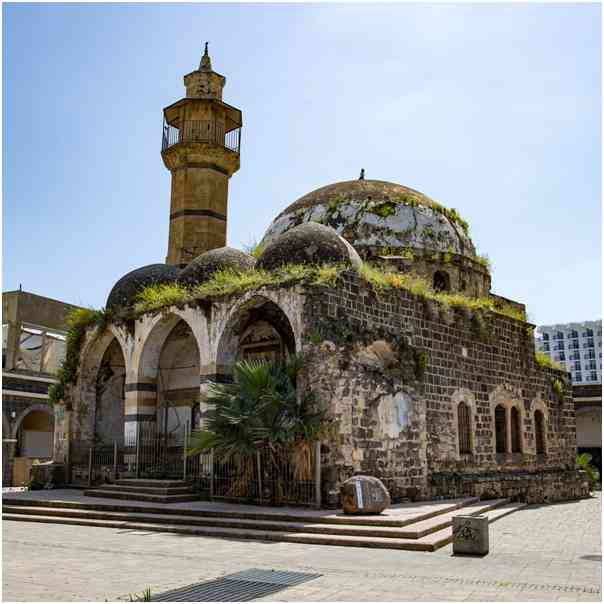
The Omari Mosque in Tiberias, built in the 18th century by Zahir
al-Umar.Credit: Gil Eliahu
Moshe
Gilad
May. 18, 2022 2:12 PM
Tiberias was once a small city.
Walking the length of the Old City from north to south takes less than a half
hour. This week, we took a leisurely stroll from the Zahir al-Umar Fortress to
the Greek Orthodox Church on the shore. It’s a short distance, only a few
hundred meters, but the sights are astounding.

An illustration of Zahir al-Umar,
who was the autonomous Arab ruler of northern Palestine in the mid-18th
century.Credit: Ziad Zaydany
Professor Mustafa Abbasi, a
historian, pointed out the buildings that have survived in this part of the
city. We saw the fortress; the administrative building built by the Ottomans
known as the saraya; the building that once housed the Tiberias Hotel; the
Franciscan Church; the guard towers on the remnants of the ancient city wall,
the dilapidated Omari Mosque built by Zahir al-Umar (whose name is
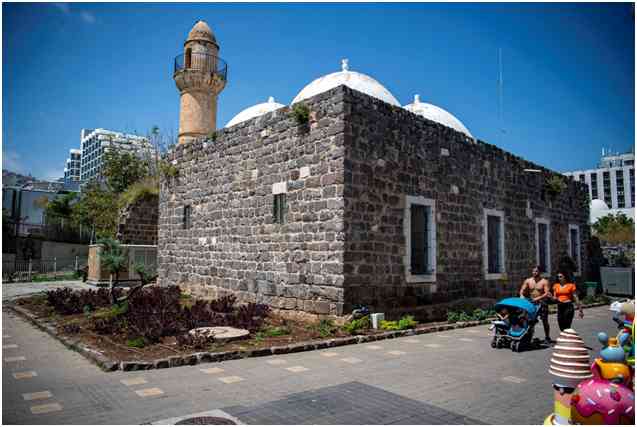
sometimes spelled Daher al-Omar) in the 18th century and the sealed-off
Al-Bahr Mosque. We saw the Etz Hahayim Synagogue built by Rabbi Hayyim
Abulafia, and drank coffee on the boardwalk. We turned down two offers to sail
on the lake in a boat. We bought hats at one of the shops on Hagalil Street.
Abbasi chose a khaki-colored cap. Mine had two yellow pineapples on it.
The bottom line of the tour that
we did: The sights are lovely and awful at the same time. Tiberias is a
beautiful city that sits on the shore of a beautiful lake, but it also very
neglected and unattractive. The remnants of the Old City are large structures
built of black basalt, things of real beauty, but only a few remain and some
are in terrible condition. The city wall was nearly completely destroyed by the
combined damage of earthquakes, severe flooding in 1934, the war of 1948 and
events since then. Amazing assets of the city are either, at
best, totally neglected or, at worst, deliberately wrecked.

The building that was once the Hotel Tiberias. Credit: Gil Eliahu
All this happened on our watch.
Just 74 years ago, Israeli sappers blew up entire historic quarters of the city
that were home to both Arabs and Jews. A city rich in historical and cultural
heritage was almost totally wiped off the face of the earth.
No new, attractive city center
was built in its place. The streets in the center of the Old City all look
terrible now. Some are appallingly rundown. Zahir al-Umar's Omari Mosque looks
like a ruin being used as a dump in the heart of the city. Many shops on the
main streets stand empty. An entire building on Hagalil Street is burned-out
and covered with soot. Several buildings appear to be abandoned. In other streets,
there are stores and coffee shops that bear the signs of poverty and neglect.
The boardwalk named for Yigal Allon has been fixed up a bit, but it still not
very inviting. It’s quite disheartening to see a city that is such an important
center of tourism for the Galilee area look this way.
Prof. Abbasi, who has extensively
researched the history of the Galilee area and teaches at Tel Hai Academic
College, recently published a book in Hebrew titled “Tiberias and its Arab
Inhabitants during the British Mandate Period, 1918-1948.” The book is a detailed
academic historical study, but I found myself reading several chapters with
bated breath. The story of Tiberias is presented from a different vantage
point, one with which I was not familiar. Abbasi tells the tale of a mixed Arab
and Jewish city that could serve as a model of coexistence. He also traces the
story of this city’s destruction.
Some 300
years ago, Zahir al-Umar, then the Ottoman ruler of the Galilee, invited Rabbi
Hayyim Abulafia, convincing him to travel from Izmir and settle on the banks of
the Sea of Galilee. The rabbi finally relented, arriving with 40 adherents in
1740, and the governor assisted him in constructing the Jewish Quarter in the
heart of the Old City. The quarter was surrounded by Muslim ones, and the
relations between the neighbors, according to Abbasi, were excellent. This
tranquil coexistence characterized Tiberias for over 200 years. The Jewish
leadership, headed by the Abulafia and Alhadif families, large and prestigious
Sephardi families, lived in good relations with the Arab residents, headed by
the al-Tabari family, whose members served as qadis and muftis and held much
property.
The walls of the Old City in Tiberias.Credit: Gil Eliahu
Thanks to the local leadership,
peace was maintained during the
1929 riots that washed over the rest of the country. Twenty
years later, the situation was different. Moderating influences had weakened.
The Jewish mayor, Zaki Alhadif, was murdered in 1938. In Kiryat Shmuel, near
the city, 19 Jews were murdered that year. The moderating forces on each side
disappeared. The extremists and the militants dictated the tone.
On April 18th, 1948, after
several days of battle between the Haganah underground militia and Arab forces,
the British removed the Arabs of Tiberias by bus. Before that, the Old City had
been home to 6,000 Jews and 5.000 Arabs. (Today, the city is home to 50,000
people, all Jews.) Tiberias, long sacred to Christians and Jews, received a
sanctified status from Muslims, as well. The holiest Muslim compound in the
city, almost unmentioned in advertising for the city, according to Abbasi, is a
shrine to Sitt Sakina, a descendant of the Prophet Mohammed. This tomb is known
today as the Tomb of Rachel, wife of Rabbi Akiva, and is located at the
southern end of town.

Part of the Greek Orthodox monastery in Tiberias.Credit: Gil Eliahu
According to Abbasi’s book,
Tiberias had become a symbol of Arab and Jewish coexistence for hundreds of
years. The warm relations ended in a grand collapse, at the height of which the
Arabs of Tiberias and the Jews of the Old City were forced to leave their
homes. The British moved the Arabs to Nazareth and Jordan, and the Old City’s
Jews were moved to other neighborhoods. The residents of Tiberias were the
first Arab urban community to be removed in its entirety, and reearch shows
that this happened partly because Jewish decision-making shifted out of the
city, to the Haganah national headquarters.
This is how Abbasi describes this
astonishing sequence of events:
“Immediately after [the removal], there began a
systematic and intentional demolition of the holy Old City, which was razed to
the ground. […] Such destruction was common and carried out in hundreds of Arab
villages and towns, but it was very surprising in Tiberias, which was
considered a sacred Jewish city, and many of its homes were owned by Jews. […]
The interesting part about the destruction, in addition to the loss of valuable
historical, archeological, and religious riches, was the stubborn struggle by
Jews from the Old City to receive compensation. Jews who against all
expectations, found themselves sharing the suffering of their Arab neighbors.”

Women walk by the Greek Orthodox Church on the shore of the Sea of
Galilee, in Tiberias. Credit: Gil Eliyahu
Old Tiberias was destroyed in
three stages. First, in April 1948, a few buildings were destroyed in the
fighting. In June of that year, the military blew up a few more buildings, and
in January 1949 massive demolition of Old City houses began.
Half the properties in the Old
City were Jewish-owned, yet the authorities destroyed its ancient area almost
completely, showing no regard for its holiness or history of coexistence.
According to Abbasi, the demolitions were not random, but part of an overall
approach toward Arab villages and towns in order to prevent the return of the
Arab residents.
While the government made no
formal decision to destroy the city, it provided the military and municipal
authorities with the means to do so, and never tried to prevent the
destruction. Government institutions displayed contempt toward the Jews of the
Old City, who belonged to what was called “the old yishuv.” This contempt was
expressed not only in the destruction of their homes, but also the confiscation
of the land and the demand that they pay rent for their temporary abodes in
empty Arab homes.
Abbasi’s
conclusion is that Tiberias, to the decision-makers, was a city with an Eastern
landscape or appearance. He says proponents of the destruction repeatedly
described it in a similar way:
“In its appearance and narrow alleys it was, to
them, a manifestation of the old, degenerate, and corrupt. This attitude was
common to many in those days, and is particularly vivid in the description by
senior Jewish National Fund figure Yosef Weitz. The Arab and Muslim ‘Eastern
landscape’ was to them not only a danger to national security, but also an object
of repugnance. To them, it symbolized the backwardness of the East, and
therefore they didn’t hesitate to destroy it, even at the cost of hurting
Jews.”

The former Hotel Tiberias, which was built by German Templers.Credit:
Gil Eliyahu

Remains of the citadel at Tiberias which Zahir al-Umar built early in his rule. Credit: Gil Eliyahu

A street in Tiberias' Old City. Credit: Gil Eliahu
What we see in today’s today is a
direct result of the destruction that took place 74 years ago. There are places
in Tiberias that look slated for immediate demolition, and others where perhaps
it would have been better to just not build anything. Much of what had been
built simply looks bad, and that includes some of the new hotels.
History will connect us
Abbasi is one of the most
optimistic people I have ever met. He believes in peace and the brotherhood of
nations. He believes in the sanctity of life and a good future. When I suggest
that the city was ruined by crooks, he looks at me softly and smiles patiently.
“I believe that history needs to be enlisted for
compromises and not wars,” he says. “We enlisted history to exhaust and kill
each other. I was born in a home that believed in the brotherhood of nations.
My family ran a Sufi order in Safed, and the chief rabbis of Safed were friends
of my grandfather and helped him stay in the country. History should connect
the two peoples. I don’t omit the difficult points, but the question is how you
present them. Tiberias and its people need to make hopeful voices heard. Let us
provide hope without giving up describing what happened.”

Part of the fortress built by Zahir al-Umar around Tiberias. Credit: Gil Eliyahu
According to Abbasi, his book is
unique in telling the story of the Arabs of Tiberias, who have been absent or
presented as component with no weight or impact in other studies. Their
absence, he says, is a perversion of history and denies answers to those
seeking to delve deeper into the city’s history. In the final chapter of his
book, he writes: “The main contribution
of this book is that, despite its focus on the
British Mandate period, it also
discusses the Arab population of Tiberias since the renewal of the city in the
early 18th century.”
In a
conference held via Zoom to mark the publication of Abbasi’s book a few weeks
ago, historian Prof. Aviva Halamish of the Open University said that
historically, Tiberias’ situation was different from that of other mixed cities
in the country. This was because of a number of factors: a relatively
peripheral location, the Sephardic Jewish majority, Jews and Arabs living side
by side in the Old City, the fact that most Jewish immigrants who arrived in
the city weren’t Zionist, and mostly the fact that Arabic was the dominant language
in the city, common to both Jews and Arabs. Nationalism, says Halamish, was
more muted, and so relations between Arabs and Jews were closer and more
relaxed.

A postcard with a photo of Tiberias taken in 1917. The Hotel Tiberias can be seen in the center. Credit: Unknown author
In 2007, journalist Dalia Karpel
created a fascinating documentary film, “The Diaries of Yossef Nachmani.” The
film centers on the days of conquest and destruction in Tiberias through the
eyes of Nachmani, an alum of Hashomer, the paramilitary self-defense
organization active in the 1910s, and the director of the Jewish National Fund
office in Tiberias, who worked a great deal with the Arab population.
The film paints a captivating
depiction of the change in Nachmani’s beliefs. At first, he was a proponent of
dialogue and reconciliation with the Arab population, and supported having it
remain in the city. He wrote lines in his diary such as: “We are widening the
abyss and arousing hate. The hotheads’ urges must be restrained.” Soon after,
in a total turnaround, Nachmani avidly supported the destruction of the Old
City to prevent the return of the Arabs. To add to the already bizarre
situation, his son, Shimon Nachmani, was one of the explosives technicians who,
on military orders, blew up the Old City homes.
No one left to care for the
people

A couple walks by the Sea Mosque in Tiberias.Credit: Gil Eliyahu
“I study on the micro level,”
Abbasi says of his research. “From a collection of details I build a macro, and
thus produce a different story than generalizations, and an overall model of
history. Generalizations are the easy way to write history. I don’t set
boundaries in advance. The material sets the boundaries and leads me to the
story. The study of Tiberias and its Arab population is an example of a case of
micro-historical research of our country.
"The
history here [in the city] is written from the bottom up, through the daily
life of the urban population in all its components, from the elite to the
commoners, who were the overwhelming majority in the city, and in our case
mostly Arabs. There were fishermen among them, farmers, builders, workers at
the nearby hot springs, water vendors, women who worked in the tourism
industry, drivers and coach owners, and even immigrants who came from Syria,
stayed in the city and worked odd jobs. Without understanding the social
processes and the interactions
between them and the local elite, it is hard to understand the city’s history.”
Abbasi says the heroes of the
city, who fought tooth and nail to maintain coexistence, were Mayor Alhadif and
the Al-Tabari family. Alhadif’s family came to Tiberias in the 18th century
along with with Rabbi Abulafia and his disciples. Alhadif served as mayor from
1928 until his murder in 1938. When the supporters of coexistence vanished from
the stage, there was no one left to care for the people.
How can Tiberias’ future be
better?

The Etz Hahaim Synagogue in Tiberias.Credit: Gil Eliahu
“Tiberias can be the jewel of the
Galilee. The leaders of the city need to change their thinking and connect with
the Arab population in the Galilee. Tiberias flourished when it was better connected
to the region, both within the Galilee and beyond the border. It was a city
convoys passed through en route to Damascus. Golani Interchange was actually
part of Tiberias and served as the most important junction in the country since
the dawn of time.
“We should remember that Tiberias
depended in the past on connections with Syria and Jordan. Until 1948, five
buses left from here to Jordan every day. If there is a ‘warm’ peace with
Jordan and peace with Syria, Tiberias will not remain a peripheral city.
“The Night of Bridge” – June 16,
1946, when Israeli paramilitary forces blew up the bridges connecting Mandatory
Palestine with the neighboring countries – “was the night economic ties with
the East were destroyed. Tiberias is a city at the edge of the East. If you’re
not connected to the East, you have no economy. You can’t live in the East and
revile everything Eastern.

Prof. Mustafa Abbasi.Credit: Gil
Eliahu
“For a historian like me, who
knows both sides well, it breaks my heart. I’m connected to the country and the
religion. I have deep roots here. But when I see both sides harming each other,
I feel bad. It surprises me that it is the intellectuals on both sides who
either stay on the sidelines, or join the most extreme statements.
“Once there
is a high dose of religiosity and nationalism, it’s lethal. National and
religious zeal is destructive. We have turned nationalism into the holiest
thing. To me, humanity is the center of the world, and not the nation…
“I am optimistic because humanity is a smart
creature. I believe, based on a connection to Sufism, that every human being
has a divine spark. You cannot be a Sufi and hate others. The goal is to turn
this into a way of life. My grandfather sat with clerics from all denominations
in Safed and Jish and respected them. At prayer time, everyone went to pray to
their own prophet and came and sat back down, to talk and be happy. I ask
today, how did we get to such levels of hate? Our lack of familiarity has
turned us into monsters. To stop that, we need dialogue and discourse.”
The remnants of a ruined stone tower in Tiberias.Credit: Gil Eliahu
What is the conclusion of your
book about Tiberias?
“The writing of the book lasted
for three years, and what kept me strong during that time was that despite the
tragic end of Tiberias, it shows the ability of its leaders to live together
for 200 years and overcome crises. The local leaders were heroes because they
fought against the odds. The extremists may have won eventually, but Tiberias
proved that we can live together. Since the Arabs were thrown out of the city,
everyone has suffered.”
Requests for the comment of the
Tiberias municipal authorities to the above and as to its plans for the Old
City received no reply.