Showing posts with label ACRI. Show all posts

13 January 2018

This is why Israel, 70 years after 'independence' is a settler-colonial state

A Beginner’s Guide to the Unrecognized Villages of Israel

If there is one thing Israel fears more than anything it is delegitimisation. That is why Israel hates BDS because it challenges the legitimacy of the Israeli state.  All political parties in Israel know that, despite pretensions and its claims to be the only democracy in the Middle East, it is an outpost of the West in the Orient.
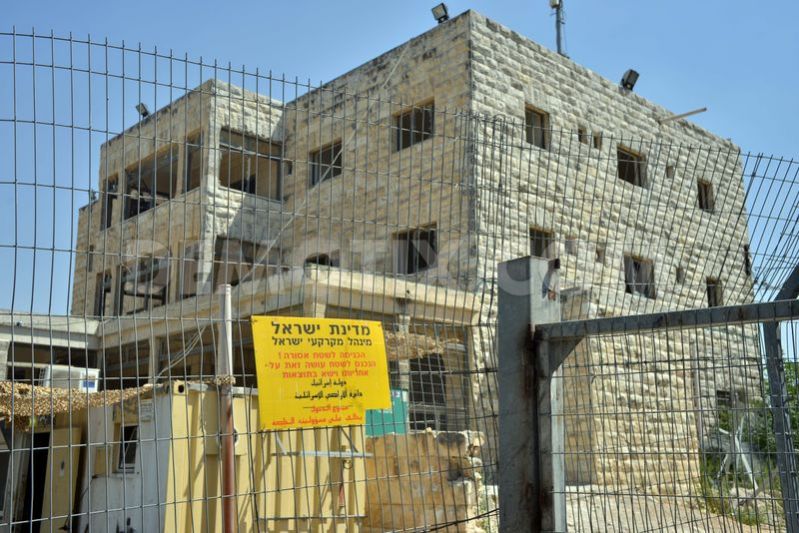
Hotel Cliff, occupied East Jerusalem. Confiscated from its Palestinian owners under the Absentees' Property Law, the State now recommends to return a small portion, i.e. the parts owned by Palestinian residents living in the West Bank. (Photo: Mahmoud Illean)
Israel is different from any ‘normal’ bourgeois democratic state in the West because it is a state based not on all of its inhabitants but on the Jewish part.  It is an ethno-nationalist state.  That is why the Jewish State Bill is so important to Netanyahu because he wants to make it explicit in the Israeli equivalent of a constitution, a Basic Law. 

When states recognise Israel as a Jewish state they are automatically recognising that it is an Apartheid state, a state not of all its citizens but its Jewish citizens.

Most states in the West like the UK have some form of equalities legislation.  Indeed equalities is written into European law.  But in Israel the whole state is based on ethnic discrimination.  Being Jewish is not a religious identification so much as a national/racial one.  In the Israeli ID card you can be Jewish on the basis of both nationality and religion.
Of course within the Jewish tribe there are numerous differences, not least because the definers of who is Jewish, the Chief Rabbinate, will not accept anyone who is converted by non-Orthodox rabbis.  So you can immigrate to Israel under one definition of being Jewish but once there you will not be recognised as Jewish by those who define personal matters, the Chief Rabbinate for purposes of birth, marriage and death.

There is therefore in Israel, just like in Nazi Germany, which was based on the Aryan race, a mixed race – Jewish bastards, mamzerim, half Jews or in Nazi Germany, Mishlinge.  Israel has come to resemble nothing so much as the State that was responsible for the decimation of some third of world Jewry. 

Despite claiming its legitimacy from the Holocaust Israel uncannily resembles Nazi Germany’s racial structures.  It was this observation by Hannah Arendt, in her seminal book Eichmann in Jerusalem – the Banality of Evil which led to her ostracisation and demonization by the Zionist movement.  She noted, amongst other things that the condemnation of the Nazis’ Nuremburg Laws during the Eichmann Trial, which prevented marriage between Jews and non-Jews was ironic in view of the fact that Jews and non-Jews couldn’t marry in Israel too.

Israel has to keep up pretensions which was why it passed a Law against racial discrimination when the Jewish Nazi Rabbi Meir Kahane was elected to the Knesset in 1984.  However the law had to exempt discrimination on the grounds of religion which meant that racism, in effect was legalised in Israel.  As a result Kahane voted for it!
The unrecognised villages of Israel are the living proof that Israel, even today, sees its Zionist role as the colonisation and settlement of the land with Jews and the uprooting and dispossession of Arabs.  In those Arab villages and towns which are recognised, planning laws prevent their development.  No extra land, because 93% of Israel is ‘Jewish’ land is allocated to the expansion of Arab lands.  Despite their population having increased over 10 fold since the Israeli State was founded, the land allocated to Israel’s 20% Arabs has not increased.  If anything it has been subject to further confiscation.  That was the purpose of the Absentee Property Law which was passed by the Israeli Labour Party government in 1950.

Despite the wilful refusal of western leaders to recognise it, Israel is the world’s last apartheid state.

Tony Greenstein 

Thousands of Arab Bedouins in Israel's Negev desert are denied power, water, sewage, and roads by the state. And their villages are under constant threat of demolition.

Photo: Aniqa Raihan
 December 25, 2017 Aniqa Raihan Foreign Policy in Focus

It’s no secret that there is an occupation happening in and around Israel.

Most people agree that the West Bank and Gaza Strip have been occupied since 1967. Much less thought and literature is dedicated to the treatment of Palestinians living inside modern-day Israel proper. I decided to head over there and see for myself.

It is commonly believed that Palestinian citizens of Israel — officially known as Arab Israelis — enjoy full equality in the Jewish State. There are Arab members of parliament, the Arab population in Israel has been growing steadily for decades, and the Arab cultural scene is thriving in places like Haifa. While all of these statements are true, Palestinians insist that occupation still exists inside the state of Israel, and nowhere is that fact more apparent than in the unrecognized Bedouin villages of the Negev desert.

Before the creation of modern Israel, the Negev desert, which constitutes the southern half of the country, was almost entirely populated by Arab Bedouins. Nearly 90 percent fled during the Nakba of 1948. 11,000 Bedouins remained, a population which has now grown to over 200,000.

Of the Bedouins still living in the Negev, half live in government-designated towns and cities, much like Native reservations in the United States, and the other half live in unrecognized villages. The Bedouin are Israeli citizens, but because their villages aren’t formally recognized by the state, they have no access to state services including water, electricity, telephones, sewage systems, and roads.
Today, the unrecognized villages of the Negev desert have the highest unemployment and poverty rates in Israel. I visited three villages to understand the effect of occupation.
Be’er Sheva, Israel (Photo: Aniqa Raihan)
Be’er Sheva is the largest city in the Negev desert. It is home to 205,000 people, about 10 percent of whom are Palestinian citizens of Israel.

Originally founded in 4,000 BCE, Be’er Sheva has been at times a Bedouin encampment, part of the Ottoman Empire, and now, the fourth most populous metropolitan center in Israel. It is a thriving college town, a growing tech hub, and interestingly, the chess capital of the world.

Less than 5 miles away are unrecognized villages where people live in tents and tin shacks.
Wadi an-Na’am, an unregistered Bedouin encampment outside Be’er Sheva, Israel (Photo: Aniqa Raihan)
The largest of the unrecognized villages is Wadi an-Na’am. It was established in the 1950s by internally displaced Bedouins from surrounding villages who’d been forcibly removed from their homes and lands, but it’s never been officially recognized.

In the 1970s, Israel built Neot Hovav, the country’s primary toxic waste disposal facility, in Wadi an-Na’am. Since its establishment, the facility has experienced frequent accidents, fires, explosions, and leaks, resulting in birth defects and long-term health problems in the Bedouin community.

The village is also surrounded by military firing zones, where the Israeli Defense Forces carry out military drills and trainings using live ammunition. Unexploded shells are often left behind from these exercises. The last accident killed two children aged 8 and 10.
A power plant outside Wadi an-Na’am, a Bedouin village that gets no electricity from the state. (Photo: Aniqa Raihan)
An electric power plant is clearly visible from the village.

This plant generates electricity for Be’er Sheva and surrounding localities, but not for Wadi an-Na’am or the 45 other unrecognized villages like it. People in the villages depend instead on an inconsistent combination of solar panels and generators. Adalah, a human rights and legal organization, currently has three open cases regarding elementary schools in Wadi an-Na’am that lack electricity.

Israel recently announced its intention to relocate the residents of Wadi an-Na’am to the nearby town of Segev Shalom. The villagers oppose this plan because it would destroy their agrarian lifestyle. In 2015 the Association for Civil Rights in Israel presented two alternative options, both of which would allow the villagers to maintain their way of life, but the relocation will move forward as originally proposed.
Umm al-Hiran, a Bedouin village on the verge of demolition by Israeli authorities. (Photo: Aniqa Raihan)
I also visited Umm al-Hiran,  an unrecognized village on the verge of demolition. Like Wadi an-Na’am, Umm al-Hiran was established in the 1950s by order of the Israeli military governor as part of a state-sanctioned effort to relocate and concentrate the Bedouin. Half of the village was briefly granted recognition in 2008, but the decision was reversed two years later.

The state has marked Umm al-Hiran as the site of a future Jewish development to be called Hiran, a project that necessitates the demolition of the entire village. Residents filed appeals and fought back in court, but in 2015, the Supreme Court of Israel rejected a petition to prevent demolition of the village. Construction was briefly halted following protests led by Adalah, but is expected to continue soon.
A memorial to a Bedouin man shot and killed by Israeli police as he fled home demolitions in Umm al-Hiran. (Photo: Aniqa Raihan)
At 3 a.m. on January 18 of this year, Israeli police arrived at Umm al-Hiran to conduct home demolitions. A local teacher named Yacoub Abu Al-Qia’an got in his car and began to drive away, but was shot at by the police.

One of the bullets hit his right knee, causing him to lose control of his vehicle and accelerate into a group of officers. One officer was killed, as was Yacoub. Israeli authorities initially declared him a terrorist connected to ISIS, but retracted when video evidence surfaced proving that he was shot before his car accelerated.

A memorial stands at the scene of the shooting.
A tribal cemetary is most of what remains of al-Araqib, a Bedouin village that Israeli authorities have demolished over 100 times. (Photo: Aniqa Raihan)
And finally, I visited the most notorious of the unrecognized villages, al-Araqib. This village, which was once home to 600 people, has been demolished 119 times. Now, only 5 tents and a tribal cemetery remain. There are more graves than villagers.

Amazingly, the demolitions aren’t even the worst past: Perhaps the most unsettling aspect of this years long tragedy is the government’s demand that the residents of al-Araqib pay for the cost of demolishing their homes.

I have been part of the movement for Palestinian justice for a year and a half now. I have spent hundreds of hours reading about the blockade of Gaza, the murders of Mahmoud Shaalan and Rachel Corrie, the intifadas, the checkpoints, the BDS movement, and more, but I was still shocked by what I saw in the Negev desert. The Bedouin are continually displaced and disenfranchised by the state — and too often, they are also erased from the mainstream Palestinian narrative.

This is occupation, pure and simple, and it is 70 years past time the world recognizes it.

Aniqa Raihan is a former Next Leader at the Institute for Policy Studies and a past member of Students for Justice in Palestine at George Washington University. She’s currently traveling in Israel-Palestine. 

2 September 2017

Israel Passes the 'Regularisation' Law - its like having a law to compensate the burglar who enters your home

Pity the Poor, Distressed Zionist Land Thief


Imagine a law in Britain which is specifically designed to legalise squatting on other peoples’ land.  Not only would this be impossible, in fact the opposite occurred under the last government.  The actions of the homeless have increasingly been criminalised, even when they take over empty housing that rich people have decided to keep empty for reasons of making a profit.

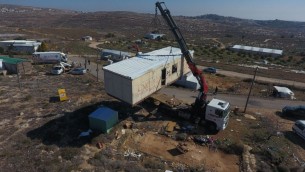
The settlement of Amona
Settlers like Education Minister, Naftali Bennett were not homeless.  Bennett came as a rich businessman from Brooklyn, New York.  He and thousands of others are ideological squatters.  They believe they are fulfilling god’s commandments to steal the land of others.  Unlike in Britain they are backed by the force of the State.

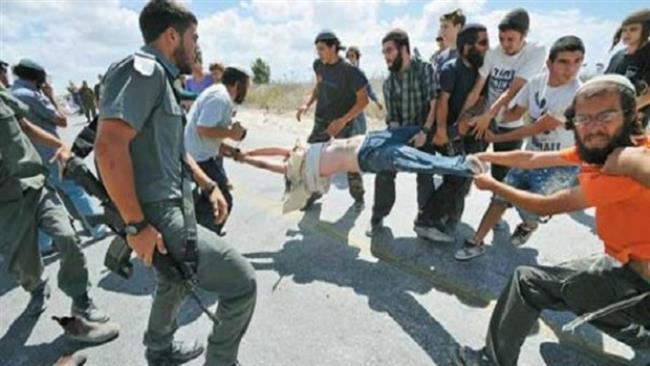
Jewish settlers have squatted in their thousands on private Palestinian land [i.e. land which the State has not confiscated under one pretext or another] to which they have no entitlement. 

Attorney General Avichai Mandelblit attends a ceremony in Jerusalem, June 13, 2017. (Yonatan Sindel/Flash90)
Instead of evicting them, as would happen if Palestinians in Israel did the same, the Knesset recently passed a ‘Regularisation Law’ which regularised the position of the land thieves.  It retrospectively legalised the theft of private Palestinian land in the West Bank.  Even the Attorney General, Avichai Mendelblit, a member of Likud, refused to support it describing it as unconstitutional but Netanyahu and his far-Right government proceeded regardless.  After all this is what settler colonialism has always done.

The Jewish settlers believe that god gave them the land, on the basis that their ancestors, completely mythical creatures, apparently lived there a few thousand years ago.  Imagine if the whole world were ordered on this basis!  In reality the settlers are doing no more than colonists have always done in places like Southern Africa.  Using the Bible to justify their expropriation of the land of the indigenous people.

See also the excellent article by Gideon Levy Oh Merciful God, Show Some [Mercy] to Victims

Tony Greenstein


The Israeli settlement of Almon in the occupied West Bank. Credit Ahmad Gharabli/Agence France-Presse — Getty Images        


Israel to High Court: Law Seizing Palestinian Land Is Humane Response to 'Distress' of Thousands of Settlers

Private lawyer representing the state says expropriation of Palestinian lands in West Bank is constitutional under both Israeli and international law

Yotam Berger 22.08.2017 12:17 Updated: 12:18 PM

The unauthorized outpost of Mitzpeh Kramim. Israel says the expropriation law would help residents there with construction. Michal Fattal
The state on Monday asked the High Court of Justice to reject legal challenges to a controversial law that would allow for the retroactive expropriation of land owned by Palestinians in West Bank settlements. It called the law “a humane, proportional and reasonable response to the genuine distress of Israeli residents.”

In seeking to persuade the court to reject the legal challenges – filed by Palestinian and Israeli human rights organizations – the state argued that the “practical alternative” to the law is the maintenance of the existing situation, which the state said is disruptive to the lives of “hundreds of families” in settlements, including families who built homes based on representations by government authorities that it was permissible.

The state added that the law is constitutional under Israeli law and also meets the requirements of international law.
Amona settlers building
Subject to specific provisions, the law allows Jewish settlers to remain in homes built on privately owned Palestinian land, even though it does not grant them ownership of the land. It also denies the Palestinian owners the right to claim the land or take possession of it “until there is a diplomatic resolution of the status of the territories.”

The state’s response was prepared by Harel Arnon, a private lawyer retained by the government after Attorney General Avichai Mendelblit refused to represent it, saying the legislation was not constitutional. Prior to its passage, he also tried to halt the legislative process.

Implementation of the law had been informally suspended following the legal challenge. However, at Mendelblit’s request, the court made the suspension official on Monday through a court order. This will remain in effect until the court makes its ruling.
Bennett shakes hands with Zeev Elkin
 The law also provides a mechanism for compensating Palestinians whose lands are seized: A landowner can receive an annual usage payment of 125 percent of the land’s value as determined by an assessment committee, or an alternate plot of land if this is possible – whichever the Palestinian landowner chooses.

The state said the law addressed “a reality in which the owners of the land are not benefiting from their rights, particularly a reality that time after time has been polarizing and tearing Israeli society apart, and severely harming public trust and institutions of government.”

The state called the current situation “a national problem.”

It also noted a number of cases in which it said residents would benefit from the law if it is found constitutional, including construction at the unauthorized outpost of Mitzpeh Kramim and a number of buildings in the settlement of Ofra.
Demolition of Amona
The state’s response included data from the Israeli Civil Administration in the West Bank, detailing the numbers of orders issued against illegal settlement construction on privately owned Palestinian land.

It said that between 2012 and 2016, orders were issued against 285 illegally built structures; between 2007 and 2011, orders were issued in connection with 251 structures; and between 2002 and 2006, more than 450 orders were issued. Between 1992 and 1996, however, the figure was only 20.

In conclusion, the state said that although there are many issues that prompted the legal challenges to the law requiring thorough consideration, ultimately the petitioners are making “much ado about nothing.”

The law, the state said, does not run counter to any precedent or legal principle, and instead is meant to deal with a unique and complex situation that at times has led to demolitions that benefited no one – a situation that places hundreds of families under “a cloud of uncertainty.”

In response, the organizations Yesh Din, Peace Now and the Association for Civil Rights in Israel – which are some of the petitioners in the case – responded: “The State of Israel, in its response today, is trying to present the land expropriation law as addressing a national problem, when in practice it involves continued government support for a criminal enterprise that has continued for decades.

“The government is minimizing the continuing harm to the rights of the Palestinian landowners, and at the same time is trying to present the Israeli citizens who are taking part in the looting of West Bank Palestinians as people who have been harmed and who require ‘compensation’ for their part in the looting,” they added. “We hope the court rejects the state’s arguments out of hand, strikes down this unconstitutional and immoral law, and sends a loud and clear message: No more.”

Yotam Berger

Haaretz Correspondent

https://ssl.gstatic.com/ui/v1/icons/mail/images/cleardot.gif

State says outpost legalization law protects Palestinians

Responding to petition from left-wing NGOs, government insists preventing additional outpost evacuations is in Israel’s ‘national interest’

In its official response Thursday to a High Court of Justice petition against a new law to legalize wildcat West Bank outposts, the state argued that the legislation, if implemented, would benefit Palestinians.

Private attorney Harel Arnon crafted the response on behalf of the state after Attorney General Avichai Mandelblit refused to defend the legislation. In his 156-page response, Arnon wrote that the law will ensure just compensation for Palestinian landowners who would otherwise receive the death penalty from the Palestinian Authority for selling their land to Jews.

“The law even improves the situation of landowners, who will receive significant compensation for the use of their land — an option denied to them without the law,” Arnon wrote on behalf of the state.
The response also rejected claims that the legislation violates Israeli and international law. Arnon argued that it was in Israel’s “national interest” to prevent the evacuation of the some 4,000 homes that the law would legalize retroactively.


Defense Ministry dismantling Amona outpost in the central West Bank on February 6, 2017. (Courtesy Amona Council)

“The Regulation Law balances the obligation of the government towards thousands of citizens who have relied in good faith on government action and a minor infringement of property rights, with increased compensation to the landowners,” the state concluded.

Passed over six months ago, the Regulation Law allows the Israeli government to expropriate private Palestinian land where illegal outpost homes have been built ex post facto, provided that the outposts were “built in good faith” or had government support.

In return, the legislation states, the Palestinian landowners will be compensated financially or with other land.

The passage of the bill, originally meant to save the since-razed outpost of Amona, was roundly condemned by a slew of activists and political figures in Israel and abroad.

Its legality was immediately challenged in a High Court petition from left-wing NGOs Peace Now, Yesh Din and ACRI (Association for Civil Rights in Israel) on behalf of 27 Palestinian local councils and 13 Israeli civil society organizations.

Regardless of the petition, the law was supposed to have gone into effect last week. However, at the behest of Mandelblit, the High Court ruled Thursday to freeze its implementation for two months.


Jewish Home chair Naftali Bennett (R) shakes hands with Minister for Jerusalem Affiars Zeev Elkin after a vote on the so-called Regulation Bill, a controversial bill that seeks to legitimize illegal West Bank outposts, December 7, 2016. (Hadas Parush/Flash90)

Consequently, no additional land will be expropriated even if it fits the above conditions. At the same time, outposts found to have been built in good faith or with government backing will not be demolished until a final decision is made.

Justice Minister Ayelet Shaked echoed state’s response to the High Court petition in a Monday statement praising the legislation. “The law offers a counter to the racism of the Palestinian Authority, which places the death penalty on those who sell land to Jews,” she said

But the left-wing NGOs behind the High Court challenge said the government’s response was an attempt to cover for a “criminal enterprise.”

“The Israeli government’s response seeks to present the expropriation law as a solution for a national problem, while the real problem is the state’s involvement in illegal settlement activity for the past five decades,” they said in a joint statement.

The court is now set to hear a response from the Knesset’s legal adviser in mid-September, followed by what is expected to be an unprecedented challenge to the law from Mandelblit himself in October.
In the months leading up to the February 6 Knesset vote on the Regulation Law, Mandelblit warned that the legislation bypassed standard land regulation procedures in the West Bank and that it legalized Israeli settlements built on private Palestinian land in breach of local and international law.
Mandelblit also cautioned that the legislation openly curtailed property rights of Palestinians in the West Bank in a way that contravenes the protections granted to occupied populations under the Fourth Geneva Convention.

When the Knesset passed the law anyway, Mandelblit officially notified the High Court that he would not defend the legislation if it was challenged. Arnon was subsequently chosen to represent the state in Mandeblit’s stead.

In May, Haaretz revealed that Arnon’s own home in the Elazar settlement is being built illegally on land that had been designated strictly for military purposes.


These illegal structures could be legalized under Israel's contentious 'land-grab' law, whose validity is now being determined by the High Court of Justice

Yotam Berger Aug 23, 2017 9:01 AM 

Settlers build in the illegal West Bank outpost of Amona, since evacuated by Israel. Emil Salman

There are 3,455 residential and public buildings built on private Palestinian lands in the West Bank, according to Civil Administration data. These illegal structures could be legalized under the expropriation law, whose validity is now being determined by the High Court of Justice in response to Palestinian petitions against the law.

Extensive details on the scope of illegal structures on private Palestinian land were revealed in an appendix to the state’s response to the petitions.

The law allows the state to expropriate Palestinian lands on which settlements or outposts were built “in good faith or at the state’s instruction,” and deny its owners the right to use those lands until there is a diplomatic resolution of the status of the territories. The measure provides a mechanism for compensating Palestinians whose lands are seized.

According to the Civil Administration, the 3,455 structures fall into three categories. The first includes 1,285 structures that are clearly private land. These are structures built during the past 20 years on land that was never defined as state land and all have had demolition orders issued against them. The second category comprises 1,048 structures that were built on private land that had earlier been erroneously designated state land. The third category contains 1,122 structures that were built more than 20 years ago, during a period when planning laws were barely enforced in the West Bank.
The structures on clearly private land are within the jurisdictions or adjacent to the jurisdictions of 74 settlements throughout the West Bank. Of these, 874 are in outposts – small, illegal satellites of larger settlements. One example would be the Tzur Shalem outpost near Karmei Tzur in the Etzion Bloc. Amona, which was evacuated in February, was another example. The other 411 are individual structures that were built on enclaves of private land within various legal settlements that were planned in accordance with Israeli law.

Israel just passed the land-grabbing law. What is it all about?

Of the 1,285 structures built on clearly private land, 543 are built on what the Civil Administration calls “regularized private land,” meaning lands whose owners are known and whose ownership is formally registered. The other homes are built on lands recognized as private after aerial photos proved that these lands had been cultivated over the years, but there is no definitive registry of who was cultivating them. Cultivating land establishes ownership in the West Bank in accordance with the Ottoman-era laws that still prevail there.

According to Dr. Ronit Levine-Schnur, an expert on property rights at the Interdisciplinary Center, Herzliya, “Regularized land is land for which there is clear land registration, whether performed under Jordanian rule or during the Mandate period. The land at Amona was regularized land. In these cases there is no doubt about the rights because the registration invalidates any competing right and there’s no such thing as a statue of limitations on registered land. Non-regularized land can be unregistered but known to be privately owned, or registered but in a registry that doesn’t have the same strong evidentiary power.”

The second category includes structures built on lands that had been erroneously declared state land. Because the original declarations of state land were based on obsolete surveying technology, when the technology improved, errors were discovered and lands were removed from the state land listings. As a result, 1,048 structures suddenly found themselves outside the “blue line” that demarcates state lands. Of these, 799 structures are in areas that had a valid master plan and were thus planned and built based on the earlier declarations. Of this subcategory, 303 buildings are in the ultra-Orthodox city of Modi’in Ilit.

The third category of structures were built on private lands, with the Civil Administration admitting that in most cases the owners of the lands are known. These structures, however, were built more than 20 years ago, during a period when there was almost no oversight regarding construction on private Palestinian land. Until 1998, the policy was to conduct virtually no enforcement actions in the settlements. Of these 1,122 structures, 480 are in Ofra, 193 are in Beit El, and 146 are in Elon Moreh. Dozens of other such homes were built in Eli, Shavei Shomron, Psagot, Ma’aleh Michmash and Hermesh.

All told, of the 3,455 structures built on private Palestinian land in the West Bank, 1,576 (around 45 percent) were built on regularized private land and the rest on private land whose owners are not confirmed. This number includes residential structures and public buildings, mobile and permanent alike, but doesn’t include other types of structures like storage rooms, fences, roads and infrastructures that were built on private land.

The Civil Administration data is similar to the numbers that appeared in a recent Peace Now report, which estimated that the expropriation law could legalize up to 4,000 housing units in the settlements and outposts. Outposts that could be legalized included Avigail, Ahuzat Shalhevet, Beit El East, Bat Ayin West, Jebal Artis, Hill 725, Givat Assaf and more. The report noted that numerous homes could also be legalized in Oranit, Asfar, Beit El, Givat Ze’ev, Gitit, Har Gilo and others.

The Civil Administration appendix also details how many demolition orders were issued against illegal structures in the settlements. Between 2012 and 2016 there were 285 orders issued; between 2007 and 2011 – 251; from 2002 to 2006 – 451; between 1997 and 2001 – 278 orders and between 1992 and 1996 only 20 demolition orders were issued.

Yotam Berger

Haaretz Correspondent

26 August 2016

Palestinian Children – Shackled, Beaten, Not Allowed to See their Parents or a Lawyer – That’s Israeli Democracy

In Hebron there is a very high rate of  murder of Palestinian civilians by the Israeli military
You judge a society, any society by its treatment of its children.  Israel is a society which treats its own, Jewish children very well.  Israeli Jewish children have all the safeguards and protections that one would expect in this country.  But when it comes to Palestinian children then they are shackled when they go to court, when they are interrogated, they are thrown into tiny, stinking cells, they have no automatic right to a lawyer in the military courts of the West Bank, they cannot see their parents as of right.  And the chance of a Palestinian child, or indeed anyone, being acquitted in a Military Court is slender.  Some 99.7% of those who appear in them are convicted.  Even the courts of Stalin and Hitler had higher acquittal rates.

Israel acts and is a police state for Palestinians.  And now the Israeli Parliament, the Knesset has passed a law which will allow all children, including those inside Israel to be arrested and imprisoned from the age of 12.  But there is just one catch.  It will never be used against a Jewish child.  It is purely there to be used against Israeli Arab children who protest or throw stones etc. 
It is normal practice after a child has been held in solitary confinement or beaten for them to be expected to sign a confession in a language, Hebrew, which they don’t understand.  Military courts however have no problem with this.
Yet there are those in British politics, whether it is the detestable Joan Ryan MP, who Chairs Labour Friends of Israel, or Owen Smith MP who defends Israel unconditionally or our own Hove MP Peter Kyle.

The Labour Right and most of the Conservative Party have a blind eye to Israeli human rights abuses in just the same way as they turn a blind eye to Saudi Arabia’s genocidal bombing of Yemen.

Tony Greenstein


This brief video illustrates the fear instilled in young Palestinians, mostly boys, arrested by Israeli occupation forces, often during night raids.

Produced by Defense for Children International – Palestine (DCIP), it features 14-year-old Osama, who was taken from his home in the West Bank during a raid at 3am one night.

“It was the worst feeling to be far away from family and friends,” Osama says. He spent four months in an Israeli prison for allegedly throwing stones.

In a report released at the end of July, Human Rights Watch lists Israel among six countries that have adopted far-reaching “counterterrorism” policies that have led to sweeping arrests of children.

Israel joins Afghanistan, the Democratic Republic of Congo, Iraq, Nigeria and Syria as governments Human Rights Watch describes as “trampling on children’s rights in a misguided and counterproductive response to conflict-related violence.”
“The indefinite detention and torture of children needs to stop,” said Jo Becker, the organization’s director of children rights advocacy.

Not a week goes by when about a dozen to as many as 38 Palestinian children from the West Bank, including East Jerusalem, are arrested.

In June, Israel extended administrative detention orders for seven children.

Solitary confinement as coercion
Israel appear to be increasing the use of solitary confinement against Palestinian child detainees to pressure them during interrogations. One 16-year-old boy spent 22 days in isolation.

“The practice of using solitary confinement on children, for any duration, is a clear violation of international law, as it amounts to cruel, inhuman or degrading treatment or punishment, and in some cases, torture,” said Ayed Abu Eqtaish, accountability program director at DCIP.

Israel doesn’t use solitary confinement for disciplinary, protective or medical reasons, according to DCIP’s documentation, but as an interrogation tool.
Children are confined in cells that barely fit a mattress while they undergo lengthy interrogations during which Israeli authorities attempt to extract confessions or more information on other people, according to DCIP.

“The cell was closed tightly and had no windows, except two ventilations gaps,” 17-year-old Rami K. told DCIP.

“The walls were gray, which hurt my eyes, and the surface was coarse, so I could not lean on them. The cell had a sink and a toilet, but the toilet had a nasty smell. The lights were on the entire time.”
Rami was held for 16 days in isolation while being interrogated. The interrogation was drawn out over hours, during which his wrists and ankles were bound to a metal chair.

Blaming Palestinian culture

Israel defended its treatment of children earlier this month, following criticism by several countries at the United Nations Security Council.

Amit Heumann, the legal adviser to Israel’s UN mission, blamed Palestinians for Israel’s treatment of them.

“It is the responsibility of leaders everywhere to protect children at all costs, to protect them from the ravages of war and to shelter them in a protective environment, where children can thrive,” he said.

“Unfortunately, the Palestinians are failing at this most critical responsibility.”
“Instead of nourishing their youth with the dreams of a bright future, Palestinian children are fed a steady diet of hatred for Israel and glorification of violence in the lessons they learn in school, in the sermons they hear in the mosque and in the streets that are named after terrorists.”

Such debunked claims that “incitement” – rather than the reality of Israel’s military occupation – are to blame for violence, have long been a staple of Israeli government propaganda.

In its report, Human Rights Watch criticizes Israel’s treatment of Palestinian children under its occupation regime in the West Bank, where 500 to 700 children are brought before military tribunals annually, and an average of 220 children are held in prison each month.

But the line between Israeli civil and military law regarding children has become increasingly difficult to discern since violent confrontations between Palestinians and Israeli forces escalated in October 2015.

Last week, the Israeli parliament passed a new law allowing the imprisonment of children as young as 12.

Israel’s military regime in the occupied West Bank has always allowed the detention of 12-year-old Palestinians.

According to DCIP’s statistics, of the 440 Palestinian children in Israeli prison in February, 104 were between the ages of 12 and 15. This represents a four-fold increase from the number of young teens in prison prior to October 2015.

And though the law ostensibly applies to Jewish and Palestinian citizens of Israel alike, it was explicitly created to target Palestinians.

Imprisoning 12 and 13-year-olds will be permitted in cases where the child is convicted of so-called terrorism, a charge that almost exclusively applies to Palestinians.

“This law was born of necessity,” said Likud lawmaker Anat Berko, who proposed the measure. “We have been experiencing a wave of terror for quite some time. A society is allowed to protect itself. To those who are murdered with a knife in the heart it does not matter if the child is 12 or 15.”

The Association for Civil Rights in Israel warns that the Israeli parliament may soon allow life sentences for children under 14.

This is the latest amendment to Israel’s penal code that expands the criminal culpability of Palestinian children in order to allow harsher penalties.

Last year, the Israeli parliament imposed mandatory minimum sentencing and extended the maximum sentence on people who throw stones at traffic.

Israel also revived administrative detention against Palestinian children ostensibly living under Israeli civil law in the last year.