Showing posts with label al-Araqib. Show all posts

13 January 2018

This is why Israel, 70 years after 'independence' is a settler-colonial state

A Beginner’s Guide to the Unrecognized Villages of Israel

If there is one thing Israel fears more than anything it is delegitimisation. That is why Israel hates BDS because it challenges the legitimacy of the Israeli state.  All political parties in Israel know that, despite pretensions and its claims to be the only democracy in the Middle East, it is an outpost of the West in the Orient.
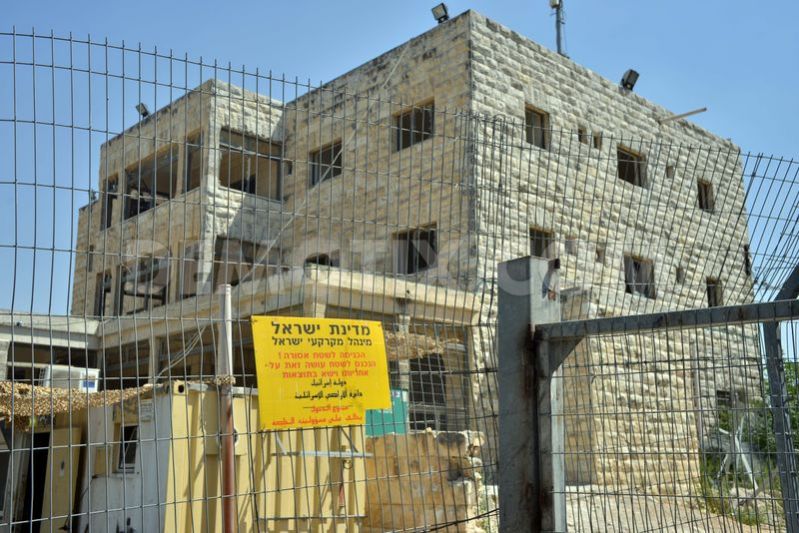
Hotel Cliff, occupied East Jerusalem. Confiscated from its Palestinian owners under the Absentees' Property Law, the State now recommends to return a small portion, i.e. the parts owned by Palestinian residents living in the West Bank. (Photo: Mahmoud Illean)
Israel is different from any ‘normal’ bourgeois democratic state in the West because it is a state based not on all of its inhabitants but on the Jewish part.  It is an ethno-nationalist state.  That is why the Jewish State Bill is so important to Netanyahu because he wants to make it explicit in the Israeli equivalent of a constitution, a Basic Law. 

When states recognise Israel as a Jewish state they are automatically recognising that it is an Apartheid state, a state not of all its citizens but its Jewish citizens.

Most states in the West like the UK have some form of equalities legislation.  Indeed equalities is written into European law.  But in Israel the whole state is based on ethnic discrimination.  Being Jewish is not a religious identification so much as a national/racial one.  In the Israeli ID card you can be Jewish on the basis of both nationality and religion.
Of course within the Jewish tribe there are numerous differences, not least because the definers of who is Jewish, the Chief Rabbinate, will not accept anyone who is converted by non-Orthodox rabbis.  So you can immigrate to Israel under one definition of being Jewish but once there you will not be recognised as Jewish by those who define personal matters, the Chief Rabbinate for purposes of birth, marriage and death.

There is therefore in Israel, just like in Nazi Germany, which was based on the Aryan race, a mixed race – Jewish bastards, mamzerim, half Jews or in Nazi Germany, Mishlinge.  Israel has come to resemble nothing so much as the State that was responsible for the decimation of some third of world Jewry. 

Despite claiming its legitimacy from the Holocaust Israel uncannily resembles Nazi Germany’s racial structures.  It was this observation by Hannah Arendt, in her seminal book Eichmann in Jerusalem – the Banality of Evil which led to her ostracisation and demonization by the Zionist movement.  She noted, amongst other things that the condemnation of the Nazis’ Nuremburg Laws during the Eichmann Trial, which prevented marriage between Jews and non-Jews was ironic in view of the fact that Jews and non-Jews couldn’t marry in Israel too.

Israel has to keep up pretensions which was why it passed a Law against racial discrimination when the Jewish Nazi Rabbi Meir Kahane was elected to the Knesset in 1984.  However the law had to exempt discrimination on the grounds of religion which meant that racism, in effect was legalised in Israel.  As a result Kahane voted for it!
The unrecognised villages of Israel are the living proof that Israel, even today, sees its Zionist role as the colonisation and settlement of the land with Jews and the uprooting and dispossession of Arabs.  In those Arab villages and towns which are recognised, planning laws prevent their development.  No extra land, because 93% of Israel is ‘Jewish’ land is allocated to the expansion of Arab lands.  Despite their population having increased over 10 fold since the Israeli State was founded, the land allocated to Israel’s 20% Arabs has not increased.  If anything it has been subject to further confiscation.  That was the purpose of the Absentee Property Law which was passed by the Israeli Labour Party government in 1950.

Despite the wilful refusal of western leaders to recognise it, Israel is the world’s last apartheid state.

Tony Greenstein 

Thousands of Arab Bedouins in Israel's Negev desert are denied power, water, sewage, and roads by the state. And their villages are under constant threat of demolition.

Photo: Aniqa Raihan
 December 25, 2017 Aniqa Raihan Foreign Policy in Focus

It’s no secret that there is an occupation happening in and around Israel.

Most people agree that the West Bank and Gaza Strip have been occupied since 1967. Much less thought and literature is dedicated to the treatment of Palestinians living inside modern-day Israel proper. I decided to head over there and see for myself.

It is commonly believed that Palestinian citizens of Israel — officially known as Arab Israelis — enjoy full equality in the Jewish State. There are Arab members of parliament, the Arab population in Israel has been growing steadily for decades, and the Arab cultural scene is thriving in places like Haifa. While all of these statements are true, Palestinians insist that occupation still exists inside the state of Israel, and nowhere is that fact more apparent than in the unrecognized Bedouin villages of the Negev desert.

Before the creation of modern Israel, the Negev desert, which constitutes the southern half of the country, was almost entirely populated by Arab Bedouins. Nearly 90 percent fled during the Nakba of 1948. 11,000 Bedouins remained, a population which has now grown to over 200,000.

Of the Bedouins still living in the Negev, half live in government-designated towns and cities, much like Native reservations in the United States, and the other half live in unrecognized villages. The Bedouin are Israeli citizens, but because their villages aren’t formally recognized by the state, they have no access to state services including water, electricity, telephones, sewage systems, and roads.
Today, the unrecognized villages of the Negev desert have the highest unemployment and poverty rates in Israel. I visited three villages to understand the effect of occupation.
Be’er Sheva, Israel (Photo: Aniqa Raihan)
Be’er Sheva is the largest city in the Negev desert. It is home to 205,000 people, about 10 percent of whom are Palestinian citizens of Israel.

Originally founded in 4,000 BCE, Be’er Sheva has been at times a Bedouin encampment, part of the Ottoman Empire, and now, the fourth most populous metropolitan center in Israel. It is a thriving college town, a growing tech hub, and interestingly, the chess capital of the world.

Less than 5 miles away are unrecognized villages where people live in tents and tin shacks.
Wadi an-Na’am, an unregistered Bedouin encampment outside Be’er Sheva, Israel (Photo: Aniqa Raihan)
The largest of the unrecognized villages is Wadi an-Na’am. It was established in the 1950s by internally displaced Bedouins from surrounding villages who’d been forcibly removed from their homes and lands, but it’s never been officially recognized.

In the 1970s, Israel built Neot Hovav, the country’s primary toxic waste disposal facility, in Wadi an-Na’am. Since its establishment, the facility has experienced frequent accidents, fires, explosions, and leaks, resulting in birth defects and long-term health problems in the Bedouin community.

The village is also surrounded by military firing zones, where the Israeli Defense Forces carry out military drills and trainings using live ammunition. Unexploded shells are often left behind from these exercises. The last accident killed two children aged 8 and 10.
A power plant outside Wadi an-Na’am, a Bedouin village that gets no electricity from the state. (Photo: Aniqa Raihan)
An electric power plant is clearly visible from the village.

This plant generates electricity for Be’er Sheva and surrounding localities, but not for Wadi an-Na’am or the 45 other unrecognized villages like it. People in the villages depend instead on an inconsistent combination of solar panels and generators. Adalah, a human rights and legal organization, currently has three open cases regarding elementary schools in Wadi an-Na’am that lack electricity.

Israel recently announced its intention to relocate the residents of Wadi an-Na’am to the nearby town of Segev Shalom. The villagers oppose this plan because it would destroy their agrarian lifestyle. In 2015 the Association for Civil Rights in Israel presented two alternative options, both of which would allow the villagers to maintain their way of life, but the relocation will move forward as originally proposed.
Umm al-Hiran, a Bedouin village on the verge of demolition by Israeli authorities. (Photo: Aniqa Raihan)
I also visited Umm al-Hiran,  an unrecognized village on the verge of demolition. Like Wadi an-Na’am, Umm al-Hiran was established in the 1950s by order of the Israeli military governor as part of a state-sanctioned effort to relocate and concentrate the Bedouin. Half of the village was briefly granted recognition in 2008, but the decision was reversed two years later.

The state has marked Umm al-Hiran as the site of a future Jewish development to be called Hiran, a project that necessitates the demolition of the entire village. Residents filed appeals and fought back in court, but in 2015, the Supreme Court of Israel rejected a petition to prevent demolition of the village. Construction was briefly halted following protests led by Adalah, but is expected to continue soon.
A memorial to a Bedouin man shot and killed by Israeli police as he fled home demolitions in Umm al-Hiran. (Photo: Aniqa Raihan)
At 3 a.m. on January 18 of this year, Israeli police arrived at Umm al-Hiran to conduct home demolitions. A local teacher named Yacoub Abu Al-Qia’an got in his car and began to drive away, but was shot at by the police.

One of the bullets hit his right knee, causing him to lose control of his vehicle and accelerate into a group of officers. One officer was killed, as was Yacoub. Israeli authorities initially declared him a terrorist connected to ISIS, but retracted when video evidence surfaced proving that he was shot before his car accelerated.

A memorial stands at the scene of the shooting.
A tribal cemetary is most of what remains of al-Araqib, a Bedouin village that Israeli authorities have demolished over 100 times. (Photo: Aniqa Raihan)
And finally, I visited the most notorious of the unrecognized villages, al-Araqib. This village, which was once home to 600 people, has been demolished 119 times. Now, only 5 tents and a tribal cemetery remain. There are more graves than villagers.

Amazingly, the demolitions aren’t even the worst past: Perhaps the most unsettling aspect of this years long tragedy is the government’s demand that the residents of al-Araqib pay for the cost of demolishing their homes.

I have been part of the movement for Palestinian justice for a year and a half now. I have spent hundreds of hours reading about the blockade of Gaza, the murders of Mahmoud Shaalan and Rachel Corrie, the intifadas, the checkpoints, the BDS movement, and more, but I was still shocked by what I saw in the Negev desert. The Bedouin are continually displaced and disenfranchised by the state — and too often, they are also erased from the mainstream Palestinian narrative.

This is occupation, pure and simple, and it is 70 years past time the world recognizes it.

Aniqa Raihan is a former Next Leader at the Institute for Policy Studies and a past member of Students for Justice in Palestine at George Washington University. She’s currently traveling in Israel-Palestine. 

26 December 2017

Why Israel is a Settler Colonial State - Colonisation did not stop in 1948


Despite its pretence that it is a Western democracy, Israel is the only active settler-colonial state in the world. It's not just that it has Administrative Detention (in Ireland this was known as Internment) i.e. indefinite imprisonment without trial, a permanent state of emergency, censorship and a system of segregated schools, employment and residential living areas, which replicate many of the features of Apartheid society.  

Zionism from its inception was clear that it didn’t want to share Palestine with its original inhabitants.  It intended eventually to transfer most if not all of them in order that it could form a Jewish majority state.  In the meantime it intended, behind the protection of British bayonets, to evict the Palestinians from the economy and create an apartheid Jewish economy.

Between 1904 and 1948 Zionist Organisations such as Keren Hayesod and the Jewish National Fund bought up land, primarily from absentee landlords and then evicted the peasants who had been working the land.  In this it was unique because it didn't reemploy that labour on the land as landless labour but sought to exclude it altogether.

The situation was best summed up in the 1930 Hope Simpson Report, which the British Government commissioned.  It describe the leases issued by the JNF:

" . . . . The lessee undertakes to execute all works connected with the cultivation of the holding only with Jewish labour. Failure to comply with this duty by the employment of non-Jewish labour shall render the lessee liable to the payment of a compensation of ten Palestinian pounds for each default. ... Where the lessee has contravened the provisions of this Article three times the Fund may apply the right of restitution of the holding, without paying any compensation whatever."

The lease also provides that the holding shall never be held by any but a Jew. If the holder, being a Jew, dies, leaving as his heir a non-Jew, the Fund shall obtain the right of restitution. .
Keren-Hayesod Agreements: Employment of labour.—In the agreement for the repayment of advances made by the Keren-Hayesod (Palestine Foundation Fund) to settlers in the colonies in the Maritime Plain the following provisions are included :—

" Article 7.—The settler hereby undertakes that he will during the continuance of any of the said advances, reside upon the said agricultural holding and do all his farm work by himself or with the aid of his family, and that, if and whenever he may be obliged to hire help, he will hire Jewish workmen only."...

In the similar agreement for the Emek colonies there is a provision as follows : —

" Article 11.—The settler undertakes to work the said holding personally, or with the aid of his family, and not to hire any outside labour except Jewish labourers."

Zionist policy in regard to Arabs in their colonies.—.... Attempts are constantly being made to establish the advantage which Jewish settlement has brought to the Arab. The most lofty sentiments are ventilated at public meetings and in Zionist propaganda. At the time of the Zionist Congress in 1921 a resolution was passed which “solemnly declared the desire of the Jewish people to live with the Arab people in relations of friendship and mutual respect, and, together with the Arab people, to develop the homeland common to both into a prosperous community which would ensure the growth of the peoples.” This resolution is frequently quoted in proof of the excellent sentiments which Zionism cherishes towards the people of Palestine. The provisions quoted above, which are included in legal documents binding on every settler in a Zionist colony, are not compatible with the sentiments publicly expressed.  (my emphasis)

... The effect of the Zionist colonisation policy on The Arab.— Actually the result of the purchase of land in Palestine by the Jewish National Fund has been that land has been extra-territorialised. It ceases to be land from which the Arab can gain any advantage either now or at any time in the future. Not only can he never hope to lease or to cultivate it, but, by the stringent provisions of the lease of the Jewish National Fund, he is deprived for ever from employment on that land. Nor can anyone help him by purchasing the land and restoring it to common use. The land is in mortmain and inalienable. It is for this reason that Arabs discount the professions of friendship and good will on the part of the Zionists in view of the policy which the Zionist Organisation deliberately adopted. 
Umm al-Hiran - a Bedouin village in the Negev demolished to make way for the Jewish town of Hiran
To this day the policy of all Israeli governments has been to deprive the Palestinians of any right to the land.  From 1948 onwards a series of land regulations and ordinances were passed, culminating in the 1950 Absentee Property Law which declared that Arabs who had stayed in Israel during the Nakba in 1948, even if they had taken shelter from the fighting a mile away from their home, were rendered landless.  The concept of a Present-Absentee was created.  You could be present and yet absent . 

A series of laws were passed from 1948 onwards with the sole intention of depriving of their right to land even the 15% of the Palestinians who weren’t expelled.  See Israeli land and property laws.  Some 93% of Israeli land is state land, managed either directly or indirectly by the Israeli Land Authority and JNF.  This is the basis of Israeli apartheid and the demolitions and dispossessions in the article below are a consequence of this policy, which is to reserve ‘national’ i.e. Jewish national land for Jews only.  Laws such as the Reception Committees Law allow hundreds of Jewish only communities to retain their Jewish only status (as well as to exclude Black Ethiopian Jews ).

It is this underlying Zionist policy which results in half Israel’s Arab villages being ‘unrecognised’ and the continual demolition of such villages such as Al Arakabh in order that Jewish settlements can be established in their place.  It is important to understand that this takes place in Israel proper not the Occupied Territories.

The reference below to 'Absentee Property' means land from which its original Arab inhabitants has been expelled.  In the Orwelllian terminology of the Zionists they are 'absentees', having gone missing

Tony Greenstein

Corruption does not begin with Netanyahu’s cigars or pink champagne. It begins with an ideological system that sees entire segments of the population as undesirable and unnecessary, and as temporary residents in their own homes.

A Bedouin woman after authorities demolished her village of Al Araqib, January 16, 2011 (Keren Manor/Activestills.org)
Last night, a striking episode in Amnon Levy’s documentary series, “The Real Faces,” aired on TV. The episode followed the residents of the Tel Kabir, Givat Amal, and HaArgazim neighborhoods, whom the government has designated as trespassers in their own homes. The government is now trying to evict them, to the benefit of real estate tycoons.

Yesterday, a court in Be’er Sheva convicted Sheikh Siakh A-Turi, 68, of trespassing, sentencing him to ten months in prison with a fine of 36,000 shekels. Sheikh Siakh, is a resident of the Bedouin village of Al-Araqib.
Caduri Halif stands among the rubble of his demolished house, Givat Amal neighborhood, Tel Aviv, September 18, 2014. A third eviction of families in the neighborhood left 20 residents homeless and without proper compensation or an alternative housing solution. (Activestills)
The residents of Givat Amal and Al-Araqib share the same tragic fate: they are among the most marginalized people in a country whose government has declared them trespassers on land on which they have lived for decades. In both instances, the government prevented them from formalizing their property ownership by a range of deceptive means. The government, in contrast, moved quickly to formalize and recognize the ownership of those citizens whom it actually values, in some cases spitting distance from where these “trespassers” live.

To truly believe these stories, you must hear them again and again. The Mizrahi residents of these Tel Aviv neighborhoods could not formalize their ownership of the land on which they have lived for 70 years because they “missed” a small announcement in the Davar newspaper in 1951, inviting “any person who de facto owns, without a deed, an apartment or business on absentee property” to submit a request to formalize their ownership. Like their Ashkenazi neighbors—Mapai supporters and employees of the Tel Aviv municipality and the Custodian for Absentee Property—they, too, settled on property that belonged to Palestinians before 1948.

However, unlike their Ashkenazi neighbors, the Mizrahi residents had no way of hearing about an announcement published once in the Mapai party newspaper, and which allowed for a short window of two weeks to formalize property ownership. Those who read the announcement got recognized as legal landowners. Those who didn’t, didn’t; they continued to live in their houses without knowing that eventually, when their land had become desirable real estate, they could be declared “trespassers” in their own homes.

At the same time as the Israeli government was defrauding the residents of Tel Aviv’s Mizrahi neighborhoods, it was expropriating vast tracts of land in the Negev—permitted under a 1953 law to allow the government to easily seize land to promote “development, settlement, and security.” Residents of Al-Araqib were expelled by the government from their land, despite the fact that the land has since gone untouched; the government expropriated the land seemingly for no reason.

When Al-Araqib residents attempted to appeal the expropriation in court, the government refused even to hold a hearing. As Michal Rotem writes, “according to the state and its representatives, not only do the native inhabitants of the Negev lack ownership of the land, they lack even have the right to pursue their claim in court.”

Over the years, the residents of Al-Araqib have attempted to maintain their connection to the land, working their crops, watching their flocks, and burying their dead there. While lone farms — for Jews only — continue to proliferate in the region, since 2010, the government has destroyed the village of Al-Araqib 120 times.
Police stand guard as bulldozers demolish Umm al Hiran
Sheikh Siakh, a man nearing his 70s, will be imprisoned because he dared to resist this injustice. Perhaps it should comfort him that he was not shot to death by police, like Yaqub Musa Abu Al-Qian, killed in Umm Al-Hiran — a man whose only crime was attempting to get away from his village before it was destroyed so that a Jews-only town, Hiran, could be built in its place.

For months, thousands of people have joined the weekly protests against government corruption in Petah Tikvah and now Tel Aviv. But government corruption does not begin with Netanyahu’s graft investigations, nor with his cigars and rosé champagne.

Government corruption begins with an ideological system that works to demographically design the country’s territory according to the criteria of ethnic and national origin. Government corruption begins with a way of seeing entire segments of the population as unnecessary and undesirable, as temporary residents in their own homes. Government corruption begins with the criminal violence of calling people trespassers in their own houses. If we want to fight this deep moral corruption, the place to look is not Rothschild Boulevard or the Attorney General’s house, but the line that that connects Givat Amal to Al-Araqib.


29 June 2015

Land – the Basis of Israeli Apartheid

In which other country would one group of citizens be prevented, through planning laws, from building houses, whilst the dominant group is allowed to build?  In Israel not only are half the Palestinian villages ‘unrecognised’ and liable to instant demolition, but even those which are recognised are not permitted to expand.

Apartheid?  Perish the thought.

Tony Greenstein

Israel’s Arab citizens fight for a roof over their heads


Jonathan Cook, 25 June 2015

Official ‘Judaisation’ policy blamed for severe housing crisis as anger mounts over family made homeless twice in two months

Middle East Eye – 24 June 2015

 The start of the Muslim holy fasting month of Ramadan has been bitter for Tareq Khatib.

The Israeli authorities razed his home for the second time in two months last week. Now under house arrest, he is confined to a friend’s home and separated from his wife and children.

His lawyer has warned that he should expect a bill from the state for hundreds of thousands of dollars to cover the costs of the demolitions and security operations.

Arab Israelis take part in a rally organized by the High Follow-Up Committee for Arab Citizens of Israel, in protest against the demolition of homes in Arab communities, at Rabin Square, Tel Aviv, April 28, 2015. (AFP/JACK GUEZ)
Fingering prayer beads, the 48-year-old father of five looked disconsolate, his hopelessness compounded by fatigue from the afternoon heat and a long day without food or water.

           A relative of Abdelrahman Shaludi, a Palestinian who killed two Israelis with his car last month, displays his portrait inside his family home after it was razed by Israeli authorities in east Jerusalem Silwan neighborhood on November 19, 2014, (Photo: AFP/Ahmad Gharabli)
“Where are my family and I supposed to live?” he asked. “It seems the government thinks the only place for us is out on the street, without a roof over our heads. It’s like they are waging a war against their own citizens.”

A relative surveys the ruins of Tareq Khatib’s home / Photos: Jonathan Cook
In the darkness before dawn on June 15, hundreds of Israeli police entered the Galilee town of Kafr Kana, close to Nazareth, to destroy Khatib’s almost-completed house.

It was carried out like a military operation, he told Middle East Eye. Police, some on horse-back, sealed off the roads to the area while others fired stun grenades and rubber bullets as dozens of neighbours and relatives tried to stop the demolition. Four people were arrested, including Khatib himself.
Residents of Kafr Kanna stand in the rubble of a demolished home (Photo: Hassan
Treated like an enemy
Khatib’s long and unsuccessful battle to build his family a home legally has come to symbolise a much larger struggle by Israel’s Palestinian minority against decades of land confiscations, severe planning restrictions and an ever-escalating housing crisis.

Israel’s 1.5 million Palestinians, a fifth of the population, have citizenship but their leaders say they are treated more like an enemy population.

A man walks amidst the rubble of a house belonging to an Arab-Israeli family .
The formation in May of an ultra-nationalist coalition under Benjamin Netanyahu has further raised fears that the destruction of Khatib’s home will herald a wave of house demolitions in the Galilee.
Interior ministry officials are evasive about figures for unauthorised building in Israel, but experts say the number of such homes is believed to have reached around 30,000 in Israel’s Palestinian communities.

“That means one in 10 Arab homes in Israel is treated as illegal by the government and faces the threat of demolition,” said Hana Swaid, who was until recently an Arab member of the Israeli parliament.

He heads the Arab Centre for Alternative Planning, an organisation promoting fairer land and housing allocations for the Palestinian minority.

According to Swaid, the housing problems faced by Khatib and thousands of other Palestinian families in Israel derive from an official Zionist policy of “Judaisation”.

“The goal since the state’s creation has been to Judaise territory. That doesn’t mean just building communities for Jews but tightly restricting where Arab citizens can live. They are trapped with no options for the future for themselves or their children.”

The result has been rampant overcrowding in Arab communities, with a chronic lack of open spaces, proper roads, and industrial and commercial centres offering employment opportunities.

100,000 homes needed
Khatib’s troubles gained public attention in April when he, his wife and three of his children were evicted. The house he had built two years earlier in his family’s olive grove, on the edge of Kafr Kana, was destroyed.

Some 26 other homes in the town are threatened with immediate demolition. Despite repeated appeals from the local municipality, planning officials have refused to expand the town’s residential area for more than 15 years.

Arfan Khatib, a local councillor, told the Haaretz daily that parts of Kafr Kana – the place where Jesus reputedly performed his first miracle, turning water into wine – now looked more like “refugee camps”.

Tareq Khatib said: 
“I have been trying for years to get a permit to build on my land without success. We couldn’t keep living in a small rented apartment for ever, so I decided it was time to build.”
A recent study, according to Haaretz, showed that approval of at least 100,000 additional homes was needed over the next decade to avert a deepening housing crisis among the Palestinian minority.
Based on the housing ministry’s current estimates, barely a fifth of the necessary building permits will be issued to Palestinian citizens. In recent years approval rates have actually fallen.
The demolition of Khatib’s house in April, along with five homes in three buildings in the village of Dahmash in central Israel, triggered a general strike by the country’s Palestinian minority and a protest by thousands in central Tel Aviv under the banner “Fighting for our homes”.

Ayman Odeh, leader of the Joint List, the main Arab party in the Israeli parliament, told the demonstrators: “A family which loses its home, built on its own private land, is shattered.”

Simultaneous efforts to hold an emergency debate in parliament on the minority’s housing problems were blocked by opposition from the Jewish parties.

The attorney general, Yehuda Weinstein, meanwhile, has warned that a failure to enforce demolitions would be “irreconcilable” with the rule of law.

House built in six days
Angered by the demolition in Kafr Kana, local residents rallied to Khatib’s side and rebuilt his house this month in just six days.

Their efforts now lie in ruins. A large mound of rubble and twisted steel wires marks the spot where his second house briefly stood.

A torn green canvas and crumpled metal frame close by are all that is left of a large tent the family had been living in while they finished the house. Friends were able to salvage only mattresses, blankets and chairs before the bulldozers set to work.

“They chose their moment carefully,” Khatib said. “That day we were due to get the house connected to water and move in. Now nothing’s left.”

Will he try to build his house a third time? He shrugged, the mammoth task one he is apparently not yet willing to contemplate. “The system is rigged against us,” he said.

The interior ministry, which oversees building permits, was unavailable for comment. Government officials, however, regularly claim that Palestinian citizens like Khatib are refusing to abide by planning rules and prefer to build illegally.

Jeff Halper, director of the Israeli Committee Against House Demolitions (ICAHD), said thousands of Palestinian families in Israel were trapped in what he termed the same “matrix of control” that operates in the occupied territories of East Jerusalem and the West Bank, where demolitions also regularly take place.

“People are surprised that Israel demolishes three times more homes inside Israel, against its Palestinian citizens, than it does in the occupied territories,” he told MEE. “The number of demolitions in Israel undermines the idea that the policy is simply a problem of the occupation.”

ICAHD, he said, had launched a new campaign called “Judaising Palestine” to emphasise that Israel’s goal was confinement and displacement of all Palestinians wherever they were living in historic Palestine.

Despite a slow-down in Jewish immigration in recent years, Judaisation is still being actively pursued.

In late 2013 the Jewish National Fund, an international Zionist charity with semi-governmental status, announced it would invest $1 billion over the next decade to encourage 250,000 Jews from the US and Europe to move to the Galilee and Negev.

Jewish-only communities
The land and housing problems faced by Israel’s Palestinian citizens, note experts, have a long history that started in the immediate wake of the 1948 war that established Israel as a Jewish state.

Israel confiscated most of its new Palestinian minority’s lands, as well as that of the hundreds of thousands of Palestinians freshly made refugees. It then nationalised 93 per cent of its total territory on behalf of worldwide Jewry.

Israel built hundreds of rural, land-hungry communities for Jews, including farming collectives like the kibbutz, that exclude Palestinian citizens through admission committees, said Swaid.
The Palestinian minority has been mostly confined to some 130 separate communities occupying just 2.5 per cent of Israel’s land.

“While over 1,000 new Jewish communities have been established [since Israel’s creation], not a single Arab settlement has been authorized,” notes the website of Adalah, a legal centre for Israel’s Palestinian minority.

The Or Commission, an Israeli judicial-led inquiry, concluded in 2003 that systematic discrimination in land and housing had been a major cause of unrest in the Galilee three years earlier. Israeli police shot dead 13 unarmed Palestinian citizens and wounded hundreds more during demonstrations in Israel at the start of the second intifada.

The commission observed that waves of massive land expropriations had been viewed by the Palestinian minority as a “dispossession enterprise”. Despite a sevenfold increase in the Palestinian minority’s numbers since the state’s founding, it added, zoning for residential areas had barely increased.

Destroyed 80 times
The picture in Israel’s south, in the semi-desert Negev, is particularly extreme, Maysanna Morany, a lawyer with Adalah, told MEE.

There, several dozen Bedouin villages have been unrecognised by the state and 10,000 homes are automatically under threat of demolition.

The small village of al-Araqib, near Beersheva, has become a test case for the government, with the authorities destroying the entire village more than 80 times over the past five years.
Last month the Israeli Supreme Court also approved the demolition of another Bedouin village, Umm al-Hiran, to make way for an exclusive Jewish town on its land.

But there are severe problems too in the 120 or so recognised Arab communities in the Galilee and Triangle areas in the north and centre of the country, where 20,000 homes are ruled illegal.

In most cases it is because they are built in communities either lacking a state-approved master plan or with a long out-dated master plan that fails to take account of the Palestinian minority’s growth, said Morany.

Umm al-Fahm, the second largest Palestinian town in Israel after Nazareth, with a population of 50,000, has no master plan, making all its homes illegal.

A change in approach has been blocked because planning committees, dominated by Jewish officials, have refused to abandon the state’s Judaisation policy, said Swaid.

Recent research based on interior ministry data showed that no Palestinian citizen held a professional position on any of Israel’s planning committees, which oversee and approve community master plans. Further, none of the 74 staff of the interior ministry’s Planning Authority was Arab.