The Legacy of Purim & the Book of Esther Preventing Genocide or Celebrating Genocide?

As Passover begins I thought it would
be worth looking back to a previous Jewish festival, Purim. Every picture tells
a story and none more so than these pictures of the joy of the settlers as
Purim, which was celebrated a month ago, is used as the occasion to glory in
the daily humiliation of the Palestinians and as an affirmation of their innate
supremacy.
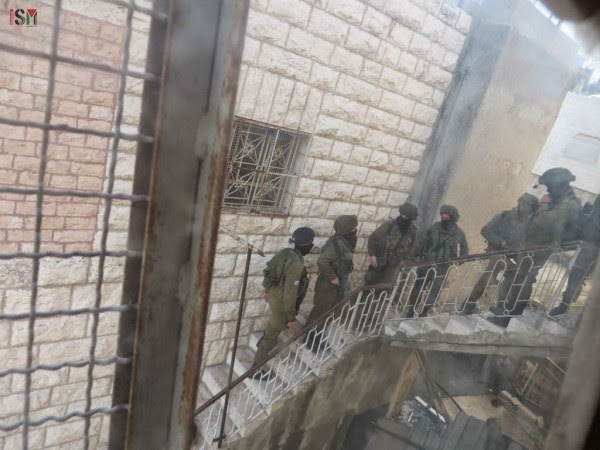
The settlers live literally on top of
the Palestinians and thrown their rubbish and detritus on top of them. Only netting prevents this rubbish landing on
the Palestinian homes. They can do this without a second though because the
Hebrew Bible tell them this is so, or at least so they claim.

When I was a boy Purim was a happy
and joyful occasion, when Queen Esther prevailed on her husband, the Persian King
Ahasuerus not to carry out the wishes of his evil Royal Vizier, Haman, which was
to destroy the Jews. Instead he is
hanged on the gallows that he had built for Mordechai, Esther’s uncle.
The Book of Esther is one of the five Megillot or scrolls and is
located in the Ketuvim, the third and final section of the Tanakh, the Hebrew
Bible. What we were not told was that Esther secured the agreement of the King
not only to kill Haman’s 10 sons but 500 other people in Shushan. Not satisfied
with this Esther asked the King to grant another day of killing. In all 75,000
were murdered.
 |
| Settlers Celebrate |
Happily this was just a fairy tale, a
myth, without any substantiation (apart from the name of the King who was
Xerxes). Even the Jewish Encyclopedia doubts its authenticity.
But to the settlers of Hebron Haman’s
followers are visible in the presence of the 200,000 Palestinians in the city.
The Jewish religion thus provides a seamless tapestry of support to the most
violent and atavistic of settlers.
There is a very good article on
Mondweiss We planned the Purim party, then my partner actually read the Book of
Esther about the background to the Book of Esther.
A subsequent article by Ahmad Al-Bazz and Anne Paq gives
us the background to these pictures in which settlers of Hebron, together with
the Israeli army, celebrate the fact that Palestinians are under their heel.
The Bible and Colonialism march hand in hand. Ahmad al-Bazz and Anne Paq write below
Photo Essay:
Israeli settlers celebrate Purim in Hebron
Today, around 300 Israeli settlers marched down Shuhada Street towards
the Ibrahimi mosque in the H2 area of Hebron to celebrate the Jewish holiday of
Purim, under the protection of Israeli soldiers and police. The starting point
of the parade had been announced as “Elor
Azaria” junction, a reference to the spot where Azaria, an Israeli soldier and
medic, had killed an incapacitated Palestinian in March 2016 and was
subsequently sentenced by an Israeli court. He was freed from prison only after
having served 9 months.
 |
Around 300 Israeli settlers march down Shuhada Street to the Ibrahimi mosque and the Cave of the Patriarchs to celebrate the Jewish holiday of Purim, March 21, 2019. (Photo: Activestills.org)
|
Purim is a Jewish holiday that commemorates the story in the book of
Esther where the Jewish people were saved from a plan to wipe them out during
the ancient Persian Empire. The holiday is often celebrated with festive
gatherings where people dress in costumes.
 |
An Israeli child dressed with a keffiyeh and fake suicide bomb belt participates in the settler Purim parade in the H2 area of the West Bank city of Hebron, March 21, 2019. (Photo: Activestills.org)
|
 |
A Israeli woman dressed as an “Arab” wearing a fake baby and a weapon marching in the settler Purim parade in the H2 area of the West Bank city of Hebron, March 21, 2019. (Photo: Activestills.org)
|
The march was accompanied by loud music and many participants dressed up
in costumes, some of them wearing keffiyehs and supposedly Arab clothes with
fake suicide bombs, while some Palestinian residents watched from behind their
fenced windows and were not allowed to pass. Some participants were also
dressed up as members as TIPH, the international human rights observers who
were recently expelled from the city by Israeli Prime Minister Netanyahu.
The departure of the international observers from Hebron was celebrated by the
Israeli settlers, who also routinely harass journalists and international
activists who document the human rights abuses that Palestinians face in the
area.
 |
Since 1997, Hebron has been divided into H2 and H1. The
H2 area in Hebron is under full Israeli control and is inhabited by
approximately 35,000 Palestinians and 500 Israeli settlers who are protected by
hundreds of Israeli soldiers. Palestinians in the area face daily harrassment
by the Israeli settlers and soldiers and impediments to their freedom of
movement. Shuhada street, once a bustling street in the city, has become a
ghost town, and hundreds of its Palestinians shops have been closed.
 |
| Israeli settlers dance on top of Palestinian homes during a Purim parade in the H2 area of the West Bank city of Hebron, March 21, 2019. (Photo: Activestills.org) |
The day before the march, it was reported that the Israeli forces raided the Haj Ziad Jaber School in Hebron and
took away a 10-year-old Palestinian boy. The march also took place as four Palestinians had been killed in
the West Bank by Israeli forces in the previous 24 hours.
 |
Two Israeli settlers harass a Palestinian man during a Purim parade in the H2 area of the West Bank city of Hebron, March 21, 2019. (Photo: Activestills.org)
|
The main checkpoints leading to
the area where the parade was taking place were closed to Palestinians during
the event.
During the Purim holiday, Israel has imposed a four-day closure on the
West Bank and the Gaza Strip, which will end on midnight on Saturday.
 |
| Israeli soldiers prevent Palestinians from accessing where the Purim Parade is taking place |
 |
| An Israeli child is dressed up as a cowboy (ActiveStills.org) |
We
planned the Purim party, then my partner actually read the Book of Esther…
This Sunday Jews all over the world will celebrate the holiday of Purim,
which commemorates the escape of a Jewish community in ancient Persia from a
genocide planned for them by an evil official named Haman – the story told in
the Old Testament’s Book of Esther.
The book has no particular religious content (it’s the only one in the
Old Testament that doesn’t even mention God), and apparently most Bible
scholars (even the Jewish
Encyclopedia) doubt its historicity – it’s generally
considered a “historical novella.” But on the surface it’s an uplifting
story, a seemingly innocent expression of ethnic pride and a celebration of
courage and resilience in the face of persecution. And the holiday itself, at
least as American Jews typically observe it, is a festive, even raucous
occasion, featuring foot-stamping, play-acting, noisemakers, and lots of
hamantaschen, a special-for-the-day kind of pastry filled with prunes or poppy
seeds.
That’s why, a couple of decades back, my partner Jean, who’s half Jewish
and half Irish Catholic by background and thoroughly pagan by inclination,
decided to add a Purim celebration to a St. Patrick’s Day-spring solstice party
she was planning for our then-young daughters; she figured it would be a fun
way to give them a taste of their Jewish heritage. Then she dug out a Bible and
actually read the Book of Esther….
For those who’ve never read the book
or don’t recall it, the heroine is a young woman who was raised by her cousin,
Mordecai, in the Persian city of Shusan, then the capital of a large
multiethnic empire, supposedly extending from India to Ethiopia. The king,
Ahasuerus, ditches his queen, Vashti, because she refuses his command to “show
the peoples and the officials her beauty” at a drunken banquet. (His aides
argue that he has to get rid of her or else “this deed of the queen will be
made known to all women, causing them to look with contempt on their husbands.”
Lest anyone miss the point, the king follows up with letters “to all the royal
provinces, to every province in its own script and to every people in its own
language, declaring that every man should be master in his own house.” In 1877
Harriet Beecher Stowe called Vashti’s disobedience the “first stand for woman’s
rights.”)
 | |
|
In search of a new queen, officials gather beautiful young virgins from
throughout the kingdom. Esther is among the chosen. On Mordecai’s advice, she
doesn’t disclose her ethnicity. After the women complete a year-long course of
cosmetic treatments under the supervision of a royal eunuch, Ahasuerus tries
them out, one by one, in bed, and ends up choosing Esther to be his queen.
Shortly after she was crowned, Ahasuerus appoints an official named Haman
his prime minister and orders that everyone bow down before him. Mordecai,
hanging around the gate of the palace, refuses to do so. Haman is infuriated,
and upon learning that Mordecai is a Jew (but apparently ignorant of his
connection to the new queen), he decides to retaliate by convincing the king
that his Jewish subjects are disloyal and all of them must be killed.
The king dutifully issues a decree to that effect, but before it is
carried out, Mordecai persuades Esther to approach the king – a dangerous move,
even for the queen – disclose her background, and plead for mercy for herself
and her community. Ahasuerus sides with his queen, orders Haman hanged, and
appoints Mordecai to replace him. The Jews are spared, and there’s great
rejoicing among them. Ever since, Jews have commemorated their deliverance and
celebrated the heroism of Esther and Mordecai.
That’s the Purim story as I learned it in my Conservative Sunday school
back in the 1950s (except that I don’t suppose anyone highlighted the
patriarchal message associated with Vashti’s fate). But when Jean read the
biblical text, we discovered that the story didn’t end just with rejoicing.
Although Esther had actually asked Ahasuerus simply to issue an order revoking
Haman’s genocidal decree, the king, according to the Bible, didn’t actually do
so. Instead, he told his queen and her uncle to “write as you please about the
Jews, in the name of the king.” The order they composed didn’t merely call off
the planned genocide – it turned the tables, authorizing the Jews “to destroy,
to kill, and to annihilate any armed force of any people or province that might
attack them” and to plunder their property, all on the very day Haman had
designated for the attack.
In the event, the Jews didn’t bother to loot anything, the Bible tells
us, but they killed Haman’s 10 sons and 500 other people in Shusan alone. At
the end of the day, when all this was reported to Ahasuerus, he asked Esther if
she had any further favors to request. In response, she asked not only to have
the corpses of Haman’s 10 sons hanged from the gallows, but also for the royal
go-ahead for another day of killing. The king granted her wish, the sons’ bodies
were strung up, and another 300 people were killed in Shusan. Around the
empire, the Jews did in a total of 75,000 of their “enemies”!
In short, the Jews faced real danger, but they managed to survive, and
then they lashed out in an orgy of vengeful violence at people they considered
enemies, even though, on the evidence, the victims had nothing to do with the
original threat. Sound familiar?
Among American Jews, at least among the liberal majority, the bloody
denouement of the Purim story is rarely mentioned, but I’m told it’s well known
in Israel. In any case, the story – along with other gruesome tales of
religiously sanctified tribal violence in Joshua and other books of the Bible –
has surely played some role, direct or indirect, in shaping Jewish culture and
psychology in both countries. In a book called Reckless Rites: Purim and
the Legacy of Jewish Violence, historian Elliott Horowitz uncovers a
long history, going back at least to the early Middle Ages, of Jewish attacks
on their gentile neighbors during Purim (as well as gentile violence against
Jews, especially, as is often the case, when Purim coincided with the Christian
Holy Week). In the West Bank, especially in Hebron, settlers regularly
celebrate the holiday with pogroms against the Palestinians. In 1994, it was on
Purim that Brooklyn-born Baruch Goldstein opened fire in the Ibrahimi Mosque in
Hebron, killing 29 Muslim worshipers and wounding 125.
And, of course, it’s not just Purim – Deir Yassin, Tantura, Qibya, Sabra
and Shatila, Operation Cast Lead, and so many more massacres took place on
different dates, but the same murderous mindset underlies them all.
Progressive Jews often claim that Zionism, or at least its cruder and
more violent expressions, contradict the real essence of Judaism, which they
believe lies in the prophets’ cries for justice or in the modern tradition of
social activism among some Jews. But Purim is a good occasion to remind
ourselves that there’s another, darker side – a history of tribalistic violence
– that’s at least as deeply rooted in our traditions.
As for that children’s party, Jean did bake hamantaschen, along with
Irish soda bread and half-moon cookies to represent the solstice. But we
decided to skip the retelling of the Purim story.