Showing posts with label Leonard Cohen. Show all posts

11 October 2021

In Memory of Mike Waterman, former Chair of Brighton & Hove Palestine Solidarity Campaign, who died of COVID earlier this year

From the Boycott of Sodastream to Aborigine Rights Mike drew the lessons from Jewish history that Zionism has effaced


Mike Waterman, known as ‘Mike the hat’ died earlier this year aged 67. I knew him for well over a decade in the Palestine solidarity and anti-war movements. From 2015-2017 he was Chair of the local Brighton & Hove Palestine Solidarity Campaign.

Mike played a crucial role in the campaign to close down the Sodastream shop in Brighton’s Western Road. This was the biggest single victory in Brighton of the Palestine solidarity movement and took over 2 years to achieve.

Mike was a dedicated Jewish anti-Zionist for whom the slogan ‘Never Again’ meant never again for all peoples, rather than the Zionist belief that it applies only to Jews.

Below there are a few appreciations from members and also his obituary in Socialist Worker.  Mike was a long-standing member of the Socialist Workers’ Party.

Tony Greenstein
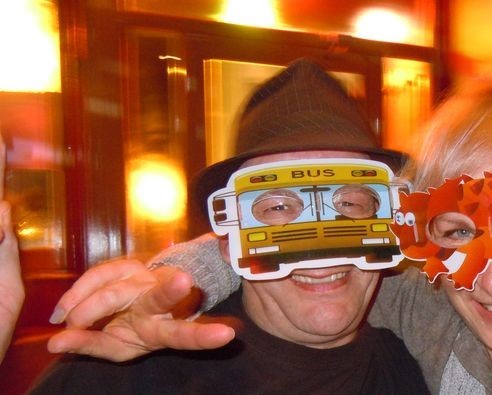
A Mensch

There's a Yiddish word that springs to mind when I reflect on my times with Mike Waterman - Mike was a mensch. A human being of noble character, a person of rare integrity.  Mike was an idealist who put his boot soles on the pavement, and achieved great victories in doing so, not least shutting down Sodastream in Hove. He also had a deep grain of humour, and immense patience with others who might just need more information to open their minds.  He loved science fiction, and came to the launch of my first SF novel at a book shop in Hove, joining in the fun but also - I recall with immense admiration - finding a way to discuss Israel-Palestine with another guest that made significant changes to their point-of-view.  I am terribly sorry to hear of his loss, which will reverberate widely, and send all my sympathies to his loved ones. 

Naomi Foyle 

Mike will always be remembered as a committed person to the cause of the oppressed and underprivileged, as much as he hardily campaigned and communicated to the public as much as he wanted to improve the understanding of the cause of injustice caused the oppression... For years I had known Mike his fearless campaign in the streets of Brighton, for public issues in the UK, workers right, NHS, anti-war, anti-imperialism and International he campaigned for the rights of Palestinians against the Israeli colonisation (as he used to call it) and other indigenous people around the world.... Enjoyed many drinks with him after a long campaigning day and he was a great person to befriend. Will greatly be missed...

Fatih

Remembering Mike W

Many’s the time Mike Waterman and I met up for a pint and a chinwag, and I look back with nostalgia.  The setting was usually the Beer Dispensary; I would get through two pints of pale ale and Mike would frugally have two halves of porter.  He was good company, and chatting with him was always an education; what he didn’t know about politics and history wasn’t worth knowing.  And Mike was such an optimist.  If you got to feeling defeated about what’s going on in the world, talk to Mike - he would lift the spirits.  He was never disheartened, not at all negative about things.

He was also resourceful, as I was to learn when he asked me to assist him in organizing BHPSC’s discussion group.   This regular meeting proved to be very successful and it rolled on for years.  Amazingly Mike never failed to come up with a subject to discuss, every month, always topical, interesting and informative.

His resourcefulness was once again demonstrated when he got his bus pass. To celebrate, he planned a trip from Brighton to Norwich - by bus - which involved multiple changes cross country!  It took the better part of a day, and the delight was that it was all free!

Mike finally moved to Norwich to be close to his sister and her family.  He was very happy there, particularly when he reached retirement.  But of course, activism being part of his DNA, he continued to organize meetings and motivate his Norfolk comrades. 

It was a great surprise to learn of his passing.  He left us too early!

Judy Granville
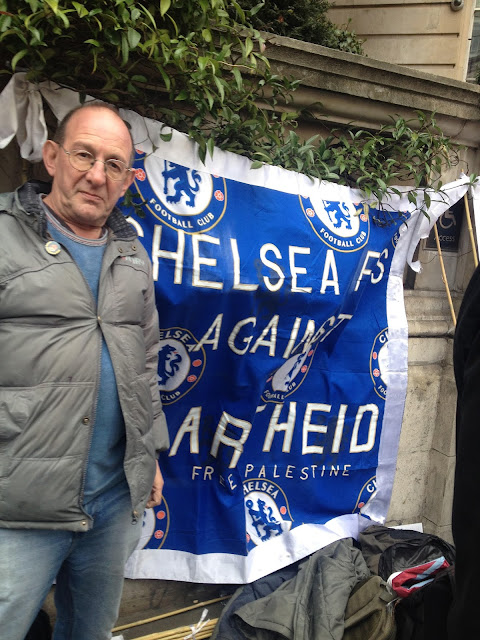
Mike Waterman 1953-2021

by Phil Mellows


Covid has taken the life of  Mike Waterman who died at his Norwich home last Friday after apparently staging a recovery from the virus.

The following evening, at a few hours’ notice, a Zoom event organised by Norwich Socialist Workers Party (SWP) attracted more than 40 people. It heard moving tributes to a comrade and friend who made a difference everywhere he went.

Mike joined the SWP in the early 1970s. As well as being a trade union activist in Wandsworth council in south London he developed a reputation as a resolute anti-racist and fighter for the Palestinian cause.

He was well-read, knew his history, and thanks to his instinct for getting stuck in gained enormous experience. This equipped him to handle every situation and argument with a quiet confidence.

He took that with him to Australia in the late 1980s where he became influential in turning the small International Socialist Organisation outwards. There he engaged in campaigns from the struggle for Aboriginal rights to the fight against the first Iraq war. He supported the 1998 dock workers' strike, all the time drawing the connections between apparently diverse issues.


Mike Waterman


Mike was also among the 200,000 protesters tear-gassed at the G8 summit in Genoa in 2001.

He returned to Britain where he tirelessly galvanised Brighton & Hove SWP for a decade.

Mike was central to launching Stand Up to Racism in the city. He also achieved perhaps his greatest triumph when the local branch of the Palestine Solidarity Campaign succeeded in closing the SodaStream shop. It was selling products manufactured in the occupied West Bank.

He had joined the picket there every Saturday for two years, consistently arguing that the campaign was broadened. Winning that argument proved key.

At the end of 2017 Mike moved to Norwich to be close to his sister and once again made an immediate impact. He became a vital force in local campaigns, Palestine inevitably to the fore.

For those who worked with him, he was a rock, the vital centre of every SWP branch he joined. He was a comrade adept at patiently explaining his differences with those who disagreed with us, while standing shoulder-to-shoulder with them in the struggle.

Immediately identifiable by the pork pie hat that seemed permanently attached to his head, he was an influential leader.

And his passions beyond politics were surprisingly diverse.

He loved to dance to ska and reggae and trance music. He was a fan of Leonard Cohen and Chelsea Football Club and liked strong, dark beers and a Sunday roast.

He was a demon on the poker table, and he turned to science fiction for a sense of how our world can be different.

Our condolences go to his sister Julie, his brother Leo, his niece Rachael and her children Eva and Jamie.

11 November 2016

The Death of a Legend - the Immortal Leonard Cohen

Hey, that’s no way to say goodbye!

It was with shock and sadness that I learnt late last night (or was it early morning?) of the death of one of my teenage musical heroes.  Whereas the death of David Bowie left me cold, Leonard Cohen’s departure feels as if a piece of my life has been taken from me.

Leonard Cohen was a terrible sexist and misogynist but he wrote songs, filled with a biblical symbolism, that few could.  He was the prophet of gloom and doom. But there is a beauty in sadness and no expressed this better than Leonard Cohen.

I particularly like Richard Silverstein’s appreciation below.

I disagree though with Richard about Cohen and Israel.  Unfortunately Leonard Cohen was a Zionist and during the 1973 ‘Yom Kippur’ war he flew to Israel to play for the troops and apparently met the then General Arik Sharon.  See Leonard Cohen positions on zionism/Israel.  Also my understanding of Lover, Lover, Lover from the New Skin album I would suggest that the lyrics in part are a reference to Israel.   Cohen is another example, along with Dylan, of the separation of artistic and musical genius, from the people who create that art and music.  Even the greatest artists have feet of clay.  Salvador Dalli, TS Elliot and Jack London were other examples.  People can create beautiful things on even the worst impulses!  But most of Leonard Cohen’s impulses and inspiration were derived from beauty.  His love songs are unsurpassed.   


The final stanza of Lover Lover Lover
And may the spirit of this song,
may it rise up pure and free.
May it be a shield for you,
a shield against the enemy.

My favourite album has to be the Songs of Leonard Cohen followed by Songs from a Room .  Songs of Leonard Cohen is simply an unsurpassed masterpiece with my all-time favourite So Long Marianne followed closely by Suzanne and Hey That’s No Way to Say Goodbye.  Bird on the Wire in the follow up album is a wonderful expression, a spiritual ballad, of the desire for freedom.


November 11, 2016 By Richard Silverstein

It’s been a horrible week.  No question about it.  Today brings word that Leonard Cohen has died at age 82.  Words cannot express the feelings of gratitude I have for his life and his achievement.  From his first album in 1967 he accompanied me through my youth and into later days.  All the way through.
Leonard Cohen in performance
Cohen could only have arisen in the heart of the 1960s.  He was an esoteric poet whose haunting, elliptical lyrics captured a young generation.  His voice was unlike any heard up to that day, except for perhaps Dylan’s.  It was dark and deep, warm yet chilling.  It was not sweet or charming or melodious, or any of the qualities associated with pop singers.

He was a bard, a Homer for our generation.  He took poetry and brought it to the people.  But it wasn’t a poetry packaged for popular consumption.  You listened to Cohen on his terms.  You entered his world.  And what a world it was!  Populated with fierce, ineffable beauty, with heroes who could also be villains.  He spoke of love, but never denied its opposite.  Who spoke of good, but acknowledged the human propensity toward evil.
Leonard Cohen was not a popularizer.  He didn’t pander to popular taste.  He didn’t get down on your level.  You came to him.  Sometimes his songs and concerts were like being a member  of a secret cult or society.  That could offer rich rewards if you were willing to spend the time to listen and absorb his allusive and ethereal poems.  But that was Cohen’s Achilles Heel as well.  You could not delve into Cohen like he was a pop musician.  You had to work for your pleasure.  And what pleasures there were.

While Cohen could be a demanding otherworldly aesthete, he never denied the harsh, gritty world around him.  Unlike Dylan, one could never call Cohen a writer with a political consciousness or a deep commitment to social justice.  But a song like Democracy is Coming to the USA should be a rallying cry for those already commencing to unseat Donald Trump in four years.

Another crucial element of Cohen’s oeuvre is his Jewish consciousness.  The songs are shot through with Jewish heart including references to Biblical stories and liturgical prayers.  Everyone knows songs like Hallelujah, which not only draws its name from the Book of Psalms, but includes references to David’s first glance at Bathsheba bathing on the roof, which leads him to send her husband, Uriah to the frontlines of battle where he is conveniently killed.  Whereupon David takes her as one of his wives.  This is a mortal sin which the Bible tells us prevented God from offering David the honor of building the First Temple in Jerusalem.  An honor bestowed on David’s son and successor, Solomon.

The song also weaves another Biblical story into the lyrics as David morphs into Samson in this stanza:

Well your faith was strong but you needed proof
You saw her bathing on the roof
Her beauty and the moonlight overthrew ya
She tied you to her kitchen chair
And she broke your throne and she cut your hair
And from your lips she drew the Hallelujah

It’s a bold poetic stroke to meld the stories.  Cohen likes the Samson story so much he appropriates it as if David and Samson are almost the same character.  They are two powerful men of overweening pride who were each brought low by their love for a woman.  In David’s case, his own lust brought about the death of another man.  In Samson’s case, despite his betrayal he was able to exact revenge on his tormentors.  Both men came to tragic ends due to their hubris.

This is a rendering of the song into Yiddish by a performer who offers a translation that is freely adapted from the original into a beautiful, fluid Yiddish.

There are a number of lesser known songs which are freighted with Jewish references.  They include Who by Fire, whose lyrics are a beautiful adaptation of the High Holiday prayer, U’netaneh Tokef.  Compare the original prayer with Cohen’s later adaptation to see what a graceful and elegant job he’s done of rendering it into the modern era:

And who by fire, who by water
Who in the sunshine, who in the night time
Who by high ordeal, who by common trial
Who in your merry merry month of May
Who by very slow decay
And who shall I say is calling?
And who in her lonely slip, who by barbiturate
Who in these realms of love, who by something blunt
And who by avalanche, who by powder
Who for his greed, who for his hunger
And who shall I say is calling?
And who by brave assent, who by accident
Who in solitude, who in this mirror
Who by his lady’s command, who by his own hand
Who in mortal chains, who in power
And who shall I say is calling?
This is the original prayer:
On Rosh Hashanah it is inscribed
And on Yom Kippur it is sealed
How many shall die and how many shall be born
Who shall live and who shall die
Who at the measure of days and who before
Who by fire and who by water
Who by the sword and who by wild beasts
Who by hunger and who by thirst
Who by earthquake and who by plague
Who by strangling and who by stoning
Who shall have rest and who shall go wandering
Who will be tranquil and who shall be harassed
Who shall be at ease and who shall be afflicted
Who shall become poor and who shall become rich
Who shall be brought low and who shall be raised high.

Another lesser known song is the Song for Isaac (an early 1966 performance), Cohen’s retelling of the story of the Akedah, the sacrifice of Issac.  The lyrics end with a dramatic and compelling attack on human warfare.  If only we’d learned the lesson he tried to teach back in 1968 when he wrote this:

And if you call me brother now,
forgive me if I inquire,
“Just according to whose plan?”
When it all comes down to dust
I will kill you if I must,
I will help you if I can.
When it all comes down to dust
I will help you if I must,
I will kill you if I can.
And mercy on our uniform,
man of peace or man of war,
the peacock spreads his fan.

If you are too young to know about Leonard Cohen, you have a great joy in store.  Go watch videos of him singing the songs and some of the great covers like Jeff Buckley’s soaring cover of Hallelujah. Then watch the Pentatonix’s equally entrancing cover of the same song.

Curiously, Israel never played any role in his music.  He never wrote a song, as far as I know, that referred to Israel.  That may reflect his sense of ambivalence about what Israel meant to the Jewish people and the Diaspora.  Cohen was clearly and decidedly a Diaspora Jew.  He was perhaps a spiritual Jew, but never a traditional one.

Many off us know that on his last world tour Cohen played Israel.  After controversy erupted, he tried to add a concert in Palestine in an awkward attempt to “balance” the Tel Aviv gig.  He believed that he could somehow forge a compromise if he played to both communities.  But it was a hopelessly out of touch response to a profoundly complex political conflict.  While his poetry could navigate such human complexities, his grasp of the politics of the conflict was not equally nuanced.

He was also a Buddhist.  I can remember as a UCLA graduate student conceiving of the idea of inviting Cohen to perform a concert for an all-day celebration of Jewish culture hosted by the campus Hillel.  When I finally reached his agent, he liked the idea but said Cohen couldn’t perform because he was spending a half-year at a monastery in Greece.

Cohen was a Jew who would cause consternation among today’s Zionists and communal leaders seeking monomaniacal clarity around questions of Jewish identity and definitions of who and what is a Jew.  Cohen’s identity was fluid.  He could be David one day and latter-day Sybarite another.

There are only a few singer-songwriters whose legacies will long outlive their lives.  Leonard Cohen is one of them.  We must cherish what he brought to us.  Keep alive his legacy.

Compare the gifts he offered with those of Donald Trump (he’s the other reason this has been an awful week).  The latter will be with us for four years before we consign him to the dustbin of history. He will mean nothing in the long run except as a punchline or an exemplar of the worst we have to offer ourselves and the world.

But Cohen will stand the test of time.  His words, his beliefs, his life will last.