Zionist Attempts to Ban Solidarity with the Palestinians & anti-Zionism as 'anti-Semitic' Rejected by Employment Tribunal

 |
| the hapless Ronny Fraser looks shell-shocked at the verdict |
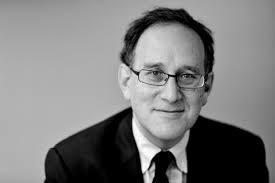 |
| Anthony Julius - smug but not so bright as he gives himself credit for. All legal bluster and threats turned to ashes |
 |
| Brian Klug - defence witness - Oxford don, co-founder of Independent Jewish Voices and expert on anti-Semitism |
 |
| Mike Cushman of LSE and Bricup |
 |
| Emeritus Professor Jonathan Rosenhead of the LSE & co-founder of Bricup |
 |
| Sally Hunt - soft-left leader of UCU who did her best to be helpful to the Zionists but received no appreciation |
 |
| Dr Sue Blackwell - Bricup, Birmingham University & ex-UCU Executive - stalwart fighter for the Palestinians |
It seems that Anthony Julius, judging by the 864 pages of his history of anti-Semitism in England, thought that he could overwhelm the Tribunal's powers of discernment through the sheer volume of paperwork. Normally bundles should be no more than 100 pages. Even complex commercial cases rarely achieve this amount of paperwork. Not only was the case preposterous, it was also highly artificial and synthetic. Even the Jewish Chronicle's Simon Rocker, no friend of the Palestinians, is forced to admit that 'Anti-Israel union case was ‘act of epic folly’
Not only did the Employment Tribunal conclude that this was an attempt to achieve political ends by legal means, but they also made it clear that they were ‘troubled by the implications of the claim. Underlying it we sense a worrying disregard for pluralism, tolerance and freedom of expression, principles which the courts and tribunals are, and must be, vigilant to protect (for a recent example, see Smiih-v- Trafford Housing Trust [2012] EWHC).'
One of the more interesting aspects to me is how Antony Julius, the lawyer who nearly bankrupted the Princess Diana Foundation, through absurd claims of copyright, whilst charging the charity multi-million pound fees, could seriously believe he had a case. Discrimination cases are notoriously difficult to win, even when there is tangible evidence of discrimination. You have to be pretty sure of your case.
 |
| Jeremy Newmark - the pushy CEO of Jewish Leadership Council who the Tribunal found was a liar |
 |
| Having tried to push his way into a meeting where he had no right to be, it was claimed that Newmark was 'Jew-baited' |
This was a case of tilting at windmills and testifies to the utter stupidity and narrow-mindedness of the ‘leaders’ of the Jewish community and the Jewish establishment in Britain. Jeremy Newmark, Chief Executive Officer of the Jewish Leadership Council (Jewish capitalists who refuse to accept even the rigged 'democracy' of the Board of Deputies of British Jews) and ex-Alliance for Workers Liberty member and arch-Zionist Jane Ashworth were called untruthful i.e. liars.
Discrimination is based on what are called ‘protected characteristics’ – for example disability, sexual orientation, sex, age, religion etc. The case was wobbly from the start. It was primarily based on resolutions at University &College Union AGMs. It is difficult to see how democratic debate at a union annual general meeting counts as harassment. But perhaps Zionists live in a different universe. They boast Israel is ‘the only democracy’ in the Middle East but when they lose a debate they cry ‘anti-Semitism’.
But for the purposes of the Race Relations Act 1975 (now Equalities Act 2010) Jews fall, as do Sikhs, under the rubric of ‘race’. A small obstacle had to be overcome – how is a boycott of Israeli universities an act of harassment against British Jews? The answer of course is that being Jewish is inextricably intertwined with supporting Israel – which proclaims itself as a Jewish State. In other words opposing Israel automatically means opposing Jews – ipso facto ‘anti-Semitism’ - anti-Zionism equals anti-Semitism, as most Zionists will admit when pressed (& some like Jonathan Hoffman don’t need prompting!).
 |
| The tribunal stated that 'Jewishness' is a protected characteristic - but this begs the question - what is Jewishness? |
 |
| What angered the Zionists most was the Tribunal's finding that Zionism is 'not intrinsically a part of Jewishness' |
 |
| The Tribunal put their finger on the hypocrisy of Zionists who talk about how they resent 'bad' and 'good' Jewish terminology when 'traitor' and not being mainstream are their main epithets! |
Interestingly, one of the never ending series of Zionist front organisations, the Academic Friends of Israel was also exposed as one man, his wife and a computer! (Para. 55)
 |
| Like most Zionist lobby organisations, Stand With Us etc., Academic Friends of Israel, is a one man and his wife band |
 |
| Accusing Newmark of doing what he did, i.e. trying to push his way in, was 'anti-Semitic' - Jewish 'pushiness' is apparently an anti-Semitic stereotype |
In Para. 131, the Tribunal took great exception to the usual Zionist device of presenting anyone who opposes them as an anti-Semite. A leading Zionist, Jeremy Newmark, tried to push his way into the UCU’s 2008 Conference and was told to stop pushing. This was an anti-Semitic remark because Jews are always described as ‘pushy’!!
‘There was a conflict of evidence concerning an event at the Respondents' Congress in 2008…. A closed debate was to be held, for which permits were required. Ms Jane Ashworth… managed (as she put it) to "sneak in" without the necessary permit. Mr Jeremy Newmark, now and perhaps then Chief Executive of the Jewish Leadership Council (also a witness before us), attempted to do likewise but was stopped by stewards. He then tried to push his way in, but was not allowed to do so. … We also reject as utterly unfounded the emotive allegation of Ms Ashworth that Mr Newmark was "Jew-baited". He was not baited at all. Neither Ms Ashworth nor Mr Newmark was a member of the Respondents.'
Unsurprisingly the tribunal went on to find [Para. 148] ‘that we have rejected as untrue the evidence of Ms Ashworth and Mr Newmark concerning the incident at the 2008 Congress …. Evidence given to us about booing. jeering and harassing of Jewish speakers at Congress debates was also false, as truthful witnesses on the Claimant's side accepted. One painfully ill-judged example of playing to the gallery was Mr Newmark's preposterous claim, in answer to the suggestion in cross- examination that he had attempted to push his way into the 2008 meeting, that a 'pushy Jew' stereotype was being applied to him.’
 |
| John Mann MP - another 'expert' on anti-Semitism who doesn't like answering questions not to his liking |
 |
| Dennis MacShane Crooked ex-MP - caught invoicing himself for extra expenses - 1 of Fraser's star witnesses of truth |
The finding of the tribunal concerning the respondent’s witnesses was entirely differerent [para. 149]:
‘the Respondents' witnesses were rather less colourful than the Claimant's. They were after all called for the mundane purpose of telling the Tribunal about facts rather than ventilating their opinions (although Mr Julius took the opportunity to explore their opinions nonetheless). In so far as they were tested on matters of fact, we found all of them careful and accurate witnesses.’
Despite my doubts as to whether ‘Jewishness’ counts as a protected characteristic, doubts which the tribunal seem to share, the section of the tribunal judgment that caused most grief to the Zionists was para. 150 where they found that
‘a belief in the Zionist project or an attachment to Israel or any similar sentiment cannot amount to a protected characteristic. It is not intrinsically a part of Jewishness and, even if it was, it could not be substituted for the pleaded characteristics, which are race and religion or belief.’

The dismissal of the harassment charges verged on the brutal. The tribunal found that:
‘152 It is implicit in the word 'unwanted' that a claimant complaining of harassment must have a sustainable ground for feeling aggrieved about the conduct on which the claim is rested. He has none.
153 … Was the conduct 'related to' the Claimant's protected characteristics of race or religion or belief? Plainly, the Respondents' conduct was not. Their constitutional behaviour was not connected in any way whatsoever with his Jewishness.
154 Did the Respondents' conduct have the effect of violating the Claimant's dignity or creating the necessary adverse environment for him? Self-evidently, it did not.'

In para. 155 the tribunal found that even if, legally, the actions of Congress or individual members of UCU, could be construed as harassment ‘we would not uphold it. Apart from anything else (in particular, the question whether debates and decisions about Israel, the academic boycott and so forth 'related to' the Claimant's race or religion or belief), the requisite effect would not be made out. We bear in mind the need to avoid trivialising the protection against harassment.’ In other words, the reasons for passing such a motion or debating the Boycott of Israeli universities had nothing to do with harassing Jewish people but with political positions on Israel.
In para. 156 the tribunal emphasises that point that even if Mr Fraser felt harassed as the result of the passing of a motion ‘we are quite clear that it would not be reasonable for it to have had such an effect…. When a rugby player takes the field he must accept his fair share of minor injuries (see Vowles, para 35, citing an earlier Court of Appeal authority). Similarly, a political activist accepts the risk of being offended or hurt on occasions by things said or done by his opponents… ‘
The activities of the Parliamentary Committee on Anti-Semitism have never been examined. Its membership is wholly Zionist and it takes assertion as fact when coming from Israel advocates. In para. 157 the tribunal have a few words of their own to say about the unfair way this Committee operates:


In para. 163 ‘Complaint (6) is obviously untenable. The fact that some Jewish members resigned from the union is part of the narrative in this case but it cannot amount to harassment of the Claimant by the Respondents. 'Unwanted' conduct (as we understand that term) is not identified.’
164 Complaint (7) fares no better. 'On our primary findings, nothing is established concerning dealings between the Respondents and the EHRC about which any remotely arguable complaint of harassment (or anything else) could be made. There was no 'unwanted' conduct. There was no adverse effect. In any event, such an effect could not be reasonable.
165 'There is nothing in complaint (8). Again, it falls on our primary findings. The Respondents' management of the meetings and debates was unobjectionable and no valid allegation of 'unwanted' conduct on their part (rather than by pro- Palestinian activists) can be founded on it.'166 'In respect of complaint (9) the Claimant again fails to make out any arguable complaint of 'unwanted' conduct against the Respondents. There was a debate, constitutionally managed by them, which culminated in the vote to reject the EUMC Working Definition. It was open to Congress to consider that motion. Its legality was not in question. The vote was valid and the outcome was the product of the union's democratic processes…. Nor was the Respondents' conduct 'related to' the Claimant's protected characteristics. Nor did their conduct produce the prescribed effect upon him. Nor would it have been reasonable for it to do so.’

167 'Complaint (10) is obviously hopeless.'
The tribunal then makes clear its own anger that such a hopeless case should have taken up 25 days of tribunal time in order to pursue a political campaign by other means.

This is repeated at para. 180:

'The Employment Tribunals are a hard-pressed public service and it is not right that their limited resources should be squandered as they have been in this case. Nor… should the Respondents have been put to the trouble and expense of defending proceedings of this order or anything like it.’
Which strongly suggests that the Claimant, the Israeli government and his other sponsors face a hefty claim for costs. Activists should ensure that the UCU Executive try to reclaim the costs of this unnecessary action.
Perhaps the icing on the cake is the tribunal’s observations that the Zionists operate in a fundamentally undemocratic manner:
179 'We are also troubled by the implications of the claim. Underlying it we sense a worrying disregard for pluralism, tolerance and freedom of expression, principles which the courts and tribunals are, and must be, vigilant to protect..’
180 'What makes this litigation doubly regrettable is its gargantuan scale…. The Employment Tribunals are a hard-pressed public service and it is not right that their limited resources should be squandered as they have been in this case. Nor, if (contrary to our view) it was proper to face them with any claim at all, should the Respondents have been put to the trouble and expense of defending proceedings of this order or anything like it.’
The employment tribunal noted that 50 Jewish academics had signed a letter rejecting the suggestion that UCU was an anti-Semitic organisation. Like it or not, the Zionist claim that to be Jewish is to be Zionist is no longer acceptable to rationale thinking people. It is confined to the Melanie Phillips and David Aaronovitches of this world. It is a classic anti-Semitic trope in fact.
But what has also been missed, by pro-Palestinian supporters and anti-Zionists, is that ‘lawfare’ the resort to law to resolve political disputes, is a sign of the weakness of the Zionists. This is shown by similar failed attempts in the USA. Courts may consist primarily of conservative minded judicial appointees, especially the higher courts, establishment to their roots, but they nonetheless have an attachment to logic and precedent. The idea of taking a political debate into a courtroom has always been frowned on, as Gray J made clear in the libel action launched by David Irving against Penguin Books. The idea that one can short-cut a democratic majority at a conference with the decision of a judge is, itself, fundamentally undemocratic. But given that supporters of Israel and Zionists have lost the battle of public opinion and because Israel relies on elite opinion and military power, there is no other option.
Zionism and Zionist activists are firmly opposed to free speech. The Union of Jewish Students, which regularly (& unsuccessfully) tried to ban me speaking on campuses always, without exception, refused the option they were offered to debate me. Why? Because they know that when they debate with their opponents they invariably lose. Zionists aren’t very good at getting across to people their convoluted distortions of history and their misuse of the holocaust.
Below are a number of articles and comments on what happened.
BM BRICUP, London WC1N3XX
bricup@bricup.org.uk
www.bricup.org.uk
PRESS RELEASE 26th March 2013 - FOR IMMEDIATE RELEASE
UNION DEFEATS LEGAL CHALLENGE ALLEGING ANTISEMITISM: RIGHT TO ADVOCATE BOYCOTT OF ISRAEL UPHELD
* Judgment says that complainant was trying to use the law for political purposes* Employment Tribunal result hailed as important victory by pro-Palestinian groups
BRICUP today welcomed the outcome of the Employment Tribunal (ET) case brought by
Ronnie Fraser against his union, the University and College Union (UCU). The former college teacher’s claim of institutional antisemitism on the part of the union was thrown out comprehensively.
"Fraser vs. UCU" was viewed by activists as a test case for all UK unions’ right to advocate boycott of Israeli universities and products, and firms that operate in the Occupied Palestinian Territory. It also has important implications for free speech on Palestine and Israel on university campuses. In the two-week hearing at Kingsway ET last November, Fraser had alleged that he was treated unfairly and with hostility during union debates about academic boycott, and about the decision not to use a contentious ‘working definition of antisemitism’ that conflated antisemitism with criticism of Israel.
Fraser’s case was argued by Anthony Julius, the lawyer who handled Princess Diana’s divorce, and author of a recent book on antisemitism. His numerous witnesses included the disgraced former MP Denis MacShane. Summing up for Fraser, Mr. Julius argued that the ‘attachment to Israel’ of many Jews in the UK constitutes a ‘protected characteristic’ under the Equality Act 2010. If the Tribunal had agreed with him, open discussion of Israeli policies – whether in the unions or in the media - would have become almost impossible.
Fraser agreed that he had been able to speak in UCU’s boycott debates but claimed that his speeches at UCU's Annual Congress were not applauded because of antisemitism on the part of fellow delegates. But UCU's Counsel, Antony White QC, showed that other Jewish speakers, both for and against the boycott motions, had been applauded.
All ten of Fraser’s claims were thrown out by the ET. The judgment says “we greatly regret that the case was ever brought. At heart it represents an impermissible attempt to achieve a political end by litigious means”.
The tribunal received a letter signed by 58 Jewish members of UCU who said that they held differing views about academic boycott, but all agreed that their union was not antisemitic. Fraser is the founder and director of the pressure group Academic Friends of Israel and a member of the Board of Deputies (BoD) of British Jews. The hearing revealed the extent to which pro-Israel lobby groups had attempted to interfere with UCU's policies and decision- making. In his evidence Fraser admitted that "the Friends of the various Israeli University groups" had donated £70,000 to the Fair Play Campaign Group, set up by the BoD and the Jewish Leadership Council to coordinate activity against boycotts of Israel. Fraser further alleged that the Fair Play Campaign Group in turn had given £50,000 to Engage, an organisation campaigning against academic boycott. Fraser and his witnesses admitted under cross-examination that in 2007 he withdrew a Congress motion on antisemitism after pressure from the BoD, the Jewish Leadership Council and Engage.
Tom Hickey, a senior member of UCU’s National Executive Committee, said: “This is a landmark judgment. The accusation of antisemitism against UCU because it supports a boycott of Israel is absurd. Its record in fighting racism, including antisemitism, is second to none in the trade union movement. Had this vacuous charge been upheld, unions and universities would have been silenced on the key moral issue of the century”.
According to Professor Jonathan Rosenhead of the British Committee for the Universities of Palestine (BRICUP) “The Fraser case against UCU has now been shown up clearly for what it was, an attempt to shut down legitimate debate about Israel. The Israelis have a word for it –‘lawfare’. It isn’t working.” [ ends ]
Notes
1. UCU, the University and College Union, represents approximately 120,000 academic and academic-related staff in Further and Higher Education in the UK. UCU was formed in June 2006 by the amalgamation of the Association of University Teachers (AUT) and the National Association of Teachers in Further and Higher Education (NATFHE).
Please note that while the people quoted above are members of UCU, they do not claim to speak for UCU, only for BRICUP. UCU's own press release can be found at: http://www.ucu.org.uk/6562
2. "Fraser further alleged that the Fair Play Campaign Group in turn had given £50,000 to Engage" - it should be noted that some of Fraser's witnesses contradicted him on this point.
3. For further information contact:
Tom Hickey:
Prof. Jonathan Rosenhead:
Mike Cushman:
Sue Blackwell:
FRASER vs. UCU: BACKGROUND BRIEFING NOTES
This note describes first, the relevant discussion of Israel and Palestine within UCU; second, the history of legal advice and interventions; and finally Mr Fraser’s known involvement.1. Relevant motions passed by UCU Congresses
The Fraser case against UCU has arisen from the policy discussions and decisions within UCU about Israel and Palestine, especially those concerned with an academic boycott of Israeli universities, which has been endorsed by organisations representing the bulk of Palestinian civil society
It has never been proposed that the union should instruct its members to implement such a boycott. However, a range of motions short of this have been proposed, and passed, at successive UCU annual Congresses from 2007 onwards. Mr Fraser’s case against the union cited his experience of these debates at Congress.
The key debates and motions passed have been as follows:
2007 – Congress agreed to circulate the Palestinian (PACBI) call for boycott to branches; encourage members to consider the moral implications of links with Israeli universities; and organise a tour of UK universities by Palestinian academic trade unionists.
2008 – affirmed that criticism of Israeli policy is not per se antisemitic; agreed to promote wide discussion among members about the appropriateness of continuing links with Israeli academic institutions.
2009 – [following the Israeli Cast Lead invasion of Gaza] called for a number of changes in UK government policy on Israel/Palestine; urged branches to discuss the Palestinian call for a boycott, divestment and sanctions (BDS) campaign; and resolved to hold an international, inter-union conference to investigate the lawful implementation of a BDS campaign including the option of institutional academic boycott.
On advice from legal counsel that it would be outside the powers of the union to make a call to boycott Israeli academic institutions this motion, though passed by Congress, was ruled null and void by the UCU President.
2010 – resolved to start the process of imposing a boycott on Ariel College (in a West Bank settlement)
2011 – agreed to circulate the PACBI call for academic and cultural boycott of Israel to members; resolved not to use the ‘EUMC working definition of anti-semitism’ in internal UCU procedures.
2. History of legal threats and moves against UCU and its predecessors
May 2005 - AUT (one of UCU’s predecessor organisations) received a letter from Anthony Julius of solicitors Mishcon de Reya, acting for 6 AUT members. It argued that boycott resolutions passed at AUT Council 2005 were ultra vires , i.e. falling outside the union’s objects as defined in its rules of association.
2007 – UCU, and the Trustees of UCU, sought legal advice respectively from (Lord) Anthony Lester and Anthony White QC on the implications of the resolution passed in 2007. Their views were (respectively) that the union could lay itself open to charges of unlawful interference in contractual relations between union members and Israeli or other institutions; and that UCU would be acting outside its objects if it even allowed votes on the boycott to be held at branch meetings.
2007 Anthony Julius of solicitors Mishcon de Reya wrote to UCU on behalf of 4 un-named UCU members threatening legal action over the main resolution passed at the previous Congress
May 2008 – the Stop the Boycott organisation commissioned an opinion from Michael Belloff QC and Pushpinder Saini QC on that year’s impending boycott resolution. They argued i) that the terms of the motion were outside the union’s rules; ii) that UCU could incur liability for inducing acts of discrimination on grounds of racial origin contrary to the Race Relations Act; and iii) that discussion of such resolutions could descend into an attack on Jews generally, thereby creating a hostile atmosphere for Jewish members which would be contrary to the discrimination provisions of the
Race Relations Act.
2008 – UCU Congress agreed a rule change, drafted on the advice of the union’s standing counsel and proposed by the union’s National Executive Committee, to extend the union’s objects as defined in its rules of association.
2008 – UCU was for several months under threat of legal action by 12 anonymous members unless it repudiated the previous year’s motion. UCU met counsel for the litigants but declined to do so.
2012 – Julius threatened action on behalf of Fraser which eventually led to the tribunal hearing.
3. The Fraser case
Ronnie Fraser is a UCU member and chief organiser of, in effect, a 1person organisation called Academic Friends of Israel which received funding from non-UCU sources. He and it made appearances at UCU congresses. In 2007 Ronnie Fraser’s UCU branch proposed a motion to Congress to incorporate the 'EUMC working definition of Antisemitism' into the union’s working practices. In the Employment Tribunal proceedings it was revealed that this was intended to make implementing a boycott through UCU impossible. He withdrew the motion on the advice of the Board of Deputies and the Jewish Leadership Council, who disagreed with his strategy.
In 2010 Ronnie Fraser made a complaint to UCU of alleged antisemitism in e-mail posts made to the union’s Activists List by a UCU member. He based this complaint entirely on statements in the posts which he said violated the ‘EUMC definition of Antisemitism’. The complaint was investigated, the member appeared before an internal tribunal, and all the charges were rejected.
In 2011 Congress decided (see above) not to use the EUMC Working Definition within UCU. The argument was not that antisemitism was to be ignored (indeed as a form of racism any instances should be severely dealt with by the union) but that the EUMC definition conflates anti-semitism with criticism of Israel.
In 2012 Ronnie Fraser commenced proceedings against UCU through Anthony Julius of Mishcon De Reya, alleging institutional antisemitism within UCU – in the conduct of debates, and specifically against himself.
UCU activist writes: It's about the Palestinians stupid
Mike Cushman Crosspost from JewsansfrontieresTo no one’s surprise a Zionist claque has swiftly assembled to denounce the findings of the Fraser vs UCU Employment Tribunal. It would appear that according to these voices the only business a the next meeting of UCU’s national executive will not be fighting the massive cuts in UK higher and further education but debating when and in what format to reissue The Protocols of the Elders of Zion.
Hysterical rubbish, of course but we have to explore why the reaction is so unbalanced. Fraser and his legal advisors chose the legal terrain and the scope of their action, not UCU. They chose their schedule of witnesses who declaimed and dissembled but failed to address the matters that Fraser wished the tribunal to consider.
Anthony White, counsel for UCU, demolished their testimony but was only able to do so with such effectiveness because they were such poor witnesses. Ever since the tribunal, Fraser’s self-proclaimed friends have been picking over 50 pages of closely argued legal findings trying to claim they are simultaneously technically narrow and the most wide-ranging antisemitic text of recent years.
Hirsh and Susskind et al fail to grasp at least two very basic points. They solipsistically believe it is all about the Jews; they cannot understand or believe that it is about the Palestinians.
For the vast majority of those active in support of Palestinian rights it was the oppression of Palestinians that led them to activity. They only started to consider Zionism as an ideology when they started to enquire why Israel was behaving so badly and so criminally. At that point they encountered the Zionist justification for occupation and oppression and took a stance of either deploring the degradation of a potentially positive movement or took a more radical stance of identifying Zionist ideology, in itself, at the heart of the problem.
The absence of the Palestinians even as objects, let alone actors, in the Zionist exclusionary Jewish narrative tells us all we need to know about why being anti-Zionist is radically different from being an anti-Semite. Anti-Zionism is a stance against a pernicious anti-Palestinian racism. Zionism is an ideology that allows Israel to behave as it does while simultaneously believing that Israel conforms to the norms of liberal, law-based democracy.
Secondly, they continually ask, ‘why only boycott Israel?’ The Palestinian call for BDS is the only extant call for boycott by a significant national liberation movement. Other movements and peoples call for different forms of support each of which must be considered on its merits.
Israel’s crimes are not to measured on a Richter scale of oppression against those of China or Burma or Zimbabwe and only be the subject of campaigns when they reach the hotly contested pinnacle at the top of the Premiership of abuse. That the crimes are profound and continuing is a sufficient justification.
Other regimes are the subject of regular denunciation and sanction by western governments, Israel is singled out not by our opposition but by the condoning of its actions by the USA; its massive military and civil aid; and its systematic cover at the Security Council. Similarly the EU treats Israel, in defiance of geography, as a surrogate, if displaced, part of Europe and grants the privileges of association without requiring the fulfilment of Council of Europe human rights standards.
None of this is deny the possibility, and occasional reality, of support for Palestinian rights being motivated by malice towards Jews. We have a duty to criticise and condemn such behaviour when we see it and the Palestinian rights movement is, in general, self-aware and self critical on this. Fraser and his team were unable to discover any such motivation behind the actions of UCU officers and activists and are now reduced to asserting that its absence can only be the result of a wider collaboration to conceal it. Such concealment is beyond the limited ability of UCU, PSC, BRICUP, the Employment Tribunal Service or other presumed conspirators. Its absence is just that, an absence.
Mike Cushman is a member of BRICUP and is a UCU branch secretary and a regular speaker in favour of Palestinian rights at successive UCU congresses. His interventions were regularly referred to by Fraser and his witnesses.
Follow BRICUP on twitter
Keep up to date with the academic boycott at
Times Higher Education 27 MARCH 2013, JACK GROVE
A Jewish academic who claimed the University and College Union’s policy on Palestine constituted harassment has been rebuked by an employment tribunal for misusing the legal process.
Ronnie Fraser, a further education lecturer and founding director of Academic Friends of Israel, argued that the UCU was institutionally anti-Semitic owing to motions passed in favour of a boycott of Israel.
Despite enlisting the services of Anthony Julius, best known as Diana, Princess of Wales’ divorce lawyer and a partner at Mishcon de Reya, all of his 10 claims of harassment have been “dismissed in their totality”.
During the 20-day hearing in December, Mr Fraser called several witnesses to give evidence, including Howard Jacobson, the Booker Prize winning novelist, John Mann MP, the former MP Denis MacShane and numerous leading Jewish academics.
However, in its judgment, which was published on 25 March, Mr Fraser’s claim is strongly criticised by the tribunal members.
The action is branded by tribunal panel members as “an impermissible attempt to achieve a political end by litigious means” and a case which showed a “worrying disregard for pluralism, tolerance and freedom of expression”.
Mr Fraser, the child of refugees who fled Nazi Germany, is viewed as a “sincere witness”, but the tribunal notes his “political experience” and are not impressed by his claim that the tone of several debates at the UCU’s annual congress “violated his dignity”, thereby constituting harassment.
“No doubt some of the things said in the course of debates were upsetting, but to say they violated his dignity…is to overstate his case hugely,” the judgment says.
“The claimant [Mr Fraser] is a campaigner,” it adds.
“He chooses to engage in the politics of the union in support of Israel and in opposition to activists to the Palestinian cause.
“When a rugby player takes the field he must accept his fair share of minor injuries. Similarly, a political activist accepts the risk of being offended or hurt on occasions by things said or done by his opponents (who themselves take on a corresponding risk).”
Scorn is also invoked for Mr Julius’s decision to pursue certain points, with complaints variously dismissed as “palpably groundless”, “obviously hopeless” and “devoid of any merit”.
The “sorry saga” had also acquired a “gargantuan scale” that required a 20-day hearing and a 23 volumes of evidence which was “manifestly excessive and disproportionate”, the tribunal adds.
“Our analysis to date has despatched almost the entire case as manifestly unmeritorious,” it concludes.
Several complaints were also made with reference to the wrong act of Parliament, while some were also “out of time” as the incident has occurred too long ago to bring to the tribunal.
The judgment also says public resources had been “squandered” conducting such a long case, while “nor should the [UCU] have been put to the trouble and expense of defending proceedings of this order”.
Sally Hunt, UCU general secretary, said: “This has been an extremely difficult period for the UCU staff and members involved in defending the union’s position and I am especially pleased therefore that the tribunal found our witnesses to be careful and accurate.
“The claimant, while unsuccessful, of course had the right to challenge the union in the courts and will be treated with respect within the union as will his views on this question.
“Now that a decision has been made I hope in turn that he, and others who share his views, will play an active part in the union and its debates rather than seek recourse to the law.”
jack.grove@tsleducation.com
Even the rabidly Zionist Jewish Chronicle sees it as 'a blistering rejection'
Pro-Israel activist's case against UCU fails
By Jenni Frazer, March 28, 2013A blistering rejection of pro-Israel activist Ronnie Fraser's case against the academic union, UCU, was published on Seder night by a London employment tribunal.
In a 49-page ruling, the Employment Judge, AM Snelson, sitting with Mr A Grant and Lady Sedley, rejected Mr Fraser's claims of unlawful harassment by the UCU, and dismissed the entire proceedings.
The reserved judgment was issued in respect of nearly three weeks of hearings which took place in October and November last year. In a stern rebuke in the conclusion of the judgment, Judge Snelson wrote: "Lessons should be learned from this sorry saga. We greatly regret that the case was ever brought. At heart, it represents an impermissible attempt to achieve a political end by litigious means...What makes this litigation doubly regrettable is its gargantuan scale."
The judge rebuked the litigants, saying "the Employment Tribunals are a hard-pressed public service and it is not right that their limited resources should be squandered as they have been."
Although the tribunal said that Mr Fraser had impressed them "as a sincere witness" with "nothing synthetic about his displays of emotion", there were harsh words for several others who gave evidence during the hearing, particularly the chief executive of the Jewish Leadership Council, Jeremy Newmark, whose testimony was rejected as untrue.
Two MPs - one has since resigned from Parliament - were also criticised for giving "glib evidence, appearing supremely confident of the rightness of their positions... Both parliamentarians clearly enjoyed making speeches. Neither seemed at ease with the idea of being required to answer a question not to his liking."
Mr Fraser said that he was "naturally disappointed" at the decision but added that he was "grateful that the hearing provided us with the opportunity to raise and discuss in great detail the issues of discrimination and antisemitism which are so important to Anglo-Jewry."
He expressed particular concern over a statement in the judgment that "a belief in the Zionist project or an attachment to Israel" was "not intrinsically a part of Jewishness".
Mr Fraser commented: "For the court to say that as Jews we do not have an attachment to Israel is disappointing considering we have been yearning for Israel for 2000 years and it has been in our prayers all that time."
He said; "As a member of the Board of Deputies, I intend to campaign for us as a community to accept a definition of Jewishness which includes a connection with Israel and the adoption of a definition of anti-semitism."
UCU CLEARED OF ANTISEMITISM; ANTHONY JULIUS CHARGED WITH ‘BEING RUBBISH’
By Jamie, 26 March 2013
A lengthy legal battle between the University and College Union (UCU) and Ronnie Fraser, a college lecturer and 50 percent of pro-Israel pressure couple Academic Friends of Israel, has ended with a complete victory for UCU. Fraser, represented by lawyer and prominent Engage-nik Anthony Julius, had accused the union of antisemitic harassment, connected with its record of pro-Palestinian activism and advocacy. An employment tribunal dismissed the claim.
The tribunal's judgement is detailed, considered, and hilarious. The highlights:
Anthony Julius is rubbish
• I do not think that law means what you think it means: '[Anthony Julius] referred in support of his argument to a concept unfamiliar to us and not, so far as we are aware, known to our law' (p. 7)
• 'It seems to us that a belief in the Zionist project or an attachment to Israel or any similar sentiment cannot amount to a protected characteristic. It is not intrinsically a part of Jewishness and, even if it was, it could not be substituted for the pleaded characteristics, which are race and religion or belief. Accordingly, if and in so far as the Claimant [i.e. Ronnie Fraser] seeks to base his claim on what might be termed a sub-characteristics (we are bound to say that we remain uncertain as to Mr Julius's position on this point), we find that it is not open to him to do so.' (p. 37)
• Prior to legal action, Anthony Julius wrote a letter to the UCU demanding 'the abrogation of Motion 70 of 2011 [which rejected theEUMC Working Definition of antisemitism - cf. p. 22], an open an[d] unqualified acknowledgement that the union had been guilty of institutional anti-Semitism coupled with a public apology, a commitment to abide by a code of conduct in respect of its Jewish members to be drawn up by a body comprising individuals approved by the claimant and a further commitment to sponsor a programme (for a minimum of 10 years and conducted by that same body) educating academics about the dangers of anti-Semitism, "with special reference to the relationship between anti-Semitism and what now passes for 'anti-Zionism'".' (pp. 33-34) Will that be all, sir?
The UCU is alright
• [In general, our judgement is that UCU Congress] proceedings were well-ordered and balanced... They were managed in an even-handed fashion with speakers selected in turn to speak for and against the motions... The debates were conducted with courtesy. Speakers on both sides received applause. Despite strength of feeling, they lightened the occasion with humour from time to time. We were quite unable to detect the atmosphere of intimidation which the written case on the Claim's behalf attempted to convey.' (p. 32)
Academic Friend of Israel
• 'The Claimant does much of his campaigning through the 'Academic Friends of Israel' ('AFI'), an impressively-presented organisation with a PO Box Address, a mission statement and a letterhead showing its patron as the Chief Rabbi and its advisory board as comprising a list of dignitaries including the President of the Board of Deputies of British Jews. Despite appearances, as the Claimant engagingly told us, AFI consists of him, his wife and a computer. Like any experienced political activist, he is alive to the PR benefits of disseminating his own views in such a way as to seem to be speaking for a significant number of others.' (p. 19)
• On Ronnie Fraser (who comes off quite well in the judgement): 'He believes passionately in the campaign which he has waged for so long, and appears to regard this litigation as an important engagement within it. Although his sincerity is not in question, his political experience showed at a number of points. He veered away from awkward questions. We were also struck by the contrast between his simple, down-to-earth style and the magnificent prose in which his written case was couched. We do not believe that it would ever occur to him to thank that as a member of the respondents [i.e. UCU] he inhabits an environment of "thickening toxicity"'. (p. 36)
The Bozo Brothers
• Of John Mann MP and former MP Denis MacShane, who appeared before the tribunal:
'Both gave glib evidence, appearing supremely confident of the rightness of their positions. For Dr MacShane, it seemed that all answers lay in the MacPherson Report (the effect of which he appeared to misunderstand). Mr Mann could manage without even that assistance. He told us that the leaders of the Respondents were at fault of the way in which they conducted debates but did not enlighten us as to what they were doing wrong or what they should be doing differently. He did not claim ever to have witnessed any Congress or other UCU meeting. And when it came to anti-Semitism in the context of debate about the Middle East, he announced, "It's clear to me where the line is..." but unfortunately eschewed the opportunity to locate it for us. Both parliamentarians clearly enjoyed making speeches. Neither seemed at ease with the idea of being required to answer a question not to his liking.' (p. 36)
• The tribunal describes a 13 Dec 2006 meeting, requested by UCU officials Sally Hunt and Paul Mackney with Mann and MacShane, concerning the 2006 All-Party Inquiry into Antisemitism:
'The meeting was not a particularly productive one. Ms Hunt and Mr Mackney referred to parts of the report which had described Jewish students feeling threatened on campus and explained that they wished for further information because that matter called for investigation. The parliamentarians did not provide any detail and did not genuinely respond to that inquiry at all. Mr Mann led for them and the more conciliatory tone of Dr MacShane gave way to a somewhat hostile display in which Mr Mann made no bones about his view that the union was operating in an anti-Semitic way and that those at its head must address the problem. He did not explain what the anti-Semitic behaviour was supposed to have consisted of besides referring to the boycott debate and characterising any boycott of Israel or Israeli institutions as itself anti-Semitic.' (p. 24)
• On the All-Party Inquiry into Antisemitism, commissioned by Mann and chaired by MacShane, the tribunal comments: ' [its] fairness... was, to put it at its very lowest, open to question.' (p. 38)
Jeremy Newmark is an antisemitic stereotype
• 'There was a conflict of evidence regarding an event at the Respondents' [i.e. UCU's] Congress in 2008... A closed debate was to be held, for which permits were required. Ms Jane Ashworth, a member of Engage... managed (as she put it) to "sneak in" without the necessary permit. Mr Jeremy Newmark, now and perhaps then Chief Executive of the Jewish Leadership Council... attempted to do likewise but was stopped by stewards. He then tried to push his way in, but was not allowed to do so. Mr Waddup [of the UCU]... spoke to Mr Newmark and told him that he would not be allowed in. We reject the allegation that Mr Waddup said, "You're not wanted here". We also reject as utterly unfounded the emotive allegation of Ms Ashworth that Mr Newmark was "Jew-baited". He was not baited at all... [W]e have rejected as untrue the evidence of Ms Ashworth and Mr Newmark concerning the incident at the 2008 Congress...
'Evidence given to us about booing, jeering and harassing of Jewish speakers at Congress debates was also false, as truthful witnesses on the Claimant's side accepted. One painfully ill-judged example of playing to the gallery was Mr Newmark's preposterous claim, in answer to the suggestion in cross-examination that he had attempted to push his way into the 2008 meeting, that a "pushy Jew" stereotype was being applied to him.' (pp. 32, 36) Ah, the 'preposterous Jew' trope. Typical.
• 'The opinions of witnesses were [mostly]... unremarkable and certainly not unreasonable. One exception was a remark of Mr Newmark in the context of the academic boycott controversy in 2007 that the union was "no longer a fit arena for free speech", a comment which we found not only extraordinarily arrogant but also disturbing.' (p. 36)
Palpable, obvious
• The tribunal's summary judgements of Fraser's and Julius's ten complaints, respectively: 'without substance'; 'devoid of any merit'; '[t]here is nothing in [it]'; 'palpably groundless'; 'arguable'; 'obviously untenable'; 'fares no better'; '[t]here is nothing in [it]'; 'fails to make out any arguable complaint'; 'obviously hopeless'. (pp. 37-41)
• 'Lessons should be learned from this sorry saga. We greatly regret that the case was ever brought. At heart, it represents an impermissible attempt to achieve a political end by litigious means. It would be very unfortunate if an exercise of this sort were ever repeated... We are also troubled by the implications of the claim. Underlying it we sense a worrying disregard for pluralism, tolerance and freedom of expression'.
In the contradiction lies the hope.
Bertholt Brecht
Crushing defeat for Israel lobby as anti-boycott litigation fails in UK
Asa Winstanley
UCU cleared of harassment in landmark tribunal
Read the judgment of the Fraser v UCU Tribunal in full
How the American far-Right neo-cons see it
How British Justice Failed Ronnie Fraser, Ben Cohen


