Show solidarity with the 4 Elbit activists who have been convicted of trying to prevent war crimes

Registration
Letter to Judge Reid from signholders
UPDATE
WE
HAVE JUST BEEN INFORMED THAT THE SENTENCING HEARING THIS COMING MONDAY HAS BEEN
POSTPONED TILL MONDAY 10th JULY
This meeting has been called
because 4 Palestine Action protesters, including myself, were convicted on May
16 of ‘intent to cause criminal damage’
to the Shenstone factory of Israeli arms company Elbit which manufactures engines
which power the drones that murder and maim Palestinian civilians, including
children.
We were arrested on March 9 2021
whilst driving to the factory. Two months later Israel attacked Gaza and
murdered over 250 people, including 50 children.

The eagerness to prosecute for breaches of the law doesn't extend to Boris Johnson or powerful politicians involved in the COVID frauds
Of course Elbit Systems Ltd.
could have been prosecuted under the International
Criminal Courts Act 2001 of being ancillary to the commission of war
crimes. Section
52 of the Act holds that acts committed outside the UK will be treated as
committed here by persons resident in this country.
Carol Vorderman on corruption in this government

Matt Hancock too hasn't had his collar felt by the Police - strange that
However the Police, Judges and Tory/Labour
politicians are more concerned with the damage to Elbit’s factories from paint
than the damage done to human beings. That is the ‘logic’ of capitalism.
Today our fundamental rights are
under attack. People are being sent to prison just for using the terms “climate
change” and “fuel poverty” in court and arrested for literally upholding the
law concerning the right of juries to make decisions on their conscience.

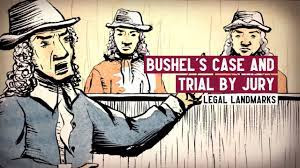
In 1670, Bushel’s
Case established the right of a jury to reach a verdict ‘according to their convictions.’ This
allowed the acquittal
of the protesters that toppled the statue of the slave trader, Edward
Colston. Since then the Court
of Appeal has withdrawn ‘lawful excuse’ from damage to property.
Palestine Action activists have
been prevented from explaining their motives when on trial. Climate activists
have also been prevented from discussing their motives in court. This
undermining of the jury system is a huge attack on all of our rights.

Amy Pritchard & Giovanna Lewis who were both sentenced to imprisonment for daring to mention climate change

You can show
solidarity with Tony Greenstein and the 3 other Elbit activists on Monday June
26 outside Wolverhampton court (10am)
[the date is
still not finalised because probation reports haven’t yet been obtained on most
of the defendants]
Come along to our Zoom meeting on Saturday June 24
at 6pm
to discuss the issues and how we can fight back.
Register here:
https://us02web.zoom.us/webinar/register/WN_K4VLOrwARMueMGRUMnPjkg
Speakers include:
·
Huda Ammori from Palestine Action, which protests against factories supplying arms
to Israel
- Kush Naker of Just Stop Oil
- Tim Crosland, Director of PlanB, which links mobilisation and litigation to
hold power to account for the climate catastrophe
- Tony Greenstein, who is facing a custodial sentence and has been prevented from
speaking out about his motives in court
- Deepa Driver on the fight for justice for Julian Assange
·
Cathy,
Sally, Ollie arrested (28 April 23)
·
https://www.youtube.com/watch?v=G1CZteBxvaU

The Tolpuddle Martyrs also defied the law in order to form a union - unfortunately the TUC leaders don't have a fraction of their courage today despite holding a Tolpuddle Festival each year
QUOTES FROM PROMINENT JUDGES, LAWYERS, AND SCHOLARS
Lord
Patrick Devlin, a former Law Lord and legal scholar, said:
‘The first object of any tyrant
in Whitehall would be to make Parliament utterly subservient to his will: and
the next to overthrow or diminish trial by jury, for no tyrant could afford to
leave a subject’s freedom in the hands of twelve of his countrymen. Trial by
jury is more than one wheel of the constitution: it is the lamp that shows that
freedom lives.’
As Marcel Berlins and Clare Dyer
wrote
‘Lord Devlin, one of the great law lords, regarded the jury's
right to bring in a perverse acquittal as one of the glories of our jury
system.’
"It gives protection against laws which
the ordinary man regards as harsh and oppressive . . . an insurance that the
criminal law will conform to the ordinary man's ideas of what is fair and just.
If it does not, the jury will not be a party to its enforcement."

The BBC, Media and Politicians are always concerned about attacks on the right to protest in Hong Kong but never in Britain
Lord
Justice Auld, a former Court of Appeal Judge said
in 2001:
‘[Jury nullification] has been an
accepted feature of our jury system for a long time and is seen as a useful
long-stop against oppression by the State and as an agent, on occasion, of law
reform.’

Melinda
Janki, Guyana-based lawyer, and winner of the Commonwealth Rule of Law prize, 2023
said:
‘For decades ExxonMobil
suppressed evidence that burning fossil fuels would destroy the global climate
system. Today we in the Global South are living with the impacts. People are
dying. Animals are dying. It is unconscionable and contrary to the rule of law
for any judge to seek to suppress evidence of the destructive impacts of fossil
fuels.’
Revd
Dr Sue Parfitt, a priest and retired psychotherapist, said:
‘It’s a serious matter indeed if
a jury feels unable to make decisions according to their conscience, just as it
confounds the basis for the law in this land when defendants are prevented from
telling the whole truth in court. Both rights must be defended.’
John Adams,
lawyer, a leader of the American Revolution and later 2nd President of the USA,
1771, said:
‘It is not only [the juror’s]
right, but his duty … to find the verdict according to his own best
understanding, judgment, and conscience, though in direct opposition to the
direction of the court.’
Oliver Wendell
Holmes, US Supreme Court Justice, said
in 1920:
‘the
jury has the power to bring in a verdict in the teeth of both law and facts.’
E.P. Thompson,
writer and historian, said
in 1980:
‘The
English common law rests upon a bargain between the Law and the People. The
jury box is where people come into the court; the judge watches them and the
jury watches back. A jury is the place where the bargain is struck. The jury
attends in judgment, not only upon the accused, but also upon the justice and
humanity of the law….’

Michael
Randle, addressing the jury in his own defence said:
‘The
judge, Judge McCowan, in his summing up to the jury virtually directed them to
find Clive Ponting guilty. He told the jury that the interests of the State
were synonymous with the policies of the State and these were determined by the
government of the day. Ponting's motives, he said were irrelevant. The jury
should forget about any concept of moral duty. But the jury did not forget the
concept of moral duty or were unwilling to accept the judge's contention that
the interests of the state were synonymous with the policies of the government.
They brought in a verdict of Not Guilty. The lamp of freedom shone more
brightly that day, and a dangerous shift towards arbitrary power was avoided. I
appeal to you today to keep that lamp burnished and shining and to allow
considerations of humanity and common sense to guide your judgement. I invite
you to agree with us that what we did was right and to find us Not Guilty.’
Matt
Hutchings KC, a leading Barrister from London, said:
‘Our
country is in crisis. The root cause is a clash between a government and media
bosses who are acting at the behest of the fossil fuel industry, and our
citizens, ordinary people who are calling for a rapid and just transition away
from fossil fuels to green and clean energy. When people are charged with
offences which they committed because of their sincere beliefs about the
climate crisis, the jury should be allowed to hear evidence about these
beliefs. It is not right that juries are prevented by judicial directions from
hearing the truth about why the defendants are in the dock. The eminent judge
Sir Patrick Devlin wrote in his book 'Trial by Jury' that juries were "an
insurance that the criminal law will conform to the ordinary man's idea of what
is fair and just". At a time when our democratic values and institutions
are under attack, it is vital that we defend one of our sacred democratic
principles: the independence of juries.’
Rabbi
Jeffrey Newman from North London said:
‘Intention is an ancient concept,
fundamental in Jewish & British law, for example in distinguishing between
murder and manslaughter. It seems to me, therefore, that we cannot disregard
motivation when we come to look at actions and consequences in other contexts.
As a Jew, and a rabbi - that is, a Jewish teacher - I have had to think very
carefully about issues of obedience to the law and where and when a state may
enact laws that a citizen, after careful and honest consideration, decides
cannot and should not be obeyed. At such times, courageous protest by posters,
placards or leaflet distribution have been prohibited by repressive regimes.
Judges have sometimes focussed the attention of juries too narrowly thereby
causing much harm. At this time, we must consider with all due wisdom the needs
of our planet and all its species and of future generations as we assess the
proportionality of protest.’

Paul
Stephens, 58, a former Police Officer, said:
‘I joined the police in 1983 to
protect the good people from the bad. Simplistic I know but I was 19. The legal
system in the UK is doing the exact opposite. They are protecting polluters,
allowing increased harm and obscene profits; whilst prosecuting people trying
to save life in a way that is so unjust; gagging them from sharing their
motivation with the jury. Extinction changes everything and the legal system
must wake up and become a force for good.’
Heather
Hallett, a member of the Court of Appeal from
2005-2019 and currently chairing the Public Inquiry into the COVID pandemic. In
her 2017 Blackstone Lecture on the Role of the Jury said:
A
jury may refuse to convict in spite of the law and the evidence because it
concludes that the law is an unjust law. The jury passes its verdict on the law.
Secondly, it ensures that the prosecution and the judge are on trial….
These
trials all took place in the full glare of publicity. Here we see a specific
application of the principle of open justice: the public can attend court and
scrutinise what is going on. They can see the jury make its protest as to what
they see as an unjust law or unjust application of the law. There is a check
against arbitrary or oppressive conduct by the court. Here the 17th century
rationale lives on despite Caverno’s claim. We see as Professor Zander has
properly pointed out the jury can set aside ‘unjust laws, oppressive
prosecutions and harsh sentences.’
Law Lord Lord Hoffmann confirmed this in R v Jones (Margaret) [2007]
1 AC 161 (89) when he stated:
My Lords, civil disobedience on conscientious grounds has a long
and honourable history in this country. People who break the law to affirm
their belief in the injustice of a law or government action are sometimes
vindicated by history. The suffragettes are an example which comes immediately
to mind. It is the mark of a civilised community that it can accommodate
protests and demonstrations of this kind.

Trudi
Warner (3 March 23)
Save Our Juries
A
new group Save our Juries has been set up, the purpose of which is to protect and defend the right to a fair
trial through the power of collective action, as judges undermine it by
concealing from juries their proper role
Save Our Juries will
defend and protect the right to a fair trial and shine a spotlight on the
repression that is taking place by:
1. Literally upholding the law on
signs which explain a jury’s right to acquit a defendant
as a matter of conscience
2. The power of silence and blank signs as a symbol of state repression.
More
than 20 people have already been referred to the Attorney General for upholding
the law on our signs. The more the state reacts against us the more it exposes
to the public its violence and authoritarianism. If you want to take collective
action against the Government’s programme of repression at this critical moment.
Just
as the fossil fuel companies and others have for decades hidden the truth of the climate and ecological
crises from the public to maintain their profits, the British judiciary now
perpetuates the suppression of evidence through the courts, including by:
1. Banning
those engaged in campaigns of political defiance from explaining their
motivations and beliefs to the jury
2. Telling
the jury that motives, even if articulated, are irrelevant and must be ignored
3. Sending people to prison just for using the terms “climate
change” and “fuel poverty” in court
4. Banning
references to a jury’s right to acquit a defendant as a matter of conscience
5. Arresting
and referring for prosecution those who remind jurors of their right to make
decisions on their conscience.
6. Directing
the jury that defences such as necessity, proportionality or reasonable excuse
are not available.
7. Limiting
the time to present a defence to 15 minutes.
Jury
trials are being turned into show trials, with the jury being used just to
rubber-stamp the politicised directions of the judge.

Save
Our Juries will campaign
to protect & defend the right to trial by jury by nonviolent collective
action.
The
principle that juries can acquit a defendant on their conscience (“jury
nullification”) has a long history. It was first established in 1670 when the
Recorder of London tried to compel a jury to convict two Quaker preachers,
William Penn and William Mead, for holding an unlawful assembly. Chief Justice
Vaughan, of the Court of Common Pleas ruled that juries have the
right to “give their verdict according to
their convictions”. That ruling is celebrated with a marble plaque in the
Old Bailey.
Because
of that principle, the penalty of hanging for stealing sheep was abolished in
this country because juries refused to convict people of that offence. After
the passing of the Fugitive Slaves
Act 1850, many US juries declined to convict those who had
helped the enslaved to gain their freedom. In 1985, a British jury acquitted Clive Ponting for breach of the Official
Secrets Act after he leaked a document which exposed the Government’s lies over
the sinking of the Argentine ship, General
Belgrano, with the loss of 368 lives, despite the judge’s direction that he
had no defence in law.
The
Jury is the “Achilles heel” in the Government’s programme of repression against
those expressing defiance against its authoritarian policies. It only takes 3
out of 12 jurors to prevent a guilty verdict. If ordinary people are empowered to act on their conscience, as is
their right, and presented with the relevant context, many will refuse to
convict their fellow citizens who have been taking a stand against the
corruption of the fossil fuel industry or those who are supplying arms with
which to commit war crimes.
If
juries routinely decline to convict, that’s not embarrasses the Government, it
haemorrhages one of their primary sources of power, repression through the
criminal courts. That’s why such extreme measures have been taken to bypass juries
in conscience cases.
When
Trudi Warner, a retired social worker held up
a placard communicating the jury’s right to make decisions of conscience, she
was arrested and sent to the Old Bailey. When 24 of us replicated her action in May
outside Inner London Crown Court, Judge Reid referred us to the Attorney
General for contempt of court. Those taking part included Quakers, health
professionals, a priest, legal professionals and a retired police officer.
The
Attorney General, the Government’s most senior legal adviser, now faces a
dilemma. See The
Times. She can either decline to prosecute, undermining the authority of
the judges. Or she can prosecute us, in which case there will be more of us and
the assault on trial by jury will be brought to national and international
attention.

Save Our Juries
is a natural point of intersection for diverse campaigns and movements,
including anti-racism, peace and climate movements. Juries have acquitted those
who toppled the statue of the slave-trader, Edward Colston, those attempting to
block violent deportations, and those resisting climate breakdown and fuel
poverty. Likewise a judge had recently ruled that those blocking the sale of
drones to Israel which would be used to target Palestinians, could not explain
their motivations to the jury and could not inform the jury of their right to
acquit as a matter of conscience.

Save Our Juries
reaches across political divides. When someone’s liberty is at stake, the right
to a fair hearing and the right to trial by jury are fundamental even to a
‘conservative’ sense of British justice. Judge Reid’s actions have already been
gathering support from some unlikely sources, see for example “Protesters must be allowed to explain motives in court”,
The Times:

“Whether you sympathise with Insulate Britain
or regard them as woke tofu-munchers, surely any defendant in a criminal trial
is entitled to defend themselves when their liberty is at stake? … Banning all
reference to motive also compromises the jury. Shouldn’t jurors be able to
consider whether these protestors were acting out of conscience?”
Save Our Juries
campaigns to prevent the suppression of evidence and the subversion of
democracy (hence its support for the self-determination of peoples and the
decolonisation of land, education and ecosystems). Initially, Save Our Juries will support the
following collective actions:
1.
Upholding
the law on signs
Upholding
the law on a sign outside court for an hour (e.g. between 9 and 10am) is a
simple, accessible and powerful action. It presents the State with a deep dilemma.
It must either:
i)
criminalise people for literally upholding the law, exposing to public
view its repressive nature; or
ii)
permit jurors to be empowered by being informed of their right to acquit
a defendant as a matter of conscience, risking a critical mass of jury
acquittals.
A
letter can be handed in to the presiding Judge, openly communicating the
rationale for the action (such as the letter handed to Judge Reid by the 24
signholders in May).
2.
The power of
silence (and blank signs) as a symbol of oppression
Blank
signs may be held outside courts where defendants are being prevented from
explaining their motives and advancing a defence (blank signs being the international symbol of state repression).
Campaign
launch: at Gail Bradbrook’s trial at Isleworth CC (Monday 17th July), and on
Friday 21st July) at Isleworth, ILCC, Hove, and other Crown Courts
If you’re interested in joining a sign-holding
action in July (or at some later date), please email us at saveourjuries@protonmail.com
There
is a central working group of 5-6 people who have been working on the
development of the campaign, action designs and the essential administration
and care that allows people to take action.
Given
the diversity of the movement, different groups engaging in the campaign will
know best how to communicate with their communities. Quakers involved in the
campaign, for example, have emphasised the role of Quakers in establishing the
original precedent on the principle of jury nullification in 1670:
Tony
Greenstein
“Quakers stand up for vital legal precedent established in
1670 Quaker trial”.
To join or support the campaign, please contact saveourjuries@protonmail.com.
“We took direct action against the UK’s racist policies,
and a jury acquitted us. Resistance can succeed” (Guardian, 16 June
23)
“Extinction Rebellion co-founder cleared of further charge
in paint-throwing case” (Independent, 21 February, 2023)
“Insulate Britain activists cleared in court after M4
protest” (Bristol Post, 16 January 23)
“The government is undermining the idea of trial by jury
after Colston Four verdict” (Independent, 20 April 22)
“Juries keep letting Extinction Rebellion off the hook —
here’s why” (Evening Standard, 8 April 22)
“UK activists keep being acquitted by juries. What does
that mean for protest?” Open Democracy, 22 January 22
“Grant Shapps slams Bristol jury for clearing Colston Four”
(Daily Mail, 6 January 22)
“Jurors see the bigger picture: activists who were cleared
in court”, (Guardian, 6 January 22)
“Jury acquits Extinction Rebellion protesters despite ‘no
defence in law’” (Guardian, 23 April 21)
“Extinction Rebellion founder cleared of vandalism in
landmark case after arguing climate change justification”
(Independent, 10 May 2019)
B.
TRUTH-TELLING
AND SOLIDARITY ACTIONS TO DATE
“Climate activists risk contempt charges over placards
outside court” (The Times, 2 June 23)
“Judge refers doctors, priest and Olympic Gold medalist to
Attorney General over
alleged contempt of court” (Press release, 2
June 23)
“Judges join lawyers in the bear pit” (Law
Society Gazette, 23 May 23)
“17 May 2023: Judge Silas “Silencing” Reid defeated by
show of solidarity for retired social worker arrested for holding up a sign”
(Press release, 17 May 23)
“Climate activists call crown court judge ‘unprincipled
bully’ during protest” (Independent, 15 May 23)
“Protesters must be allowed to explain motives in court”
(The Times, 13 March 23)
“Insulate Britain activist jailed for eight weeks for
contempt of court” (Guardian, 7 February 23)
“Activists jailed for seven weeks for defying ban on
mentioning climate crisis” (Open Democracy, 3 March 23)
“Climate activist who allegedly held sign directed at
jurors may be charged” (Guardian, 4 April 23)
Video and stills from signholders and others
“‘Not only a right, but a duty’: A history of perverse
verdicts” (Justice Gap)
“Jury Nullification: The Short History of a Little
Understood Power” (Midlands Historical Review)
School syllabus (Penn and Mead)
History GCSE: The Conventicle Act of 1664 and the
Independence of the Jury (BBC)
The Auld Review, September 2001, Juries,
paras. 99ff
“Lawyers For Israel Oppose Conscience”, Craig
Murray, 20 May 23
Fully
Informed Jury Association (US)
Jury Nullification (Wikipedia)


