Showing posts with label Amena Saleem. Show all posts

26 April 2015

John Humphries and the Bias of Today

Israeli lies go unchallenged on BBC’s flagshipcurrent affairs show

Amena Saleem 


A BBC correspondent displayed a fawning attitude towards Shimon Peres while Israel was attacking Gaza last year. (World Economic Forum/Flickr)
In March, the BBC’s flagship news program Today broadcast an interview with Moshe Yaalon, Israel’s defense minister.
John Humphries - Today's Zionist Interrogator-in-chief
Yaalon was given free rein to disseminate lies and propaganda with not a single interruption or challenge from Today presenter, Sarah Montague.

In response, the Palestine Solidarity Campaign and many individuals complained to the BBC about the substandard level of interviewing. The replies received from the BBC have revealed the extent to which the organization is prepared to make a fool of itself in order to justify and protect its soft interviews with Israeli spokespeople.
A view of Today at work
Many had complained that Yaalon was allowed to deny the occupation and the siege on Gaza, and had falsely claimed the Palestinians have “political independence” with Israel not wanting to “govern them whatsoever” — and had done so without any challenging interventions from Montague.

In fact, as Yaalon told lie after lie, there was absolute silence from Montague as the minutes ticked on, with not a sound to indicate she was still present.
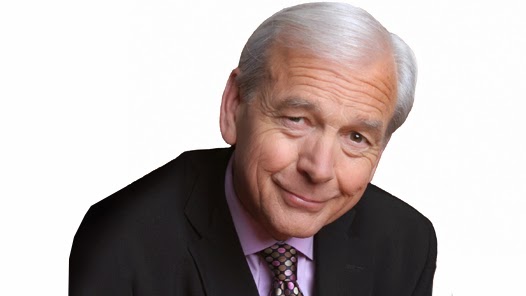
Despite a reputation among politicians as a fierce interrogator, Humphries goes soft on Mark Regev
The BBC complaints department sent this collective response to those who contacted it about the broadcast: “Please note that it’s always going to be difficult in a live environment against time constraints to challenge each and every comment made, given the amount of other questions and points to cover.”

A quick look at some of Today’s interviews with Palestinian spokespeople is enough to demonstrate just how ludicrous this statement from the BBC is.

And a comparison with Today’s interviews with Israelis during the same time period is sufficient to reveal the unswerving nature of the BBC’s pro-Israeli, anti-Palestinian bias.

Patronising and aggressive

Take, for example, interviews conducted by Today during July and August 2014.
On 3 July, with the occupied West Bank almost totally shut down by Israel following the disappearance of three Israeli teenagers, Today presenter John Humphrys interviewed Abdullah Abdullah, chairperson of the Palestinian Legislative Council’s political committee.

Humphrys ignored the alleged difficulties of a live environment and time constraints and instead challenged “each and every comment” made by Abdullah, to the extent that the senior Palestinian politician was effectively denied the opportunity to comment at all.

This is part of the interview:

Humphrys: “What I’m trying to do is ask you where we go from here.”

Abdullah: “From here? This racist Israel is exposing itself once more…”

Humphrys [interrupting]: “Can you just cut the rhetoric for a moment and try and deal with the practicalities?”

Abdullah: “This is a government of gangsters. It’s got to be exposed…”

Humphrys [interrupting]: “A bit less rhetoric perhaps and a bit more thought to what is actually going to take place in the Middle East.”

Abdullah: “This is the lack of resolution in the international community…”

Humphrys [interrupting]: “To do what?”

Abdullah: “Israel has been created by your country some 66 years ago…”

Humphrys [interrupting]: “Can we talk about now instead of fifty years ago? That’s what I’m trying to do, talk about what should happen now.”

Abdullah: “If we go to the root cause of it, we would be able to solve everything…”

Humphrys [interrupting]: “We’ve been going to the root cause of it for fifty years. It hasn’t got anywhere has it?”

The interview continues in the same vein for another thirty seconds, with a patronising, aggressive Humphrys continually interrupting and refusing to allow Abdullah the time to complete any of the observations he is trying to make.

At one point, he even puts words into Abdullah’s mouth, saying: “If you’re saying this morning that nothing can move forward until Israel is destroyed, well, at least we know what your position is.”
Abdullah has said nothing of the sort and, when he attempts to make his position clear — “What I say is that Israel…has to be held accountable for its violations of international law” — he is interrupted again by the BBC presenter.

Compare this aggression to Montague’s passive encounter with Yaalon, where the Israeli minister decides what he’s going to say and says it uninterrupted, and at no point is asked to “cut the rhetoric” — despite referring to Gaza as “Hamastan.”

Easy ride for Israel

Immediately after Humphrys spoke to Abdullah on 3 July, he interviewed the Israeli government spokesperson, Mark Regev — Palestinians aren’t interviewed by Today without an Israeli to counter them. The same isn’t true in reverse, and Israelis are continuously interviewed — as Yaalon was — with no Palestinian present to give an alternative viewpoint.

Regev was given his customary easy ride on the BBC. Humphrys was polite and non-challenging, and allowed the Israeli to blame Hamas for all the violence that takes place in the West Bank and Gaza without daring to question him on Israeli army violence against Palestinian civilians.

Six days later, Humphrys interviewed the head of the Palestinian Centre for Human Rights, Raji Sourani, who was on the phone from Gaza.

Gaza, by then, was under day and night attack by Israel.

Sourani explained this, to which Humphrys replied: “Couldn’t you stop it if you stopped firing rockets at Israel?”

Sourani: “I think Israel initiated that for several years before…”

Humphrys [interrupting, and incredulous]: “Israel initiated you firing rockets at them?”

Sourani: “No, I’m talking about before this, Israel was attacking for seven nights, bombing Gaza from south to north, and nobody slept for seven days before that, and they were bombing for seven days before that…”

Humphrys [emphatically]: “Three Israeli teenagers have been murdered.”

Sourani: “Eleven has been killed by Israel, including four Palestinian teenagers, and nobody has mentioned that and that’s a great shame. There is no holier than holy blood. Every blood is holy, even Palestinian one.”

The minute-long interview ends here and Humphrys goes on to interview Daniel Taub, Israel’s ambassador to the UK. The rudeness and hectoring disappears and Taub is given four minutes to tell lies about Gaza, such as this —“It’s an area that’s clearly not under occupation” — unchallenged.
Humphry’s interview with Sourani, as well as demonstrating yet again the hostile atmosphere of the BBC for Palestinians, reveals how deeply ingrained the Israeli narrative is within the minds of BBC presenters.

Humphrys sounded genuinely incredulous at Sourani’s suggestion that Israeli violence may have preceded Palestinian violence, rather than being, as Israel always maintains, a defensive reaction to it.
His attitude is that of the colonial-minded journalist, wedded to the belief that if the natives would only stop firing their rockets the colonizer could live in peace.

The theft of land and freedom by the colonizer doesn’t come into it, and Humphrys even implies that Gaza deserves the fatal collective punishment it is receiving because three Israeli teenagers were killed in the West Bank.

Breathtaking 

Such unbalanced, biased interviewing continued through July and August, as Israel was pounding much of Gaza to rubble and wiping out entire Palestinian families.

The lack of impartiality was replicated on BBC television news and BBC Online, where pro-Israeli commentators were presented as “independent” and brought on to defend Israel’s actions.

On the 31 July episode of Today, Sarah Montague, true to form, interviewed two Israelis — and no Palestinians — on whether Israel’s assault on Gaza was legal.

Her guests — a retired colonel from the Israeli army, who greenlighted massacres in Gaza during Operation Cast Lead five years before, and a former spokesperson for the Israeli government —enjoyed nine minutes of gentle conversation in which they were able to assert that Israel had no other option but to attack and did so only with great sorrow. 

Today continued to provide a willing platform for Israeli propaganda into August.

On 13 August, former Israeli president, Shimon Peres, was given airtime in an interview with Middle East correspondent, Wyre Davis, for the stated reason than his was “one voice that we haven’t heard much of during this crisis.”

Davis allowed him to tell one astounding lie after another for four minutes.

This was his first lie: “Look, we left Gaza willingly, unilaterally…We handed over to the Palestinians a free, open Gaza, which is a beautiful strip of…a beautiful beach. They could have developed it for tourism, for fishing, for agriculture. We don’t understand, frankly, why are they fighting? What are they shooting? We left. What is the purpose? They want to be free. They are free.”

And this came towards the end: “When we left Gaza, Gaza was open. No restriction, no closure, nothing whatever. We helped them even, to build a new modern agriculture. We would like to see them a normal nation, living in peace, developing their country.”

To which a compliant Davis replied: “Your position is clear. You obviously pursue peace from a position of strength.”

The lies were breathtaking, the fact he was allowed to tell them unchallenged, extraordinary. Compare this to Abdullah’s interview on Today a month earlier, when he wasn’t given the space even to complete a sentence, or Sourani’s interview when he was hectored to justify Gaza’s rockets, the BBC interviewer’s concern, as it always is, being only for Israel, not for the Palestinians under occupation.
The BBC complaints department can fire off as many email messages as it likes, arrogantly declaring the impartiality of the BBC or trying to pretend interviewers don’t have time to “challenge each and every comment made” by an Israeli interviewee.

But an analysis of just one BBC program’s interviews with its Palestinian and Israeli guests shows those claims to be as big a lie as any told by an Israeli spokesperson appearing on Today. And that is truly shameful.

18 January 2014

The BBC has become little more than the mouth piece of the ruling elites.

Don't Ever Pay these Thieves and Liars Your License Fee

 Posted: 08 Jan 2014 05:30 PM PST
This article first appeared on the excellent Outrage Site


The reality is that the BBC has always been a spokesman of the ruling class.  In the 1950's and 1960's it banned the War Game about the reality of nuclear war and its Irish and anti-colonial coverage was equally bad.
Theodor Herzl - didn't care about Dreyfuss and believed that anti-Semitism was good for the Jews
My most recent experience of the BBC is Simon Schama's appalling History of the Jews.  It was nothing of the kind, it was a History of Zionism.  I complained to the BBC and its gone to the BBC Trust, filled with establishment types.  It portrayed the Dreyfuss Affair, a pivotal area in fighting anti-semitism, which Zionism says is impossible though Theodore Herzl's eyes.  But Herzl had nothing to do with the Affair, the only Zionist who did,  Bernard Lazarre, resigned from the Zionist Actions Committee and Herzl didn't even mention  it in his booklet  The Jewish State published nearly two years late in 1896.  In this 4 volume Diaries has mentioned it cursorily

Instead I pointed out that Herzl sought and got, a friendly review of his pamphlet from Edouard Drumont, author of the Eternal Jew, which on its first print run sold a 100,000 copies.  Although Drumont was a dedicated anti-Semite he was also a devout Zionist.  Schama's only response to this was that it came from the 'unsavoury' part of the anti-Zionist movement until I provided chapter and verse for him.  Like most ruling class and especially Zionist historians, they know very little, though even most Zionist historians consider the tale of  Herzl's Zionism starting with the Dreyfuss Affair a myth.  Not so the BBC which stood by this most reactionary of Zionist story tellers.

The BBC has a history of saying nothing when Gaza is under siege, but the moment a rocket is fired they spring into action.  Israeli deaths merit attention, Palestinian lives are cheap.  So it was  till the end days of Apartheid.  During the period up to the early '70s the BBC was happy to broadcasat sporting events from South Africa.

In an article 'BBC admits pandering to Israeli propaganda' byAmena Saleem of The Electronic Intifada (London 14 December 2012)

Amena Saleem cites the Israeli justification for not mentioning Israeli attacks on Gaza, an unarmed enclave, unless it is in the context of Israel's defence:

'In an email sent on 21 November to a member of the UK-based Palestine Solidarity Campaign, and seen by this writer, the BBC Complaints Department explains in some detail how the broadcaster had gone out of its way to lay the blame for the violence of the previous eight days on the Palestinians.

The email, signed off “BBC Complaints,” states: “Since the news of Israeli air strikes in Gaza our coverage has pointed out on numerous occasions that the attacks are in response to recent rocket attacks on Israel from the Gaza Strip.”

It adds: “Our initial online report on 14 November pointed to how the attack on Ahmed Said Khalil al-Jabari and another Hamas official ‘follows a wave of rocket attacks against Israel from the territory’ and how ‘the United States said it supported Israel’s right to self-defense, and condemned militant rocket attacks on southern Israel.’”

Seemingly oblivious to or unfazed by the inaccuracy of its own reporting, the message goes on: “On the BBC’s News at Ten that same evening, the BBC’s Gaza and West Bank correspondent Jon Donnison’s report explained that ‘Israel says the strike followed a wave of rocket attacks from inside Gaza,’ before hearing directly from Israeli Army Spokeswoman Lt. Col. Avital Leibovich as she explained how ‘I can just elaborate that the target of the operation is to protect Israeli civilians. The same lives of Israelis that have been under constant rocket attack for the past year.’”

In a twist of almost comic absurdity, given eight days of reporting which squarely blamed Hamas for the violence and equated the fear caused by the 12-pound and 90-pound Palestinian rockets with the terror induced by Israel’s 500-pound to 2,000-pound bombs, the email ends with: “We will continue to report on developments from the region in a fair, accurate and impartial way.”

Official line

All BBC journalists stuck to Israel’s official line that the assassination of 14 November, and what followed, was in retaliation to Palestinian rockets — and conveniently omitted from their reports the fact that Israel had been engaged in killing Palestinian children in the days immediately preceding al-Jabari’s execution.

Israel’s 10 November 2012 killing of 18-year-old Ahmad Dardasawi was not deemed newsworthy by the BBC.
(Ashraf Amra / APA images)
 The Palestine Solidarity Campaign wrote to the BBC’s flagship news and current affairs program Today on 12 November to ask why it had not covered the killing of the five Palestinian teenagers on 8 and 10 November.

The program’s assistant editor, Dominic Groves, wrote back to say: “Even in the space of a three hour program it is not always possible to cover every development in a story — especially one as long running and complex as the one in the Middle East.”

Time was the excuse I was given when the BBC couldn't defend Schama's lies.

And yet the killing of five young boys by Israel isn’t a “development in a story;” it is news in itself. When the Today program can give prominent coverage to a Palestinian rocket attack on a bus in April 2011, which killed a 16-year-old Israeli schoolboy, how can Groves claim the same program has no room to report on the slaughter of five Palestinian boys by the Israeli army? (“Israeli boy Daniel Viflic dies after rocket hits bus,” 18 April 2011).

The Miners' Strikes
Police Mobs at Orgreave
Yet  none of this should be a surprise. At the time of the General Strike it supported  the Government and Lord Reith, its Director-General, refused to broadcast a peaceful message from the Archbishop of Canterbury.

In the 1984-5 strike it dealt with Police violence at Orgreave, where all the police cases of 'assault' were thrown out, by the simple method of reversing the video of  Police attacking Miners and Minters defending themselves.  What was broadcast appeared to be the Miners attacking the Police and the Police responding.  The corrupt South  Yorkshire Police that the BBC had said nothing about.
 

Nelson Mandela

Mandela whose death the BBC did much to trivialise

One of the most significant events of 2013 was the memorial for Nelson Mandela, marred by the bogus interpreter, who made random movements while standing alongside those paying tribute.

Whilst BBC covered Mandela's death and the aftermath extensively - as we would hope for one of the great figures of the 20th Century. It also took delight in reporting on fake signer Thamsanqa Jantjie.
The more the BBC spoke about the bogus signer though - at the detriment of other news - the more irritating it became. Not because it was frivolous - we are used to the BBC being self-indulgent and frivolous - but because over recent years the broadcaster has become more and more like Thamsanqa Jantjie.

My view is that the BBC is simply not transmitting an accurate account of reality. Over the space of the year it has ignored significant news and spun events to present something quite different from what those involved witnessed.

Ignoring, muting or giving a distorted representation of news would be a serious accusation for any broadcaster in the UK, as news programmes are obliged to be balanced. For the BBC, however, it is an even more serious matter.

One of the key reasons that the BBC is such a tarnished brand is that it harboured one of the most prolific paedophiles in the world. The tarnishing was exacerbated by its flagship news programme Newsnight spiking an exposé of Savile, who was instead featured in two nauseating tributes during prime time Christmas slots in 2011.

After the Newsnight spike came to light, in 2012, the BBC was on the back foot and it was completely on its arse later that year after Newsnight broadcasted an 'investigative journalism' piece accusing an unnamed Tory of abusing children. Jigsaw identification, made easy by Twitter, revealed the figure to be Lord McAlpine, who turned out to be the wrong man but did prove to be promiscuously litigious.

Many of us who grew up with Newsnight being as vibrant as The Day Today - which was inspired by Paxman's abrasive approach - have been concerned about how timid the programme has become since the Savile spike and the McAlpine McScrewup. I would go so far as to compare it to a whining, castrated dog licking its groin and rather more interested in its wounds than the world around it.

Some have linked BBC news' ongoing timidity to Tory grandee Chris Patten being helicoptered in as chair of the BBC Trust. Such is its apparent reluctance to question domestic political decisions that it does sometimes seem that the broadcaster has become a public-funded PR agency for a failing government.

This view was reinforced in 2013 when Tory Party chairman Grant Shapps / Michael Green / Sebastian Fox suggested that the BBC would lose income if it doesn't free itself from bias. The most bizarre thing about that statement was not that Grant Shapps has at least three identities but the suggestion that the BBC has a left wing bias. If the BBC is currently left wing my name is Corinne Stockheath.

Margaret Thatcher and her husband Dennis both characterised BBC journalists as "pinkos" but they can rest assured that this is far from the case these days. If it were still the case then student protests, in which young people were beaten by the police, might have been broadcasted rather than eventually posted online with the focus shifted to a wheelie bin fire.

A diligent broadcaster would have also put such protests in context by examining how student dissent is being stamped down and politically aware students are being spied on by the police. The BBC did not.

If the BBC is "pinko" or even neutral we might have expected it to broadcast a confrontational interview with Grant Shapps about the allegation that fraud may have been committed within one of his business ventures. Channel 4 News revealed that although the police have dropped an investigation into past business affairs of Shapps, lawyers who advised the police say some of his company's activities may have amounted to "an offence of fraud".

If the BBC was a neutral broadcaster working on behalf of the public that funds it - let alone "pinko," we might have expected it to broadcast the mass protest about hospital cuts and the sell-off of the NHS, brokered by a political party that hasn't won an election for 22 years. BBC journalists were at the Tory Party Conference, outside which the demonstration took place, but throughout the day neglected the 50,000 marchers.

Throughout 2013 we have had very little debate on BBC news programmes about the relentless asset stripping of the NHS and a much greater focus on individual examples of poor practice. The BBC's coverage of the NHS in 2013 reminded me of a spoilt child trying to get its more virtuous sibling into trouble to get itself out of trouble. Helping to undermine the NHS in the hope of saving its own skin, frankly, is sickening and will not be forgotten by the public.

Police mobs at Orgreave  - the BBC hid behind the Police
The BBC will not redeem itself in the eyes of the public by towing the party line on policies the government wants to push and citizens oppose. The only way the BBC can redeem itself for Savile and the McAlpine fiasco is to produce accurate, balanced news for those people who pay them. That is not the Tory Party. It is not Grant Shapps. It is not Sebastian Fox. It is the British public. To ignore and distort news to appease a government is as outrageous as the BBC hiding news about Savile to protect itself.

By Will Black, who writes for the Huffington Post and has a background in anthropology and mental health care

5 May 2013

BBC admits downplaying the scale of Israel’s occupation

What the BBC doesn’t admit to is a consistent and overwhelming pro-Israeli bias

BBC2's Gavin Esler - a tame pro-Israeli broadcaster

It’s always a good result to get anything out of the BBC, whose hostility to the Palestinians is palpable.  At the time when the last Director-General, Greg Sykes, was sacked by virtue of the trumped up report from Lord Hutton, for not having done the government’s bidding more easily, a new era began.  Ariel Sharon, Israel’s still comatose Prime Minister, threatened the BBC that it would lost its privileged access to Israeli news and the army, unless it changed its stance.
Brighton picket of the local BBC during the Gaza attack
And Thompson, who was played by the last government like a puppet on a string, was willing to obey.  He had seen the consequences of not so doing.  So PSC’s determination to get the BBC to admit they are wrong is admirable.
BBC Broadcasting House
Tony Greenstein

Submitted by Amena Saleem on Wed, 05/01/2013 - 18:11

The BBC has admitted that a report it broadcast in January implying that only part of the West Bank is under occupation was inaccurate.

The claim that there is a difference between “West Bank towns and villages and areas occupied by Israel” was made on the BBC’s heavyweight current affairs program, Newsnight.

Introducing an item about the Negev (Naqab) desert, presenter Gavin Esler, said: “Israeli soldiers shot dead a 17-year-old Palestinian youth today near the barrier which separates West Bank towns and villages from areas occupied by Israel.”

The Palestine Solidarity Campaign (PSC) wrote to the BBC to point out that the whole of the West Bank, including East Jerusalem, is under Israeli occupation and that a false distinction cannot be made between “West Bank towns and villages” and “areas occupied by Israel.”

The BBC initially wrote back defending Esler’s phrasing. In an email to the PSC, Stuart Webb of BBC Complaints wrote: “With this reference Gavin sought to broadly differentiate between parts of the West Bank administered directly by the Palestinian Authority and sections directly occupied by Israeli forces.”

At no point in his introduction to the Negev report had Esler mentioned the Palestinian Authority. Moreover, as the PSC pointed out in its reply, “West Bank towns and villages,” which Esler was implying are not under Israeli occupation, and “areas occupied by Israel” are one and the same — it is all Palestinian land which has been occupied by Israel since 1967. Put simply, the BBC was wrong to attempt to make any kind of differentiation.

“Belligerent occupation”

The facts make this abundantly clear. That the whole of the West Bank is under occupation is recognized by the UN, the UK and other governments, and by international organizations. The Israeli high court has ruled that Israel holds the West Bank under “belligerent occupation.” In July 2004, the International Court of Justice ruled that Israel illegally occupies the whole of the West Bank, with no distinction made between Area A and Area C — the zones under Palestinian Authority and Israeli administration respectively — in violation of international law. And, of course, UN Resolution 242 calls for the withdrawal of Israeli armed forces from territories occupied by Israel in 1967, including the whole of the West Bank.

It is curious then, with all of this information readily available, that the BBC made such a serious mistake in a scripted item, a mistake which downplayed the true scale of the Israeli occupation of Palestinian land.

Following further correspondence with the PSC, the BBC today acknowledged its mistake and apologized.
Passers-by stop to give the picketters encouragement
The Newsnight team wrote in an email: “We agree that it was inaccurate to describe the barrier in this way with the implication that not all of the West Bank is occupied. The reference to the shooting in Budrus was intended to put a newsworthy top line in the introduction to a feature about the Negev desert and we apologize for the error.”

Newsnight added: “We regret any mistake we made,” but rejected claims of bias towards an Israeli narrative.

Catching them out

It was important to the PSC to pursue this case and secure an admission of error, because the narrative that it is only Area C that is under occupation is one that the BBC seems to be taking up across its reporting, and this needed to be challenged.

Most recently, on 17 April, in a documentary entitled Israel: Facing the Future, BBC presenter John Ware, filmed driving through Ramallah, said: “Although Israel occupies most of the West Bank, Palestinians are governed day-to-day by the Palestinian Authority, based here.”

Like Esler, Ware is not a rookie reporter. He knows, and his team of researchers would know, as Newsnight’s researchers should know, that Israel does not occupy most of the West Bank, it occupies all of it.

The reasons for the BBC trying to obscure this fact and mislead its audiences can only be guessed at. However, it is to be hoped that, now it has been challenged and caught out, its misreporting on this particular subject will cease across the whole of its considerable output.

15 December 2012

BBC’s Terms of Reference are set by Israel


Israel 'Reacts' to Palestinian Rocket Attacks & 


The Partisans 'Provoked' the German Panzer SS Division

Think how strange it would be if we considered France’s Nazi occupiers justified in carrying out ‘retaliations’ for attacks made on them by the Maquis.  Perhaps then we could rethink Oradour sur Glane, a village a few kilometres north of Limoges which was totally destroyed by the Nazi’s, 642 men, woman and children massacred by a German Panzer Division.  

The Government's 'independent' mouthpiece
After all, either the right of an occupied people to resist is a natural one, a human one, that no law can take away or it is a mere diplomatic convenience.  But such a right is not one recognised by the BBC when it comes to Israel/Palestine.  Despite occupying Gaza and the West Bank for 45 years, instead of barely more than 4 years, Israel is seen as on the defence, the victim, despite being the 4th most powerful state in the world militarily.


The pro-Zionist bias of the BBC is legendary, as many articles on this blog have detailed.  Its recent coverage of the attack on Gaza was no different from normal:

  1. Israel’s attacks were in ‘retaliation’ for Hamas rocket strikes.
  2. No mention was made of the fact that Ahmed al-Jabari had been assassinated after a ceasefire had been agreed and he had been the negotiator.  He apparently had ‘blood on his hands.’  Perhaps the Israeli General who doesn’t have blood on his hands would like to stand up.
  3. No mention of the 7 Palestinians killed in Gaza prior to Israel’s attacks, or the fact that 5 of them were children.
  4. No mention is made of the fact that the attacks are, as in 2008-9, close to an Israeli general election.
  5. And to cap it off, an e-mail from a BBC Complaints official states that ‘Since the news of Israeli air strikes in Gaza our coverage has pointed out on numerous occasions that the attacks are in response to recent rocket attacks on Israel from the Gaza Strip.”  Yes that was precisely the point of the complaint!  

It’s called circular logic but the only ‘logic’ in the BBC response is to hug the United States and Israel.  The BBC is its present parlous state, especially post-Savile, is unlikely to want to ruffle any feathers in the government by taking anything other than a strictly pro-Israeli stance.

Part of the problem with complaints about the BBC is the belief that it is capable of any significant change.  The BBC has always been a poodle of the British establishment, whether over Palestine, colonialism or strikes at home.  In the Miners’ strike they reversed footage at Orgrieve to show Police attacks as responses to Miner’s attacks.  

Only this year the Supreme Court upheld the BBC’s decision to refuse to release the Balen Report on  bias, which although brought by a Zionist (the BBC isn’t biased enough!) is widely believed to criticise the BBC’s endemic anti-Palestinian bias.  See Reporting on Israel and the Palestinians  

There is still the naïve belief that the BBC represents something ‘good’ – its Auntie rather than the home of the mass sexual predator Jimmy Savile, his accomplices and an establishment, not least the unlamented recent Director General, Mark Thompson, who turned a blind eye to Savile’s actions.  There is no democratic control of the BBC, instead it is left in the hands of the good and great, like Lord Patten, a failed but influential Tory politician.
The Nazi ruins of Oradour-sur-Glane - a 'reprisal' action according to the Nazis (& BBC)
Trade unionists don’t make up any of the membership of the BBC Trust or the previous BBC Directors.  Political conflicts within the BBC have almost always reflected divisions within the British ruling class itself, albeit with a right-wing orientation.  This came to head with the timorous  opposition of some in the BBC like Andrew Gilligan, when he talked of ‘sexed up’ intelligence on an early morning Today programme.  In fact the intelligence was a work of fiction.  But sure enough a reactionary Northern Ireland member of the House of Lords Lord Hutton produced a Report which backed Blair and Alistair Campbell, his propagandist against any semblance of BBC independence.  Director-General Greg Dyke was forced to resign and Mark Thompson took over, determined to learn the lessons, viz. to cowtow to the government politically.

In many ways the BBC is far worse than its commercial rivals.  No thinking person believes Fox News, whereas people see in the BBC an ‘independence’ which masks a bias which is the more dangerous for being its disguise.

The only way to force a BBC that can spend £½ m in rewarding its latest DG George Entwistle for abject failure is not to pay the licence fee.

Below is an excellent article crossposted from Electronic Intifada by Amena Saleem.

Tony Greenstein

BBC admits pandering to Israeli propaganda

Amena Saleem, The Electronic Intifada, London 14 December 2012

Israel’s 10 November 2012 killing of 18-year-old Ahmad Dardasawi was not deemed newsworthy by the BBC. (Ashraf Amra / APA images)
One of the most consistent aspects of the BBC’s reporting of Gaza and Israel is the insistence of its journalists that any “outbreak of violence” is the fault of the Palestinians.

When Israel bombs or shells Gaza, this is unfailingly reported by the BBC as being in “response” or “retaliation” to rockets being fired from the blockaded territory. The unflinching regularity of this one-sided reporting by the UK’s state broadcaster is meticulously recorded in More Bad News from Israel, the book by Greg Philo and Mike Berry which contains research by the Glasgow Media Unit into the BBC’s reporting of the occupation.

The BBC’s coverage of Israel’s most recent assault on Gaza in November was no exception. An article published on the BBC’s website the day Hamas commander Ahmed al-Jabari was assassinated in an Israeli airstrike in Gaza City stated that the killing “follows a wave of rocket attacks against Israel from the territory” (“Israeli air strike kills Hamas military chief Jabari,” 14 November 2012).

The article went on to feature an Israeli army spokesperson’s claim that al-Jabari had “a lot of blood on his hands” and Israeli Prime Minister Benjamin Netanyahu’s assertion that a “clear message” had been sent to “Hamas and other terrorist organizations.” Netanyahu’s comments ended with the words: “We will continue to do everything to protect our citizens.”

All of Israel’s key propaganda messages were conveyed, while the reality was carefully hidden. There is, of course, the ongoing reality that Israel is an occupier and a serial violator of international law — facts which are buried under the credibility and authority the BBC accords to its politicians and spokespeople and what they say.

Ignoring reality

On an immediate level, another crucial reality was ignored. By assassinating al-Jabari — itself an illegal act of extrajudicial murder which the BBC failed to examine, even as it printed Netanyahu’s triumphal “clear message” — Israel had violated a ceasefire brokered three days earlier.

This information, so casually ditched by the BBC’s journalists — online, on television and on radio news — was absolutely crucial. It emboldened the lie, disseminated across the BBC’s media outlets, that al-Jabari’s killing and the eight-day onslaught that came next followed “a wave of rocket attacks” from Gaza.
It didn’t. Al-Jabari’s assassination and the ensuing attack on Gaza which killed more than 160 Palestinians, including more than 30 children, followed a ceasefire, which the Palestinian groups in Gaza had been observing and may well have carried on observing if Israel hadn’t broken it. Couple this with the fact that, in 2008, Israel broke another ceasefire to instigate a three-week massacre in Gaza, killing 1,400 Palestinians, including 352 children, and a picture builds of an aggressive Israeli state, regularly bombing and shelling a civilian population with no regard for agreed truce arrangements.

Uneasy pattern

Take into account that both attacks on Gaza, in 2008 and 2012, came just months before Israeli elections, and an uneasy pattern begins to emerge — one which responsible journalists would, presumably, want to question and investigate.

Moreover, al-Jabari was killed as he carried with him, in the car that was hit, a draft agreement for a permanent truce with Israel, raising yet another vital question: was Israel trying to sabotage a possible end to the violence?

Such facts and the questions they prompted appeared to be irrelevant to the BBC’s presenters. On 18 November, four days after al-Jabari was killed, Samira Ahmed hosted BBC One’s Sunday Morning Live program. This included a 15-minute debate entitled “Are Israeli military actions justified?” featuring Abdel Bari Atwan, editor of the newspaper Al-Quds Al-Arabi, and right-wing political commentator Charlie Wolf.
The justification for military action put forward by Ahmed to start the debate was “Hamas rocket attacks.” And this is where the debate stuck. Any attempt by Atwan to give depth or context to the discussion, by mentioning the blockade, the occupation, or Israel’s year-round attacks on Gaza, were batted away by Ahmed who unfailingly came back with the rejoinder: “But wouldn’t it all stop if Hamas stopped firing rockets?” The implication of course was that Hamas starts violence, and Israel responds because it has to protect its citizens.

That Palestinian rocket attacks might be a response to 45 years of ongoing occupation, combined since 2006 with a crippling blockade, is not a possibility the BBC is willing to discuss on its airwaves.
In just 15 minutes, the former Channel 4 News presenter revealed how completely she has attuned herself to the BBC’s commitment to the Israeli narrative by referring to “Hamas rocket attacks” 15 times, and never once to Israel’s ceasefire violations and the complicated questions these violations raise.

Blaming the victims

This fits in with what would appear to be her employer’s editorial policy on Israel and Gaza. In an email sent on 21 November to a member of the UK-based Palestine Solidarity Campaign, and seen by this writer, the BBC Complaints Department explains in some detail how the broadcaster had gone out of its way to lay the blame for the violence of the previous eight days on the Palestinians.

The email, signed off “BBC Complaints,” states: “Since the news of Israeli air strikes in Gaza our coverage has pointed out on numerous occasions that the attacks are in response to recent rocket attacks on Israel from the Gaza Strip.”

It adds: “Our initial online report on 14 November pointed to how the attack on Ahmed Said Khalil al-Jabari and another Hamas official ‘follows a wave of rocket attacks against Israel from the territory’ and how ‘the United States said it supported Israel’s right to self-defense, and condemned militant rocket attacks on southern Israel.’”

Seemingly oblivious to or unfazed by the inaccuracy of its own reporting, the message goes on: “On the BBC’s News at Ten that same evening, the BBC’s Gaza and West Bank correspondent Jon Donnison’s report explained that ‘Israel says the strike followed a wave of rocket attacks from inside Gaza,’ before hearing directly from Israeli Army Spokeswoman Lt. Col. Avital Leibovich as she explained how ‘I can just elaborate that the target of the operation is to protect Israeli civilians. The same lives of Israelis that have been under constant rocket attack for the past year.’”

In a twist of almost comic absurdity, given eight days of reporting which squarely blamed Hamas for the violence and equated the fear caused by the 12-pound and 90-pound Palestinian rockets with the terror induced by Israel’s 500-pound to 2,000-pound bombs, the email ends with: “We will continue to report on developments from the region in a fair, accurate and impartial way.”

The email highlights the BBC’s willingness to ignore facts and important questions — for example, why did Israel really kill al-Jabari? — in favor of a narrative that, deliberately or not, echoes that of the Israeli government.

Child deaths unreported

Less than a week before al-Jabari’s execution, Israel had killed seven Palestinians in Gaza in the space of 48 hours. Of these, five were teenage boys (“New Israeli escalation against the Gaza Strip,” Palestinian Centre for Human Rights, 11 November 2012).

The first to die, 13-year-old Ahmad Abu Daqqa, was shot in the abdomen by Israeli soldiers. Two days later, brothers 16-year-old Mohammed Harara and 17-year-old Ahmed Harara were killed playing football when Israeli forces fired shells at their playground. As people rushed to help, three more shells were fired, and an 18-year-old and 19-year-old were killed.

It is safe to assume that if five Israeli teenagers, including two brothers playing football and a 13-year-old, had been killed by Palestinian rockets fired from Gaza, it would be headline news for the BBC.

The Israeli killing of the Palestinian youngsters was ignored on BBC television and prime-time radio news. Even when al-Jabari was killed, four days after the Harara brothers lost their lives, and some kind of premeditated build-up to the eight-day assault began to emerge, the BBC still refused to mention Israel’s two-day killing spree in Gaza a few days earlier.

Official line

All BBC journalists stuck to Israel’s official line that the assassination of 14 November, and what followed, was in retaliation to Palestinian rockets — and conveniently omitted from their reports the fact that Israel had been engaged in killing Palestinian children in the days immediately preceding al-Jabari’s execution.
The Palestine Solidarity Campaign wrote to the BBC’s flagship news and current affairs program Today on 12 November to ask why it had not covered the killing of the five Palestinian teenagers on 8 and 10 November.

The program’s assistant editor, Dominic Groves, wrote back to say: “Even in the space of a three hour program it is not always possible to cover every development in a story — especially one as long running and complex as the one in the Middle East.”

And yet the killing of five young boys by Israel isn’t a “development in a story;” it is news in itself. When the Today program can give prominent coverage to a Palestinian rocket attack on a bus in April 2011, which killed a 16-year-old Israeli schoolboy, how can Groves claim the same program has no room to report on the slaughter of five Palestinian boys by the Israeli army? (“Israeli boy Daniel Viflic dies after rocket hits bus,” 18 April 2011).

Since the latest “ceasefire” came into effect on the evening of 21 November, Israel has been flying its F-16s over the skies of Gaza, 40 Gaza fishermen have been detained by Israeli forces, and a 20-year-old Palestinian has been shot and killed by Israeli fire, while 54 Palestinians, including six children have been injured (“Protection of civilians weekly report,” UN Office for the Coordination of Humanitarian Affairs, 28 November - 4 December 2012 [PDF]).

Like the everyday struggle of Palestinians in Gaza, currently dealing with power cuts lasting eight hours each day, this has gone unreported by the BBC and other mainstream media because no one, yet, is firing rockets back.
Amena Saleem is active with the Palestine Solidarity Campaign in the UK and keeps a close eye on the media’s coverage of Palestine as part of her brief. She has twice driven on convoys to Gaza for PSC. More information on PSC is available at www.palestinecampaign.org.