4 April 2013

Feminists for Imperialism – Susan Nossel, PEN & Amnesty International USA


Truthdig Columnist Resigns from PEN over its appointment of a ‘Feminist’ Supporter of US Wars, Susan Nossel

PEN International takes the toxic Nossel off the embarrassed hands of Amnesty International
Emmeline Pankhurst - a predecessor of today's feminist imperialist - handed the white feather to men who didn't support the imperialist war in Europe (1914-18)
We have come across Susan Nossel before.  She is a feminist advocate of war.  PEN, the international writers organisation, states that ‘PEN stands for the principle of unhampered transmission of thought within each nation and between all nations, and members pledge themselves to oppose any form of suppression of freedom of expression in the country and community to which they belong, as well as throughout the world wherever this is possible.'

A search of its web site shows that these fine principles don’t, for some unfathomed reason, apply to the United States.  I couldn’t find a single mention of Bradley Manning, the army soldier who gave Wikileaks thousands of documents concerning US Foreign Policy nor could I find any reference to Julian Assange either!  Presumably there are limits to freedom speech as far as PEN is concerned.

Below is a sorry tale of how the United States and in particular the State Department under Hilary Clinton, has gathered under its wing a host of ‘feminist’ supporters of the Afghan and other US wars.  All in the name of women's ‘freedom’.  Naturally they have nothing to say about the propensity of US soldiers to first rape their victims and then kill every family member in the vicinity.
Nor do ‘smart’ bombs distinguish between men, women and children.  But as the US and Dick Cheney made clear in Iraq 'we don't do body counts' - at least not of the people whose country they have invaded.  Instead, fresh from inviting war criminal Madeleine Albright, to their ‘alternative’ convention (for whom half a million dead Iraqi children were a price worth paying for sanctions) Amnesty International USA held an oh so nice kite flying exercise, in support of women’s freedom, where the genteel folk who make up AI, could let their consciences flow freely.
Nossell defends Obama's foreign policy including its opposition to the Goldstone Report on Israeli war crimes
Nossell stands in a fine feminist tradition.  Emiline and Christabel Pankhurst, the most militant of the Suffragettes,  supported World War I and handed out white feathers to men who were conscientious objectors.  Feminism itself, especially its western versions never opposed imperialist wars and in the 1980's we saw in Britain the formation of the long since dead Jewish Feminist group.

What we also see is how imperialism is able to co-opt 'feminist' arguments as a rationale for their own military aggression.  This is not new.  Blair and Nossel's liberal intervensionism used to be known by supporters of British imperialism, like the Webbs and George Bernard Shaw, as 'trusteeship'.  We held the colonies 'in trust' for their peoples who, unfortunately, were still too backward and savage to take on the responsibility themselves.
The Infamous Amnesty Poster that supported NATO in the Afghan War
Even Hitler invaded Czechoslovakia because he couldn't tolerate the terrible abuses that the Sudeten Germans were suffering from.  The attack on Poland was merely an act of defence and so on.  What is different is that the US not only conducts a nakedly aggressive foreign policy, based on the most appalling series of human rights violations and secret prisons and torture centres [see How the United States set up a Network of Torture Centres in Iraq] but it seeks to control and neutralise those who might be expected to oppose their criminal behaviour.  It understands the potential of human rights organisations to expose their hypocrisy, invading Iraq to eliminate one mass murderer only to kill about 50 times as many people, opposing Saddam's use of torture only to 'improve' on it immensely.

So  they seek instead to portray their occupation as benevolent to women, just as the British did in India with their opposition to Sutti, the burning of widows on their husband's funeral pyre.  It is doubtful whether the millions of women who died of starvation as foodstuffs were exported from India, in the name of the 'free' market, benefited all that greatly from Britain's occupation of their land.

 Tony Greenstein

Chris Hedges resigns from human rights organization PEN 

Chris Hedges resigns because of the appointment of Nossel.  The warmongers want a foot in the peace camp!
2 April 2013

Truthdig – 1 Apr 2013

The Truthdig columnist was scheduled to speak at events sponsored by PEN American Center next month, but he has resigned his membership in the writers’ organization over its executive director, Suzanne Nossel, a former aide to Hillary Clinton who may have coined the term “soft power.”

The following is from a 2004 Foreign Affairs article by Nossel titled “Smart Power: Reclaiming Liberal Internationalism”:

To advance from a nuanced dissent to a compelling vision, progressive policymakers should turn to the great mainstay of twentieth-century U.S. foreign policy: liberal internationalism, which posits that a global system of stable liberal democracies would be less prone to war. Washington, the theory goes, should thus offer assertive leadership—diplomatic, economic, and not least, military—to advance a broad array of goals: self-determination, human rights, free trade, the rule of law, economic development, and the quarantine and elimination of dictators and weapons of mass destruction (WMD)

In addition to working for the State Department under Hillary Clinton as deputy assistant secretary of state for international organization affairs, Nossel has worked as executive director of Amnesty International USA, and for Human Rights Watch and The Wall Street Journal.

Chris Hedges emailed the following statement to PEN and it is reprinted here with his permission:
I will not be participating as a speaker in the PEN World Voices Festival in May.  I will not participate because of your decision to select Suzanne Nossel as Executive Director of the PEN American Center.  This appointment makes a mockery of PEN as a human rights organization and belittles the values PEN purports to defend.  

I spent seven years in the Middle East, most of them as the Middle East Bureau Chief of The New York Times.  The suffering of the Palestinians under Israeli occupation and the plight of those caught up in our imperial wars in countries such as Iraq are not abstractions to me. 

Nossel’s relentless championing of preemptive war—which under international law is illegal—as a State Department official along with her callous disregard for Israeli mistreatment of the Palestinians and her refusal as a government official to denounce the use of torture and use of extra-judicial killings, makes her utterly unfit to lead any human rights organization, especially one that has global concerns. 

PEN American Center, by appointing Nossel, has unwittingly highlighted its own failure to defend and speak out for our dissidents, especially Bradley Manning. I hereby resign from PEN.  I will wait until the organization returns to its original mandate to defend those who are persecuted, including those within the United States, before returning to the organization.

Sincerely,
Chris Hedges

More about PEN: It is a global organization made up of writer members that advocates for free expression and other human rights causes. The chapter representing the eastern United States is called PEN American Center and was founded in 1922. Its membership has included Robert Frost, Tony Kushner, Langston Hughes, Thomas Mann, Arthur Miller, Susan Sontag, Salman Rushdie and John Steinbeck .

U.S. Cooption of the Human Rights Movement Continues

An Appeal to PEN: Exec. Director Suzanne Nossel Must Go

by John V. Walsh and Coleen Rowley / April 1st, 2013

When political people have finished with repression and violence PEN can indeed be forgotten. Until then, with all its flounderings and failings and mistaken acts, it is still, I think, a fellowship moved by the hope that one day the work it tries and often manages to do will no longer be necessary.
    – Arthur Miller who once led PEN
To advance from a nuanced dissent to a compelling vision, progressive policymakers should turn to the great mainstay of twentieth-century U.S. foreign policy: liberal internationalism… (which) should offer assertive leadership — diplomatic, economic, and not least, military — to advance a broad array of goals…
Suzanne Nossel, new Executive Director of PEN American Center in Smart Power, Foreign Affairs

Suzanne Nossel is a disturbing choice as the new executive director of PEN, American Center, an American branch of the worldwide association of writers and related professions devoted to free expression and “the ideal of one humanity living in peace in the world.” The stark contrast between the statements of Arthur Miller and Suzanne Nossel above is enough to sound an alarm. But Nossel’s career path, the masters she has served, the stances she has taken and the activities she has sponsored demonstrate profound differences with PEN. PEN cannot remain true to the ideals articulated by Arthur Miller with Nossel at the helm. She is an embodiment of the ongoing, and all too successful, cooption of the Human Rights movement by the U.S. government.

Nossel’s AI Backs NATO Assault on Afghanistan: Bombing Women to Free Them


“Amnesty’s Shilling for U.S. Wars”

Nossel came to PEN after a year’s stint as Executive Director of Amnesty International, USA (AI), in 2012. Before that she served in Hillary Clinton’s State Department as Deputy Assistant Secretary of State for International Organization Affairs. Let’s consider her time at AI first.

Nossel assumed her post as Executive Director of AI, in January, 2012. Then in May when NATO held its “Summit Meeting” in Chicago, AI sponsored a “Shadow Summit” there. As part of this effort AI mounted a campaign which employed bus stop billboards supporting the NATO invasion in the words, “NATO, Keep the Progress Going. Human Rights for Women and Girls in Afghanistan.”1 “Bombing the women to save them” might well have been the slogan.

AI’s “Shadow Summit” featured a number of panels at a Chicago Hotel with the main speaker at the first panel former Secretary of State, Madeleine Albright, who famously observed to Leslie Stahl that the deaths of many hundreds of thousands of Iraqis, including an estimated 500,000 children, on her watch during the Clinton administration was a price “worth it” to weaken former U.S. ally, Saddam Hussein. What was such a person doing at an AI event? The same panel featured other female luminaries from the U.S. foreign policy establishment, including Melanne Verveer, U.S. Ambassador-at-Large for Global Women’s Issues, who was also a main speaker with Albright; U.S. Rep. Jan Schakowsky, D-Illinois; and Afifa Azim, General Director and Co-Founder, Afghan Women’s Network; along with Moderator Gayle Tzemach Lemmon, Deputy Director of AI.

One of us (C.R.) and Anne Wright, who resigned from the State Department in 2003 to protest the war on Iraq, along with a handful of fellow antiwar activists attempted to attend the panel but were refused entrance until some in the group pointed out that they were members of AI. AI then allowed the group to enter, but in an apparent lapse of concern for free speech, only if signs opposing NATO’s war on Afghanistan were left outside. Such is the forgetfulness that proximity to power breeds. In a written account of the panel entitled “Amnesty’s Shilling for U.S. Wars,” Rowley and Wright noted that the CIA’s, “Red Cell” in a report disclosed by Wikileaks, had recommended a strategy of using “women’s rights” to sell the war in Afghanistan. Rowley and Wright continued in their piece: “When we saw that audience participation was going to be limited to questions selected from the small note cards being collected, we departed. We noted, even in that short time, however, how easy it was for these U.S. government officials to use the “good and necessary cause” of women’s rights to get the audience into the palm of their collective hand — just as the CIA’s “strategic communication” expert predicted!” One has to ask what is afoot when a former State Dept. official takes over an organization like AI, which then neatly fits its approach into that of the U.S. government.

A few months after the appearance of the Rowley/Wright piece and complaints by other members and donors of AI, Nossel resigned unceremoniously. A call to AI’s national office unearthed the reply from a staff member that the “staff had been told” that Nossel had resigned “for personal reasons.” The promise of a return call by someone more knowledgeable did not materialize. Who was responsible, on or off the board, for hiring Nossel in the first place remains a mystery.

The Revolving Door: A Formula for Cooption

Nossel had previously worked at the State Department under Hillary Clinton. Nossel is often credited with coining the phrase “Smart Power,”2 which Clinton repeated interminably in her Senate confirmation hearings to characterize how she would run State and which Nossel defined in a 2004 article in Foreign Affairs as “assertive leadership — diplomatic, economic, and not least, military.” What was this smartly powered State Department like into which Nossel was hired? Perhaps Ralph Nader has taken the measure of it most perceptively, in a CounterPunch essay entitled, “Hilary’s Bloody Legacy: Militarizing the State Department”:

Behind the public relations sheen, the photo-opportunities with groups of poor people in the developing world, an ever more militarized State Department operated under Clinton’s leadership.

A militarized State Department is more than a repudiation of the Department’s basic charter of 1789, for the then-named Department of Foreign Affairs, which envisioned diplomacy as its mission. Secretary Clinton reveled in tough, belligerent talk and action on her many trips to more than a hundred countries. She would warn or threaten “consequences” on a regular basis. She supported soldiers in Afghanistan, the use of secret Special Forces in other places and “force projection” in East Asia to contain China. She aggressively supported or attacked resistance movements in dictatorships, depending on whether a regime played to Washington’s tune.

Because Defense Secretary Robert Gates was openly cool to the drum beats for war on Libya, Clinton took over and choreographed the NATO ouster of the dictator, Muammar al-Gaddafi, long after he had given up his mass destruction weaponry and was working to re-kindle relations with the U.S. government and global energy corporations. Libya is now in a disastrous warlord state-of-chaos. Many fleeing fighters have moved into Mali, making that vast country into another battlefield drawing U.S. involvement. Blowback!

Thus did Nossel’s strategy of “Smart Power” play out as she worked at the side of Clinton.

Before working at State, Nossel worked at Human Rights Watch, which has come under increasing criticism for its distorted accounts of the Chavez government in Venezuela and other official enemies of the US. And before that she worked at the UN under Richard Holbrooke as the Clintons masterminded the bombing of Yugoslavia and pushed NATO eastward in violation of assurances given by Reagan to Gorbachev.

Here we behold a revolving door between government and human rights NGOs, much like the one connecting the Pentagon and defense contractors or between regulatory agencies and the corporate entities they are to regulate. Nossel is clearly aware of the use that the U.S. government can make of organizations like PEN, writing in her 2004 “Smart Power” essay “that the United States’ own hand is not always its best tool: U.S. interests are furthered by enlisting others on behalf of U.S. goals.” In what sense can PEN claim to be a “non-governmental organization” with Nossel in charge? In what sense can PEN claim to protect writers from the state with someone in charge who has been a frequent and unapologetic presence in the corridors of power?

The Subversion of Human Rights Organizations

For many decades the rhetoric of human rights has been used by the West to justify its aggressive actions around the world. James Peck in his superb and much neglected work, Ideal Illusions: How the U.S. Government Co-opted Human Rights, painstakingly and meticulously documents such subversion over the past 50 years. But the subversion goes farther than the selective attention often paid to official enemies and the relative neglect of human rights violations by U.S. allies. He also points out that the concept of human rights that has prevailed in the West over this period is a shriveled one, basically confined to civil rights. Although the mainstream human rights movement in the West claims to take its inspiration from the UN Declaration of Human Rights, it rarely mentions Articles 25 and 26, among others, which affirm health care and education as rights. Thus the fact that Gaddafi’s Libya had the highest literacy rate or highest score in all of Africa on the UN’s Human Development Index counted for nothing in assessments of Gaddafi. Nor is faintest praise to be found for the many hundreds of millions lifted from poverty and made literate in New China.

Similarly, Jean Bricmont in his insightful, Humanitarian Imperialism, another book studiously avoided by “progressives” in the West, details the use of human rights rhetoric to gain the support of European intellectuals for the Clintons’ assault on the Balkans. This in fact marked a turning point in the view of intellectuals toward the wars of present day imperial powers on weaker nations, a view that set the stage for assaults on Iraq, Afghanistan, Pakistan, Libya and now Syria. It marked a sharp break with the opposition of intellectuals to the U.S. war on Vietnam. The important principle of sovereignty enshrined in international law to protect weak nations from falling prey to powerful ones was rudely tossed aside, with much talk of human rights as the justification.

PEN Shows No Concern for Julian Assange or Bradley Manning

The principle at work here is not new. Julien Benda raised it long ago in The Treason of the Intellectuals. As Benda said, “There are two sets of principles. They are the principles of power and privilege and the principles of truth and justice. If you pursue truth and justice it will always mean a diminution of power and privilege. If you pursue power and privilege it will always be at the expense of truth and justice.” In our time we may identify Noam Chomsky and the late Alexander Cockburn among those who follow in the tradition of Benda. They represent the best in the tradition of PEN.

The question is which way will PEN go – the way of Benda or continue along the way of Nossel. Today a search on the PEN, America, web site readily yields entries for Pussy Riot, Ai Weiwei, and Liu Xiaobo, but nothing is to be found for “Bradley Manning” or “Julian Assange”! That in itself speaks volumes about Nossel’s PEN. As Chomsky and others have often pointed out, the primary duty of intellectuals is to critique their own ruling elite. After all, we can most affect our own rulers and it is their actions we are most responsible for. And that is what requires genuine courage. Criticizing elites in countries that are America’s official enemies is an easy and secure career path.

PEN members should take action

For those who are appalled by what is happening at PEN, here are links to a list of current  and newly elected officers and Trustees. They bear ultimate responsibility for the path that PEN is taking and for Suzanne Nossel’s employ. The issue can also be raised at the upcoming PEN World Voices events in NYC. It is clear that many speakers at these events, perhaps the overwhelming majority, hold views quite the opposite of Nossel’s, as well they should. Nossel should resign. Speaking out in cases like this is the only way to prevent the Empire from corrupting all it touches, including the human rights movement.

Although Nossel is often credited with the term “Smart Power,” from the title of her article in Foreign Affairs in 2004, Joseph Nye, Dean emeritus of Harvard’s Kennedy School of government and another Pentagon and State Department functionary over the decades when not slaving in the fields of academe, published a book in 2003 with the title, Smart Power.

John V. Walsh, lately become an associate member of PEN, is a biophysicist/neuroscientist living in the Boston and area and a contributor to DissidentVoice.org, CounterPunch.org, and Antiwar.com. 

Coleen Rowley, now an antiwar activist in the Twin Cities area, is a former FBI special agent and legal counsel in the Minneapolis field office, who wrote a “whistleblower” memo in May 2002 and testified to the Senate Judiciary Committee about some of the FBI’s pre-9 / 11 failures. The authors can be reached at: John.Endwar@gmail.com. We are interested in hearing from members of PEN and others who are interested in taking action. Read other articles by John V. Walsh and Coleen Rowley.

“Amnesty’s Shilling for U.S. Wars”

 June 18, 2012

For decades, Amnesty International has been a respected name in the cause of human rights, but its recent hiring of Suzanne Nossel, a longtime U.S. “humanitarian interventionist,” has swung the organization more behind the Afghan War and the use of U.S. military force, Ann Wright and Coleen Rowley write.

By Ann Wright and Coleen Rowley

The new Executive Director of Amnesty International USA – Suzanne Nossel – is a recent U.S. government insider. So it’s a safe bet that AI’s decision to seize upon a topic that dovetailed with American foreign policy interests, “women’s rights in Afghanistan,” at the NATO Conference last month in Chicago came directly from her.

Nossel was hired by AI in January 2012. In her early career, Nossel worked for Ambassador Richard Holbrooke under the Clinton Administration at the United Nations. Most recently, she served as Deputy Assistant Secretary for International Organizations at the U.S. Department of State, where she was responsible for multilateral human rights, humanitarian affairs, women’s issues, public diplomacy, press and congressional relations.

Amnesty International's "NATO: Keep the Progress Going" poster at a Chicago bus stop.

She also played a leading role in U.S. engagement at the U.N. Human Rights Council (where her views about the original Goldstone Report on behalf of Palestinian women did not quite rise to the same level of concerns for the women in countries that U.S.-NATO has attacked militarily).

Nossel would have worked for and with Hillary Clinton, Madeleine Albright, Samantha Power and Susan Rice, and undoubtedly helped them successfully implement their “Right to Protect (R2P)” – otherwise known as “humanitarian intervention” – as well as the newly created “Atrocity Prevention Board.”

This cornerstone of President Barack Obama’s foreign policy (which has served mainly to rationalize the launching of war on Libya) is now being hauled out to call for U.S.-NATO military intervention in Syria.

“Smart Power” = smart wars?

In fact, Nossel is herself credited as having coined the term “Smart Power,” which embraces the United States ’ use of military power as well as other forms of “soft power,” an approach which Secretary of State Hillary Clinton announced at her confirmation as the new basis of State Department policy.

An excerpt from Nossel’s 2004 paper on “Smart Power” published in the Council on Foreign Relations’ Foreign Affairs magazine sounds a lot like Samantha Power’s (and also traces back to Madeleine Albright’s) theories:

“To advance from a nuanced dissent to a compelling vision, progressive policymakers should turn to the great mainstay of twentieth-century U.S. foreign policy: liberal internationalism, which posits that a global system of stable liberal democracies would be less prone to war.

“Washington, the theory goes, should thus offer assertive leadership — diplomatic, economic, and not least, military [our emphasis] — to  advance a broad array of goals: self-determination, human rights, free trade, the rule of law, economic development, and the quarantine and elimination of dictators and weapons of mass destruction (WMD).”


Perhaps the AI’s hiring of a State Department shill as executive director of its U.S. affiliate was merely coincidental to how/why its “NATO Shadow Summit ” so closely mimicked the CIA’s latest propaganda assault, but….

The “CIA Red Cell,” a group of analysts assigned to think “outside the box” to anticipate emerging challenges, was right to worry in March 2010 when the State Department’s Bureau of Intelligence and Research (INR) found that 80 percent of French and German citizens were opposed to continued deployment of their countries’ militaries in the U.S.-NATO war in Afghanistan.

Even though public apathy had, up to that point, enabled French and German politicians to “ignore their voters” and steadily increase their governments’ troop contributions to Afghanistan, the CIA’s newly-created think tank was concerned that a forecasted increase in NATO casualties in the upcoming “bloody summer … could become a tipping point in converting passive opposition into active calls for immediate withdrawal.”

In a “confidential” memo, the “Red Cell” wrote: “The Afghanistan mission’s low public salience has allowed French and German leaders to disregard popular opposition and steadily increase their troop contributions to the International Security Assistance Force (ISAF). Berlin and Paris currently maintain the third and fourth highest ISAF troop levels, despite the opposition of 80 percent of German and French respondents to increased ISAF deployments, according to INR polling in fall 2009.

“Public Apathy Enables Leaders To Ignore Voters …

“Only a fraction (0.1-1.3 percent) of French and German respondents identified ‘Afghanistan’ as the most urgent issue facing their nation in an open-ended question, according to the same polling. These publics ranked ‘stabilizing Afghanistan’ as among the lowest priorities for US and European leaders, according to polls by the German Marshall Fund (GMF) over the past two years.

“According to INR polling in the fall of 2009, the view that the Afghanistan mission is a waste of resources and ‘not our problem’ was cited as the most common reason for opposing ISAF by German respondents and was the second most common reason by French respondents. But the ‘not our problem’ sentiment also suggests that, so for, sending troops to Afghanistan is not yet on most voters’ radar.

“But Casualties Could Precipitate Backlash

“If some forecasts of a bloody summer in Afghanistan come to pass, passive French and German dislike of their troop presence could turn into active and politically potent hostility. The tone of previous debate suggests that a spike in French or German casualties or in Afghan civilian casualties could become a tipping point in converting passive opposition into active calls for immediate withdrawal.”


The CIA “Special Memorandum” went a step further, inviting “a CIA expert on strategic communication and analysts following public opinion” to suggest “information campaigns” that State Department polls showed likely to sway Western Europeans.

The “Red Cell” memo was quickly leaked, however, furnishing a remarkable window into how U.S. government propaganda is designed to work upon NATO citizenry to maintain public support for the euphemistically titled “International Security Assistance Force” (ISAF) waging war on Afghans. Here are some of the CIA propaganda expert’s suggestions:

“Messaging that dramatizes the potential adverse consequences of an ISAF defeat for Afghan civilians could leverage French (and other European) guilt for abandoning them. The prospect of the Taliban rolling back hard-won progress on girls’ education could provoke French indignation, become a rallying point for France’s largely secular public, and give voters a reason to support a good and necessary cause despite casualties. …

“Outreach initiatives that create media opportunities for Afghan women to share their stories with French, German, and other European women could help to overcome pervasive skepticism among women in Western Europe toward the ISAF mission. … Media events that feature testimonials by Afghan women would probably be most effective if broadcast on programs that have large and disproportionately female audiences.”


‘NATO: Keep the Progress Going!’

Amnesty International struck similar themes in announcements  posted online as well as billboard advertisements on Chicago bus stops, telling “NATO: Keep the Progress Going!” beckoned us to find out more on Sunday, May 20, 2012, the day thousands of activists marched in Chicago in protest of NATO’s wars.

The billboard seemed to answer a recent Huffington Post article, “Afghanistan: The First Feminist War?”

“The feminist victory may be complete in America, but on the international stage it’s not doing so well with three quarters of the world’s women still under often-severe male domination. Afghanistan is an extreme case in point in what might be termed the first feminist war … a war that now may not be won even if Hillary Clinton dons a flack jacket and shoulders an M16 on the front lines. Still, since the Bush Administration to the present America ‘s top foreign policy office has been held by women … women who have promised not to desert their Afghan sisters.”

Our curiosity was further piqued because we consider ourselves to be women’s rights and human rights proponents and also due to our own prior federal careers in intelligence and military. (Colonel Wright is retired from the State Department/US military and Rowley is from the FBI.)

So along with a few other anti-war activists, we packed into a taxi to head to the Chicago hotel where Amnesty International’s “Shadow Summit” featuring former Secretary of State Madeleine Albright and other female foreign relations officials was being held.  We happened to carry our “NATO bombs are not humanitarian”; “NATO Kills Girls” and anti-drone bombing posters that we had with us for the march later that day.

As we arrived, an official-looking black car dropped off Melanne Verveer, U.S. Ambassador-at-Large for Global Women’s Issues, who was to be a main speaker (on the first panel, along with former Secretary Albright; U.S. Rep. Jan Schakowsky, D-Illinois; and Afifa Azim, General Director and Co-Founder, Afghan Women’s Network; along with Moderator Gayle Tzemach Lemmon, Deputy Director of the Council on Foreign Relations’ Women and Foreign Policy Program).

Verveer cast a cold glance at us and would not answer Ann Wright’s questions as she scurried into the hotel with her aides surrounding her and us following behind. At first the hotel security guards tried to turn us away but we reminded the registration desk the Summit was advertised as “Free Admissions” and that some of us were members of Amnesty International.

So they let us register and attend as long as we promised to leave our signs outside and not disrupt the speakers. The hotel conference room was about half full. We stayed long enough to hear the opening remarks and the moderator’s first questions of Albright and the other speakers on the first panel.

All generally linked the protection and participation of Afghan women in government as well as the progress made in educating Afghan women to the eventual peace and security of the country as envisioned by the new strategic “partnership” agreement that Obama had just signed with Afghan President Hamid Karzai.

Ms. Verveer said Afghan women do not want to be seen as “victims” but are now rightfully nervous about their future. When we saw that audience participation was going to be limited to questions selected from the small note cards being collected, we departed, missing the second panel as well as kite-flying for women’s rights.


AMNESTY INTERNATIONAL’S KITE FLYING IN SUPPORT OF THE AFGHAN AND ASSORTED US WARS

We noted, even in that short time, however, how easy it was for these U.S. government officials to use the “good and necessary cause” of women’s rights to get the audience into the palm of their collective hand — just as the CIA’s “strategic communication” expert predicted!

Secretary Albright?

Not everyone was hoodwinked however.  Even before the “Summit” was held, Amnesty realized it had a PR problem as a result of its billboard advertisement touting progress in Afghanistan. An Amnesty official tried to put forth a rather lame defense blaming an accidental poor choice of wording.

But many readers (and AI members) posted critical comments and questions, including concerns about Albright’s involvement given her infamous defense of Iraqi sanctions in the 1990s, which were estimated to have caused the deaths of a half million Iraqi children, with the comment “we think the price is worth it.”

Under the blogger’s explanation: “We Get It / Human Rights Now,” there were comments like these:

“Could someone from AI please explain why Madeleine Albright was invited to participate in this event? We (and especially those of us who are familiar with AI) should all be able to understand that the wording on the poster was a genuine, albeit damaging, mistake. But why Ms. Albright?”

“The posters are pro-NATO and play into prevailing tropes about so called ‘humanitarian intervention’ via ‘think of the women & children’ imagery. The posters & the forum that includes Albright are neither slight slips nor without context. AI is coping heat because they have miss-stepped dramatically. There is NOTHING subtle about either the imagery nor the message!

“It is not a case of ‘oh sorry we didn’t realize it it could be interpreted that way!’ They used pro Nato imagery & slogans ahead of & during a controversial summit that has thousands protesting in the streets. Tell me again how that is not taking sides?

“They asked a notorious apologist for mass murder of children to speak on the right of women and children…tell me again: how is that not taking sides. So it is absolutely reasonable for past supporters (and board members like myself) to be asking how it is that Amnesty USA so lost its bearings they could make a critical SERIES of errors like this?”


Of course the defensive AI blog author never answered the numerous questions asking why Amnesty had chosen Madeleine Albright as their main speaker. So we will venture an answer that probably lies in the fact that all of the powerful feminist-war hawks who have risen to become Secretary of State (or are waiting in the wings) are now taking their lead from the ruthless Grand Dame who paved the way for them, Madeleine Albright — (see Coleen Rowley’s recent articles: “Obama’s New ‘Atrocity Prevention Board’: Reasons for Skepticism”  and “Militarization of the Mothers: You’ve Come a Long Way, Baby, from Mother’s Day for Peace”).

It’s also possible the highest ranks of the feminist wing of military interventionism (i.e. Madeleine Albright, Condi Rice, Hillary Clinton, Susan Rice, Samantha Power, et al) are so passionate and hubristic about the nobility of their goal and “Amercan exceptionalism” that some have simply succumbed to a kind of almost religious (blind faith) type fervor.

The Road to Hell

Nossel’s and Albright’s theories are flawed in many ways but suffice it to say that democracies are actually not less prone to war. A long list of “democracies” – including Nazi Germany, the Roman Empire, the United Kingdom, France and the United States itself – disprove this assertion.

In any event, the U.S. has been terribly hypocritical in its support of “democracies” in foreign countries, often toppling or attempting to topple them (i.e. Iran’s Mossadeqh, Guatemala’s Arbenz, Chile’s Allende) in order to gain easier control of a foreign country through an allied dictatorship.

No one is going to argue that the goals of humanitarianism, preventing atrocities and furthering women’s rights around the world are not “good and necessary” (in the words of the CIA strategic communications expert). We would go so far as to say these ARE truly noble causes!

Testimonials about human rights’ abuse are often true and fundamentalist regimes’ treatment of women seems to vary only in degrees of horrible. But while it’s true that many women lack rights in Afghanistan, some would argue that it’s conveniently true. And that the best lies are always based on a certain amount of truth.

The devil, however, lies in the details of promoting equality and accomplishing humanitarianism. Most importantly the ends, even noble ends, never justify wrongful means. In fact, when people such as Samantha Power decide to bomb the village Libya , to save it, it will backfire on a pragmatic level.

It must be realized that it is the nobility of the U.S.-NATO’s motivation that – as CIA propaganda department has advised – should be relied upon to convince otherwise good-hearted people (especially women) to support (or at least tolerate) war and military occupation (now known to encompass the worst of war crimes, massacres of women and children, torture, cutting off body parts of those killed, as well as increasing mental illness, self-destructive behavior and suicides among U.S. soldiers and the corresponding cover-ups of all such horrible means).

In the decades after Vietnam, a number of military scholars identified declining American public support for that war as the main factor responsible for the U.S. “losing” Vietnam. One lesson learned and quickly implemented was to get rid of the military draft and put the wars on a credit card so fewer citizens would pay attention.

Some control also had to be gained over the type of free media (that led to trusted TV anchor Walter Cronkite broadcasting his public souring on the Vietnam War). A whole series of war propaganda systems, from planting retired generals as “talking heads” on TV to the assistant to Defense Secretary Donald Rumsfeld deciding to “embed the media,” have worked pretty well to maintain the necessary level of war momentum in mainstream media and amongst public opinion.

But now, with American polls approaching the same problematic levels as those in Europe cited by the “CIA Red Cell,” we suddenly see major human rights organizations like Amnesty International (as well as others) applauding Obama’s (and the feminist war-hawks’) “Atrocity Prevention Board.”

Such sleight of hand seems to work to work even better amongst political partisans. By the way, it should be noted that Congress may allow these Pentagon propagandists to target American citizens through the National Defense Authorization Act of 2013.

There are some clear lines where the laudable need to further human rights should not be twisted into justifying harsh economic sanctions that kill hundreds of thousands of children or, even worse, “shock and awe” aerial bombing that takes the lives of the women and children the “humanitarian” propagandists say they want to help.

Madeleine Albright’s response about the deaths of a half million children on 60 Minutes, that “the price was worth it,” illustrates the quintessential falsity of what ethicists call “act utilitarianism” or concocting fictional happy outcomes to justify the terrible wrongful means.

It also seems that a human rights NGO, in this case Amnesty International, which had gained a solid reputation and hence the trust of those it has helped through the years, will be jeopardized in aligning itself with the U.S. Secretary of State and NATO.

This is exactly how the Nobel Peace Prize got corrupted,  aligning itself with the U.S. Secretary of State and NATO, which is why Nobel laureate Mairead Maguire withdrew from the Nobel Peace forum held in Chicago during NATO.

Good NGOS and non-profits that want to maintain the trust in their humanitarian work tend to be very careful to maintain their independence from any government, let alone any war-making government. When NGOs, even good ones, become entwined with the U.S./NATO war machine, don’t they risk losing their independent credibility?

Ann Wright is a 29-year U.S. Army/Army Reserve Colonel and a 16-year U.S. diplomat who served in Nicaragua, Grenada, Somalia, Uzbekistan, Kyrgyzstan, Sierra Leone, Micronesia, Afghanistan and Mongolia. She resigned in 2003 in opposition to the Iraq war. She returned to Afghanistan in 2007 and 2010 on fact-finding missions.

Coleen Rowley, a FBI special agent for almost 24 years, was legal counsel to the FBI Field Office in Minneapolis from 1990 to 2003. She wrote a “whistleblower” memo in May 2002 and testified to the Senate Judiciary on some of the FBI’s pre-9/11 failures. She retired at the end of 2004, and now writes and speaks on ethical decision-making and balancing civil liberties with the need for effective investigation.

2 April 2013

Pope Francis I – A Humble and Obedient Servant for Argentine’s Fascist Junta

The future Pope Francis, Cardinal Bergoglio, with the head of the Argeninian Junta General Videla


There is nothing new about the allegations surrounding the new Pope and nothing out of character either when it comes to supporting fascist violence and far-right regimes.  Franco had no better supporters than the Roman Catholic church.  The same with Mussolini.  Pope Pius XII was a fierce anti-communist who, along with the Catholic clergy in Germany supported Hitler’s war against ‘Bolshevism’ and refused to speak out against the persecution of Jews and Gypsies.

Just one Catholic priest, Pastor Bernard Lichtenberg, of Hedwig Cathedral in Berlin, spoke out against the deportation and extermination of the Jews.  Pius XII couched his condemnations in homilies and generalisations.  When on October 14/15 the Nazis rounded up over 1,000 Jews in Rome, of which the Pope is the Bishop, Pius remained silent.  Yet the silence of the Catholic Church also extended to the mass murder of its own priests in Poland, who were considered part of a Polish intelligentsia which must be wiped out.  That is why cries of ‘anti-Semitism’ are not convincing as an explanation.

In particular the Apostolic Nuncios, in Slovakia and Budapest, were without doubt responsible for intervening and doing their best to save Jews from deportation.  Indeed appalling though the official Catholic Church’s reaction to the holocaust was, the Zionist response was even worse.

It is therefore no surprise to know that the leading Catholic clergy in Argentina, of which Bergoglio was one, failed to speak out against the ‘disappearance’ of 30,000 Argentinians and their torture.

Cardinal Bergoglio and his supporters have made much of his humility, simple life (he even cooks his own meals and travels by public transport!).   There is nothing new in this.  What is clear is that Bergoglio comes from the same right-wing tradition as the former Hitler Youth Member, Cardinal Ratzinger, the former pope.  Bergoglio was fiercely opposed to liberation theology. 

As Archbishop Helder Camara of Brazil put it : ‘"When I give food to the poor, they call me a saint. When I ask why the poor have no food, they call me a communist."

The Church teaches passivity in the face of the rich and the ruling class.  The meek will inherit the kingdom of god but in the present life they must acquiesce and render unto Caesar that which is his.  In the words of the Wobblies take-off of the Salvation Army they supported ‘pie in the sky’ but hunger on earth.

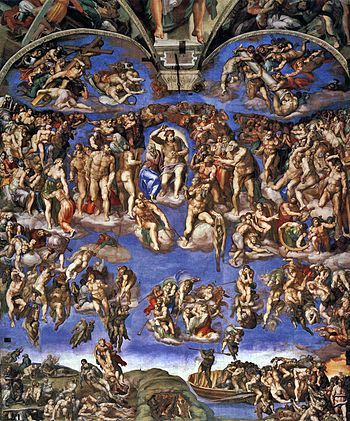
The Catholic Church today is a fabulously rich institution.  Pope Francis will no longer be leading a ‘humble’ life but will live surrounded by the immense wealth of the Vatican and the priceless Sistine Chapel and Basilica paintings of Michaelangelo, to say nothing of servants and bodyguards.

Tony Greenstein

The heart of darkness and the new Pope Jorge Mario Bergoglio.

Cardinal Bergoglio

Cross posted from Organised Outrage
"The church's role and support of the dictatorship hasn't been fully shown under the light of day" - Ian Mount

Last night within minutes of learning that the new leader of Roman Catholicism hailed from the Church hierarchy in Argentina I posted the following comment on my Facebook wall:
'I wonder what his position was during the dirty war. The then cardinal was an absolute bastard and backed the government when it was murdering, raping, torturing and disappearing people.' 
From my late teens I have had an interest in that period of Argentine history known as the rule of the Generals. At a conference on oral history in Ennis recently I recommended Horacio Verbitsky's book The Flight: Confessions of an Argentinian Dirty Warrior as one that provided rich insight into the times. Although if the reader wants a more overarching and thorough account of the era, Guerrillas and Generals: The Dirty War in Argentina is hard to go past. It is certainly one of my favourite works of non-fiction read within the past decade.
sistine-chapel-michelangelo-painting - the not so humble surroundings of Pope Francis Bergoglio


Horacio Verbitsky has been one of the biggest critics of Jorge Mario Bergoglio. Reportedly in his book, The Silence: from Paulo VI to Bergoglio, the secret links between the Church and the Navy Mechanics School, which unlike The Flight is not available in English, he claims that the new pontiff when “Provincial” of Argentina for the Society of Jesus, was complicit in the activities of the regime: 'It is terrible to see how he is rewarded.'

Although the 'highest ranking Jesuit in Argentina during the military dictatorship led by General Jorge Videla', Bergoglio seems not to have challenged the military juanta. And Videla would later claim in an interview that 'he had received the blessing of the country’s top clergymen for the actions of his regime.'

While Verbitsky is a serious journalist and human rights advocate he was at one time a member of the Montenero guerrillas, many of whose members suffered appalling violence at the hands of the Videla regime.

Whether his association with the guerillas has given his observations an ideological hue will always be a matter of debate and his detractors will certainly seek to use it to smear him.  Perhaps less easier to dismiss through the usual recourse to the slander rebuttal is the very dark shadow cast by legal proceedings:
In 2010, Bergoglio was questioned as a witness by judges probing the arrest and torture of two young Jesuits, Orlando Yorio and Francisco Jalics, who were taken to the notorious Naval School of Mechanics in March 1976. ESMA was known as a torture center during the so-called Dirty War, in which government agents targeted suspected left-wing activists, tens of thousands of whom were "disappeared." Yorio and Jalics were freed alive after five months. Bergoglio was alleged to have betrayed the young missionaries to the regime because they had become opposition sympathizers and he wanted to preserve the Jesuits' political neutrality.He was also questioned in two more investigations into alleged regime crimes, but no charges were brought and he denied any wrongdoing.

Bergoglio and Videla 

Michelangelo's Pieta in the Basilica Church in St Peter's Square
Other human rights activists who have documented the atrocities of the regime have defended the new pope.  Nobel Peace Prize winner Adolfo Perez Esquivel, himself tortured by the military, argued:

"Perhaps he didn’t have the courage of other priests, but he never collaborated with the dictatorship ... Bergoglio was no accomplice of the dictatorship. He can’t be accused of that."

The evidence thus far is that Bergoglio was at best silent. It was certainly a dangerous time for clergy who did speak out. They faced torture, murder and disappearance. And allegations in the Guardian two years ago that political prisoners were spirited away to Bergoglio's holiday home by the military to avoid Inter-American Human Rights Commission investigators are almost certainly without foundation. Against that, the Church has a history of lying and covering up for its princes, making it hard for the average observer to get to the truth.

1976-83 was a dark period in the history of a country already familiar with volatility and political violence. Argentine society was well into the throes of a guerrilla war where the guerrillas did not emerge with distinction for the manner in which they often treated those they kidnapped and held in people's prisons. But it was really when the military staged a coup in 1976 allowing it to take power that the country would have made an appropriate candidate for the title of Joseph Conrad’s work on Africa, The Heart of Darkness. The election of a new Catholic pontiff from a country with a dark history is already serving as an invitation to the Dirty War to yield what may be a dirty truth.

By Anthony McIntyre of the Pensive Quill.

Critics claim new Pope was part of Argentinean cover-up during junta reign

The Unholy Trinity

Critics of new Pope Francis have claimed that he maintained his silence as Argentina’s brutal military dictatorship raged a dirty war against left wing activists.

Some critics have pointed to his failure and the failure of his church to expose human rights violation at the height of military rule.

The claims were made in the wake of the publication of an interview with Argentina’s former military dictator Jorge Videla.

The interview, conducted in 2010, were only published on Sunday, hours before Archbishop of Buenos Aires Jorge Mario Bergoglio was elected Pope in Rome.

In the interview, Videla claims that he kept Argentina’s Catholic hierarchy informed about his regime’s policy of ‘disappearing’ political opponents.

He also told El Sur magazine that that the country’s Catholic leaders, including the new Pope claim his critics, offered advice on how to ‘manage’ the policy.

Videla said he had ‘many conversations with Argentina’s then primate Cardinal Primatesta, about his regime’s dirty war against left-wing activists.'

He claimed there were also conversations with other leading bishops from Argentina’s Episcopal conference as well as with the country’s papal nuncio at the time, Pio Laghi.

Videla said: “They advised us about the manner in which to deal with the situation.
“In certain cases church authorities offered their good offices and undertook to inform families looking for disappeared relatives to desist from their searches, but only if they were certain the families would not use the information to denounce the junta.


“In the case of families that it was certain would not make political use of the information, they told them not to look any more for their child because he was dead.”


Videla added: “The church understood well and also assumed the risks of such involvement.”

Critics say the Videla confession confirms long-held suspicions that Argentina’s Catholic hierarchy collaborated with the military’s so-called process of national reorganisation, which sought to root out communism.
sistine chapel and michelangelo paintings

Thousands of left-wing activists were swept up into secret detention centres where they were tortured and murdered after the Videla led coup in 1976.

The interview claims military chaplains were assigned as spiritual advisers to the junior officers who staffed the centres.

The Argentinean church’s actions were in stark contrast to the Catholic hierarchy in Brazil, where church leaders denounced that country’s military dictatorship and provided sanctuary to its victims.
Argentinean bishops were prominent defenders of the regime against accusations of human rights abuses from abroad.

The report says that at the height of the state’s offensive, Cardinal Primatesta refused to meet with mothers of the disappeared.

It claims he also prohibited the lower clergy from speaking out against state violence, even as death squads targeted Catholic priests critical of the regime.

The “Dirty War” Pope

Cross posted from The “Dirty War” Pope – World Socialist Web Site  16 March 2013

For over a week, the media has subjected the public to a tidal wave of euphoric banality on the Roman Catholic Church’s selection of a new pope.

This non-stop celebration of the dogma and ritual of an institution that for centuries has been identified with oppression and backwardness is stamped with a deeply undemocratic character. It is reflective of the rightward turn of the entire political establishment and its repudiation of the principles enshrined in the US Constitution, including the wall of separation between church and state.

What a far cry from the political ideals that animated those who drafted that document. It was Thomas Jefferson’s well-founded opinion that “In every country and in every age, the priest has been hostile to liberty. He is always in alliance with the despot, abetting his abuses in return for protection to his own.”

Jefferson’s view—and the reactionary character of the media’s sycophantic coverage—finds no more powerful conformation than in the identity of the new pope, officially celebrated as a paragon of “humility” and “renewal.”

Placed on the papal throne is not only another hard-line opponent of Marxism, the Enlightenment and all manner of human progress, but a man who is deeply and directly implicated in one of the greatest crimes of the post-World War II era—Argentina’s “Dirty War.”

Amid the pomp and ceremony Friday, the Vatican spokesman was compelled to address the past of the new Pope Francis—the former Archbishop of Buenos Aires, Jorge Bergoglio. He dismissed the accusations against him as the work of “anti-clerical left-wing elements.”

That “left-wing elements” would denounce the complicity of the Church’s leaders in the “Dirty War” waged by the military junta that ruled Argentina between 1976 and 1983 is scarcely surprising. They accounted for many of the estimated 30,000 workers, students, intellectuals and others who were “disappeared” and murdered, and the tens of thousands more who were imprisoned and tortured.

But some of Bergoglio’s harshest critics come from within the Catholic Church itself, including priests and lay workers who say he handed them over to the torturers as part of a collaborative effort to “cleanse” the Church of “leftists.” One of them, a Jesuit priest, Orlando Yorio, was abducted along with another priest after ignoring a warning from Bergoglio, then head of the Jesuit order in Argentina, to stop their work in a Buenos Aires slum district.

During the first trial of leaders of the military junta in 1985, Yorio declared, “I am sure that he himself gave over the list with our names to the Navy.” The two were taken to the notorious Navy School of Mechanics (ESMA) torture center and held for over five months before being drugged and dumped in a town outside the city.

Bergoglio was ideologically predisposed to backing the mass political killings unleashed by the junta. In the early 1970s, he was associated with the right-wing Peronist Guardia de Hierro (Iron Guard), whose cadre—together with elements of the Peronist trade union bureaucracy—were employed in the death squads known as the Triple A (Argentine Anti-Communist Alliance), which carried out a campaign of extermination against left-wing opponents of the military before the junta even took power. Adm. Emilio Massera, the chief of the Navy and the leading ideologue of the junta, also employed these elements, particularly in the disposal of the personal property of the “disappeared.”

Yorio, who died in 2000, charged that Bergoglio “had communications with Admiral Massera, and had informed him that I was the chief of the guerrillas.”

The junta viewed the most minimal expression of opposition to the existing social order or sympathy for the oppressed as “terrorism.” The other priest who was abducted, Francisco Jalics, recounted in a book that Bergoglio had promised them he would tell the military that they were not terrorists. He wrote, “From subsequent statements by an official and 30 documents that I was able to access later, we were able to prove, without any room for doubt, that this man did not keep his promise, but that, on the contrary, he presented a false denunciation to the military.”
Pope Francis enjoys a joke with supporters of the Junta
Bergoglio declined to appear at the first trial of the junta as well as at subsequent proceedings to which he was summoned. In 2010, when he finally did submit to questioning, lawyers for the victims found him to be “evasive” and “lying.”Bergoglio claimed that he learned only after the end of the dictatorship of the junta’s practice of stealing the babies of disappeared mothers, who were abducted, held until giving birth and then executed, with their children given to military or police families. This lie was exposed by people who had gone to him for help in finding missing relatives.

The collaboration with the junta was not a mere personal failing of Bergoglio, but rather the policy of the Church hierarchy, which backed the military’s aims and methods. The Argentine journalist Horacio Verbitsky exposed Bergoglio’s attempted cover-up for this systemic complicity in a book that Bergoglio authored, which edited out compromising sentences from a memorandum recording a meeting between the Church leadership and the junta in November 1976, eight months after the military coup.

The excised statement included the pledge that the Church “in no way intends to take a critical position toward the action of the government,” as its “failure would lead, with great probability, to Marxism.” It declared the Catholic Church’s “understanding, adherence and acceptance” in relation to the so-called “Proceso” that unleashed a reign of terror against Argentine working people.

This support was by no means platonic. The junta’s detention and torture centers were assigned priests, whose job it was, not to minister to those suffering torture and death, but to help the torturers and killers overcome any pangs of conscience. Using such biblical parables as “separating the wheat from the chafw,” they assured those operating the so-called “death flights,” in which political prisoners were drugged, stripped naked, bundled onto airplanes and thrown into the sea, that they were doing “God’s work.” Others participated in the torture sessions and tried to use the rite of confession to extract information of use to the torturers.

This collaboration was supported from the Vatican on down. In 1981, on the eve of Argentina’s war with Britain over the Malvinas (Falkland) Islands, Pope John Paul II flew to Buenos Aires, appearing with the junta and kissing its then-chief, Gen. Leopoldo Galtieri, while saying not a word about the tens of thousands who had been kidnapped, tortured and murdered.

As Jefferson noted, the Church is “always in alliance with the despot,” as it was in backing Franco’s fascists in Spain, its collaboration with the Nazis as they carried out the Holocaust in Europe, and its support of the US war in Vietnam.

Nonetheless, the naming of a figure like Bergoglio as pope—and its celebration within the media and ruling circles—must serve as a stark warning. Not only are the horrific crimes carried out in Argentina 30 years ago embraced, those in power are contemplating the use of similar methods once again to defend capitalism from intensifying class struggle and the threat of social revolution.

Bill Van Auken

Pope's election revives row over Argentine junta

By AFP
Posted  Friday, March 15  2013 at  00:57

Argentine cardinal Jorge Bergoglio's election as Pope Francis has revived a longstanding controversy over his role during the dark days of his homeland's "Dirty War."

Francis's elevation was widely celebrated in Argentina, but some accuse him and his country's church of having been too close to the brutal right-wing junta in power between 1976 and 1983.

In 2010, Bergoglio was questioned as a witness by judges probing the arrest and torture of two young Jesuits, Orlando Yorio and Francisco Jalics, who were taken to the notorious Naval School of Mechanics in March 1976.

ESMA was known as a torture center during the so-called Dirty War, in which government agents targeted suspected left-wing activists, tens of thousands of whom were "disappeared."
Yorio and Jalics were freed alive after five months.

Bergoglio was alleged to have betrayed the young missionaries to the regime because they had become opposition sympathizers and he wanted to preserve the Jesuits' political neutrality.
He was also questioned in two more investigations into alleged regime crimes, but no charges were brought and he denied any wrongdoing.

Horacio Verbitsky, a leftist author and militant who has written extensively on the Dirty War, claims that he has found "five new witnesses who confirm Bergoglio's role in the military government's crackdown."
Verbitsky maintains that the church actively collaborated with the regime and was even complicit in the disappearance of dissident priests.

For his part, Bergoglio has always denied any implication in the case of the two tortured missionaries, and even insists he intervened with the then head of the junta, Jorge Videla, to beg for their freedom.

"He even allowed them to leave for Italy," said Jose Maria Poirier, director of the Argentine Catholic journal Criterio.
"Some clergymen stayed silent, others were complicit. There were bishops who sympathized with the dictatorship, but that's not the case with Bergoglio, he's a man beyond reproach."

And 81-year-old Argentine architect Alfredo Perez Esquivel, himself a torture victim and winner of the 1980 Nobel Peace Prize for his human rights advocacy, came to Bergoglio's defence in an interview with BBC radio.

"There were bishops who were accomplices of the dictatorship, but Bergoglio was not," he said. "There is no link between him and the dictatorship."

A group accused of crimes against humanity under the dictatorship appeared in court wearing Vatican rosettes in honor of Bergoglio's new papal duties.
The defendants sat in the dock wearing the Vatican insignia on the lapel of their jackets during a hearing in the northwestern city of Cordoba.

The trial aims to determine the responsibility of a group of more than 40 soldiers in atrocities committed in the clandestine detention center La Perla.

In 2007, former police chaplain Cristian von Vernich became the first Argentine priest to be jailed for life. He was found guilty of complicity in seven murders, 31 cases of torture and 42 kidnappings.

Vatican defends Pope Francis’ actions during Argentina’s’Dirty War’

By Alessandro Speciale| Religion News Service, Published: March 15

VATICAN CITY — The Vatican on Friday (March 15) hit back at critics who claim that newly elected Pope Francis failed to do enough to protect two fellow Jesuits during Argentina’s military dictatorship.

Cardinal Jorge Bergoglio, now Pope Francis, has been criticized for his stance towards the military junta in his native Argentina, when as many as 30,000 people died or disappeared.

After his election to the papacy on Wednesday, Francis has faced intense scrutiny for his role in the arrest of two young Jesuits, Orlando Yorio and Francisco Jalics, who were detained for months in a notorious torture center.

Bergoglio, the first pope to hail from Latin America, was the top-ranking Jesuit in Argentina in the 1970s during the nation’s “Dirty War.”

At a press conference on Friday, the Vatican’s chief spokesman, the Rev. Federico Lombardi, said there has never been “a concrete or credible accusation” against Bergoglio. “He was questioned by an Argentinian court as someone aware of the situation but never as a defendant.”

According to Lombardi, criticism of Bergoglio, which first emerged on the eve of the 2005 conclave that elected then-Cardinal Joseph Ratzinger as Pope Benedict XVI, is aimed at discrediting the church.

The accusations come from “anticlerical elements to attack the Church,” Lombardi said, and “must be firmly rejected.”

According to the Vatican spokesman, Bergoglio acted “to protect many persons at the time of the military dictatorship.”

Led by Jorge Videla, the military government orchestrated a reign of terror that plucked political enemies from their homes and sent then to sadistic torture centers where they were often raped, drugged and subjected to mock executions before they were killed.

The victims are called “los desaparecidos” or “the disappeared,” and number as high as 30,000. Argentinians today are still searching for the remains of the disappeared and their living offspring — scores of babies were born in their parents’ torture chambers and given to military families to adopt.

Critics say at worst, the Catholic Church was complicit in the crackdown and, at best, didn’t speak out forcefully enough to stop it. In one of his last acts as head of the Argentinian Catholic bishops’ conference, last year Bergoglio issued a collective apology for the church’s failure to protect its flock.

On Friday, the Vatican released a statement by Jalics, one of the two Jesuits allegedly tortured under Bergoglio’s watch. He said that while he has no information on Bergoglio’s actions during the five months he and his companion were detained and tortured, after his release he and Bergoglio “celebrated Mass publicly” and “embraced one another.”

“I have made my peace with these events and, as far as I am concerned, the case is closed,” he adds. “I wish Pope Francis God’s rich blessings for his office.”

Bergoglio himself always denied the accusations.

In a 2010 book-length interview, he said the two Jesuits were eventually released partially because he and his fellow Jesuits tried “like crazy” to obtain their release.

“The same night I heard about their kidnapping, I started acting,” he said in the book. The future pope says he met twice with Argentina’s military junta leadership to negotiate for their release.

While Bergoglio was always critical of the left-wing political activism of some parts of the clergy who fought actively against the dictatorship, he says he “did what he could at the time, with the little relations he could count on, to advocate for those who had been kidnapped.”

Three quarters of Argentina's 40-million-strong population are Catholic, but the influence of the church diminished under President Nestor Kirchner and his wife Cristina, who succeeded him in 2007.

Cristina Kirchner's government has legalized same-sex marriage in the teeth of strong opposition from the bishops, but pressure from the church has stymied moves to legalize abortion.

And Poirier argued that Francis's elevation might "reverse the decline and strengthen the church" in Argentina by giving it a more attractive local face.

How Islam Saved Jewry

It’s not often that I reprint an article from the Jewish Chronicle, a paper I’m presently taking to the Press Complaints Commission.  But regardless of the lack of any materialist analysis, how the rise and fall of Islam as a world empire related to the development of industry, trade, a market, the following article is nonetheless interesting in debunking the widely held Zionist nostrum these days of a Judeo-Christian heritage against the Islamic enemy.  As if Islam has been the promoter of the Crusades and pogroms and Christianity the defender of the Jews.  And when Christianity split, in the wake of developing capitalist nation states and colonialism, the Protestant Reformation led by Luther proclaimed that ‘the Jews are our misfortune' - something Julius Streicher emblazoned on the masthead of Der Sturmer.

Tony Greenstein

So, what did the Muslims do for the Jews?

By David J Wasserstein, May 24, 2012

 Islam saved Jewry. This is an unpopular, discomforting claim in the modern world. But it is a historical truth. The argument for it is double. First, in 570 CE, when the Prophet Mohammad was born, the Jews and Judaism were on the way to oblivion. And second, the coming of Islam saved them, providing a new context in which they not only survived, but flourished, laying foundations for subsequent Jewish cultural prosperity - also in Christendom - through the medieval period into the modern world.
cordoba synagogue
By the fourth century, Christianity had become the dominant religion in the Roman empire. One aspect of this success was opposition to rival faiths, including Judaism, along with massive conversion of members of such faiths, sometimes by force, to Christianity. Much of our testimony about Jewish existence in the Roman empire from this time on consists of accounts of conversions.
Maimonides house in Fes Morocco

Great and permanent reductions in numbers through conversion, between the fourth and the seventh centuries, brought with them a gradual but relentless whittling away of the status, rights, social and economic existence, and religious and cultural life of Jews all over the Roman empire.

A long series of enactments deprived Jewish people of their rights as citizens, prevented them from fulfilling their religious obligations, and excluded them from the society of their fellows.

Had Islam not come along, Jewry in the west would have declined to disappearance and Jewry in the east would have become just another oriental cult
Maimonides monument in Cordoba
This went along with the centuries-long military and political struggle with Persia. As a tiny element in the Christian world, the Jews should not have been affected much by this broad, political issue. Yet it affected them critically, because the Persian empire at this time included Babylon - now Iraq - at the time home to the world's greatest concentration of Jews.

Here also were the greatest centres of Jewish intellectual life. The most important single work of Jewish cultural creativity in over 3,000 years, apart from the Bible itself - the Talmud - came into being in Babylon. The struggle between Persia and Byzantium, in our period, led increasingly to a separation between Jews under Byzantine, Christian rule and Jews under Persian rule.
Manuscript page by Maimonides Arabic in Hebrew letters
Beyond all this, the Jews who lived under Christian rule seemed to have lost the knowledge of their own culturally specific languages - Hebrew and Aramaic - and to have taken on the use of Latin or Greek or other non-Jewish, local, languages. This in turn must have meant that they also lost access to the central literary works of Jewish culture - the Torah, Mishnah, poetry, midrash, even liturgy.

The loss of the unifying force represented by language - and of the associated literature - was a major step towards assimilation and disappearance. In these circumstances, with contact with the one place where Jewish cultural life continued to prosper - Babylon - cut off by conflict with Persia, Jewish life in the Christian world of late antiquity was not simply a pale shadow of what it had been three or four centuries earlier. It was doomed.

Had Islam not come along, the conflict with Persia would have continued. The separation between western Judaism, that of Christendom, and Babylonian Judaism, that of Mesopotamia, would have intensified. Jewry in the west would have declined to disappearance in many areas. And Jewry in the east would have become just another oriental cult.
Egyptian Alexandria Jewish girls during BatMitzva
But this was all prevented by the rise of Islam. The Islamic conquests of the seventh century changed the world, and did so with dramatic, wide-ranging and permanent effect for the Jews.

Within a century of the death of Mohammad, in 632, Muslim armies had conquered almost the whole of the world where Jews lived, from Spain eastward across North Africa and the Middle East as far as the eastern frontier of Iran and beyond. Almost all the Jews in the world were now ruled by Islam. This new situation transformed Jewish existence. Their fortunes changed in legal, demographic, social, religious, political, geographical, economic, linguistic and cultural terms - all for the better.
Iraqi Jews Jakob Yusef, 70, and niece Khalda Salih, 38, stand in their home in the tiny remaining Baghdad Jewish community on April 17, 2003. The family has lived their entire life in Baghdad while the Jewish community has dwindled to approximately 60 members from around 400,000 in the 1960's. (Mario Tama / Getty Images)
First, things improved politically. Almost everywhere in Christendom where Jews had lived now formed part of the same political space as Babylon - Cordoba and Basra lay in the same political world. The old frontier between the vital centre in Babylonia and the Jews of the Mediterranean basin was swept away, forever.

Political change was partnered by change in the legal status of the Jewish population: although it is not always clear what happened during the Muslim conquests, one thing is certain. The result of the conquests was, by and large, to make the Jews second-class citizens.

This should not be misunderstood: to be a second-class citizen was a far better thing to be than not to be a citizen at all. For most of these Jews, second-class citizenship represented a major advance. In Visigothic Spain, for example, shortly before the Muslim conquest in 711, the Jews had seen their children removed from them and forcibly converted to Christianity and had themselves been enslaved.

In the developing Islamic societies of the classical and medieval periods, being a Jew meant belonging to a category defined under law, enjoying certain rights and protections, alongside various obligations. These rights and protections were not as extensive or as generous as those enjoyed by Muslims, and the obligations were greater but, for the first few centuries, the Muslims themselves were a minority, and the practical differences were not all that great.

Along with legal near-equality came social and economic equality. Jews were not confined to ghettos, either literally or in terms of economic activity. The societies of Islam were, in effect, open societies. In religious terms, too, Jews enjoyed virtually full freedom. They might not build many new synagogues - in theory - and they might not make too public their profession of their faith, but there was no really significant restriction on the practice of their religion. Along with internal legal autonomy, they also enjoyed formal representation, through leaders of their own, before the authorities of the state. Imperfect and often not quite as rosy as this might sound, it was at least the broad norm.
Rhodes Synagogue
The political unity brought by the new Islamic world-empire did not last, but it created a vast Islamic world civilisation, similar to the older Christian civilisation that it replaced. Within this huge area, Jews lived and enjoyed broadly similar status and rights everywhere. They could move around, maintain contacts, and develop their identity as Jews. A great new expansion of trade from the ninth century onwards brought the Spanish Jews - like the Muslims - into touch with the Jews and the Muslims even of India.

All this was encouraged by a further, critical development. Huge numbers of people in the new world of Islam adopted the language of the Muslim Arabs. Arabic gradually became the principal language of this vast area, excluding almost all the rest: Greek and Syriac, Aramaic and Coptic and Latin all died out, replaced by Arabic. Persian, too, went into a long retreat, to reappear later heavily influenced by Arabic.
Jews of Kai-Fung-Foo China
The Jews moved over to Arabic very rapidly. By the early 10th century, only 300 years after the conquests, Sa'adya Gaon was translating the Bible into Arabic. Bible translation is a massive task - it is not undertaken unless there is a need for it. By about the year 900, the Jews had largely abandoned other languages and taken on Arabic.

The change of language in its turn brought the Jews into direct contact with broader cultural developments. The result from the 10th century on was a striking pairing of two cultures. The Jews of the Islamic world developed an entirely new culture, which differed from their culture before Islam in terms of language, cultural forms, influences, and uses. Instead of being concerned primarily with religion, the new Jewish culture of the Islamic world, like that of its neighbours, mixed the religious and the secular to a high degree. The contrast, both with the past and with medieval Christian Europe, was enormous.

Like their neighbours, these Jews wrote in Arabic in part, and in a Jewish form of that language. The use of Arabic brought them close to the Arabs. But the use of a specific Jewish form of that language maintained the barriers between Jew and Muslim. The subjects that Jews wrote about, and the literary forms in which they wrote about them, were largely new ones, borrowed from the Muslims and developed in tandem with developments in Arabic Islam.

Also at this time, Hebrew was revived as a language of high literature, parallel to the use among the Muslims of a high form of Arabic for similar purposes. Along with its use for poetry and artistic prose, secular writing of all forms in Hebrew and in (Judeo-)Arabic came into being, some of it of high quality.

Much of the greatest poetry in Hebrew written since the Bible comes from this period. Sa'adya Gaon, Solomon Ibn Gabirol, Ibn Ezra (Moses and Abraham), Maimonides, Yehuda Halevi, Yehudah al-Harizi, Samuel ha-Nagid, and many more - all of these names, well known today, belong in the first rank of Jewish literary and cultural endeavour.

W here did these Jews produce all this? When did they and their neighbours achieve this symbiosis, this mode of living together? The Jews did it in a number of centres of excellence. The most outstanding of these was Islamic Spain, where there was a true Jewish Golden Age, alongside a wave of cultural achievement among the Muslim population. The Spanish case illustrates a more general pattern, too.

What happened in Islamic Spain - waves of Jewish cultural prosperity paralleling waves of cultural prosperity among the Muslims - exemplifies a larger pattern in Arab Islam. In Baghdad, between the ninth and the twelfth centuries; in Qayrawan (in north Africa), between the ninth and the 11th centuries; in Cairo, between the 10th and the 12th centuries, and elsewhere, the rise and fall of cultural centres of Islam tended to be reflected in the rise and fall of Jewish cultural activity in the same places.

This was not coincidence, and nor was it the product of particularly enlightened liberal patronage by Muslim rulers. It was the product of a number of deeper features of these societies, social and cultural, legal and economic, linguistic and political, which together enabled and indeed encouraged the Jews of the Islamic world to create a novel sub-culture within the high civilisation of the time.

This did not last for ever; the period of culturally successful symbiosis between Jew and Arab Muslim in the middle ages came to a close by about 1300. In reality, it had reached this point even earlier, with the overall relative decline in the importance and vitality of Arabic culture, both in relation to western European cultures and in relation to other cultural forms within Islam itself; Persian and Turkish.

Jewish cultural prosperity in the middle ages operated in large part as a function of Muslim, Arabic cultural (and to some degree political) prosperity: when Muslim Arabic culture thrived, so did that of the Jews; when Muslim Arabic culture declined, so did that of the Jews.

In the case of the Jews, however, the cultural capital thus created also served as the seed-bed of further growth elsewhere - in Christian Spain and in the Christian world more generally.

The Islamic world was not the only source of inspiration for the Jewish cultural revival that came later in Christian Europe, but it certainly was a major contributor to that development. Its significance cannot be overestimated.

David J Wasserstein is the Eugene Greener Jr Professor of Jewish Studies at Vanderbilt University. This article is adapted from last week's Jordan Lectures in Comparative Religion at the School of Oriental and African Studies.