Showing posts with label Shay Hazkani. Show all posts

4 March 2016

Rewriting History – First the Holocaust now the Nakba – Netanyahu style

It is illegal to teach about the Nakba in Israel today.  History is what the State says it is.  The word ‘Nakba’ is officially banned from Israeli, including Israeli Arab, textbooks.  By  banning a word, Israeli’s stupid leaders, led by Netanyahu, believe that they can rewrite history itself.  That Israel’s Palestinians will somehow forget about what happened in 1948.  What this is really about is removing knowledge of the Nakba from Israeli Jewish history.

However even the most stupid Police state doesn’t reclassify files that have already been declassified.  The secrets are already out.  They have already been studied.  What kind of mentality is it that believes that by reclosing the archives you can change or rewrite history?
I guess the mind of mentality that can rewrite the history of the holocaust and pretend that it was the Palestinians not Hitler who was responsible – step forward Netanyahu!

Tony Greenstein 

Classified: Politicizing the Nakba in Israel's state archives
Documents that have already been cited in history books are being re-classified in the State Archives.
Israeli troops in Gaza in 1957 when a number of massacres of civilians took place before Israel withdrew - all excised from official memory
Israeli state archive documents that were de-classified in the 1980s have been re-classified in recent years, according to a recently hired assistant professor at the University of Maryland’s Center for Jewish Studies.
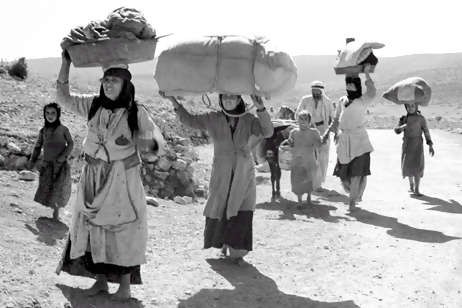
Palestinian refugees fleeing to Lebanon in 1948
Shay Hazkani, who was Israel Channel 10′s military correspondent from 2004-8 and will soon complete his doctorate at New York University, discusses the background and politics of the state’s decision to re-classify various documents in an interview for the Ottoman History Podcast.
In the interview, which was recorded in July 2014 (I came across it recently by chance), Hazkani estimates that about one-third of documents that were de-classified in the 1980s have been re-classified starting from the late 1990s, when the archives were digitized.


These reclassified documents were used extensively by prominent “new historians” like Benny Morris (“Birth of the Palestinian Refugee Problem”), Avi Shlaim (“The Iron Wall”), Hillel Cohen (“Good Arabs” and “1929″) and Ilan Pappe (“Ethnic Cleansing of Palestine”) and cited in their books.
But even though these books certainly exist in the public domain, and they do cite original documents in the Israeli state archives that note orders given to the nascent Israeli army to expel Palestinians during the 1948 war, the government of Israel continues to promote its official narrative — that the Palestinians left of their own accord. Hence the government and, more specifically, the security establishment attempts to control the discourse by re-classifying these documents.
The 25-minute interview is embedded below and well worth your time. Among other things, Hazkani explains that Israel adopted a law in 1955 that specified documents could be kept classified for a maximum of 50 years. But the Mossad, the army and the Shin Bet, which control very large archives, refused to comply with the law. Petitions to declassify specific documents have been brought before the higher courts, with some pending now.

Toward the end of the interview, Hazkani recounts a fascinating anecdote involving his own experience with re-classified documents, this time connected with an incident reported by Joe Sacco in his graphic novel “Footnotes in Gaza.” Sacco traveled to Gaza in 2002 and 2003 to research the book, which was published in 2009. The “footnote” refers to an incident that occurred during the Israeli army’s three-month occupation of Gaza during 1956-7, during the Suez War.
For the book, Sacco interviews several Palestinian eyewitnesses who describe having seen the Israeli army shoot and kill at least 100 civilians out of the hundreds that were rounded up and herded into a schoolyard in Rafah. According to the witnesses, the event took place on November 12, 1956. The details, as drawn and described in Sacco’s book, are quite harrowing, which explains why articles about the book published in Haaretz caused a furore. In the podcast, Hazkani recounts having followed the online discussions and debates about the claims in Sacco’s book.

One blogger, recounts Hazkani, writes in a post about having seen a specific document that confirms some of Sacco’s account. Hazkani happened to be on his way to the archive when he read that post; and since the blogger cited a specific file number, he asked to see it. But when he received the file, it contained a note that indicated the document had been reclassified the previous day — the same day the blogger had published his post.

There is obviously an inherent contradiction in Israeli authorities so clumsily trying to reclassify damning documents that have already been cited by well-known historians, even as it invests so much money and effort in promoting its image abroad as a transparent democracy. Israel is obviously not the only country that tries to shape its image by keeping documents classified for extended periods or even indefinitely. Hazkani mentions colonial archives recently uncovered in Britain, and Turkey’s still-classified archives from the Ottoman era. But Israel’s attempts to redact or classify documents after they have been extensively cited seems counter-productive at best.

1948 no catastrophe says Israel, as term nakba banned from Arab children's textbooks

Israel's education ministry has ordered the removal of the word nakba – Arabic for the "catastrophe" of the 1948 war – from a school textbook for young Arab children, it has been announced.

The decision – which will alter books aimed at eight- and nine-year-old Arab pupils – will be seen as a blunt assertion by Binyamin Netanyahu's Likud-led government of Israel's historical narrative over the Palestinian one.

The term nakba has a similar resonance for Palestinians as the Hebrew word shoah – normally used to describe the Nazi Holocaust – does for Israelis and Jews. Its inclusion in a book for the children of Arabs, who make up about a fifth of the Israeli population, drives at the heart of a polarised debate over what Israelis call their "war of independence": the 1948 conflict which secured the Jewish state after the British left Palestine, and led to the flight of 700,000 Palestinians, most of whom became refugees.

Netanyahu spoke for many Jewish Israelis two years ago when he argued that using the word nakba in Arab schools was tantamount to spreading propaganda against Israel.

Palestinians have always maintained that the 1948 refugees were the victims of Israeli "ethnic cleansing". But in recent years a new generation of revisionist Israeli historians has rejected the old official narrative that the Palestinians, supported by the neighbouring Arab states, were responsible for their own misfortune.

Reflecting those changing perceptions, Ehud Olmert, Israel's last prime minister and leader of the centrist Kadima party, referred to Palestinian "suffering" at the Annapolis peace conference in 2007.
Netanyahu's Likud takes a different view. "There is no reason to present the creation of the Israeli state as a catastrophe in an official teaching programme," said the education minister, Gideon Saar.

"The objective of the education system is not to deny the legitimacy of our state, nor promote extremism among Arab-Israelis." There was bitter controversy in 2007 when nakba was introduced into a book for use in Arab schools only, by the then education minister, Yuli Tamir of the centre-left Labour party.

"In no country in the world does an educational curriculum refer to the creation of the country as a 'catastrophe'," Saar told MPs in the Knesset yesterday. "There is a difference between referring to specific tragedies that take place in a war – either against the Jewish or Arab population – as catastrophes, and referring to the creation of the state as a catastrophe."

Arab MP Hana Sweid accused the government of "nakba denial". The follow-up committee for Arab education said: "Palestinian-Arab society in Israel has every right to preserve its collective memory, including in its school curriculums."

Jafar Farrah, director of Mossawa (Equality), an Israeli-Arab advocacy group, told Reuters the decision to excise the term nakba only "complicated the conflict". He called it an attempt to distort the truth and seek confrontation with the country's Arab population.

Yossi Sarid, a dovish former education minister, said the decision showed insecurity. "Zionism has already won in many ways, and can afford to be more confident," he said. "We need not be afraid of a word."

Israeli Arab activists have also pledged to carry on marking Nakba Day in the face of planned legislation that would withhold government money from institutions that fund activity deemed detrimental to the state.

These include commemorating the nakba – on the same day as Independence Day – "rejecting Israel's existence as the state of the Jewish people" and supporting an "armed struggle or terrorist acts" against Israel. An initial version proposed by the far-right foreign minister Avigdor Lieberman would have banned all Nakba commemorations and carried sentences of up to three years in prison.

By the book

Japan has long been criticised for toning down aspects of its wartime atrocities in textbooks, particularly the Nanjing massacre and use of sex slaves. Russia has taken up Soviet techniques of airbrushing history, a book being banned two years ago for positing that Vladimir Putin had established an "authoritarian dictatorship". A decade after Nelson Mandela's release from prison, black schoolchildren in South Africa were still studying textbooks that extolled the voortrekkers and offered only minimal explanations of their own history. In Britain it was an exam paper that caused offence when a poem by Carol Ann Duffy containing referencing knife crime was removed from the GCSE syllabus. The Carol Ann Duffy poem began: "Today I am going to kill something. Anything./ I have had enough of being ignored and today/ I am going to play God."

4 June 2015

Tantura – the Massacre that the Zionists tried to Cover Up

An excellent article by Jonathan Cook, a British journalist who lives in Nazareth.  He was blacklisted by the Guardian.

Tantura was the scene of one of the worst massacres of the Nakba and there has been a concerted effort to cover it up.  The University of Haifa was complicit in the brow-beating of Teddy Katz, the 
Haifa MA student, who was forced into rewriting his thesis.

Jonathan Cook 4 June 2015
The Commemoration of the Massacre at Tantura

For Palestinians, Tantura, the name of a coastal village south of Haifa that was once home to 1,700 inhabitants, has become a byword for the darkest episodes of the Nakba (Arabic for catastrophe), the ethnic cleansing of 1948.

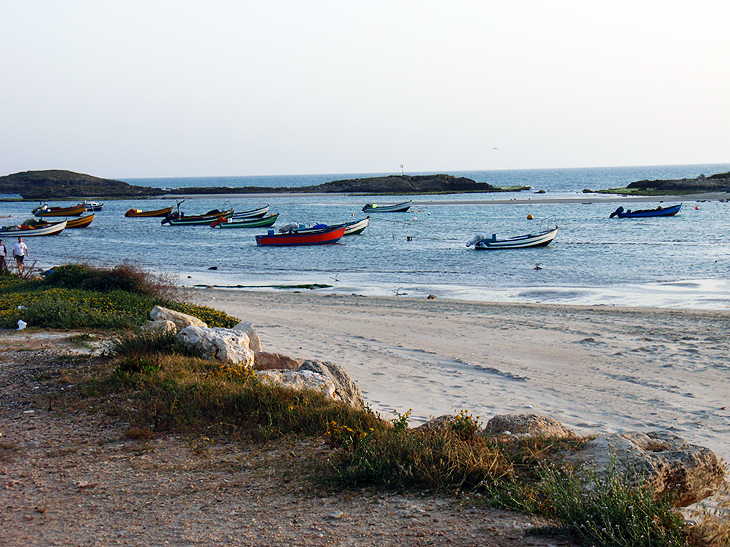
If you're looking for a truly great beach in Israel ... you should consider checking out Dor Beach so goes the blurb on the tourist brochure
For Israelis, the site is referred to by a different name — Dor, known as a popular beach resort belonging to two neighboring kibbutzim, Dor and Nahsholim, an hour’s drive north of Tel Aviv.
In May, some 300 activists met in the resort’s car park in an attempt to end the long-enforced silence about Tantura in Israelis’ collective memory. Precisely 67 years after the massacre, they staged the first-ever commemoration at the site.

The Commemoration of the Massacre at Tantura
They laid wreaths in the car park, marking the mass grave in the village cemetery where more than 200 Palestinians were hurriedly interred after they had been executed on 22 May 1948, as Zionist forces swept up the Mediterranean coast.

Some 130 small placards were held aloft, each bearing the name of a victim the organizers had been able to identify.

Then the group held a short procession past baffled Israeli holiday-makers — sunbathing, building sandcastles and barbecuing — through an area where Tantura’s 250 homes once stood. The march finished at the beach, where in 1948 many of the villagers had been interrogated before being put to death.

Quest for justice

Tantura in 1935 during the British Mandate
There are few signs today of the original village to disturb Israelis’ revelries. A Hebrew-language sign admits vaguely that a small domed shrine amid the chalets is the ancient grave of a sheikh.

An impressive large stone structure on the beachfront, once a prominent Tantura home, according to the village’s refugees, is simply marked “Entry forbidden.”

The organizers hope to use the commemoration to increase pressure on the Israeli authorities to allow Israel’s Palestinian minority to erect a permanent memorial at the site to the victims.

By contrast, a monument has stood for decades a short distance away, on the main coastal highway, listing the names of 13 Zionist fighters who were reported to have died in the attack on Tantura.

“This massacre has been kept out of Israelis’ consciousness for far too long,” said Hazar Abu Raya, one of the organizers. “It is time for that to change. This is a first step in our quest for justice for the families.”

Basel Ghattas, a Palestinian member of Israel’s parliament, the Knesset, who took part, said the commemoration was an important milestone. He mentioned a famous quotation — often attributed to David Ben-Gurion, Israel’s first prime minister — that “The old will die and the young will forget.”
“Ben-Gurion has been proved wrong,” said Ghattas. “The third generation after the Nakba refuse to forget. They demand a right of return and have intensified the struggle to keep the memory of the Nakba alive.”

Relatives ‘buried under the tarmac’

The event was the first joint venture between Filasteeniyat, a grassroots Palestinian rights movement, and the Association for the Defense of the Rights of the Internally Displaced People in Israel. Both are organizations representing Israel’s 1.5 million-strong Palestinian minority, a fifth of the state’s population. (Government population figures put Palestinians in Israel at 1.7 million, but this includes Palestinians in occupied East Jerusalem, most of whom don’t have Israeli citizenship.)

A handful of now-elderly survivors from Tantura, who, as children, were spared death, were among those attending. Many had fled or been put on trucks by the soldiers to be transported to the Palestinian village of Fureidis, close by.

Palestinian refugees who remained inside Israel’s boundaries after 1948 were given the Orwellian status of “present absentees”: present in Israel, but forced to become absentees from their original homes.

One of the survivors, 73-year-old Mahmoud Amar, who was six at the time of the massacre, said he remembered being woken by his mother, who told him to get dressed quickly. “She said, ‘People are being killed.’”

As they fled the village, he recalled seeing dead bodies all around. One of them was his grandfather.
Many of his other relatives ended up in Syria, including in the Yarmouk refugee camp. He and his mother settled in Fureidis.

His uncle was one of those made to bury dozens of villagers’ bodies, he added.

He said he was very moved by the commemorative ceremony: “I have many relatives buried under the tarmac here, who are invisible to all these visitors who think of this place simply as a holiday resort. It is time the dead were given the respect they deserve.”

Rasmiya Hashmowi, aged 80, who lost several uncles, rested in a chair next to the beach after the procession. She said the event had been very emotional: “Seeing everyone here today gave me hope that one day I or my children might see a real return, on a much larger scale.”

Complete cover-up

Also in attendance were Ilan Pappe, a noted Israeli historian of the Nakba, and Teddy Katz, whose research in the late 1990s provided for the first time Israeli eyewitness testimony confirming long-standing Palestinian claims of a massacre at the village.

Katz’s master’s dissertation created such a furore in Israel that he was eventually forced under mounting legal, financial and academic pressure to renounce parts of it. He suffered a stroke during this period that friends and family attribute to the severe stress he was placed under.

He has struggled to recover since. Giving a short speech seated in a wheelchair, next to the wreaths at the entrance to Nahsholim’s hotel, he called the events at Tantura “shameful” and apologized on behalf of Israelis.

The Tantura revelations would also have a profound impact on the career of Pappe, author of the best-seller The Ethnic Cleansing of Palestine.

As the only academic at the University of Haifa to publicly come to Katz’s defense, Pappe found himself on a path of increasing confrontation with his institution, leading him eventually to leave the country and reestablish his career at Exeter University in the UK.

Tantura, said Pappe, was a test of Israelis’ willingness to set aside their traditional narratives of the Nakba: that the refugees had left their villages largely of their own accord and that Israel’s army was “the most moral in the world.”

A report on the website of the Committee for Accuracy in Middle East Reporting in America (CAMERA), a Zionist lobby group, claimed only last year that the Tantura massacre was “fictional.”

“Tantura is probably the most extreme example in Israel of a place that is today associated with fun and entertainment that was created over the ruins of a major massacre from 1948,” Pappe said. “The cover-up that took place here was more complete than anywhere else.”

Killed in cold blood

Katz’s revelations were based on taped interviews with 20 Palestinian survivors and 20 former soldiers from the Alexandroni Brigade, which attacked the village a week after Israel unilaterally declared statehood.

According to Israeli and Palestinian historians, Tantura was one of more than 500 Palestinian villages that were ethnically cleansed by Zionist forces in 1948. Most were later razed and their lands passed to exclusively Jewish communities like Dor and Nahsholim.

The inhabitants of the destroyed Palestinian villages formed the bulk of the 750,000 refugees Israel refused to allow back to their homes.

From Katz’s testimonies, he was able to estimate that some 20 Palestinians had been killed in the initial fighting at Tantura, a figure backed by a later official account from the Israeli army.

After the village’s surrender, many of the Palestinian men were taken aside. Katz’s research suggests that up to 225 Palestinians were killed in cold blood. A Jewish eyewitness who supervised the burials told Katz that he counted 230 Palestinian corpses himself.

A car park for the beach resort was later built over the village cemetery where the mass grave was dug.

Other massacres

Although historians have identified dozens of massacres by Zionist forces in 1948, most were much smaller in scale than Tantura.

Aryeh Kitzhaki, a former director of the Israeli army’s archives, said in the early 1990s that he had seen files on 10 massacres in which more than 50 Palestinians were killed, and another 100 smaller ones.

The only comparable events to Tantura occurred at Deir Yassin, near Jerusalem, and at Lydd, now the mostly Jewish city of Lod, close to Israel’s Ben-Gurion airport.

Pappe said events like the Tantura commemoration were vital to forcing Israelis to confront their community’s responsibility for the mass dispossession of Palestinians in 1948.

“Deir Yassin was the only massacre that was acknowledged by Israel,” he said. “Ben-Gurion apologized for it to King Abdullah [of Jordan] after he made inquiries.”

Concerning Tantura, he added, the official version is still that those Palestinians who died there were killed during battle.

Tantura, Pappe noted, was the largest and most significant village in a coastal area between Haifa and Tel Aviv that Israeli leaders wanted emptied of Palestinians. Of the 64 Palestinian villages in the area, only two, Fureidis and Jisr al-Zarqa, both close to Tantura, were allowed to survive after intense lobbying by neighboring Jewish communities that wanted the villagers as a labor force.

No escape route

Pappe believes the extent of the massacre at Tantura occurred as a result of a botched expulsion operation. Such expulsions were carried out as part of Plan Dalet, an outline for ethnically cleansing Palestine of as much of its Palestinian population as possible.

Instead of attacking Tantura from three sides, as occurred elsewhere, driving the population northwards towards Lebanon and Syria, the brigade encircled the village, leaving the inhabitants no escape route.

Katz’s research confirmed Palestinian accounts that the massacre occurred in two stages. After village leaders waved a white flag following clashes that left a handful of Palestinians and Israelis dead, the soldiers went on a killing spree, entering homes and executing anyone they found. The rampage left an estimated 100 villagers dead.

The rest were rounded up, with fighting-age men separated from the elderly, women and children. The men were led to the beach, where they were interrogated and another 100 or so — aged between 13 and 30 — executed.

Once the furore over Katz’s research broke, he was stripped of his degree by the University of Haifa and forced to extensively rewrite his dissertation. However, the evidence of the massacre has only grown since.

Documents unearthed a few years later in Israel’s archives showed that, in the wake of the attack, army headquarters had heard fears that the large number of unburied corpses at Tantura might lead to an outbreak of typhoid.

Other reports noted “irregularities” and “over-enthusiasm” in the attack, while a final report from the Alexandroni Brigade observed: “We have tended to the mass grave.”

Fear of speaking out

Pappe has pointed out in his own research that the Tantura massacre went largely unremarked even in Palestinian literature of the Nakba period.

The reason, he suggested, was that many of the traumatized survivors — who had been children at the time — lived close by to Tantura in Fureidis or Jisr al-Zarqa in modern-day Israel. As the years passed, and knowledge of the Nakba grew, they continued to fear that speaking out might lead to fresh retaliations against them and their families.

One of Katz’s interviewees, Mustafa Masri, ended his testimony saying: “One should not mention these things. I do not want them to take revenge against us. You are going to cause us trouble.”
Katz’s work shook Israel in large part because it depended not just on Palestinian accounts — most Israeli scholars have preferred to ignore and discredit Palestinian oral history — but on Israeli witnesses who confirmed the Palestinian testimonies.

According to the accounts of historians and of those involved, the two other large-scale massacres — at Deir Yassin and Lydd — occurred in different circumstances, and were probably more planned.
Deir Yassin was attacked in early April 1948, five weeks before the Zionist leadership announced statehood. Under the auspices of the Haganah, soon to become the Israeli army, a Zionist militia called the Irgun carried out the attack.

The goal was to sow so much fear that Palestinians in other villages would flee without fighting.
The evidence suggests that the Irgun’s leader, Menachem Begin, later to become an Israeli prime minister, even inflated the death toll at Deir Yassin — from just over 100 to 250 — to encourage a mass exodus.

Three months later, at the city of Lydd, soldiers under the command of Yitzhak Rabin, also to become a prime minister, fired on a mosque where dozens of residents had sought refuge from the fighting. Some 176 bodies were reportedly recovered from the building.

According to Rabin’s own account, Ben-Gurion was keen to see the large Palestinian population centers close to Tel Aviv emptied.

Historical deceptions

Many long-standing Israeli claims about the Nakba have been steadily discredited by historical research.

Two years ago, Israeli scholar Shay Hazkani revealed that the widespread view that Palestinians fled their villages in 1948 under orders from neighboring Arab states had been encouraged by an Israeli misinformation campaign initiated by Ben-Gurion.

Hazkani had only found out about Ben-Gurion’s efforts because he was erroneously given a classified file in the Israeli military archives.

In May this year, a letter was published in the Haaretz newspaper suggesting claims that Israel tried to persuade 50,000 refugees from Haifa to return to their homes were a deception.

The former Israeli Prime Minister Golda Meir states in her autobiography that Ben-Gurion ordered her to Haifa to plead with the refugees to stay. Meir wrote: “I sat on the beach there and begged them to return home … I pleaded with them until I was exhausted but it didn’t work.”

However, a few weeks after the mass expulsions in Haifa, Ben-Gurion wrote to Abba Khoushy, soon to become Haifa’s mayor, stating: “I hear that Mr. Marriot [Cyril Marriot, the British consul in Haifa] is working to return the Arabs to Haifa. I don’t know how it is his business, but until the war is over we don’t want a return of the enemy. And all institutions should act accordingly.”

In fact, Ben-Gurion did not reverse his policy after the war, barring the return of Haifa’s refugees as well as those from hundreds of other villages.

- See more at