Showing posts with label Camera. Show all posts

27 February 2018

Martin Luther King Boycotted the Israeli State

This was originally posted in March 2013 but an update has marked it as posted today - it is of historical interest only
For many years, the Zionist movement, up to its neck in collaboration with South African Apartheid, hauled out a fabricated quote from Martin Luther King to the effect that when you criticise Zionism you mean Jews and ‘that is anti-Semitism’.  The only problem with this, as even the ultra-conservative Zionist pressure group Camera was forced to admit, was that it was false.  Meanwhile it turns out that Martin Luther King was doing his best to avoid the pariah state.

How Martin Luther King Jr. avoided visiting Israel

Documents that have come to light 45 years after the assassination of Martin Luther King Jr. show Israel's efforts to woo the civil rights leader – a campaign that never came to fruition.

The Israel Consul in Atlanta, Zeev Dover, had an interesting idea 50 years ago. In order to bring the State of Israel closer to the "black community," he made a suggestion to the Foreign Ministry: To send books on Judaism and Israel to "the libraries of every black college." Alongside this, Dover recommended inviting African-American lecturers to "black colleges" who "had visited Israel and are familiar with our history." In this way, he hoped Israel could contribute towards "introducing the sophisticated nature of the national movement for the social-cultural regeneration of the people of Israel to this group."

These ideas can be found in a memorandum under the heading "Ties with the black community," sent by the consul to the Israeli Embassy in Washington on November 9, 1962. The memo is part of a selection of documents that deal with Israel's ties with the black community in the United States, and with its failed attempts to host the black leader Martin Luther King in Israel.

These documents were recently released by the State Archives, on the 45th anniversary of King's assassination. Studying them is also relevant during the run-up to the visit of another black leader to these shores – U.S. President Barack Obama.

The internal debate within Israel regarding Martin Luther King was revealed in a classified document that the consul in Atlanta sent to the Washington embassy in August 1962. Exactly a year later, King led the huge demonstration in Washington, where he delivered his historic "I have a dream" speech.

The Israel Consul in Atlanta wrote that he "places great importance on forming connections with the black leadership," but added: "In my opinion the time is not yet ripe for his visit to Israel." He explained that this was because King represents "the militant wing of the civil rights movement," and that important organizations "are not in agreement with him and oppose his methods." He also added that alongside the global fame King had attained, he also had managed to alienate groups of moderate African Americans.

The consul raised the concern that inviting King to Israel would lead to "severe negative responses," and recommended that "in any case, we should not be the first country that gives King so-called international status." He also warned that King's visit to Israel could harm Israel's ties with Southern states in the U.S., who felt threatened by the dominant radical leader. At the end of the memo he recommended "shelving the idea until the right moment," and added "our efforts to enter into discussions with different factors in the black community must be done…without being overly conspicuous."

The next letter he sent on the subject to his superiors at the Foreign Ministry, in November 1962, presented a more complex picture: On the one hand, the black community does not have real impact or importance in the U.S. – and therefore Israel shouldn't go out of its way to woo it. On the other, he noticed the unrest that had begun, and warned that Israel should not ignore it.

"It is important that we define what our specific objectives are towards this population, and accord them the appropriate treatment," he wrote. He added the argument that African-Americans only comprise 11 percent of the population of the U.S., and said that: "despite the high birthrate [they] will remain a minority. Moreover, many more years will pass until this racial minority recovers from the economic and educational backwardness that is the result of discrimination."

When reading the consul's words, it's worth bearing in mind the spirit of the times they were written in. Today they may seem racist and arrogant: "Uniting and driving the Negros is the urge to defend themselves against discrimination and all that entails. It is unlikely that in the near future, the Negros will become a group with the political and economic influence consistent with their numbers in the total population. This is also because of their low average levels of education and affluence, and also since domestic pressures are at the top of their concerns, with the rest of the world taking second place to their struggle for recognition."

However, the consul warned that "we should not ignore this large population," and recommended "fostering contact with all its branches more than ever before." He also said that Israel's main concern should be directed towards "laying the ground for the future."

Among other things, the consul suggested emphasizing the historical similarities between Jews and blacks as persecuted minorities, but added that "our first goal must be, in my opinion, filling the gap in [their] knowledge and clarifying the eternal connection between the Jewish people and their country."

He attached to the letter a list of dozens of American colleges that had black students. "In the southern U.S., blacks are concentrated in their own special colleges, which allows us special access to this sector without the fear of 'discrimination' on our part that could occur after making a special and separate request to students on mixed campuses" he wrote.

While the Israeli government had not yet formulated its final position regarding King, there were other organizations in Israel that hurried to invite him to visit. The Histadrut labor federation received King's confirmation – but for some unknown reason he cancelled his visit. This pattern repeated itself several times over the next few years: Authorities in Israel invited him, he responded in the affirmative, but the visits never took place. In 1964, following the announcement that King was to receive the Nobel Peace Prize, Israeli representatives met with him.

Deputy Prime Minister Abba Eban met with King in Washington and invited him to visit Israel. King accepted, but a date was not set. Five months later, in March 1965, the Israeli ambassador in Washington, Avraham Harman, invited King as an official guest of the Israeli government to visit "on any date at his convenience." This invitation was another that went unfulfilled.

In December that same year, King met with Shimon Yallon, the consul general of Israel in Atlanta. At the start of the meeting King said he had held an "open invitation" to visit Israel for four years, but that his visit had, unfortunately, yet to take place.

Half a year later, King wrote to the Israeli ambassador in Washington. In his letter, he said that he was "very embarrassed" he didn't respond to his request over the course of several months. He justified this as follows: "Just the other day one of my secretaries discovered a large number of letters that had been placed in a folder of 'letters to be filed.'…Your letter was, unfortunately, one of those in that particular folder...I can assure you that it was not due to sheer carelessness but to the pressures of an understaffed and overworked office."

But despite the apology, King ended the letter with a reservation: "At this writing, it is not possible for me to give you a date when I can go there, but I do hope that my schedule will soon ease up so that I can accept an invitation to go to Israel," he wrote to the ambassador.

The trend started to change in 1967. Prime Minister Levi Eshkol wrote to King that he was happy to hear about his coming visit to Israel, and offered government sponsorship for the trip. In May 1967 King responded, saying that he would accept the invitation and that he would be happy to meet the prime minister personally: "Take this means to express my deep appreciation to you for the invitation you extended me to come to your wonderful country," he wrote. The outbreak of the Six-Day War gave him an excuse to cancel the visit again. Less than a year later, in April 1968, he was assassinated.

One can understand why Israel made such efforts to bring about a visit from King – as a visit from a Nobel laureate could have improved Israel's standing in the U.S. and Africa, where he was revered. As to the question of why King did not accept the invitations, there is no clear-cut answer.

"King was sympathetic to Israel and declared support for its right to exist in peace. But given all the delays and evasions, it seems he did not want to identify himself with Israel to this extent during the struggle for equal rights for blacks in the United States," write Shlomo Mark and Hagai Zoref at the State Archives. "It is possible that the fact that during the 1960s his status began to decline in the African-American community, with the rise of more radical groups that were identified with anti-Israel positions, such as Malcolm X and the Black Panthers, also contributed to this," they added.

4 June 2015

Tantura – the Massacre that the Zionists tried to Cover Up

An excellent article by Jonathan Cook, a British journalist who lives in Nazareth.  He was blacklisted by the Guardian.

Tantura was the scene of one of the worst massacres of the Nakba and there has been a concerted effort to cover it up.  The University of Haifa was complicit in the brow-beating of Teddy Katz, the 
Haifa MA student, who was forced into rewriting his thesis.

Jonathan Cook 4 June 2015
The Commemoration of the Massacre at Tantura

For Palestinians, Tantura, the name of a coastal village south of Haifa that was once home to 1,700 inhabitants, has become a byword for the darkest episodes of the Nakba (Arabic for catastrophe), the ethnic cleansing of 1948.

If you're looking for a truly great beach in Israel ... you should consider checking out Dor Beach so goes the blurb on the tourist brochure
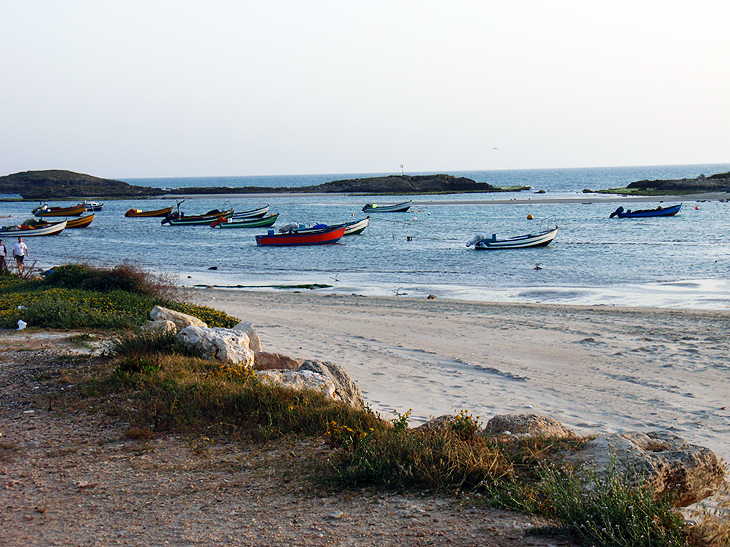
For Israelis, the site is referred to by a different name — Dor, known as a popular beach resort belonging to two neighboring kibbutzim, Dor and Nahsholim, an hour’s drive north of Tel Aviv.
In May, some 300 activists met in the resort’s car park in an attempt to end the long-enforced silence about Tantura in Israelis’ collective memory. Precisely 67 years after the massacre, they staged the first-ever commemoration at the site.

The Commemoration of the Massacre at Tantura
They laid wreaths in the car park, marking the mass grave in the village cemetery where more than 200 Palestinians were hurriedly interred after they had been executed on 22 May 1948, as Zionist forces swept up the Mediterranean coast.

Some 130 small placards were held aloft, each bearing the name of a victim the organizers had been able to identify.

Then the group held a short procession past baffled Israeli holiday-makers — sunbathing, building sandcastles and barbecuing — through an area where Tantura’s 250 homes once stood. The march finished at the beach, where in 1948 many of the villagers had been interrogated before being put to death.

Quest for justice

Tantura in 1935 during the British Mandate
There are few signs today of the original village to disturb Israelis’ revelries. A Hebrew-language sign admits vaguely that a small domed shrine amid the chalets is the ancient grave of a sheikh.

An impressive large stone structure on the beachfront, once a prominent Tantura home, according to the village’s refugees, is simply marked “Entry forbidden.”

The organizers hope to use the commemoration to increase pressure on the Israeli authorities to allow Israel’s Palestinian minority to erect a permanent memorial at the site to the victims.

By contrast, a monument has stood for decades a short distance away, on the main coastal highway, listing the names of 13 Zionist fighters who were reported to have died in the attack on Tantura.

“This massacre has been kept out of Israelis’ consciousness for far too long,” said Hazar Abu Raya, one of the organizers. “It is time for that to change. This is a first step in our quest for justice for the families.”

Basel Ghattas, a Palestinian member of Israel’s parliament, the Knesset, who took part, said the commemoration was an important milestone. He mentioned a famous quotation — often attributed to David Ben-Gurion, Israel’s first prime minister — that “The old will die and the young will forget.”
“Ben-Gurion has been proved wrong,” said Ghattas. “The third generation after the Nakba refuse to forget. They demand a right of return and have intensified the struggle to keep the memory of the Nakba alive.”

Relatives ‘buried under the tarmac’

The event was the first joint venture between Filasteeniyat, a grassroots Palestinian rights movement, and the Association for the Defense of the Rights of the Internally Displaced People in Israel. Both are organizations representing Israel’s 1.5 million-strong Palestinian minority, a fifth of the state’s population. (Government population figures put Palestinians in Israel at 1.7 million, but this includes Palestinians in occupied East Jerusalem, most of whom don’t have Israeli citizenship.)

A handful of now-elderly survivors from Tantura, who, as children, were spared death, were among those attending. Many had fled or been put on trucks by the soldiers to be transported to the Palestinian village of Fureidis, close by.

Palestinian refugees who remained inside Israel’s boundaries after 1948 were given the Orwellian status of “present absentees”: present in Israel, but forced to become absentees from their original homes.

One of the survivors, 73-year-old Mahmoud Amar, who was six at the time of the massacre, said he remembered being woken by his mother, who told him to get dressed quickly. “She said, ‘People are being killed.’”

As they fled the village, he recalled seeing dead bodies all around. One of them was his grandfather.
Many of his other relatives ended up in Syria, including in the Yarmouk refugee camp. He and his mother settled in Fureidis.

His uncle was one of those made to bury dozens of villagers’ bodies, he added.

He said he was very moved by the commemorative ceremony: “I have many relatives buried under the tarmac here, who are invisible to all these visitors who think of this place simply as a holiday resort. It is time the dead were given the respect they deserve.”

Rasmiya Hashmowi, aged 80, who lost several uncles, rested in a chair next to the beach after the procession. She said the event had been very emotional: “Seeing everyone here today gave me hope that one day I or my children might see a real return, on a much larger scale.”

Complete cover-up

Also in attendance were Ilan Pappe, a noted Israeli historian of the Nakba, and Teddy Katz, whose research in the late 1990s provided for the first time Israeli eyewitness testimony confirming long-standing Palestinian claims of a massacre at the village.

Katz’s master’s dissertation created such a furore in Israel that he was eventually forced under mounting legal, financial and academic pressure to renounce parts of it. He suffered a stroke during this period that friends and family attribute to the severe stress he was placed under.

He has struggled to recover since. Giving a short speech seated in a wheelchair, next to the wreaths at the entrance to Nahsholim’s hotel, he called the events at Tantura “shameful” and apologized on behalf of Israelis.

The Tantura revelations would also have a profound impact on the career of Pappe, author of the best-seller The Ethnic Cleansing of Palestine.

As the only academic at the University of Haifa to publicly come to Katz’s defense, Pappe found himself on a path of increasing confrontation with his institution, leading him eventually to leave the country and reestablish his career at Exeter University in the UK.

Tantura, said Pappe, was a test of Israelis’ willingness to set aside their traditional narratives of the Nakba: that the refugees had left their villages largely of their own accord and that Israel’s army was “the most moral in the world.”

A report on the website of the Committee for Accuracy in Middle East Reporting in America (CAMERA), a Zionist lobby group, claimed only last year that the Tantura massacre was “fictional.”

“Tantura is probably the most extreme example in Israel of a place that is today associated with fun and entertainment that was created over the ruins of a major massacre from 1948,” Pappe said. “The cover-up that took place here was more complete than anywhere else.”

Killed in cold blood

Katz’s revelations were based on taped interviews with 20 Palestinian survivors and 20 former soldiers from the Alexandroni Brigade, which attacked the village a week after Israel unilaterally declared statehood.

According to Israeli and Palestinian historians, Tantura was one of more than 500 Palestinian villages that were ethnically cleansed by Zionist forces in 1948. Most were later razed and their lands passed to exclusively Jewish communities like Dor and Nahsholim.

The inhabitants of the destroyed Palestinian villages formed the bulk of the 750,000 refugees Israel refused to allow back to their homes.

From Katz’s testimonies, he was able to estimate that some 20 Palestinians had been killed in the initial fighting at Tantura, a figure backed by a later official account from the Israeli army.

After the village’s surrender, many of the Palestinian men were taken aside. Katz’s research suggests that up to 225 Palestinians were killed in cold blood. A Jewish eyewitness who supervised the burials told Katz that he counted 230 Palestinian corpses himself.

A car park for the beach resort was later built over the village cemetery where the mass grave was dug.

Other massacres

Although historians have identified dozens of massacres by Zionist forces in 1948, most were much smaller in scale than Tantura.

Aryeh Kitzhaki, a former director of the Israeli army’s archives, said in the early 1990s that he had seen files on 10 massacres in which more than 50 Palestinians were killed, and another 100 smaller ones.

The only comparable events to Tantura occurred at Deir Yassin, near Jerusalem, and at Lydd, now the mostly Jewish city of Lod, close to Israel’s Ben-Gurion airport.

Pappe said events like the Tantura commemoration were vital to forcing Israelis to confront their community’s responsibility for the mass dispossession of Palestinians in 1948.

“Deir Yassin was the only massacre that was acknowledged by Israel,” he said. “Ben-Gurion apologized for it to King Abdullah [of Jordan] after he made inquiries.”

Concerning Tantura, he added, the official version is still that those Palestinians who died there were killed during battle.

Tantura, Pappe noted, was the largest and most significant village in a coastal area between Haifa and Tel Aviv that Israeli leaders wanted emptied of Palestinians. Of the 64 Palestinian villages in the area, only two, Fureidis and Jisr al-Zarqa, both close to Tantura, were allowed to survive after intense lobbying by neighboring Jewish communities that wanted the villagers as a labor force.

No escape route

Pappe believes the extent of the massacre at Tantura occurred as a result of a botched expulsion operation. Such expulsions were carried out as part of Plan Dalet, an outline for ethnically cleansing Palestine of as much of its Palestinian population as possible.

Instead of attacking Tantura from three sides, as occurred elsewhere, driving the population northwards towards Lebanon and Syria, the brigade encircled the village, leaving the inhabitants no escape route.

Katz’s research confirmed Palestinian accounts that the massacre occurred in two stages. After village leaders waved a white flag following clashes that left a handful of Palestinians and Israelis dead, the soldiers went on a killing spree, entering homes and executing anyone they found. The rampage left an estimated 100 villagers dead.

The rest were rounded up, with fighting-age men separated from the elderly, women and children. The men were led to the beach, where they were interrogated and another 100 or so — aged between 13 and 30 — executed.

Once the furore over Katz’s research broke, he was stripped of his degree by the University of Haifa and forced to extensively rewrite his dissertation. However, the evidence of the massacre has only grown since.

Documents unearthed a few years later in Israel’s archives showed that, in the wake of the attack, army headquarters had heard fears that the large number of unburied corpses at Tantura might lead to an outbreak of typhoid.

Other reports noted “irregularities” and “over-enthusiasm” in the attack, while a final report from the Alexandroni Brigade observed: “We have tended to the mass grave.”

Fear of speaking out

Pappe has pointed out in his own research that the Tantura massacre went largely unremarked even in Palestinian literature of the Nakba period.

The reason, he suggested, was that many of the traumatized survivors — who had been children at the time — lived close by to Tantura in Fureidis or Jisr al-Zarqa in modern-day Israel. As the years passed, and knowledge of the Nakba grew, they continued to fear that speaking out might lead to fresh retaliations against them and their families.

One of Katz’s interviewees, Mustafa Masri, ended his testimony saying: “One should not mention these things. I do not want them to take revenge against us. You are going to cause us trouble.”
Katz’s work shook Israel in large part because it depended not just on Palestinian accounts — most Israeli scholars have preferred to ignore and discredit Palestinian oral history — but on Israeli witnesses who confirmed the Palestinian testimonies.

According to the accounts of historians and of those involved, the two other large-scale massacres — at Deir Yassin and Lydd — occurred in different circumstances, and were probably more planned.
Deir Yassin was attacked in early April 1948, five weeks before the Zionist leadership announced statehood. Under the auspices of the Haganah, soon to become the Israeli army, a Zionist militia called the Irgun carried out the attack.

The goal was to sow so much fear that Palestinians in other villages would flee without fighting.
The evidence suggests that the Irgun’s leader, Menachem Begin, later to become an Israeli prime minister, even inflated the death toll at Deir Yassin — from just over 100 to 250 — to encourage a mass exodus.

Three months later, at the city of Lydd, soldiers under the command of Yitzhak Rabin, also to become a prime minister, fired on a mosque where dozens of residents had sought refuge from the fighting. Some 176 bodies were reportedly recovered from the building.

According to Rabin’s own account, Ben-Gurion was keen to see the large Palestinian population centers close to Tel Aviv emptied.

Historical deceptions

Many long-standing Israeli claims about the Nakba have been steadily discredited by historical research.

Two years ago, Israeli scholar Shay Hazkani revealed that the widespread view that Palestinians fled their villages in 1948 under orders from neighboring Arab states had been encouraged by an Israeli misinformation campaign initiated by Ben-Gurion.

Hazkani had only found out about Ben-Gurion’s efforts because he was erroneously given a classified file in the Israeli military archives.

In May this year, a letter was published in the Haaretz newspaper suggesting claims that Israel tried to persuade 50,000 refugees from Haifa to return to their homes were a deception.

The former Israeli Prime Minister Golda Meir states in her autobiography that Ben-Gurion ordered her to Haifa to plead with the refugees to stay. Meir wrote: “I sat on the beach there and begged them to return home … I pleaded with them until I was exhausted but it didn’t work.”

However, a few weeks after the mass expulsions in Haifa, Ben-Gurion wrote to Abba Khoushy, soon to become Haifa’s mayor, stating: “I hear that Mr. Marriot [Cyril Marriot, the British consul in Haifa] is working to return the Arabs to Haifa. I don’t know how it is his business, but until the war is over we don’t want a return of the enemy. And all institutions should act accordingly.”

In fact, Ben-Gurion did not reverse his policy after the war, barring the return of Haifa’s refugees as well as those from hundreds of other villages.

- See more at