Showing posts with label Tantura. Show all posts

1 March 2022

Haifa University’s scandalous treatment of Teddy Katz, stripping him of his MA, was an Academic Lynching

Haifa University failed a student in order to uphold the Zionist fable that there was no massacre in the Arab village of Tantura in May 1948


On 21 January 2000, Ma’ariv published an article on the massacre in Tantura, a village on the Mediterranean coast south of Haifa, based on an MA thesis by Teddy Katz, a student at Haifa University. The thesis had been awarded the highest possible grade, 97%.

The testimonies, of both Palestinian survivors and members of the Alexandroni Brigade of the Haganah, which perpetrated the massacre, tell a chilling tale of a brutal massacre. On 22–23 May 1948, some 200 unarmed villagers were shot dead after they had surrendered.

The Tantura chapter of the thesis is based on the testimonies of 40 witnesses, 20 Arabs and 20 Jews. A few days after the Ma’ariv article, the veterans of the brigade sued Katz for libel. One would have assumed that Haifa University would stand behind Katz. In fact from the start the university began acting as if he were already guilty. It is clear that their loyalty to the Zionist narrative exceeded any attachment to academic freedom.

Spearheading the crusade against Katz within the university were senior members of the Department of Land of Israel Studies, who have always defended the Zionist narrative that the Palestinians left voluntarily, on the orders of the Arab regimes, rather than being expelled and ethnically cleansed.

It was a Palestinian NGO in Israel, Adalah, that provided assistance on a pro bono basis. Katz’s name was summarily removed from a list of those to be honored for their work. It was literally tippexed out.

Before the trial began, Katz tried to persuade the court not to take the case, arguing that it was a scholarly debate that should be determined not in court but within the university. If the university had supported this effort, he may have succeeded in avoiding a trial, but the university refused to support his application.

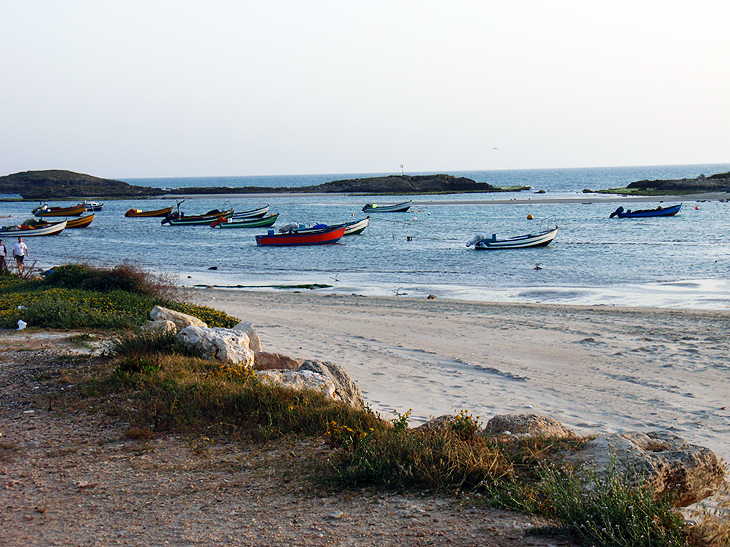
An aerial view of Dor beach, built over the village of Tantura, where the Israeli military massacred over 200 Palestinians in 1948. [Getty]

The trial began on 13 December 2000, with Katz being called to the witness box. The crux of the prosecution’s case rested on six minor mistakes. For example Katz substituted the word “Germans” for “Nazis.” No discrepancies were found in any of the remaining 224 references concerning Tantura.

That night, weakened by a stroke several weeks earlier and subjected to enormous pressures by his family, friends, and neighbours in the kibbutz where he lived, Katz acquiesced on the advice of one of his lawyers Katz signed an agreement that repudiated his own academic research. The agreement titled “An Apology,” is so sweeping as to bear a resemblance to a police “confession” extracted under physical pressure.

Teddy Katz

Haifa university lawyer Amazia Atzmon, an Israeli Defence Force General, also pressed him to stop. “Tell him to sign [the recantation document] and just continue his studies for his doctorate”. Atzmon had a strong interest in ending the case.

Twelve hours later, Katz formally regretted his retraction and wanted to continue the trial, but the judge, Drora Pilpel, refused to allow Katz to withdraw his concession. She threw it out, as she later admitted, without listening to Katz’s tapes.

Tantura residents flee their village, May 1948. Dozens of others may have been killed. 

When interviewed for the film “Tantura” a shamefaced Pilpel admitted that

If it’s true, it’s a pity. If he had things like this, he should have gone all the way to the end.

The judge’s ruling made no reference to the merits of the case, but only to the court’s ability to accept Katz’s retraction of his retraction. A number of members of the academy were only too happy to swoop down like vultures on the alleged defects in the work of a historian just starting out on his academic career.

One can speculate that the motivation of Haifa and mainstream Israeli academics was not simply denial of the massacre but a recognition that if Katz had won the case, Israeli academia’s role for more than 50 years in suppressing the truth about the Nakba would itself be in the dock.

Aerial view of Dor beach and its parking lot, built over the mass grave of the Tantura victims.

The injustice of what happened is now apparent as a result Alon Schwarz's documentary “Tantura” which had its world premiere at the Sundance Festival.

Schwarz listened to all 140 hours of the taped testimonies and he is convinced that Israeli soldiers killed between 200 and 250 male residents of Tantura. Former combat soldier Moshe Diamant  said:

They silenced it. It mustn’t be told, it could cause a whole scandal. I don’t want to talk about it, but it happened. What can you do? It happened.

Theodore "Teddy" Katz

According to Diamant, villagers were shot to death by a “savage” using a submachine gun, at the conclusion of the battle. He added that, in connection with the libel suit in 2000, the former soldiers tacitly understood that they would pretend that nothing unusual had occurred after the village’s conquest. “We didn’t know, we didn’t hear. Of course everyone knew. They all knew.”

Another combat soldier, Haim Levin, related that a member of the unit went over to a group of 15 or 20 POWs “and killed them all.” Levin says he was appalled, and he spoke to his buddies to try to find out what was going on. “You have no idea how many [of us] those guys have killed,” he was told.

Another combat soldier described a different incident that occurred there: “It’s not nice to say this. They put them into a barrel and shot them in the barrel. I remember the blood in the barrel.” One of the soldiers summed up by saying that his comrades simply didn’t behave like human beings in the village – and then resumed his silence.

Amitzur Cohen, talked about his first months as a combat soldier: “I was a murderer. I didn’t take prisoners.” Cohen related that if a squad of Arab soldiers was standing with their hands raised, he would shoot them all. Asked how many Arabs he killed he said: “I didn’t count. I had a machine gun with 250 bullets. I can’t say how many.”

The film presents the conclusion of experts who compared aerial photographs of the village from before and after its conquest. A comparison of the photographs, and the use of three-dimensional imaging done with new tools, makes it possible not only to determine the exact location of the grave but also to estimate its dimensions: 35 meters long, 4 meters wide. “They took care to hide it,” Katz says in the film, “in such a way that the coming generations would walk there without knowing what they were stepping on.”

A note dated June 9, 1948, says: "To the region commander. Yesterday I checked the mass grave in Tantura cemetery. Found everything in order.”Credit: IDF Archives

Yad Vashem historian Yoav Gelber, who played a pivotal role in discrediting Katz’s paper, asserted that a few dozen Arabs had been killed in the battle itself, but that a massacre had not occurred.

Katz’s and now Schwarz’s claims are backed up in the film with documents obtained from the IDF archive and historical aerial maps analyzed by experts, including some in the IDF who Schwarz said wished to remain unidentified.

Schwarz interviewed Katz and Ilan Pappe as well as the- veterans who admitted to the killings. Also included are interviews with some veterans who continue to deny the killings, as well as academics who doubled down on their dismissal of Katz’s methodology and findings.

One of those who had provided Katz with a four-hour testimony, wherein he repeatedly compared the horrors to the acts of Nazis and suggested the Alexandroni Brigade acted worse in as much as they killed prisoners of war, was a veteran IDF General, Shlomo Ambar. For the court case Ambar had signed an affidavit stating that he did not recall anything he said to Katz.

But in his interview with Katz, Ambar had said that

“I associate [what had happened in Tantura] only with this: I went to fight against the Germans who were our worst enemy. But when we fought we obeyed the laws of the war dictated to us by international norms. They [the Germans] did not kill prisoners of war. They killed Slavs, but not British POWs, not even Jewish POWs— all those from the British army who were in German captivity survived.”

Haifa University joins the political battle

The then Minister of Education Limor Livnat personally told Katz that she had ordered the university to strip his research from the shelves and that failure to do so would result in a complete cancellation of state funding.

The university was urged by the plaintiff to strip Katz of his Master’s degree. Rather than waiting to see how the Supreme Court would rule in a few months’ time, the university leadership acted immediately.

The actual stripping of Katz’s title was halted at the last moment due to protests from the Middle East History department. Yet the university proceeded with the work of two committees it had set up: one to check the quotations in the thesis against the tapes, and another to check if there had been fault in the supervision process.

Zalman Amit, a professor emeritus at the Center for Studies in Behavioral Neurobiology in Concordia University, Montreal, noted

the university has never explained by what procedural rules it was able to re-open consideration of the status of a thesis that had already been approved and awarded a rating of 97%.

The committee found some faults and on this basis Katz’s degree was suspended. The school made him an offer to submit a revised thesis. None of this was in accordance with academic procedures. Amit wrote:

the university never explained the legal and procedural justification for this development in accordance with a pre-existing rule-book. This is particularly relevant since it is clear that Katz’s thesis was not “re-inspected” as a result of an internal academic complaint, or on the basis of academically-based information presented formally to the faculty by a qualified and authorized academic body, or as a result of a complaint from any person who launched such a complaint as a result of an academic scrutiny of the thesis. Instead, it appears that evaluation of the thesis was re-opened on the basis of some allegation that arose from an aborted legal case and that the action did not follow established and formal rules of academic procedure.

Remains of mosque in Tantura ruins. Photo by Zalameh Zalameh at Zochrot

The “cleansing” of a village (this is the terminology found in Haganah documents) was to close off a village from three directions, and cause most of the population to flee in the desired direction. If it was a northern town, it would be towards Lebanon or Syria; if eastern, towards Jordan etc. In Tantura the town was closed off from land in all directions, and at sea there was a blockade by a Haganah navy force.

“[Shimshon Mashvitz] agreed [to stop] after he had killed eighty-five people [alone]…He killed them [with a Sten gun]. They stood next to the wall, facing the wall, he came from the back and killed them all, shooting them in the head…Every group twenty or thirty people. Twice or three times he changed magazines.” (Salih ‘Abd al-Rahman (Abu Mashayiff), from Tantura – Teddy Katz, Master’s Thesis).

Katz took the challenge up and interviewed more people and added in more verbatim interview sections, as well as restructuring the work. 1½ years later, Katz submitted the revised thesis, which was considerably larger than the original. The university then proceeded to appoint a five-examiner committee to judge Katz’s revised work.

Two of the examiners gave Katz passing scores, 85 and 83. Another gave a 74, which in this context was a failing mark. But the most interesting thing was the marks from two of the examiners: 40 and 50. As Benny Morris noted in The Jerusalem Report (9th February 2004), the last two graders were Dr. Avraham Sela (Hebrew University) and Dr. Arnon Golan (Haifa University). Morris wrote:

Three years ago, together with Hebrew U. professor Alon Kadish, those two scholars authored “The Conquest of Lydda, July 1948” which argued that the Israeli army had carried out only a “partial expulsion” of the populations of the Arab towns of Lydda and Ramlah and dismissed the charge that the troops had massacred Lydda townspeople, some of them inside a mosque, on July 12 1948.

In fact, according to IDF records from 1948 what was ordered and carried out was a full-scale expulsion; and Yiftah brigade troops killed some 250 townspeople. Oral testimony of Yiftah veterans, deposited in the Yigal Allon archive posits that the troops fired one or more bazooka rounds into the mosque compound, where dozens of Arab POWs were being held. The authors even failed to mention the expulsion order signed by the then Lt. Col. “Yitzhak R”, (Rabin) the operations officer, which ordered the brigade to expel “the inhabitants of Lydda”.

In other words, Haifa University got two examiners who themselves had fabricated the history of the Naqba in the interests of the Zionist narrative, to fail Katz.

Katz was thus stripped of the MA degree which would have allowed him to continue on to his PhD. In an act of “magnanimity” the university nonetheless offered him a “2nd class” Masters, a “non-research Masters”.

Following his first stroke, Katz had 4 subsequent strokes. The fifth stroke, some 8 years ago, which occurred on the 20th annual memorial day of his daughter Amira’s death, left him partially paralyzed. The treatment of Katz cannot but have helped play a part.

Tantura residents flee their village, May 1948. 

The behaviour of Haifa University is shocking but this incident (along with the forced resignation of Ilan Pappe) demonstrates that political considerations have long since affected its academic decisions. The time is long overdue for Haifa University to make amends for what was an academic lynching. Haifa’s behaviour also confirms the rightfulness of the academic boycott of Israeli academia.

Israeli universities are complicit, at all levels, in the oppression and exploitation of the Palestinians.  Academic freedom simply does not come into it.

Tony Greenstein

4 June 2015

Tantura – the Massacre that the Zionists tried to Cover Up

An excellent article by Jonathan Cook, a British journalist who lives in Nazareth.  He was blacklisted by the Guardian.

Tantura was the scene of one of the worst massacres of the Nakba and there has been a concerted effort to cover it up.  The University of Haifa was complicit in the brow-beating of Teddy Katz, the 
Haifa MA student, who was forced into rewriting his thesis.

Jonathan Cook 4 June 2015
The Commemoration of the Massacre at Tantura

For Palestinians, Tantura, the name of a coastal village south of Haifa that was once home to 1,700 inhabitants, has become a byword for the darkest episodes of the Nakba (Arabic for catastrophe), the ethnic cleansing of 1948.

If you're looking for a truly great beach in Israel ... you should consider checking out Dor Beach so goes the blurb on the tourist brochure
For Israelis, the site is referred to by a different name — Dor, known as a popular beach resort belonging to two neighboring kibbutzim, Dor and Nahsholim, an hour’s drive north of Tel Aviv.
In May, some 300 activists met in the resort’s car park in an attempt to end the long-enforced silence about Tantura in Israelis’ collective memory. Precisely 67 years after the massacre, they staged the first-ever commemoration at the site.

The Commemoration of the Massacre at Tantura
They laid wreaths in the car park, marking the mass grave in the village cemetery where more than 200 Palestinians were hurriedly interred after they had been executed on 22 May 1948, as Zionist forces swept up the Mediterranean coast.

Some 130 small placards were held aloft, each bearing the name of a victim the organizers had been able to identify.

Then the group held a short procession past baffled Israeli holiday-makers — sunbathing, building sandcastles and barbecuing — through an area where Tantura’s 250 homes once stood. The march finished at the beach, where in 1948 many of the villagers had been interrogated before being put to death.

Quest for justice

Tantura in 1935 during the British Mandate
There are few signs today of the original village to disturb Israelis’ revelries. A Hebrew-language sign admits vaguely that a small domed shrine amid the chalets is the ancient grave of a sheikh.

An impressive large stone structure on the beachfront, once a prominent Tantura home, according to the village’s refugees, is simply marked “Entry forbidden.”

The organizers hope to use the commemoration to increase pressure on the Israeli authorities to allow Israel’s Palestinian minority to erect a permanent memorial at the site to the victims.

By contrast, a monument has stood for decades a short distance away, on the main coastal highway, listing the names of 13 Zionist fighters who were reported to have died in the attack on Tantura.

“This massacre has been kept out of Israelis’ consciousness for far too long,” said Hazar Abu Raya, one of the organizers. “It is time for that to change. This is a first step in our quest for justice for the families.”

Basel Ghattas, a Palestinian member of Israel’s parliament, the Knesset, who took part, said the commemoration was an important milestone. He mentioned a famous quotation — often attributed to David Ben-Gurion, Israel’s first prime minister — that “The old will die and the young will forget.”
“Ben-Gurion has been proved wrong,” said Ghattas. “The third generation after the Nakba refuse to forget. They demand a right of return and have intensified the struggle to keep the memory of the Nakba alive.”

Relatives ‘buried under the tarmac’

The event was the first joint venture between Filasteeniyat, a grassroots Palestinian rights movement, and the Association for the Defense of the Rights of the Internally Displaced People in Israel. Both are organizations representing Israel’s 1.5 million-strong Palestinian minority, a fifth of the state’s population. (Government population figures put Palestinians in Israel at 1.7 million, but this includes Palestinians in occupied East Jerusalem, most of whom don’t have Israeli citizenship.)

A handful of now-elderly survivors from Tantura, who, as children, were spared death, were among those attending. Many had fled or been put on trucks by the soldiers to be transported to the Palestinian village of Fureidis, close by.

Palestinian refugees who remained inside Israel’s boundaries after 1948 were given the Orwellian status of “present absentees”: present in Israel, but forced to become absentees from their original homes.

One of the survivors, 73-year-old Mahmoud Amar, who was six at the time of the massacre, said he remembered being woken by his mother, who told him to get dressed quickly. “She said, ‘People are being killed.’”

As they fled the village, he recalled seeing dead bodies all around. One of them was his grandfather.
Many of his other relatives ended up in Syria, including in the Yarmouk refugee camp. He and his mother settled in Fureidis.

His uncle was one of those made to bury dozens of villagers’ bodies, he added.

He said he was very moved by the commemorative ceremony: “I have many relatives buried under the tarmac here, who are invisible to all these visitors who think of this place simply as a holiday resort. It is time the dead were given the respect they deserve.”

Rasmiya Hashmowi, aged 80, who lost several uncles, rested in a chair next to the beach after the procession. She said the event had been very emotional: “Seeing everyone here today gave me hope that one day I or my children might see a real return, on a much larger scale.”

Complete cover-up

Also in attendance were Ilan Pappe, a noted Israeli historian of the Nakba, and Teddy Katz, whose research in the late 1990s provided for the first time Israeli eyewitness testimony confirming long-standing Palestinian claims of a massacre at the village.

Katz’s master’s dissertation created such a furore in Israel that he was eventually forced under mounting legal, financial and academic pressure to renounce parts of it. He suffered a stroke during this period that friends and family attribute to the severe stress he was placed under.

He has struggled to recover since. Giving a short speech seated in a wheelchair, next to the wreaths at the entrance to Nahsholim’s hotel, he called the events at Tantura “shameful” and apologized on behalf of Israelis.

The Tantura revelations would also have a profound impact on the career of Pappe, author of the best-seller The Ethnic Cleansing of Palestine.

As the only academic at the University of Haifa to publicly come to Katz’s defense, Pappe found himself on a path of increasing confrontation with his institution, leading him eventually to leave the country and reestablish his career at Exeter University in the UK.

Tantura, said Pappe, was a test of Israelis’ willingness to set aside their traditional narratives of the Nakba: that the refugees had left their villages largely of their own accord and that Israel’s army was “the most moral in the world.”

A report on the website of the Committee for Accuracy in Middle East Reporting in America (CAMERA), a Zionist lobby group, claimed only last year that the Tantura massacre was “fictional.”

“Tantura is probably the most extreme example in Israel of a place that is today associated with fun and entertainment that was created over the ruins of a major massacre from 1948,” Pappe said. “The cover-up that took place here was more complete than anywhere else.”

Killed in cold blood

Katz’s revelations were based on taped interviews with 20 Palestinian survivors and 20 former soldiers from the Alexandroni Brigade, which attacked the village a week after Israel unilaterally declared statehood.

According to Israeli and Palestinian historians, Tantura was one of more than 500 Palestinian villages that were ethnically cleansed by Zionist forces in 1948. Most were later razed and their lands passed to exclusively Jewish communities like Dor and Nahsholim.

The inhabitants of the destroyed Palestinian villages formed the bulk of the 750,000 refugees Israel refused to allow back to their homes.

From Katz’s testimonies, he was able to estimate that some 20 Palestinians had been killed in the initial fighting at Tantura, a figure backed by a later official account from the Israeli army.

After the village’s surrender, many of the Palestinian men were taken aside. Katz’s research suggests that up to 225 Palestinians were killed in cold blood. A Jewish eyewitness who supervised the burials told Katz that he counted 230 Palestinian corpses himself.

A car park for the beach resort was later built over the village cemetery where the mass grave was dug.

Other massacres

Although historians have identified dozens of massacres by Zionist forces in 1948, most were much smaller in scale than Tantura.

Aryeh Kitzhaki, a former director of the Israeli army’s archives, said in the early 1990s that he had seen files on 10 massacres in which more than 50 Palestinians were killed, and another 100 smaller ones.

The only comparable events to Tantura occurred at Deir Yassin, near Jerusalem, and at Lydd, now the mostly Jewish city of Lod, close to Israel’s Ben-Gurion airport.

Pappe said events like the Tantura commemoration were vital to forcing Israelis to confront their community’s responsibility for the mass dispossession of Palestinians in 1948.

“Deir Yassin was the only massacre that was acknowledged by Israel,” he said. “Ben-Gurion apologized for it to King Abdullah [of Jordan] after he made inquiries.”

Concerning Tantura, he added, the official version is still that those Palestinians who died there were killed during battle.

Tantura, Pappe noted, was the largest and most significant village in a coastal area between Haifa and Tel Aviv that Israeli leaders wanted emptied of Palestinians. Of the 64 Palestinian villages in the area, only two, Fureidis and Jisr al-Zarqa, both close to Tantura, were allowed to survive after intense lobbying by neighboring Jewish communities that wanted the villagers as a labor force.

No escape route

Pappe believes the extent of the massacre at Tantura occurred as a result of a botched expulsion operation. Such expulsions were carried out as part of Plan Dalet, an outline for ethnically cleansing Palestine of as much of its Palestinian population as possible.

Instead of attacking Tantura from three sides, as occurred elsewhere, driving the population northwards towards Lebanon and Syria, the brigade encircled the village, leaving the inhabitants no escape route.

Katz’s research confirmed Palestinian accounts that the massacre occurred in two stages. After village leaders waved a white flag following clashes that left a handful of Palestinians and Israelis dead, the soldiers went on a killing spree, entering homes and executing anyone they found. The rampage left an estimated 100 villagers dead.

The rest were rounded up, with fighting-age men separated from the elderly, women and children. The men were led to the beach, where they were interrogated and another 100 or so — aged between 13 and 30 — executed.

Once the furore over Katz’s research broke, he was stripped of his degree by the University of Haifa and forced to extensively rewrite his dissertation. However, the evidence of the massacre has only grown since.

Documents unearthed a few years later in Israel’s archives showed that, in the wake of the attack, army headquarters had heard fears that the large number of unburied corpses at Tantura might lead to an outbreak of typhoid.

Other reports noted “irregularities” and “over-enthusiasm” in the attack, while a final report from the Alexandroni Brigade observed: “We have tended to the mass grave.”

Fear of speaking out

Pappe has pointed out in his own research that the Tantura massacre went largely unremarked even in Palestinian literature of the Nakba period.

The reason, he suggested, was that many of the traumatized survivors — who had been children at the time — lived close by to Tantura in Fureidis or Jisr al-Zarqa in modern-day Israel. As the years passed, and knowledge of the Nakba grew, they continued to fear that speaking out might lead to fresh retaliations against them and their families.

One of Katz’s interviewees, Mustafa Masri, ended his testimony saying: “One should not mention these things. I do not want them to take revenge against us. You are going to cause us trouble.”
Katz’s work shook Israel in large part because it depended not just on Palestinian accounts — most Israeli scholars have preferred to ignore and discredit Palestinian oral history — but on Israeli witnesses who confirmed the Palestinian testimonies.

According to the accounts of historians and of those involved, the two other large-scale massacres — at Deir Yassin and Lydd — occurred in different circumstances, and were probably more planned.
Deir Yassin was attacked in early April 1948, five weeks before the Zionist leadership announced statehood. Under the auspices of the Haganah, soon to become the Israeli army, a Zionist militia called the Irgun carried out the attack.

The goal was to sow so much fear that Palestinians in other villages would flee without fighting.
The evidence suggests that the Irgun’s leader, Menachem Begin, later to become an Israeli prime minister, even inflated the death toll at Deir Yassin — from just over 100 to 250 — to encourage a mass exodus.

Three months later, at the city of Lydd, soldiers under the command of Yitzhak Rabin, also to become a prime minister, fired on a mosque where dozens of residents had sought refuge from the fighting. Some 176 bodies were reportedly recovered from the building.

According to Rabin’s own account, Ben-Gurion was keen to see the large Palestinian population centers close to Tel Aviv emptied.

Historical deceptions

Many long-standing Israeli claims about the Nakba have been steadily discredited by historical research.

Two years ago, Israeli scholar Shay Hazkani revealed that the widespread view that Palestinians fled their villages in 1948 under orders from neighboring Arab states had been encouraged by an Israeli misinformation campaign initiated by Ben-Gurion.

Hazkani had only found out about Ben-Gurion’s efforts because he was erroneously given a classified file in the Israeli military archives.

In May this year, a letter was published in the Haaretz newspaper suggesting claims that Israel tried to persuade 50,000 refugees from Haifa to return to their homes were a deception.

The former Israeli Prime Minister Golda Meir states in her autobiography that Ben-Gurion ordered her to Haifa to plead with the refugees to stay. Meir wrote: “I sat on the beach there and begged them to return home … I pleaded with them until I was exhausted but it didn’t work.”

However, a few weeks after the mass expulsions in Haifa, Ben-Gurion wrote to Abba Khoushy, soon to become Haifa’s mayor, stating: “I hear that Mr. Marriot [Cyril Marriot, the British consul in Haifa] is working to return the Arabs to Haifa. I don’t know how it is his business, but until the war is over we don’t want a return of the enemy. And all institutions should act accordingly.”

In fact, Ben-Gurion did not reverse his policy after the war, barring the return of Haifa’s refugees as well as those from hundreds of other villages.

- See more at