The United States Gives Turkey Green Light to Attack the Kurdish PKK and PYD
In its heyday, Britain
was known as Perfidious Albion for its ability to betray allies and friends at
a moment notice. It would seem that the
United States has learnt all the dark arts and a few more.
Despite the stupidity
of leader writers on papers like The Guardian, who lend credence to the absurd
Turkish claim that it is bombing both ISIS and the PKK, it is clear that the US
agreement with Turkey to fly its planes from Incirlik air base has come at a
price. The green light for Turkey to
attack the PKK in Turkey and bomb its bases in Iraqi Kurdistan. For months the Turkish state has been itching
to attack the Kurds especially in the wake of the victory of the HDP at the
General Elections, where the 13% they gained denied Erdogan’s AK party an
absolute majority. There is thus a
massive temptation to brand the Kurds as ‘terrorists’ and outlaw the HDP or
demonise them, rerun the elections and gain an overall majority to enable, the
changes Erdogan wanted in the Constitution, which is absolute power for
himself.
 |
| Erdogan - Turkish President Looking to Commit New Massacres of the Kurds |
The Kurdish PKK and
their Syrian counterparts, the YPD, have been the only force able to tackle
ISIS on the ground. All the US’s
clients, not least its various ‘moderate’ forces in Syria and the Iraqi
government have proved completely incapable.
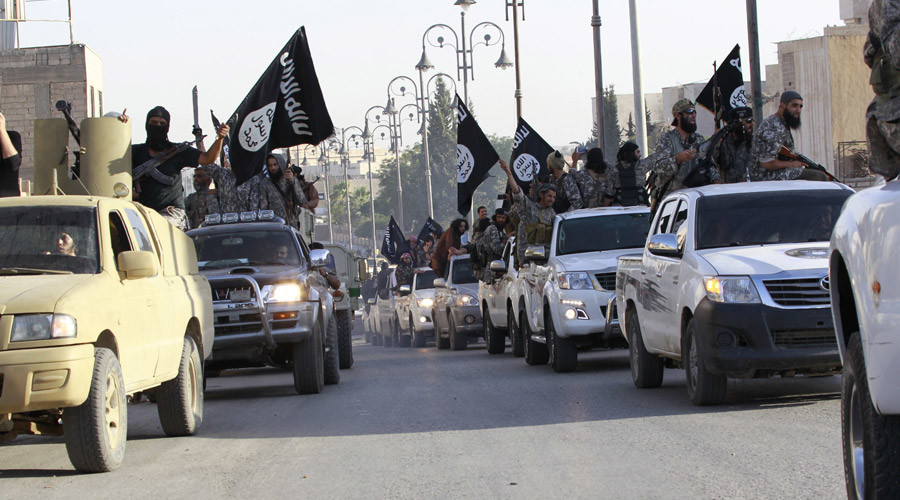
What we are seeing is in essence a decision by the US to de facto accept of the ISIS presence as
a useful weapon . It is not possible to
fight a war against ISIS and back a war against the Kurds.
 |
| Turkey's Incirlik Air Base that the US Have Secured Access To |
It also means that the
US is moving once again to a position of overtly seeking the overthrow of
Assad, a position which Israel will welcome.
This is also one of
the reasons for the strong opposition in the US to the agreement with
Iran. Along with the Kurds, Iranian
forces have been the backbone of the anti-ISIS alliance in Iraq. Obama may wish to have a de-facto alliance
with Iran, but the Republican and Zionist opposition prefers ISIS, Turkey and
Saudi Arabia to the Iranians and Hezbollah.
This is why it is a
mistake to have any illusions in the United State’s war with ISIS. The US will make their peace if necessary
with Isis in the interests of western imperial interests and keeping Turkey
sweet. Turkey has for the past year
supported Isis, allowing them to cross the border with impunity, to send
supplies and oil across the border and of course fighters. That is the reason why it took heavy pressure
from the US before it allowed Pesh Merga fighters to cross the border during
the fight to repulse Isis from Kobani.
If the US had wanted
it could have pressurised Turkey to close the border to ISIS and frozen its
bank accounts. It sought to do neither.
 |
| Kurds Mourning Dead Fighter |
The only way that
peace will be achieved in the Middle East is with a complete withdrawal of
imperialist forces from the region.
Tony Greenstein
10
August 2015
The man leading the Kurdistan Workers' Party
(PKK) has accused Turkey of trying to protect the Islamic State group by
attacking Kurdish fighters.
Cemil Bayik told the BBC he believed President Recep Tayyip Erdogan wanted
IS to succeed to prevent Kurdish gains.
Kurdish fighters - among them the PKK - have secured significant victories
against IS militants in Syria and Iraq.
But Turkey, like a number of Western countries, considers the PKK a
terrorist organisation.
A ceasefire in the long-running conflict with the group appeared to
disintegrate in July, when Turkey began bombing PKK camps in northern Iraq, at
the same time as launching air strikes on IS militants.
Observers say PKK fighters have been on the receiving end of far more
attacks than IS.
But Turkish officials deny that the campaign against IS group is a cover to
prevent Kurdish gains. On Wednesday, Turkey said
it was planning a
"comprehensive battle" against IS.
'Stop Kurdish advance'
"
The Turkish claim they are
fighting Islamic State… but in fact they are fighting the PKK," Cemil
Bayik told BBC's Jiyar Gol.
"They are doing it to limit the
PKK's fight against IS. Turkey is protecting IS.
"[President] Erdogan is behind IS
massacres. His aim is to stop the Kurdish advance against them, thus advancing
his aim of Turkishness in Turkey."
More than 40,000 people have been killed since the PKK began its armed
struggle against the Turkish government in 1984.
In the 1990s, the organisation dropped its demand for a Kurdish state and
instead called for more autonomy for the Kurds.
In March 2013, its imprisoned leader Abdullah Ocalan called a ceasefire.
But violence has resumed in recent weeks after a suicide bombing blamed on
IS
killed 32 people
in the predominantly Kurdish town of Suruc.
The PKK's military wing killed two Turkish police officers, claiming they
had collaborated with IS in the bombing.
Turkey says the group has been behind a number of other attacks.
On Sunday evening, five police officers and two civilians were hurt in a
bomb blast at a police station in Istanbul's Sultanbeyli district, Turkish
media said. It was unclear who was behind the attack.
Negotiations 'only choice'
When, on 24 July,
Turkey
officially launched its first air strikes against IS, it also attacked
Kurdish positions in northern Iraq.
Speaking to the BBC, Mr Bayik said negotiations were the "
only choice" for an end to the
Kurdish conflict.
He said the PKK would stop fighting if Turkey ended its military operation,
and called for international monitors to oversee a ceasefire.
Turkish Prime Minister Ahmet Davutoglu has previously said that strikes
against the PKK would continue until the group surrenders.
The country's fight with the PKK is complicating the US-led war on the Islamic
State group, for which the US has relied heavily on Syrian Kurdish fighters
affiliated with Turkey's Kurdish rebels.
Islamic
State's top brass has been hugely dominated by former officers from Saddam
Hussein's military, spy agencies and senior intelligence officials, including
the chief of a key counterterrorism intelligence unit, according to a new
report.
The experience they bring is said to be a major reason for Islamic State
(IS, formerly ISIS/ISIL) victories in conquering large parts of Iraq and Syria,
senior Iraqi officers on the front lines of the fight against IS told AP.
Former Hussein officers gave the militant group the structuring and discipline
it needed to bring together jihadist fighters from across the world. They have
been allegedly put in charge of intelligence-gathering, spying on the Iraqi
forces, maintaining and upgrading weapons, as well as trying to develop a
chemical weapons program.
The officials estimate the number of Saddam-era veterans in mid- and
senior-level positions within IS ranks stands between 100 and 160. They hail
from Sunni-dominated areas as a rule, with intelligence officers mostly from
western Anbar province, the majority of army officers from the northern Iraqi
city of Mosul and members of security services exclusively from Saddam's clan
around his hometown of Tikrit, a veteran of battles against IS north and west
of Baghdad, Brigadier General Abdul-Wahhab al-Saadi, told AP.
A former CIA case officer who has served in Iraq, Patrick Skinner, told AP
that Saddam-era military and intelligence officers were a
"necessary
ingredient" in IS' battlefield triumphs last year, accounting for its
expansion from a
"terrorist organization to a proto-state."
"Their military successes last year were not terrorist, they were
military successes," said Skinner, who currently works for a private
strategic intelligence services firm.
Another aspect of the problem is how officers from Saddam's mainly secular
regime happened to infuse one of the world's most radical Islamic extremist
groups. It's believed that a Saddam-era program which tolerated Islamic
hard-liners in the military in the 1990s, as well as anger among Sunni officers
when the Pentagon disbanded Saddam's military in 2003 have mostly contributed
to the transformation in Islamic State’s present line-up.
©
Stringer / Reuters
The group's second-in-command, al-Baghdadi's deputy, is a former Saddam-era
army major, Saud Mohsen Hassan, who, according to the intelligence chief who
spoke with AP on condition of anonymity, goes by the pseudonyms Abu Mutazz and
Abu Muslim al-Turkmani. Hassan is also known as Fadel al-Hayali, a fake name he
used before the fall of Saddam, the intelligence chief said.
US-run Bucca prison camp as incubator for IS
During the 2000s, Hassan was imprisoned in the Bucca prison camp, where
al-Baghdadi was also held. It's the main detention center for members of the
Sunni insurgency, maintained by the US near the Umm Qasr port city, in southern
Iraq. The prison became a kind of hatchery for the Islamic State group,
bringing militants like al-Baghdadi into contact with former Saddam officers,
including members of special forces, the elite Republican Guard and the
paramilitary force called Fedayeen, according to AP.
In Bucca's Ward 6, al-Baghdadi gave sermons, while Hassan turned out to be
good at managing people, leading strikes by the prisoners to gain concessions
from the US jailers, the intelligence chief said.
READ MORE: ISIS could have been prevented – if it hadn’t
been deliberately fostered
Former Bucca prisoners are now among top IS leaders. Among them is Abu Alaa
al-Afari, a veteran Iraqi militant who was once with Al-Qaeda but these days,
according to a chart of what is believed to be the group's hierarchy provided
to the AP by the intelligence chief, serves as the head of IS's "Beit
al-Mal," or treasury.
According to the intelligence chief, Al-Baghdadi has united members of the
group even closer after he was reportedly injured last year. He has appointed
some of his most trusted comrades to the group's Military Council, believed to
have seven to nine members — at least four of whom are former Saddam officers,
AP reported.
Saddam-era veterans also serve as
"governors" for seven
of the 12
"provinces" set up by IS in the territory it holds
in Iraq, the intelligence chief stated.
Identifying IS leadership has proved futile in the past. Besides al-Baghdadi
himself, the group rarely unveils even the pseudonyms of its members. When
reports emerge alleging IS' leaders are killed, they usually turn up alive
shortly after, under a new pseudonym sometimes.
 |
| A Kurdish Peshmerga fighter moves into position while firing into Baretle village (background), which is controlled by the Islamic State, in Khazir, on the edge of Mosul September 8, 2014 © Ahmed Jadallah / Reuters |
"IS's military performance has far exceeded what we expected. The
running of battles by the veterans of the Saddam military came as a
shock," a brigadier general in military intelligence told AP,
speaking on condition of anonymity.
"Security-wise, we are often left unable to know who replaces who
in the leadership. We are unable to infiltrate the group. It is
terrifying," he added.
A former brigadier general from Saddam-era special forces, Assem Mohammed
Nasser, also known as Nagahy Barakat, for instance, led an assault on Haditha
in Anbar province in 2014, killing around 25 policemen and briefly taking over
the local government building.
Many of the Saddam-era officers also appear to have close tribal links to or
are the sons of tribal leaders in their regions, thus providing IS with a
much-needed back-up network, as well as facilitating recruitment. These tribal
ties are thought to account, at least partially, for the sensational breakdown
of Iraqi security forces when IS captured the Anbar strategic capital of Ramadi
in May in central Iraq. Several of the officers interviewed by AP said they
believe Islamic State commanders persuaded fellow tribesmen in the security
forces to give up their positions without a fight.
Saddam-era secret agents 'do classic intelligence infiltration'
Skinner (former CIA officer) highlighted the sophistication of the
Saddam-era intelligence officers he met in Iraq, as well as the intelligence
capabilities of IS in Ramadi, Mosul and in the group's de facto capital of
Raqqa in Syria.
"They do classic intelligence infiltration. They have stay-behind
cells, they actually literally have sleeper cells," Skinner said.
"And they do classic assassinations, which depends on
intelligence," he told AP, citing a series of murders that targeted
Iraqi police, army, hostile tribal leaders and members of a government-backed
Sunni militia in 2013.
One particular initiative, believed to have fed Saddam veterans into IS,
came in the mid-1990s when Saddam departed from the traditional secular
principles of his ruling Baath party and launched the "Faith
Campaign" designed to Islamize Iraqi society.
"Most of the army and intelligence officers serving with IS are
those who showed clear signs of religious militancy during Saddam days,"
the intelligence chief said.
"The Faith Campaign ... encouraged
them."
In the run-up to the 2003 US-led invasion, Saddam publicly invited foreign
mujahedeen to come to Iraq. Many eventually joined the insurgency against US
troops. After the collapse of the Saddam regime, hundreds of Iraqi army
officers, outraged by the US decision to disband the Iraqi army, picked up guns
again, joining in the Sunni insurgency. Many insurgents were relatively secular
at first, but with the creation and growing strength of Al-Qaida in Iraq,
Islamic militants grew in prominence too. Some Sunnis got radicalized outraged
by the Shiite majority, which rose to power after Saddam's fall and whom the
Sunnis accuse of discriminating against them.
 |
| Female ISIS Judge |
Abu Bakr al-Baghdadi's first two deputies were both Saddam-era officers,
each playing a major role in setting up what would become its sweep over Syria
and Iraq, according to those interviewed by AP.
"It's clear that some of these [Saddam-era officers] must have been
inside the core of the jihadist movement in the Sunni triangle from the
beginning," Michael W.S. Ryan, a former senior executive at the State
Department and Pentagon, said referring to the Sunni-dominated area that proved
to be the most hostile to US forces in Iraq.
"Their knowledge is now in the DNA of ISIS," he added,
using an outdated acronym for the militant group.
"This melding of the Iraqi experience and what we might call the
Afghan Arab experience became the unique ISIS brand," Ryan, who
currently works for a Washington-based think tank, said.
"That brand ultimately became more successful in Iraq than Al-Qaida
in Iraq ... and, at least for now, stronger in Syria than Al-Qaida."
By: Joris Leverink
 |
| Kurdish fighters carry their parties' flags after claiming victory in Tel Abyad. | Photo: Reuters |
The capture of Tel Abyad by Syrian Kurdish forces and their Free Syrian Army allies on June 15 is arguably the biggest blow dealt to the Islamic State, or ISIS, since the militants were ousted from Tikrit by Iraqi troops in April this year.
Tel Abyad functioned as an ISIS gateway to Turkey – and to the rest of the world. As such, a fierce battle was expected when the Kurds started closing in on the town earlier this month. To the surprise of many, not in the least the Kurds themselves, Tel Abyad fell in a matter of hours.
For the first time since the start of the Syrian civil war and the rise of ISIS the two biggest cantons of Rojava were connected and the jihadists' access to the Turkish border was cut off.
Kurdish gains in northern Syria
The Kurdish capture of the key border town was part of an extensive operation by the YPG/J (Peoples'/Women's Defense Forces) and their Syrian Arab allies. The operation commenced in early May and aimed to clear large swaths of northern Syria from ISIS' presence and (re-)establish control over the liberated areas.
 |
| ISIS fighters that Turkey is Supplying |
With the help of US-led coalition air strikes targeting ISIS positions, the Kurds and their rebel allies managed to claim a series of important victories – liberating hundreds of villages, conquering the strategically important Abd al-Aziz mountain and capturing the town of Suluk which lies just 80 kilometers north of the Islamic State's de-facto capital Raqqa.
After the capture of Suluk on June 13, thousands of locals of the region fled the heavy fighting towards the border. They were closely followed by ISIS troops who prepared themselves to make a last stance in Tel Abyad. Footage of the refugees amassing at the border, separated from Turkey only by a barbed-wire fence was circulated via social media the same day.
 |
| ISIS and ex-Baathist Fighters |
At the time, the refugees were denied entry into Turkey. When a number of them pushed towards the border fence in a desperate attempt to convince the Turkish border guards to allow them access, they were attacked with water cannon and tear gas from the Turkish side. The video also showed a number of ISIS fighters openly carrying their arms mere meters away from the Turkish soldiers, forcing the people back into town – presumably to be used as human shields for when the YPG/J launched its attack on the town.
A massacre was feared as soon as the battle for Tel Abyad began. Fortunately, it never came to that. The refugees were allowed to cross the border, joining the nearly two million of their fellow countrymen and -women who had already sought refuge in Turkey, and the Kurdish forces were able to declare victory in a matter of hours after ISIS' troops realized they were trapped between a rock and a hard place. With their supply line to Raqqa cut off by coalition air strikes they quickly surrendered or fled to Turkey, mingling with the stream of refugees after cutting off their beards and changing their combat gear for civilian clothes.
Rojava's cantons united
The capture of Tel Abyad was completed by Kurdish forces who attacked from both the east and the west. The troops arriving from the east came from Rojava's Cezire canton, the largest of the three Kurdish-dominated regions in northern Syria. The troops arriving from the west stemmed from Rojava's Kobane canton, which only five months earlier had made headlines across the world when it was about to be run over by ISIS, a potential tragedy that was only averted cue to the fierce resistance of Kurdish fighters in the town.
In the course of the fighting in Kobane the town had been reduced to rubble. With Turkey refusing to open its borders to facilitate the reconstruction of the ruined town a corridor that connected Kobane with Cezire, and then on to Iraqi Kurdistan, was much needed to bring in the necessary supplies.
The creation of a connection between the two cantons, the victory over ISIS and cutting of the Islamic State's lifeline to the Turkish border – which had been one of the key routes for aspiring jihadists to enter Syria and where the militants had made millions of dollars by smuggling oil across the border into Turkey – was hailed as a potentially game-changing victory across the globe. The Turkish authorities, however, seemed less taken away by the changing of the guard at their gates.
“This is not a good sign,” AFP quoted the Turkish president Erdogan, while he commented on the Kurdish advances a day prior to Tel Abyad's capture."This could lead to the creation of a structure that threatens our borders," he said. "Everyone needs to take into account our sensitivities on this issue."
The Turkish “sensitivities on the issue” concern its belief that the Kurdish forces in Syria – the YPG and the YPJ – and their political counterpart, the Peoples' Democratic Party (PYD), are allied to the Kurdistan Workers' Party (PKK), which has been waging a three-decade insurgency against the Turkish state and is listed as a terrorist organization by the US, EU and Turkey.
In July 2012 three regions in northern Syria with a predominantly Kurdish population declared their autonomy from the central government. Since then the Kurds in these so-called 'cantons' – soon joined by other ethnic groups that are living in the same area – have been engaged in a process of radically reorganizing the local government and society, based upon the core principles of horizontal democracy, gender equality and environmental sustainability.
Inspiration for this reorganization of society was drawn from the ideas and writings of the imprisoned PKK-leader Abdullah Öcalan – one of the main reasons for the Turkish state to draw the conclusion that the PYD and the PKK are in fact the same organization, simply going by different names in different places.
It is true that elements of the PKK have been fighting alongside their Syrian comrades, both in the siege of Kobane and elsewhere, but on an organizational level the two parties remain autonomous. Nonetheless, the similar ideological backgrounds of both parties and their obvious ethnic unity have been enough reason for the Turkish State to label the Syrian Kurds as terrorists. The PYD is perceived as a bigger threat to the national security of Turkey than ISIS.
Who's the real terrorist?
Turkey has been accused on many occasions of providing aid to the Islamic State, in terms of helping ISIS fighters to cross the border into Syria, providing medical aid to injured militants, and sending arms to areas under ISIS control. The New York Times recently reported that huge quantities of fertilizer – a key ingredient for producing home-made explosives – were allowed to cross the border into Tel Abyad.
A curious fact in and of itself, but even more remarkable when set off against Turkey's policy to keep the border crossings with regions under Kurdish control sealed, in many cases not even allowing much needed humanitarian aid to cross.
Turkish government officials have been trying to shape the public opinion at the expense of the Kurdish forces. Deputy Prime Minister Bülent Arınçevent went so far as to accuse the PYD of “ethnic cleansing”, a claim that was categorically denied in a press statement by the YPG in which “all groups and individuals who want to observe the truth” were invited to “come to the region” and observe the situation for themselves rather than citing biased media outlets.
A day after the capture of Tel Abyad the governor of Şanlıurfa province in Turkey paid a visit to Akçale, Tel Abyad's Turkish sister town, and publicly claimed that the Syrian refugees who had crossed the border in the previous days were on the run from the YPG/J and coalition air strikes. When journalists on the scene remarked that none of the refugees actually claimed this, and started asking questions about ISIS' presence in the border town, they were quickly rounded up by security agents and detained for several hours.
Claims of ethnic cleansings directed at the region's Arab population by the YPG/J have been doing their rounds on a regular basis, and not exclusively by pro-Turkish media. But so far, hard evidence is lacking to back up these claims. On the contrary, many videos are circulating on social media that purportedly show Arab villagers welcoming the Kurdish fighters, thanking them for liberating them from ISIS' repression.
That said, not everybody is equally happy with the recent Kurdish advances into areas that have a dominantly Arab population. As there are local Arabs that welcome the YPG/J forces, there are others who fear that they will suffer collective punishment for the crimes ISIS committed. As stated above, no cases have been documented yet of Kurdish forces retaliating against Arab people indiscriminately, but time will tell how the relations between the two ethnic groups will take shape after the shifting power balance.
The capture of Tel Abyad was the grand finale of a string of military victories against ISIS that started with the liberation of Kobane. Aided by coalition air strikes they have proven to be the Western coalition's most reliable ally on the ground in the battle against ISIS.
Turkey fears that an empowered Kurdish population across the border in Syria might make it harder for the state to continue to subdue the Kurds at home. However,if it doesn't wants to lose face in the eyes of it's NATO-partners and the international community, it has to get its priorities straight and decide who the real terrorist is.
Joris Leverink is an Istanbul-based freelance journalist with an MSc in Political Economy, and editor for ROAR Magazine.