Showing posts with label Inkatha. Show all posts

25 January 2025

Israeli Terror in the Jenin & the West Bank Attracts No Criticism from Western Leaders

Go Fund Me Has Frozen Donations to the Al Tafawk Children’s Centre in Response to Israel’s Attacks on Jenin – all Palestine solidarity Activists Should Boycott GFM


For nearly five years, from April 2020 until the present day, The Brighton Trust has run a crowdfunder on the Go Fund Me platform for the Al Tafawk Children’s Centre in Jenin. In fact we have been raising money for the Centre since December 2018.

It made sense originally to transfer our haphazard appeals to a Crowdfunder and GFM seemed as good as any. In that time we have raised over £65,000 of which GFM took approximately 3%.

In recent years all payments from the crowdfunder have gone via PayPal’s charitable arm. It was a convenient and simple way of raising money. For nearly 5 years the appeal ran without a hitch.

Indeed the major problem we had in the past year or so was transferring money to the Centre. Originally we had done this via Western Union but since Israel smashed up their offices in Jenin this had not been possible. We were relying on couriers at one stage.

Go Fund Me is a billion dollar American corporation and I was under no illusions that one day it might pull the plug. This is exactly what has happened. Fortunately I made preparations for what might happen by taking care to collect donors emails.

On 5 January 25, out of the Blue, ‘The GFM team’ sent me an email which couldn’t even get my name right. It was clearly disingenuous. It began thanking me ‘for your efforts to help those affected by the conflict in the Middle East.’ Jenin is under occupation by the Israeli state. It is not part of a ‘conflict’ in the Middle East.

The email then said that ‘Due to recent developments within the region’ presumably Israel’s Genocide in Gaza,

we’re carefully reviewing fundraisers related to this conflict. This is an important step to help ensure fundraisers are in compliance with all applicable laws and strictly enforced policies from our payment partners and our Terms of Service.

A totally meaningless word salad.

‘Because of this, we’ve temporarily placed your fundraiser under review as we gather more information on your plan to help those abroad. [their emphasis] During this review, although transfers from your fundraiser are paused, your fundraiser remains visible to the public and can continue to receive new donations.

In other words it would continue to accept money but it wouldn’t pay it out. It gave no reason for freezing our funds.

The email then proceeded to ask a series of questions, the answers to most of which they already had when I set up  the Crowdfunder and some of which were none of their business. A clue to the real purpose of the attack on the Crowdfunder was in the additional question which asked:

‘if the funds raised will be used for exit/evacuation purposes, please also provide the following:

A detailed plan on how the funds will be used to ensure a secure departure out of Gaza. If available, please include the full names of any known coordinators, organizations, travel agents/agencies, or regions that may be involved in the passage.

It finished off by saying that ‘To complete our review, we need a direct response from you as soon as possible.’  The following day I sent an answer to their questions, with an accompanying message

I have now drawn up my response to your email.  In view of the genocide taking place in Gaza (please don't play with words) and the settler and military terror that has descended on the West Bank in the past year, which is entirely to do with settlers wanting to displace the native Palestinians, I find it difficult to judge your email in a neutral manner.

Your email has a hidden agenda and is not simply an information seeking exercise. Nonetheless I have supplied all the info that you requested.


Back came a response from ‘Brad’ of GFM Team asking a further set of questions and completely ignoring my response to the first set of questions. It talked about keeping your account safe when the only people endangering it were GFM.

‘Brad’ asked for Al Tafawk’s ‘beneficial ownership structure’ and If any individuals have a 25% stake or greater in the organization, please also provide their full legal name.’  As if the Al Tafawk Children’s Centre was some piece of real estate in Manhattan rather than a wobbly building in the middle of a refugee camp. What possible reason would GFM have for asking this kind of information unless they were passing it on to the Israelis or their American sponsors? 

GFM clearly had a hidden agenda which they were intent on not revealing. I responded refusing to answer their stupid and illiterate questions. Instead I made it clear that Jenin is under military occupation. It is not a sleepy town in America’s mid-West. Normal civil society norms don’t pertain in such a situation.

By this time I had decided that GFM were highly unlikely to restore the Crowdfunder and even if they did I wasn’t sure we wanted to continue with this racist US Corporate Scum.  So I set up a new Crowdfunder with Chuffed, which I encourage people to contribute to. The situation in Jenin is not good. Whether there will even be a children’s centre to go back to after Israel has finished what it is doing in the Jenin Refugee Camp is open to question.

Three times in the past three years Israel has entered the Al Tafawk Centre and wrecked it. The first time was in July 2021, (see Question asked about this in the House of Lords). The second time was in November 2023 and the third time more recently when it also cut the power cables to the Centre in order to ensure that the children would freeze in the winter.

It has been very difficult to find out the exact situation in Jenin and in particular the Al Tafawk Centre. I have had messages from the headteacher Mona at the Centre, who along with her family has been evicted from her home.

On Mon, 20 Jan 2025 at 10:45, Mona wrote: 

Dear Tony 

Didnt hear from you since awhile hope u are ok. Here the situation is more and more strict from both sides ! The Israeli helicopters  over us all the time ready to bomb ! We are still able to be in the center in the mornings  

Again hope you are ok 

Wednesday 22 January 2025  

The words couldnt really describe the horrible situation we are facing here…. Hundreds of people cant survive inside the camp  

My father is missed from yesterday … we are here taking people and children who kicked from the camp 

Mater is Arrested" 

Thu 23 Jan, 04:35

Dear Tony 

I cant go to the bank right now! People are kicked from the camp ! They arrested all the men nacked for unknown places and we as women and children collected and stay in one place ! As now the center is still standing ! I gave karen my sister number if something bad happen to me ! But be sure the center is still there ! WE NEED YOUR VOICE TO SHOUT FOR ALL OF US TONY. WE are facing things we never believed could happen .

Mona

Fri 24 Jan, 11:35

Tony sadly the news is very bad 

We are (the families surround the camp) kicked from homes but we are not allowed to go farther about 200 people don't have a place. But there are a lot familes and children inside and use the center 

Thank you very much we cant reach the bank right now . Things are really horrible. We lost the connection with my father .

While we were walking outside we had to be each 5 people together and made picture for each one and then they arrested randomly or   

Send us to a place they decide.

MichaEL

11:38 25 Jan 25

Yesterday Mona informed me via WhatsApp that her family was forcibly evicted from their home in the Jenin Camp as part of the current IDF operation in Jenin. Mona's father is now missing. Her brother has been arrested. 

Today Mona informed me that she and her family are in a 'safer place' near the camp, so presumably outside the camp itself. Mona said that she herself is "very sick" but she didn't go into detail. Possibly from all the stress.

So it is uncertain whether Mona and her family will be able to return to the camp, let alone reopen her Children's Centre. I hope you can help her in some way to give her some hope of opening her Centre again, if not in Jenin then somewhere else in Palestine.

Mona Jalamnh

16:26 25th January 2025

Dear Tony 

I got inflammation from the gaze when we were going out side the camp . The situation is more than awful . There are too much people couldn't go out with us cause the ways are horrible so we lost connection with the families who are inside . I am staying near by the camp and we are not allowed to move farther . We called the ambulance to move me to hospital but sadly they are not allowed to come to the place me and my family . I didn't expect  this . I will update you. We are here moving from home to other home with the children and women .who could leave with us

See my articles in Al Jazeera

Why did Israel raid and wreck a children’s centre in Jenin? – 5 July 2021

Palestinian children in the West Bank are also under attack – 14 Nov 2023


Today the situation in Jenin is horrendous as you can gauge from the articles below.

Hundreds flee Jenin amid Israel’s deepening West Bank crackdown

At least 10 killed, dozens wounded in Israeli attacks across Jenin

Security operations in Jenin put spotlight on Palestinian Authority


It is clear that with the advent of the Trump Presidency Netanyahu and his far-right government intend to proceed to not only the annexation of the West Bank but a policy of subjugation and ethnic cleansing. Settler terror, aided and abetted by the Israeli army, is the rule now in the West Bank. Trump has withdrawn even the pathetically puny sanctions on violent settlers that Biden imposed.

How this plays out with ‘normalisation’ with the Saudi regime is anyone’s guess but I suspect that in the end we can rely on Saudi Arabia’s Mohammed Bin Salman to sell the Palestinians out. The Saud’s have no loyalty except to the American dollar.

Jenin was first softened up by the Quisling Palestinian Authority forces, which are funded by the West. It is a disgrace that Britain’s Palestine Solidarity Campaign has refused so far to call them out for what they are. The Anti-Apartheid Movement in this country never failed to call out a similar force in South Africa under Apartheid, Mangosuthu Buthelezi’s Inkatha Freedom Party which also attacked the liberation movement.

Although we are now in Phase 1 of the ceasefire it is highly unlikely that it will proceed to Phases 2 and 3. Netanyahu has already promised the fascist and ‘proud homophobe’ Bezalel Smotrich, the Finance Minister and Gauleiter of the West Bank, and his Religious Zionism party, that war in Gaza will be resumed. Zionism is now off the leash and it is clear that by themselves the Palestinians are not strong enough to throw them back, despite the magnificent resistance in Gaza to date which has resulted in a situation whereby the resistance forces and Hamas are now estimated to be as strong today as they were 15 months ago.

Israel is the only state in the world not to have defined borders. We saw what that meant with the fall of Assad when Israel promptly invaded Syria, grabbing more land and bombing Syrian forces  All of which happened without one word of criticism from the West’s leaders who only wake up when, as happened on October 7th, the Palestinians strike back.

Vladimir Jabotinsky - founder of the Revisionist Zionist movement

But if it was Syria today then we can be sure that if Israel succeeds in ethnically cleansing the Palestinians of the West Bank or subduing them that the Jordanian border will be the next place where Israel will feel bound to exercise its ‘right to self-defence’. After all the original slogan of the Revisionist Zionists was ‘the West Bank is ours and the East Bank too.’

It is long overdue for the Arab working class and the Arab street to wake up and remove the corrupt and repressive leaders of their countries who have squandered their oil wealth propping up the economy of the United States and the West.

Tony Greenstein

16 June 2018

It is time that the Palestine solidarity movement recognised that Abbas and the Palestinian Authority are integral to the Occupation and the Siege of Gaza


Palestinians take part in a protest demanding the lifting of Palestinian Authority sanctions on the Gaza Strip, in the West Bank city of Ramallah, on 10 June. The PA used riot police and party thugs to violently suppress a similar protest on 13 June. Eyad Jadallah APA images
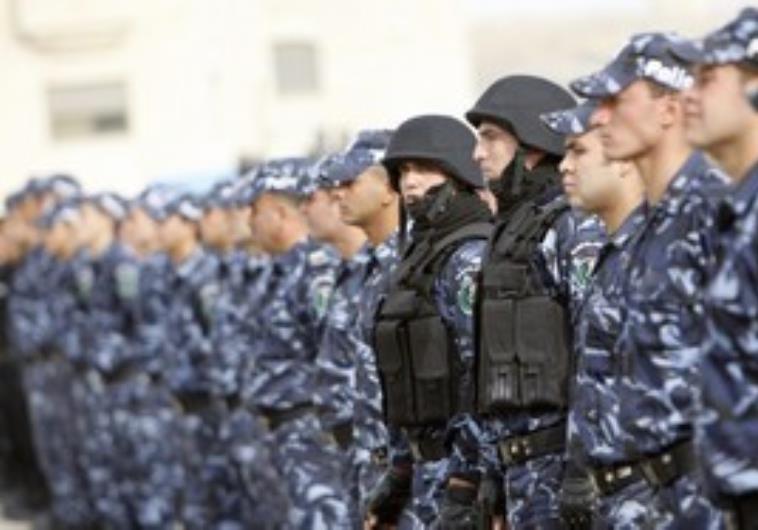
As the articles below from Electronic Intifada  and Middle East Eye show, the behaviour of the Palestinian Authority is shameful. The PA, which is nothing less than subcontractors for the Israeli state, violently attacked a demonstration in Ramallah in support of their brothers and sisters in Gaza.  And they did this on behalf of Israel (& the United States & Europe).

The demands of the demonstrators were simple - that the PA stop acting as a collaborator in enforcing Israel's siege of Gaza e.g. by requesting that Israel cut the amount of electricity Gaza receives to 3-4 hours a day or by itself cutting the salaries of 50,000 civil servants in Gaza.

It is  clear that the actions of Fateh thugs who, in co-ordination with the Palestinian Security Police, attacked the demonstration mean that Fateh should no longer be seen as a resistance movement and should be treated in the same way as the Village Leagues used to be treated.  Collaborators.

What is also shameful is that Palestinian Solidarity Campaign and the solidarity movement in this country has nothing to say about this. The Anti-Apartheid Movement never hesitated to condemn Inkatha under Mangosuthu Buthelezi in South Africa.  Inkatha Freedom Party was used and helped by the Apartheid regime to attack the anti-apartheid struggle and the ANC.  It was responsible for much of the appalling violence in the lead up to South Africa's independence.

I'd be interested to hear what the difference is between the PA and Inkatha.  I have moved motions in the past at PSC AGM calling the PA a quisling regime, the equivalent of the Vichy regime in France under the Nazis and calling for PSC to dissociate itself from the PA.  Always the response is that this is 'internal' to the Palestinian movement.  This is a shameful and cowardly response.  If we condemn Israel we cannot avert our eyes from those Palestinians who enforce Israel's occupation.

It should be a matter of shame that someone can say that 'It is a bizarre feeling when everyone around you is more scared of Palestinian forces than they are of the Israeli army.'

No doubt the PA feel the need to prove to Israel and Trump that they are 'reliable'.  That whatever rhetoric they indulge in they can be relied on to uphold the occupation's norms.  In Abbas's own words, security co-operation with Israel is 'sacred'.  As an article in the Jerusalem Post last year WILL ABBAS SEVER HIS ‘SACRED’ SECURITY COOPERATION WITH ISRAEL? made clear 'suspending security cooperation is one of the Palestinians’ strongest cards. If Abbas does follow through on his threat to end it, Israel’s security will be greatly affected, as Palestinian security forces have stopped many attacks in the West Bank since a wave of terrorism broke out in October 2015.'

The suggestion that the PA is 'internal' to the Palestinian movement is a lie.  It is a threat to the Palestinian resistance movement and it has never hesitated to act to control and prevent any movement growing which challenges the Israeli state.  It is part of the political incoherence and worse of PSC and its current leadership that they have nothing to say about the role of the PA.

Tony Greenstein
Abbas  - is the Palestinian equivalent of the Mangosuthu Buthelezi - the Black African collaborator with Apartheid

Palestinians deserve better than PA brutality


Yet this week I found myself echoing a view expressed by Jason Greenblatt, a Middle East envoy for the US president. For very different reasons to the ones he cited, I arrived at the same conclusion as Greenblatt: the Palestinian people deserve better than the Palestinian Authority.
This was evident as I observed the PA’s handling of a protest on Wednesday evening.

The protest was organized by ordinary Palestinians who object to how the PA has imposed sanctions on Gaza. It was banned by the PA on the spurious pretext of avoiding disruptions to the Eid al-Fitr holiday celebrations.

Yet the protest went ahead – without official approval – in Ramallah, a city in the occupied West Bank. Its organizers refused to be bullied into canceling a display of solidarity with their fellow Palestinians in Gaza.

During the early stages of the protest, riot police working for the PA attacked its participants. They beat protesters, taking a number of them into custody. I saw one riot police officer – his face covered by a balaclava – rolling a stun grenade towards the crowd.

After about an hour, groups of thugs and secret police dispersed among the crowd took over the task of suppressing the protest.

The thugs in question wore hats, identifying themselves as supporters of Fatah, the party dominating the PA. Some of these hats depicted a kuffiyeh, the Palestinian checkered scarf. The irony involved here was sordid: the kuffiyeh is supposed to be a symbol of liberation.

Secret police

The secret police in the crowd were easy to spot, if you looked for them. They were men with large muscles, who watched over everyone else. They could be found in groups of four.

The secret police could be seen pointing out individuals to the thugs with the Fatah hats. If individuals who had been pointed out resisted arrest by these thugs, they were dragged away and beaten. None of the thugs looked older than 25.

The thugs grabbed many protesters and placed them in headlocks. Other protesters were punched and slapped in the head. One man had his shirt completely ripped off him by the thugs before they handed him over to the riot police.

Numerous protesters were rounded up and placed in vans, which were waiting near al-Manara Square in the city center. In one case, a protester was placed in an ambulance.

I later learned that protesters who had been rounded up were driven to police stations and to the headquarters of the PA’s “preventive security” division.

While I was standing next to some protesters on Wednesday, I suddenly felt my arms being restrained. One of the secret police had forced my hands behind my back. He did not use extreme force to do so. But he was certainly asserting his control.

The man told me to come with him. He pushed me down a lane. “Don’t be scared,” he whispered. “We respect people.”

I would have laughed – if I was not worried about having my head bashed in, which the man could have done on a whim.

The secret police officer brought me near the vans full of protesters who had been arrested. He handed me over to another man, who was carrying a walkie-talkie. That man asked me – in fluent English – what I was doing at the protest. Where was I from? Was I a journalist?
I replied in Arabic that I was not a journalist.

The man took my phone and went through the photos and messages saved on it. When he handed the phone back to me, he asked me for my ID card. I told him I did not have it with me.
The man then instructed the secret police officer who had grabbed me to take me away. I was ordered to go home. As I did so, I was followed through the streets by three other secret police officers.

Police working for the Palestinian Authority are funded and trained by the European Union and the United States. A key purpose of this training is to ensure that the PA works in the interests of Israel.

The way they handled this week’s protests illustrated how the PA’s police can be similarly brutal to Israel’s forces of occupation. Palestinians surely deserve better than that.

The author is a human rights worker in Palestine. They requested anonymity as they had been instructed by their organization to remain silent on how the PA handled Wednesday’s protests.

Protests in Ramallah: Does the PA actually care about Palestinians?


It is a bizarre feeling when everyone around you is more scared of Palestinian forces than they are of the Israeli army


Photo: Palestinian security forces stand guard in Ramallah on 13 June 2018, during a protest calling on President Mahmoud Abbas to end financial sanctions against Palestinians in Gaza (Reuters)
Tessa Fox's picture
As I stepped out onto Rukab Street, one of the main streets in Ramallah, at once I heard the cries: "There's gas!"

Wednesday night's protest, organised by the Campaign to Lift PA Sanctions on Gaza, had only just begun, but security forces were already firing stun grenades and tear gas cannisters directly at crowds that only 20 seconds earlier had raised banners demanding that sanctions against Gaza be lifted and chanted: "In spirit, in blood, we redeem you Gaza."

Everyone seemed still for a while: many were scattered in different areas around central Ramallah. Tension lay heavy in the air as people stood frozen on footpaths and in the streets, staring at the number of government personnel present.

It seemed as if the Palestinian Authority had sent out every member of its security forces for this event, including the National Security Service, the Palestinian police (including riot police), the General Intelligence Service and the Preventive Security Service.

There was also a downright terrifying gang of Fatah party members, loyal to PA President Mahmoud Abbas. Some carried pepper spray. Each wore a white cap. All of them were prowling around the gathered protesters.

On Tuesday, the night before the demonstration, the PA called for a counter-protest. This, everyone knew, would be a recipe for disaster.

"I don't even know if there's going to be protest," a friend said to me. People's concerns were repressed before they could even be expressed.

The protesters' simple message was directed at the PA, which more than a month ago halved the salaries of approximately 50,000 government employees in Gaza, leaving workers unable to provide for their families.

Palestinian security personnel confront a protest in Ramallah on 13 June 2018 (Tessa Fox/MEE)

The cut came after the PA also stopped paying for Gaza's electricity last year, further limiting residents' access to power and crippling industry and essential public services including hospitals, schools.

The Palestinian National Council, the PA's legislative body, as well as factions within the PA have all called for the sanctions to be lifted. That's left Abbas to shoulder much of the blame, as his critics accuse him of trying to unseat Hamas from Gaza, where it rules the territory, while using Gaza's two million residents as political pawns.

It's left Gaza caught in a dire humanitarian crisis, between the Israeli blockade of the strip on one side and on the other the punitive approach of the PA, whose actions have been so extreme that residents within Ramallah itself, the PA's seat of government, have risen up against the authorities and called for sanctions to be lifted.

PA uses same tactics as Israel


Photos and captions circulating on social media suggested that thousands of people were there, although it was hard to differentiate between protesters, bystanders and undercover police.

I tried to push as close as I could to what was going on to take some pictures, even though I had been warned only half-an-hour earlier that taking photos and videos was banned.

I was also warned that the police were trying to break cameras and confiscate memory cards. To me, this is one of the first signs that a government can give to show that it is actually an oppressive regime. That night the PA did everything in its power to restrict the free flow of information.

Palestinians in Ramallah demand the lifting of sanctions against Gaza on 13 June 2018 (Reuters)

The whole scene was one of chaos. In one area, security forces threw rounds of sound bombs. Riot cops started running down yet another street to try to block any entrance to al-Manara, the main square in Ramallah. And dotted among the crowd were those white-capped members of Fatah, some of whom were undercover officers, taking matters into their own hands and beating up protesters, all under the watchful eye of the police.

A friend who works at a local Palestinian TV station told me that around 2,000 undercover forces were within the area. Someone else told me that one female protester had a gun pointed at her head by one of the undercover officers. She couldn't talk afterwards, she was in such a state of shock.

It felt as if those undercover police were mirroring the same tactics as used by the Israeli mustarabeen, the undercover unit trained to look and act like Arabs.

By deploying so many police in civilian clothes, the authorities sought not only to maximise the number of arrests but also to dismantle any network of trust among civilians and destroy the solidarity that is a necessary tool against any oppressive regime.

It's always been the goal of the Israeli occupation to break the unity of historical Palestine, including movement to and from Gaza, using the building of illegal settlements, restrictions on access to pre-1948 areas of the West Bank and the Greater Jerusalem Bill.

Now it is out in the open that the PA, as led by Fatah, is prepared to crush the Palestinian cause and unity to retain power over the Palestinian population.

Undercover forces made the majority of arrests, which numbered more than 60 by the end of the night. I saw people, including women and young girls, kicked, punched and beaten with batons. People's bodies were pulled in all directions as they were dragged away by at least five men to a fenced-off car park, where riot police stood guard, waiting for vans to pick up their latest prisoners.

Need to witness brutality


I knew I had to try and document the brutality. But less than 10 minutes after arriving at the protest I had already been sternly warned by an undercover policeman not to take photos.

Eventually I managed to climb up the roundabout at al-Manara. Standing on top of one of the lion statues, I had a clear vantage point of just how many people were in the streets and the brawls that were unfolding below.

Soon, I heard someone yell at me, then realised that multiple people were pointing and starting to run in my direction. I ran down the back of the statue while taking my memory card out of my camera and shoving it in my pants.

By the time I jumped down, civilian and uniformed police had already climbed inside the fence. I was trapped. They grabbed me by my arms while another tried to take my camera. I thought for sure they were going to break it. I just kept screaming and yelling at them, telling them to let me go and to wait so I could "prove" to them I had no photos.

They then put three women police officers onto me. One held my arm and kept telling me to be quiet and calm down. I yelled back: "How on earth can I be calm down when you're trying to arrest me and break my camera?"

The sound of the commotion began to work in my favour, as an older Palestinian woman came over and started apologising for what was happening. A man dressed in civilian clothes stepped forward and declared that he was a policeman. I replied that he should be wearing uniform.

I wanted to yell at them that they weren't true Palestinians; that all they were was part of a single faction, Fatah, and were simply government employees; that they didn't care about the Palestinians in Gaza; that they didn't care about the Palestinians in Ramallah, who they were beating up; that they didn't care about the Palestinians who had travelled all the way from Haifa by bus to protest alongside their brothers and sisters; and that the the people living under dictatorships across the Palestinian territories counted for nothing in their eyes.

Why is Palestinian Authority doing this?


Finally I was released and found my friend. She was beside herself because the undercover forces had taken her cameraman's memory card while she was doing a live broadcast criticising the PA. She thought for sure that she would be arrested the next day. She was terrified.

The problem was, the Palestinian security forces were driven by complete emotion. Couple this with them not being experienced enough to deal with such large crowds and it meant that their use of weapons was a disaster.

At one stage, a security officer, holding a sound bomb in his hand, wrestled with a protester. During the scuffle, the bomb went off. It seemed like all the actions of the security forces were driven by impulse rather than orders from their superiors.

Stories have also emerged of sexual harassment, perpetrated by the men wearing those Fatah caps. One woman was chased down a side street and sexually abused before she was rescued by people she knew.

Many of the Fatah supporters are themselves from families of martyrs or political prisoners. Other Palestinians cannot fathom how they could act this way during a protest in support of their brothers and sisters in Gaza. Are they attempting to create conflict among the factions?
Protesters and residents are still in a complete state of shock, as well as physical and mental exhaustion. The night after the protest, those who had attended were still too scared to walk the streets or go into public spaces for fear of being arrested or beaten up.

People unconnected to the protests were targeted just for being in the street. I witnessed multiple families and women with babies, who were trying to walk home, standing bewildered as they were yelled at by the presidential guard.

Why the protests will continue


Another protest is already set for Wednesday. What sort of excuse will the PA use then to repress people's freedom of expression and assembly when it is held outside of the Eid holiday? Will they find new grounds to ban and criminalise protests?

Fatah and Abbas showed their true colours to the people of Palestine this week as well as alienating some of the supporters from their own party. The protest held last Wednesday night wasn't organised to bring down the PA or to depose Abbas.

It was in support of another persecuted population of Palestinians, who may live under separate Hamas rule in Gaza but whose fate has now been crushed still further by the regime controlling the West Bank.

But if the removal of sanctions against Gaza is not achieved in good time, then do not be surprised if those living in the West Bank focus their energies on removing heads of government. On Friday, 70 civil society organisations and trade unions within Palestine called for the dismissal of Rami al-Hamdallah, the Palestinian prime minister and interior minister.
The activists are now recovering, tending their wounds, being released from prison and embracing their close support networks to nurture their emotionally drained minds.

Hopefully the organisation and unity of Palestinians will now only be strengthened even more, as their fight for their brothers and sisters in Gaza is emboldened by the brutality that the protesters in Ramallah faced.

- Tessa Fox is a freelance journalist, photographer and filmmaker focusing on war & conflict, indigenous affairs and the environment. She has had work published for Al Jazeera, Deutsche Welle, Al-Monitor, The Independent (UK), Holistic News (Poland), Mail & Guardian (South Africa), Knack (Belgium), Australian Broadcasting Corporation, SBS World News, New Matilda, VICE and Crikey among others. Fox was also a finalist for the Dart Centre for Journalism and Trauma Asia Pacific Prize and, as a correspondent, has reported from Turkey, Myanmar, Ethiopia, Russia, Vanuatu, the Solomon Islands, Australia and the EU among others.

The views expressed in this article belong to the author and do not necessarily reflect the editorial policy of Middle East Eye.

6 February 2016

Quisling Palestinian Authority Arrests Dissident Professor in the Service of Israel


Professor Quassem
Usually national liberation movements wait until they achieve national liberation and form the government before they start persecuting dissidents or their own people.  The African National Congress first overthrew Apartheid before it formed an alliance with the mining companies, gunning down 34 miners at the Marikana mine. 
Mahmoud Abbas - Palestineian Quisling President - believes co-operation with Palestinian security is 'sacred'
The quisling Palestinian Authority is different.  It presides over a fictitious ‘state’ and plays a diplomatic game in which it invites other countries to recognise a non-existent Palestinian ‘state’.
So it is that a distinguished professor at Nablus University, Abdel Sattar Qassem, was arrested for ‘slander, vandalism, incitement, insulting the president and “hurting the national feeling.’  It is difficult to understand how someone can insult that apology for a Zionist footstool,  Mahmoud Abbas, when he does such a good job himself.  Someone who could describe the collaboration by his Palestinian Preventive Security Force with the Israeli military as ‘sacred’ is beyond doubt a traitor to the Palestinian national cause. 
Abdel Sattar Qassem (via Indymedia)
If there were any justice in the Ramallah bantustan then the charge of ‘hurting the national feeling’ would be levelled against Abbas, Dahlan and the other cronies and collaborators in the PA.  Perhaps the real reason why Professor Qassem was arrested was because he called for the prosecution for treason of Palestinian traitors.  Unfortunately, if that were to happen, then it would be inevitable that the first candidate for prosecution would be Mahmoud Abbas.

It is essential that Palestinian solidarity groups in Britain and internationally call for the immediate release of Professor Qassem and the prosecution of those responsible for his arrest and detention.
In Britain we should go a step further.  It is a disgrace that nationally Palestine Solidarity Campaign retains friendly relations with the office of the Palestinian Authority in London, headed by Professor Hassassian.  The Anti Apartheid Movement in Britain did not have relations with Mangosuthu Buthelezi’s Inkatha Freedom Party, which collaborated with the Apartheid regime.  There is no reason why PSC should retain normal relations with the PA, whose record is as bad if not worse than Buthulezi’s.

Tony Greenstein

 5 February 2016
Palestinian Security Forces trained by the Americans, vetted by Israel and employed to suppress Palestinian resistance
A Nablus court on Thursday extended the detention of a prominent Palestinian scholar and longtime dissident whose arrest earlier this week has led to accusations that he is being politically persecuted by the Palestinian Authority.

At around 11pm on Tuesday, Abdel Sattar Qassem, a 68-year-old professor of political science at Nablus’ An-Najah National University, and a father of four, was taken from his home, where he had been staying alone. His wife, Amal al-Ahmad, was not informed of the arrest and concerned neighbors broke down a door at her prompting to check whether Qassem had suffered an accident.
I called him several times but his mobile phone was closed and I got no answer from the landline,” al-Ahmad, a program coordinator at the Women’s Study Center, told The Electronic Intifada.
Palestinian security thugs
Her fears were compounded by the fact that Qassem’s car was parked outside as usual. “I was scared that he might have suffered a heart attack or that he might have been kidnapped,” she said.
It was only after checking a camera in the family’s home that it became clear Qassem had been apprehended by Palestinian police. And it took hours still before she received a phone call from the police telling her that her husband was in detention.

Outside the court on Thursday, where Qassem’s detention was extended for another 15 days, a group of civil society activists and friends of the professor held a vigil demanding his release and an end to political detention and persecution.

His lawyer, Ahmad Sharaab, the only person to have visited Qassem in detention so far, is planning an appeal.

Qassem faces numerous charges including slander, vandalism, incitement, insulting the president and “hurting the national feeling.” According to Adnan al-Damiri, spokesperson of the PA’s security forces, the arrest came following complaints that Qassem had been inciting to kill PA leader Mahmoud Abbas.
Palestinian police attack demonstration in West Bank
The charges relate to an interview Qassem gave on Al Quds TV, broadcast from Beirut, in which he called for implementing the Palestinian Basic Law which limits presidential terms to four years.
He also called for the implementation of the Palestine Liberation Organization revolutionary law, not adapted by the PA, which calls for charges of treason to be brought against collaborators with Israel, punishable by death.

His appearance fomented a wave of incitement against him by figures allied with the Palestinian Authority, which remains presided over by Mahmoud Abbas, even though his elected mandate expired in 2009.

Constant harassment

Al-Ahmad says the arrest is only the latest episode of a concerted official persecution of her husband.
“The PA targets my husband because he has repeatedly described security coordination and collaboration with Israel as grand treason,” al-Ahmad said. “There is no democracy under the PA. Security forces arrest anyone who freely expresses his opposition to authority policies.”

Qassem writes regularly for Al Jazeera’s Arabic-language website about Palestinian and Arab affairs. One of his most recently published articles, titled “The Orphan Uprising,” discusses the current Palestinian uprising, its challenges, limitations and the failure of the Palestinian leadership to live up to the sacrifices of the youth.

A staunch opponent of the Oslo accords and negotiations process with Israel, Qassem, who is not affiliated with any political faction but is often associated with left-leaning Arab nationalist views, has been a target of the Palestinian Authority ever since its establishment. He accused former leader Yasser Arafat of corruption and regularly condemns Abbas’ security coordination and contact with the Israeli occupation.

Qassem’s work at An-Najah University also did not stop him from criticizing the school’s administration. He spoke out against what he perceived as corruption at the institution, which until recently was headed by Rami Hamdallah, now the appointed PA prime minister. He also published an article criticizing the university’s refusal to implement a Palestinian court decision halting the expulsion of four students.

That criticism led to his arrest in August 2011 on libel charges brought by the university. That was his second detention by the PA; in April 2009, he was arrested by the PA security forces.

All charges were eventually dropped.

But arrests are only a part of the pattern of repression his wife cites. Qassem survived an assassination attempt by unknown gunmen shortly after being released from his latest stint in Israeli prison, where he spent a week in July 2014; he was shot in his car while driving to give a television interview condemning Israel’s massive military assault on Gaza at the time.

The attempt on his life came after several death messages made against him for his criticism of the PA and Abbas, and following previous assaults by Palestinian security services, including after his appearance on Al Jazeera at the outset of the Tahrir Square uprising in Egypt in January 2011. The forces broke into and vandalized the local television station from where Qassem gave the interview.
He has seen everything: he was shot; his car was burnt; he was beaten. But he still refuses to be silenced,” al-Ahmad told The Electronic Intifada.

His political views and his insistence to speak truth to power has put him under constant threat from all sides,” she added. “But it hurts more when this threat comes from the Palestinian Authority. They claim to defend us while jailing and persecuting Palestinians who resist the occupation.”
Lonely struggle
Since her husband’s latest arrest by the PA, al-Ahmad says she has not received a single message of support from Qassem’s colleagues at An-Najah.

He had a hearing on 3 February, but only a few family members joined al-Ahmad outside the jail.
I don’t count on professors and intellectuals to support my husband,” al-Ahmad lamented. “Those people benefit from the PA and they are not prepared to sacrifice their privileges and face the risks of supporting their colleague.”

Two of Qassem’s colleagues contacted for this article refused to comment on his court case until it runs its course.

Al-Ahmad does, however, count on the thousands of Qassem’s former students to support their professor. Some of them turned out for Thursday’s court hearing, during which Qassem was in high spirits, his wife said.

A coalition of civil society organizations and some political factions are protesting Qassem’s arrest, putting out a statement calling for his immediate release as part of the “commitment to preserve civil liberties and defend freedom of expression.”

Both the Change and Reform Bloc of parties in parliament — which includes Hamas — as well as the leftist Popular Front for the Liberation of Palestine have also condemned the arrest as an attempt to silence independent voices, while Mourid Barghouti, the Palestinian poet based in Cairo, urged scholars and writers to speak up against his arrest.

Lifelong dissident

Born in the Tulkarem-area village of Deir al-Ghusoun in 1948, Qassem graduated from the American University of Cairo with a bachelor’s degree in political science in 1972. During that period he sought to become engaged in the Palestinian struggle for liberation. That involvement, however, saw him grow disillusioned with the Palestinian leadership.

He went on to study at the University of Missouri, where he earned a master’s degree in economics and received a PhD in political science in 1977.

Qassem has been a professor of political science at An-Najah in Nablus for more than three decades and despite persecution by both Israel and the Palestinian Authority, he has written numerous books, academic papers and articles.

These cover a variety of issues ranging from political philosophy to Palestinian history, Islamic studies, women in Islamic thought, contemporary Arab politics, the demise of Arab intellectuals and US imperialism. He also wrote a book, Days in Naqab Prison, about his experience as a political prisoner held by Israel, significantly contributing to prison literature produced by Palestinian authors.
Budour Youssef Hassan is a Palestinian writer and law graduate based in occupied Jerusalem. Blog: budourhassan.wordpress.com. Twitter: @Budour48