Showing posts with label Buthulezi. Show all posts

6 February 2016

Quisling Palestinian Authority Arrests Dissident Professor in the Service of Israel


Professor Quassem
Usually national liberation movements wait until they achieve national liberation and form the government before they start persecuting dissidents or their own people.  The African National Congress first overthrew Apartheid before it formed an alliance with the mining companies, gunning down 34 miners at the Marikana mine. 
Mahmoud Abbas - Palestineian Quisling President - believes co-operation with Palestinian security is 'sacred'
The quisling Palestinian Authority is different.  It presides over a fictitious ‘state’ and plays a diplomatic game in which it invites other countries to recognise a non-existent Palestinian ‘state’.
So it is that a distinguished professor at Nablus University, Abdel Sattar Qassem, was arrested for ‘slander, vandalism, incitement, insulting the president and “hurting the national feeling.’  It is difficult to understand how someone can insult that apology for a Zionist footstool,  Mahmoud Abbas, when he does such a good job himself.  Someone who could describe the collaboration by his Palestinian Preventive Security Force with the Israeli military as ‘sacred’ is beyond doubt a traitor to the Palestinian national cause. 
Abdel Sattar Qassem (via Indymedia)
If there were any justice in the Ramallah bantustan then the charge of ‘hurting the national feeling’ would be levelled against Abbas, Dahlan and the other cronies and collaborators in the PA.  Perhaps the real reason why Professor Qassem was arrested was because he called for the prosecution for treason of Palestinian traitors.  Unfortunately, if that were to happen, then it would be inevitable that the first candidate for prosecution would be Mahmoud Abbas.

It is essential that Palestinian solidarity groups in Britain and internationally call for the immediate release of Professor Qassem and the prosecution of those responsible for his arrest and detention.
In Britain we should go a step further.  It is a disgrace that nationally Palestine Solidarity Campaign retains friendly relations with the office of the Palestinian Authority in London, headed by Professor Hassassian.  The Anti Apartheid Movement in Britain did not have relations with Mangosuthu Buthelezi’s Inkatha Freedom Party, which collaborated with the Apartheid regime.  There is no reason why PSC should retain normal relations with the PA, whose record is as bad if not worse than Buthulezi’s.

Tony Greenstein

 5 February 2016
Palestinian Security Forces trained by the Americans, vetted by Israel and employed to suppress Palestinian resistance
A Nablus court on Thursday extended the detention of a prominent Palestinian scholar and longtime dissident whose arrest earlier this week has led to accusations that he is being politically persecuted by the Palestinian Authority.

At around 11pm on Tuesday, Abdel Sattar Qassem, a 68-year-old professor of political science at Nablus’ An-Najah National University, and a father of four, was taken from his home, where he had been staying alone. His wife, Amal al-Ahmad, was not informed of the arrest and concerned neighbors broke down a door at her prompting to check whether Qassem had suffered an accident.
I called him several times but his mobile phone was closed and I got no answer from the landline,” al-Ahmad, a program coordinator at the Women’s Study Center, told The Electronic Intifada.
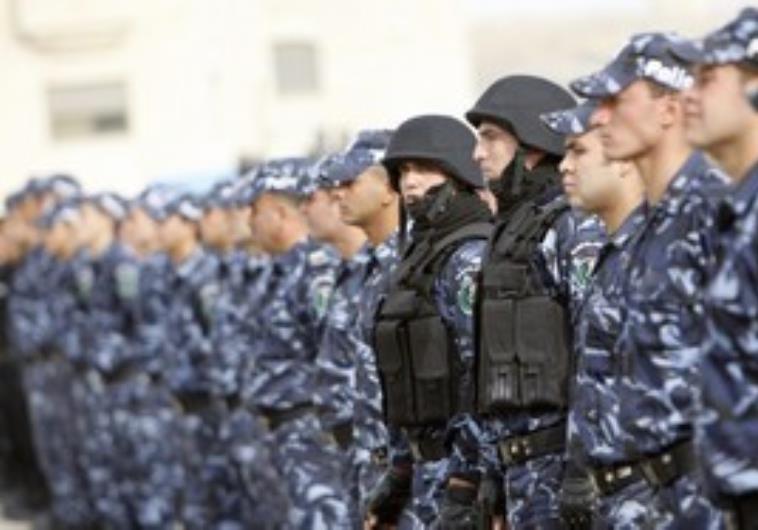
Palestinian security thugs
Her fears were compounded by the fact that Qassem’s car was parked outside as usual. “I was scared that he might have suffered a heart attack or that he might have been kidnapped,” she said.
It was only after checking a camera in the family’s home that it became clear Qassem had been apprehended by Palestinian police. And it took hours still before she received a phone call from the police telling her that her husband was in detention.

Outside the court on Thursday, where Qassem’s detention was extended for another 15 days, a group of civil society activists and friends of the professor held a vigil demanding his release and an end to political detention and persecution.

His lawyer, Ahmad Sharaab, the only person to have visited Qassem in detention so far, is planning an appeal.

Qassem faces numerous charges including slander, vandalism, incitement, insulting the president and “hurting the national feeling.” According to Adnan al-Damiri, spokesperson of the PA’s security forces, the arrest came following complaints that Qassem had been inciting to kill PA leader Mahmoud Abbas.
Palestinian police attack demonstration in West Bank
The charges relate to an interview Qassem gave on Al Quds TV, broadcast from Beirut, in which he called for implementing the Palestinian Basic Law which limits presidential terms to four years.
He also called for the implementation of the Palestine Liberation Organization revolutionary law, not adapted by the PA, which calls for charges of treason to be brought against collaborators with Israel, punishable by death.

His appearance fomented a wave of incitement against him by figures allied with the Palestinian Authority, which remains presided over by Mahmoud Abbas, even though his elected mandate expired in 2009.

Constant harassment

Al-Ahmad says the arrest is only the latest episode of a concerted official persecution of her husband.
“The PA targets my husband because he has repeatedly described security coordination and collaboration with Israel as grand treason,” al-Ahmad said. “There is no democracy under the PA. Security forces arrest anyone who freely expresses his opposition to authority policies.”

Qassem writes regularly for Al Jazeera’s Arabic-language website about Palestinian and Arab affairs. One of his most recently published articles, titled “The Orphan Uprising,” discusses the current Palestinian uprising, its challenges, limitations and the failure of the Palestinian leadership to live up to the sacrifices of the youth.

A staunch opponent of the Oslo accords and negotiations process with Israel, Qassem, who is not affiliated with any political faction but is often associated with left-leaning Arab nationalist views, has been a target of the Palestinian Authority ever since its establishment. He accused former leader Yasser Arafat of corruption and regularly condemns Abbas’ security coordination and contact with the Israeli occupation.

Qassem’s work at An-Najah University also did not stop him from criticizing the school’s administration. He spoke out against what he perceived as corruption at the institution, which until recently was headed by Rami Hamdallah, now the appointed PA prime minister. He also published an article criticizing the university’s refusal to implement a Palestinian court decision halting the expulsion of four students.

That criticism led to his arrest in August 2011 on libel charges brought by the university. That was his second detention by the PA; in April 2009, he was arrested by the PA security forces.

All charges were eventually dropped.

But arrests are only a part of the pattern of repression his wife cites. Qassem survived an assassination attempt by unknown gunmen shortly after being released from his latest stint in Israeli prison, where he spent a week in July 2014; he was shot in his car while driving to give a television interview condemning Israel’s massive military assault on Gaza at the time.

The attempt on his life came after several death messages made against him for his criticism of the PA and Abbas, and following previous assaults by Palestinian security services, including after his appearance on Al Jazeera at the outset of the Tahrir Square uprising in Egypt in January 2011. The forces broke into and vandalized the local television station from where Qassem gave the interview.
He has seen everything: he was shot; his car was burnt; he was beaten. But he still refuses to be silenced,” al-Ahmad told The Electronic Intifada.

His political views and his insistence to speak truth to power has put him under constant threat from all sides,” she added. “But it hurts more when this threat comes from the Palestinian Authority. They claim to defend us while jailing and persecuting Palestinians who resist the occupation.”
Lonely struggle
Since her husband’s latest arrest by the PA, al-Ahmad says she has not received a single message of support from Qassem’s colleagues at An-Najah.

He had a hearing on 3 February, but only a few family members joined al-Ahmad outside the jail.
I don’t count on professors and intellectuals to support my husband,” al-Ahmad lamented. “Those people benefit from the PA and they are not prepared to sacrifice their privileges and face the risks of supporting their colleague.”

Two of Qassem’s colleagues contacted for this article refused to comment on his court case until it runs its course.

Al-Ahmad does, however, count on the thousands of Qassem’s former students to support their professor. Some of them turned out for Thursday’s court hearing, during which Qassem was in high spirits, his wife said.

A coalition of civil society organizations and some political factions are protesting Qassem’s arrest, putting out a statement calling for his immediate release as part of the “commitment to preserve civil liberties and defend freedom of expression.”

Both the Change and Reform Bloc of parties in parliament — which includes Hamas — as well as the leftist Popular Front for the Liberation of Palestine have also condemned the arrest as an attempt to silence independent voices, while Mourid Barghouti, the Palestinian poet based in Cairo, urged scholars and writers to speak up against his arrest.

Lifelong dissident

Born in the Tulkarem-area village of Deir al-Ghusoun in 1948, Qassem graduated from the American University of Cairo with a bachelor’s degree in political science in 1972. During that period he sought to become engaged in the Palestinian struggle for liberation. That involvement, however, saw him grow disillusioned with the Palestinian leadership.

He went on to study at the University of Missouri, where he earned a master’s degree in economics and received a PhD in political science in 1977.

Qassem has been a professor of political science at An-Najah in Nablus for more than three decades and despite persecution by both Israel and the Palestinian Authority, he has written numerous books, academic papers and articles.

These cover a variety of issues ranging from political philosophy to Palestinian history, Islamic studies, women in Islamic thought, contemporary Arab politics, the demise of Arab intellectuals and US imperialism. He also wrote a book, Days in Naqab Prison, about his experience as a political prisoner held by Israel, significantly contributing to prison literature produced by Palestinian authors.
Budour Youssef Hassan is a Palestinian writer and law graduate based in occupied Jerusalem. Blog: budourhassan.wordpress.com. Twitter: @Budour48 

28 October 2012

Sodastream in Brighton - A Loss Leader in the Fight Against Apartheid


Why Nelson Mandela and Desmond Tutu Oppose Israeli Apartheid and Support BDS

Nelson Mandela - a long-time opponent of Israeli Apartheid


Christian fundamentalist supporters of Sodastream - 20 years ago the same people supported South African Apartheid

Black Zionist who tells anti-Zionist Jews they should have been annihilated by Hitler - and then claims that Nelson Mandela and Desmond Tutu would have agreed with them!

PSC stall in background as we hand leaflets out

One of many PSC leafletters

Zionists looking demoralised as they are shunned by the public

one of the Zionists tries putting on imaginary handcuffs (for Palestinians of course)

Simon - the Zionist jester looking non-too pleased

Christian Zionist (potty mouth) holds up poster proclaiming Jews have lived  in Palestine for 3,000 years (actually dear they were Canaanites then!)

handing out leaflets
At the regular Saturday picket today, local Zionists hit on a new ploy.  They go into the shop, buy something and then claim it as some kind of victory.  Meanwhile over 90% of members of the public who we talk to, don't want anything to do with an apartheid shop.  Of course there are few reactionaries who enter the citadels of Israel's apartheid shop.  But there were also people who gleefully broke the anti-Nazi boycott of Germany between 1933 and 1939.

Every week we are in danger of running out of leaflets as the Zionists stand around gossiping at their stall or hurling a few insults at us, which results in normal people finding that if the supporters of a cause are obnoxious, then the cause itself must be obnoxious.

The picketers are mainly Christian fundamentalists and Jewish Zionists.   The former even have a Black woman who tries to pretend that South African Apartheid and Zionist Apartheid are not the same and that she supports Nelson Mandela and Archbishop Tutu!  Today this particular creature told me, and it was recorded, that I should have been annihilated by Hitler.  Such lovely people the Zionists mix with!

She gets particularly angry when told that the heroes of the Anti-Apartheid struggle saw Israel as an apartheid state and hence support BDS.  However the evidence is quite clearOn the occasion of his visit to Israel in 1999 Mandela stated that 'To the many people who have questioned why I came, I say: Israel worked very closely with the apartheid regime. I say: I've made peace with many men who slaughtered our people like animals. Israel cooperated with the apartheid regime, but it did not participate in any atrocities'.  Indeed he was being very diplomatic.  Dr Verwoerd, South Africa’s former Prime Minister described Israel as a fellow partner in crime:

'The Jews took Israel from the Arabs after the Arabs had lived there for a thousand years. In this I agree with them. Israel like South Africa is an apartheid state. Rand Daily Mail 23. 11. 1961.'   Indeed from the very beginning of Zionism, there was an affinity with the white settlers of Southern Africa.  To Cecil Rhodes, the British imperialist after whom Rhodesia is named, Theodor Herzl wrote:  'Please give me a statement saying you have examined my programme and found it appropriate. And why do I come to you, Mr Rhodes, you will ask. Because- my programme is. a colonial programme.' T Herzl; Diaries, , Vol III p.l05

  Anti-Apartheid hero Nelson Mandela demands end to Israeli Apartheid

Nelson Mandela (born 18 July 1918)  is a former President of South Africa (the first to be elected in fully democratic election) 1994 to 1999. Before his presidency, Mandela was an anti-Apartheid activist and the leader of the African National Congress (ANC). Mandela served 27 years in prison, spending many of these years on Robben Island. Following his release from prison on 11 February 1990, Mandela supported reconciliation and negotiation, and helped lead the transition towards multi-racial democracy in South Africa. He was awarded the Nobel Peace Prize in 1993 (see) In this letter, Arjan El Fassed, mimicks a similar letter Friedman wrote, purporting to be from George Bush to Yasser Arafat.  Instead it is from Nelson Mandela to Friedman!

Nelson Mandela, Letter to Thomas L. Friedman (columnist New York Times) (March 2001):

March 30, 2001

To: Thomas L. Friedman (columnist New York Times)
From: Nelson Mandela (former President South Africa)

Dear Thomas,

I know that you and I long for peace in the Middle East, but before you continue to talk about necessary conditions from an Israeli perspective, you need to know what's on my mind. Where to begin? How about 1964. Let me quote my own words during my trial. They are true today as they were then:

"I have fought against white domination and I have fought against black domination. I have cherished the ideal of a democratic and free society in which all persons live together in harmony and with equal opportunities. It is an ideal which I hope to live for and to achieve. But if needs be, it is an ideal for which I am prepared to die."

Today the world, black and white, recognise that apartheid has no future. In South Africa it has been ended by our own decisive mass action in order to build peace and security. That mass campaign of defiance and other actions could only culminate in the establishment of democracy.

Perhaps it is strange for you to observe the situation in Palestine or more specifically, the structure of political and cultural relationships between Palestinians and Israelis, as an apartheid system. This is because you incorrectly think that the problem of Palestine began in 1967. This was demonstrated in your recent column "Bush's First Memo" in the New York Times on March 27, 2001.

You seem to be surprised to hear that there are still problems of 1948 to be solved, the most important component of which is the right to return of Palestinian refugees.

The Palestinian-Israeli conflict is not just an issue of military occupation and Israel is not a country that was established "normally" and happened to occupy another country in 1967. Palestinians are not struggling for a "state" but for freedom, liberation and equality, just like we were struggling for freedom in South Africa.

In the last few years, and especially during the reign of the Labour Party, Israel showed that it was not even willing to return what it occupied in 1967; that settlements remain, Jerusalem would be under exclusive Israeli sovereignty, and Palestinians would not have an independent state, but would be under Israeli economic domination with Israeli control of borders, land, air, water and sea.

Israel was not thinking of a "state" but of "separation". The value of separation is measured in terms of the ability of Israel to keep the Jewish state Jewish, and not to have a Palestinian minority that could have the opportunity to become a majority at some time in the future. If this takes place, it would force Israel to either become a secular democratic or bi-national state, or to turn into a state of apartheid not only de facto, but also de jure.

Thomas, if you follow the polls in Israel for the last 30 or 40 years, you clearly find a vulgar racism that includes a third of the population who openly declare themselves to be racist. This racism is of the nature of "I hate Arabs" and "I wish Arabs would be dead". If you also follow the judicial system in Israel you will see there is discrimination against Palestinians, and if you further consider the 1967 occupied territories you will find there are already two judicial systems in operation that represent two different approaches to human life: one for Palestinian life and the other for Jewish life. Additionally there are two different approaches to property and to land. Palestinian property is not recognised as private property because it can be confiscated.

As to the Israeli occupation of the West Bank and Gaza, there is an additional factor. The so-called "Palestinian autonomous areas" are bantustans. These are restricted entities within the power structure of the Israeli apartheid system.

The Palestinian state cannot be the by-product of the Jewish state, just in order to keep the Jewish purity of Israel. Israel's racial discrimination is daily life of most Palestinians. Since Israel is a Jewish state, Israeli Jews are able to accrue special rights which non-Jews cannot do. Palestinian Arabs have no place in a "Jewish" state.

Apartheid is a crime against humanity. Israel has deprived millions of Palestinians of their liberty and property. It has perpetuated a system of gross racial discrimination and inequality. It has systematically incarcerated and tortured thousands of Palestinians, contrary to the rules of international law. It has, in particular, waged a war against a civilian population, in particular children.

The responses made by South Africa to human rights abuses emanating from the removal policies and apartheid policies respectively, shed light on what Israeli society must necessarily go through before one can speak of a just and lasting peace in the Middle East and an end to its apartheid policies.

Thomas, I'm not abandoning Mideast diplomacy. But I'm not going to indulge you the way your supporters do. If you want peace and democracy, I will support you. If you want formal apartheid, we will not support you. If you want to support racial discrimination and ethnic cleansing, we will oppose you. When you figure out what you're about, give me a call.
” [1].

2. Nelson Mandela speech on International Day of Solidarity with the Palestinians (excerpt) :  
"The temptation in our situation is to speak in muffled tones about an issue such as the right of the people of Palestine to a state of their own. We can easily be enticed to read reconciliation and fairness as meaning parity between justice and injustice. Having achieved our own freedom, we can fall into the trap of washing our hands of difficulties that others faces. Yet we would be less than human if we did so.

It behooves all South Africans, themselves erstwhile beneficiaries of generous international support, to stand up and be counted among those contributing actively to the cause of freedom and justice.
Even during the days of negotiations, our own experience taught us that the pursuit of human fraternity and equality -- irrespective of race or religion -- should stand at the centre of our peaceful endeavours. The choice is not between freedom and justice, on the one hand, and their opposite, on the other. Peace and prosperity; tranquility and security are only possible if these are enjoyed by all without discrimination.

It is in this spirit that I have come to join you today to add our own voice to the universal call for Palestinian self-determination and statehood." [2].

[1]. Arjan El-Fassed, “Letter from Nelson Mandel to Thomas Friedman”, Bint Jbeil, March 2001: http://www.bintjbeil.com/E/occupation/mandella.html .
[2]. Edward. C. Corrigan, “Israel and apartheid: a fair comparison?”, rabble.ca, 2 March 2010: http://www.rabble.ca/news/2010/03/israel-and-apartheid-fair-comparison .

In case there is still any doubt left about where Mandela and Tutu stand then the article on the Christian Fundamentalist site ‘Why Israel’ http://www.whyisrael.org/2012/09/04/south-africas-boycott-of-israel-is-mandelas-legacy/ should dispel all illusions:

South Africa’s Boycott of Israel Is Mandela’s Legacy

editor Tuesday 4 September 2012 Share on FacebookShare on TwitterShare by emailPrinter friendly

By Giulio Meotti.. The South African government instructed that products made in Judea and Samaria not be labeled as “products of Israel.” Israel’s deputy foreign minister, Danny Ayalon, vehemently declared that South Africa “remains an apartheid state,” which is now turning its discrimination against Israel. A post-apartheid Pretoria boycotting Jerusalem is one of the more powerful victories for the boycott and divestment campaign. And it’s Nelson Mandela’s legacy.
On March 30, 2001, the anti-apartheid icon Mandela sent a letter to the American journalist Thomas Friedman. Israel, said Mandela, is “not a country that was established normally.”

Rather, it had “occupied another country.” He accused Israelis of indulging in “a vulgar racism.” And then came the peak of his anti-Jewish hatred: “Israel has deprived millions of Palestinians of their liberty and property. It has perpetuated a system of gross racial discrimination and inequality.” This is “an apartheid system.”

Since then, the definition of the Jewish State as an “apartheid state” has become the code word for evil. The labeling of Israel as an “apartheid state” is the embodiment of the new anti-Semitism.
Historically, black leaders in South Africa such as Desmond Tutu viewed the Jews as a part of the “capitalist camp,” and therefore exploitative of the blacks. Neo Mnumzama, chief representative of the ANC (Mandela’s party) at the United Nations, called Zionism an “ally of apartheid” and “an accomplice in the perpetuation of the crimes of Pretoria against the South African people.”

Mandela fabricated the comparison between Israel and South Africa. In his twisted version: both are small bastions of Western values and interests surrounded by a larger and non-Western people; both govern hostile majorities, using force and denying rights to subjugate them; both are run by nationalistic, racist governments unwilling to grant rights to these people but anxious to exploit labor. However, Mandela concealed the truth: in South Africa’s apartheid, there were 26 million blacks and 6 million whites, while in Israel there is a Jewish majority and a minority of Arabs who attack the Jews.

The special relationship between Israel and South Africa, according to Mandela, was an unholy alliance between pariah states (during the apartheid era, most of the black African states broke relations with Israel). The truth was another thing, however: like blacks in America before the civil rights movement, or in South Africa under apartheid, Israeli Jews and their connection to the holy land have been erased from the environment by the Arabs. It’s Palestinian anti-Semitism, not Israel’s Jewish democracy, which must be compared to apartheid’s Aryanism.

In 2000, the American Jewish Committee canceled a Washington luncheon scheduled to honor Mandela after he said that 13 Jews tried for “espionage” (read: Judaism and Zionism) in Iran were receiving a “fair trial.” While Jews — including community leaders and a rabbi — were presented as agents of Israel and the US, Mandela was laying a wreath on the grave of Ayatollah Ruhollah Khomeini, the father of the Iranian revolution, and warmly greeting his successor, Ayatollah Ali Khamenei.

In 1990, Mandela likened Israel to a “terrorist state” and declared that “we do not regard the PLO as a terrorist organization. If one has to refer to any parties as a terrorist state, one might refer to the Israeli government because they are the people who are slaughtering defenseless and innocent Arabs in the occupied territories.”

In 1999 Mandela supported the Palestinian use of violence. With Yasser Arafat seated next to him at a Palestinian Legislative Council session in Gaza City, Mandela said: “All men and women with vision choose peace rather than confrontation, except in cases where we cannot proceed, where we cannot move forward. Then if the only alternative is violence, we will use violence.” “Arafat and Mandela – Freedom and Victory,” read one of the Palestinian Authority banners hoisted in Gaza for the visit. A few weeks later, the Palestinians began the Second Intifada. Fifteen hundred Jewish civilians have since been killed in suicide attacks and shootings; 10,000 have been wounded.

We should also mention Mandela’s friendship with Colonel Gaddafi (“my brother leader”) and his endorsement of Gaddafi’s long refusal to surrender for trial those accused of the Lockerbie atrocity.
Under Mandela’s apartheid analogy, the World Conference against Racism, held by the United Nations in Durban in 2001, was transformed into a racist conference against Israel. In the same city where President Mbeki held his festival of victory against real apartheid, another death sentence was passed for the Jews. Many black leaders were involved in the Durban proto-Nazi saga.

Nelson Mandela might be a symbol of goodness for many, but as the recent boycott has proven, for Israel’s Jews, Mandela has been an enabler of anti-Semitism.

‘In an article ‘Africans for Israel: A breath of fresh air’ the Jerusalem Post carried an op ed which told readers that ‘it would not be true to say that all Black Africans oppose Zionism and Israel.  A breath of fresh air was welcome on June 28 in the form of a peaceful and dignified protest, Africans for Israel, organized by the African Christian Democratic Party and the Inkatha Freedom Party. They were joined by the Shembe Church, estimated to have one million followers, many of them ANC members. The ACDP in turn invited the South African Zionist Federation to join among others.;
The only problem with this is that Inkatha and Buthelezi were African quisling groups who collaborated with Apartheid.  The ANC only took Buthulezi into government to avoid bloodshed in Natal but his record was one of collaboration with apartheid.  Given the close ties Israel and Apartheid South Africa, which included a visit by Buthulezi to Israel during the Apartheid years, it is no surprise that Buthulezi is now opposed to BDS