Showing posts with label Global Warming. Show all posts

14 November 2021

Telling Simple Truths – We Will Never Stop Global Warming and Climate Change as Long as We have CAPITALISM

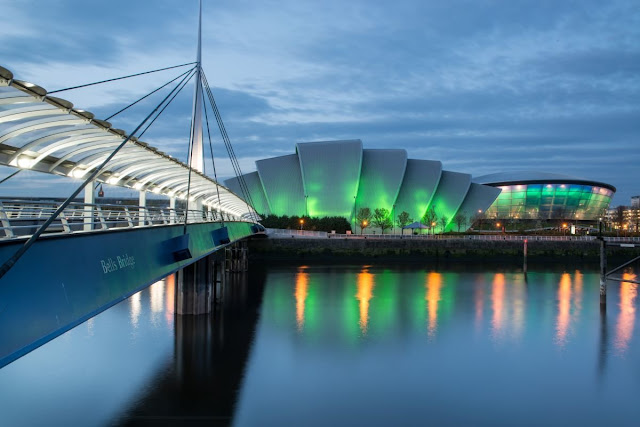
A few brief thoughts - COP26: Glasgow in the eye of the climate storm

Instead of writing a blog I have instead decided to publish an article from a friend's blog. The argument is very simple.  Capitalism is, by its very nature, incapable of preventing climate change.  Anyone who says they are a Green but not a Socialist is lying – not least to themselves.

At the heart of how capitalism works is the blind production of capital. The central driving force of capitalism is profit not human need.  Everything else is subordinate to it.  And in order to protect capital against those who would take it away and use it collectively for the benefit of humanity you have to wage wars.

Capitalism is based on economic competition not co-operation. And sometimes this isn't economic but military. The drive to gain markets and resources is ceaseless.  All the time new pretexts are dreamed up such as in Bush and Blair’s ‘war for democracy’ in Iraq.

COP26: Glasgow in the eye of the climate storm

Posted by tom

As the eyes of the world fall on Glasgow for the COP26 summit, its significance cannot be overstated. COP26 has been billed as the last chance saloon for us to save the planet by delivering on the promises adopted in the 2016 Paris Agreement which present a tangible route for each country to meet their ‘nationally determined contributions’ (NDCs: agreed timetables for emissions reductions). The NDCs give each country a realistic and equitable path to reach its target, with less developed nations recognised as having a more difficult path to net-zero emissions. These NDCs are due to be updated this year to keep countries on track to meet the Paris targets, with some yet to submit their new proposals. This will be crucial in holding countries to account for the pledges they’ve made.

It is the first of COP26’s four goals that is overarching: to “secure global net zero by mid-century and keep 1.5 degrees within reach” [1]. Reaching ‘net-zero’ emissions means adding no more greenhouse gases to the atmosphere than we remove. But this terminology and the legislation which backs it up can often be manipulated by big polluting companies who instead of reducing their carbon dioxide emissions, try to offset them by planting trees. This has been characterised as ‘greenwashing’, with the effectiveness of tree planting as an immediate solution under scrutiny. Activists cite the potential for wildfires and the time trees take to grow before they can become effective carbon capturers as major concerns [2]. By comparison, leaving fossil fuels in the ground gives a far greater certainty for the quantity of emissions reductions. Because of the urgency of the climate crisis, the central focus of world governments needs to be on emissions reductions and forcing these companies to transition to green energy- not just allowing for inadequate and unverifiable offsets.

It is important to consider what a world 1.5°C or 2°C hotter (in comparison to the period 1850-1900) would look like to know what we are fighting against. This year the Intergovernmental Panel on Climate Change (IPCC), the leading UN authority on climate science, published its sixth assessment report which gave a stark and frightening analysis. They predict that a world 1.5°C warmer would face increased precipitation, more extreme heat, droughts, higher sea levels, extinction of species and habitats and much more. But this has been common knowledge for decades- the crucial findings of the report are about how much worse the effects will be if a 2°C increase is allowed to occur. The IPCC predict that the additional 0.5°C rise would cause sea levels to rise by an extra 0.1 metres, putting 10 million more people at risk, coral reefs to decline by over 99% (as opposed to 70-90% at 1.5°C) and double the number of people to experience climate change-induced water stress. These are just a few of the many tangible effects that another 0.5°C of warming would cause and should serve as motivation for the world to act in the most ambitious manner possible.

The analysis of pathways to the 1.5°C target, however, makes for sobering reading. Limiting temperature rises to the more ambitious target will require CO2 emissions to decline by 45% by 2030 in comparison to 2010 levels and reach net zero by 2050. By comparison, the 2°C target require reductions of 25% by 2030 and net-zero by 2070. The report makes clear that pathways to 1.5°C require “rapid and far-reaching transitions in energy, land, urban and infrastructure and industrial systems”. To keep to this target, by 2050 renewables should supply at least 70% of electricity, CO2 from industry should be at least 65% lower and an additional $830 billion per year spent on energy-related investments. As of 2020 only 29% of electricity generation was from renewables, showing the scale of the task ahead.

A common theme across all the projected pathways is a dependence on carbon dioxide removal (CDR); in particular bioenergy with carbon capture and storage (BECCS) technologies. These technologies would be necessary to keep to temperature targets only in the cases where emissions don’t drop by enough or we overshoot targets and try to bring the temperature back down. But such technologies are in their early stages, with only five BECCS facilities in operation as of 2019 capturing 1.5 million tonnes per year of CO2; a miniscule amount in comparison to the 11 gigatonnes needed by 2050 in the most BECCS dependent pathway [4]. It is not just the limitations in upscaling BECCS, but the impact other carbon capture methods could have on land, energy, water and nutrients that make the feasibility of CDR a huge challenge. And the jury’s still out on the effectiveness of CDR in reducing temperatures after they’ve peaked, meaning that the NDCs need to rely on what we can do now rather than on future technology with no guarantees.

For the world to change in the manner needed requires huge political will power, which is so far lacking. The current national climate pledges put the world on track for a 2.7°C temperature rise by 2100, a far cry from the 1.5°C goal of Paris [5]. The Emissions Gap Report 2021 found that the figure could be reduced to 2.2°C if pledges were implemented effectively, but that most national climate plans focus on delaying action till after 2030. This is why it is absolutely crucial for world leaders to act now, rather than fob the public off with dubious promises on ‘net-zero’ aimed primarily at appeasing the fossil fuel industry. The new NDCs are predicted to only reduce predicted emissions in 2030 by 7.5% in comparison to the previous NDCs, when a 55% reduction is needed for the 1.5°C target. One potential solution to limit temperatures in this crucial eight year window is to focus on reducing methane emissions, the second largest contributor to global warming. Methane can warm the planet 80 times more than CO2 and stays in the atmosphere for a far shorter period, meaning that cuts to methane will have a far quicker effect. Stringent cuts to methane may therefore buy the planet a little extra time to cut CO2, which will only be possible with clearly defined rules and transparent processes to track progress.

It is clear that climate change will disproportionately affect the poor and those living in the tropics, which is why it is particularly important for the developed nations- those with the necessary resources and technology- to take the lead. But so far only ten G20 members are predicted to meet their previous NDCs (let alone their new ones) with the USA the most prominent of those predicted to fall behind. These countries are guilty of duplicity; using vague long term targets to pretend to the public that they care, whilst doing little to back it up with concrete policy. In a similar way, our media have made much of the USA’s pledged promise of $11.4 billion per year in climate finance contributions. Whilst this could end up being another empty promise- Barack Obama promised $3 billion, but only delivered $1 billion per year- it is also a drop in the ocean for what a country like the USA can afford. By comparison the total cost of the Iraq War was estimated to be $1.9 trillion. More recently the USA signed the AUKUS deal with the UK and Australia which will build submarines at a cost of $3.45 billion each, meaning three submarines will cost as much as their annual contribution to the Green Climate Fund. Once again it shows the mixed-up priorities of Western leaders. To paraphrase Tony Benn, there is always enough money to kill people but never enough to help people.
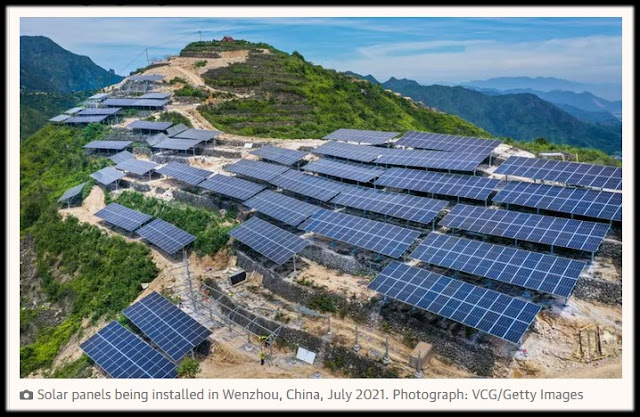
The spotlight of the Western media has however predominantly fallen on China, which is viewed as the determining factor for whether COP26 is a success or failure. There is some merit to this, with China producing an estimated 27% of global greenhouse gas emissions, but when measuring by emissions per capita, the USA are more than twice as polluting. This measure is a better indicator of how ambitious a country’s path to net-zero can be, as well as being fairer and showing who holds the greatest historic responsibility for a warming planet. China’s COP26 pledge not to build any more coal-fired power stations abroad has far greater significance than current pledges on climate finance, but it should be viewed only as a good first step. This pledge is in keeping with their current investment projects in ‘belt and road’ initiative countries, with 57% of China’s energy investment going to renewables in 2020- a jump from only 38% in 2019- but it crucially makes no reference to coal power inside China [6]. It is also clear that their headline policy of ‘peaking emissions by 2030’ must be brought forward if we are to have a chance of keeping warming under the targets.

The build-up to COP26 has been long, with promises under scrutiny like never before and a groundswell of anger and frustration from populations across the world coming to the fore. If we are to avert climate disaster, people must continue to mobilise to put pressure on their leaders to act now whilst we still have the chance. No matter how bad things get- indeed we are already feeling the effects of climate change- we must continue to fight for a green and sustainable world, staving off every fraction of a degree rise that we can. In such bleak times it is easy to be defeatist, but instead we must be realist, preparing for the worst but fighting for something far better. Glasgow’s COP26 conference is indeed of huge importance in getting the world to turn the corner, but it should just be the beginning. The fight to save our planet from the monstrous greed of capitalism; from those as Noam Chomsky said, “are willing to sacrifice the literal existence of organised human life… so they can put a few more dollars in highly overstuffed pockets” must be continued at all costs.


[1] https://ukcop26.org/cop26-goals/

[2] https://www.reuters.com/business/sustainable-business/reuters-impact-greenpeace-calls-end-carbon-offsets-2021-10-06/

[3] https://www.ipcc.ch/sr15/chapter/spm/

[4] https://en.wikipedia.org/wiki/Bioenergy_with_carbon_capture_and_storage

[5] https://www.unep.org/resources/emissions-gap-report-2021

[6] https://www.theguardian.com/commentisfree/2021/oct/27/china-climate-pledges-cop26-emissions


See also Capitalism is killing the planet – it’s time to stop buying into our own destruction George Monbiot


3 January 2019

It's Capitalism Stupid - Whatever the Problem it's Capitalism that's the Cause


We are all used to fighting in individual campaigns – whether it is for BDS and the Palestinians, or the NHS or against fascism or austerity in its many manifestations.  But what is the string that ties all this together.  What is it that makes this appalling system of imperialist robbery and exploitation tick?  That one word is capitalism, a society based not on human need but on the making of profit.  Of course by dividing us into separate campaigns and movements capitalism ensures its own survival.  Divide and rule. Racism, is one of its primary weapons.

It is because Jeremy Corbyn is perceived as being anti-capitalist in his own small and muddled way, that he is treated as the enemy within.  That is why all the bile is directed against him, not just by the mass media but by members of his own party too.  Whether it is John Mann or Joan Ryan or Hilary Benn - Corbyn's real problem is his attachment, in a fleeting and hesitant, manner to the idea that there is an alternative to capitalism.
Of course many people will say that its the best system there is, but is it? When trillions of dollars are spent on weapons and yet perhaps half the planet is in perpetual hunger? When a handful of individuals can own as much as whole states put together? When an increasing proportion of the world’s wealth is concentrated in fewer and fewer hands what possible justification is there for a society which is based on the subjugation of other nations? 
The dominant power today is the United States. The two main parties, Republican and Democrat are pro-capitalist.  Both agree that the USA has a right to intervene in other states to enforce its will. The US has hundreds of bases around the world and they are not for ‘peacekeeping’.  
Indeed the only virtue of Donald Trump is that he doesn’t hide behind niceties such as the ‘war for democracy’ or platitudes about defending human rights.  As he has shown over the Khashoggi Affair, all he is concerned about are weapons sales to vile dictatorships. 
As the planet is approaching the point of no return on climate change it is, or should be obvious that capitalism is responsible for our inability to mount any challenge to global warming. The interests of profit directly contradict the needs of humanity and yet the existing Green Parties, in Britain and internationally believe that they can Green capitalism. 


This is what is most pathetic about our own Green Party and its desperate attempts to be seen as part of the Establishment rather than a threat to it.  That was and is why Caroline Lucas has refused to come out in opposition to the IHRA definition of 'antisemitism'. The IHRA is an Establishment formulation and she, for all her day trips to the left, is part of that political establishment. The same is true of the 11 Green Councillors in Brighton, led by erstwhile Republican Liam McCafferty who also demonstrated that when Greens are in a position to make a difference buckled under and voted for the IHRA.

Capitalism is a system not only based on commodity production but the blind accumulation of capital.  It is, in George Soros’s words, amoral. British oil companies think nothing of working with tyrannical governments in Nigeria and elsewhere to sustain death squads and armies that will act against any assertion of power by the indigenous peoples affected by the production of oil for example the Ogoni people. 
American multinationals have always done this in Central and South America. Human Rights directly contradict the needs of capital but it is something that groups like Amnesty International refuse to recognise as they have backed the US war on Afghanistan..
Fracking in this country is another example of where the needs of capital supersede the interests of humanity.  That is why anyone who is seriously opposed to the destruction of the environment or in fighting global warming and climate change must also be anti-capitalist. 
Although the British Labour Party has elected a left-wing MP, Jeremy Corbyn it has met with fierce resistance by the Right whose main purpose, stripping aside all the nonsense about anti-Semitism, is making Labour safe for capitalism.  That is what this is all about really.  Israel is a symbol for all that is rotten and corrupt in world politics.
It is one of the major weaknesses of the pro-Corbyn campaign that many people see the task as being to reform capitalism whilst leaving the beast unchanged.  In many ways that is the weakness of the whole strategy of Corbyn and McDonnell . They wish to tame the beast rather than challenge it. 
The task of socialists is to use the present battles to radicalise people and create a  genuine anti-capitalist movement inside and outside the Labour Party. 
Tony Greenstein 

Labor Are You Ready To Consider That Capitalism Is The Real Problem?


November 19, 2018 Jason Hickel and Martin Kirk
Fifty-one percent of Americans between the ages of 18 and 29 no longer support the system of capitalism. , Illustration: Kseniya_Milner/iStock

In February, college sophomore Trevor Hill stood up during a televised town hall meeting in New York and posed a simple question to Nancy Pelosi, the leader of the Democrats in the House of Representatives. He cited a study by Harvard University showing that 51% of Americans between the ages of 18 and 29 no longer support the system of capitalism, and asked whether the Democrats could embrace this fast-changing reality and stake out a clearer contrast to right-wing economics.

Pelosi was visibly taken aback. “I thank you for your question,” she said, “but I’m sorry to say we’re capitalists, and that’s just the way it is.”
The footage went viral. It was powerful because of the clear contrast it set up. Trevor Hill is no hardened left-winger. He’s just your average millennial—bright, informed, curious about the world, and eager to imagine a better one. But Pelosi, a figurehead of establishment politics, refused to–or was just unable to–entertain his challenge to the status quo.
It’s not only young voters who feel this way. A YouGov poll in 2015 found that 64% of Britons believe that capitalism is unfair, that it makes inequality worse. Even in the U.S., it’s as high as 55%. In Germany, a solid 77% are skeptical of capitalism. Meanwhile, a full three-quarters of people in major capitalist economies believe that big businesses are basically corrupt.
Why do people feel this way? Probably not because they deny the abundant material benefits of modern life that many are able to enjoy. Or because they want to travel back in time and live in the U.S.S.R. It’s because they realize—either consciously or at some gut level—that there’s something fundamentally flawed about a system that has a prime directive to churn nature and humans into capital, and do it more and more each year, regardless of the costs to human well-being and to the environment we depend on.
Because let’s be clear: That’s what capitalism is, at its root. That is the sum total of the plan. We can see this embodied in the imperative to grow GDP, everywhere, year on year, at a compound rate, even though we know that GDP growth, on its own, does nothing to reduce poverty or to make people happier or healthier. Global GDP has grown 630% since 1980, and in that same time, by some measures, inequality, poverty, and hunger have all risen.
We also see this plan in the idea that corporations have a fiduciary duty to grow their stock value for the sake of shareholder returns, which prevents even well-meaning CEO’s from voluntarily doing anything good—like increasing wages or reducing pollution—that might compromise their bottom line.
Just look at the recent case involving American Airlines. Earlier this year, CEO Doug Parker tried to raise his employees salaries to correct for “years of incredibly difficult times” suffered by his employees, only to be slapped down by Wall Street. The day he announced the raise, the company’s shares fell 5.8%. This is not a case of an industry on the brink, fighting for survival, and needing to make hard decisions. On the contrary, airlines have been raking in profits. But the gains are seen as the natural property of the investor class. This is why JP Morgan criticized the wage increase as a “wealth transfer of nearly $1 billion” to workers. How dare they?
What becomes clear here is that ours is a system that is programmed to subordinate life to the imperative of profit.
For a startling example of this, consider the horrifying idea to breed brainless chickens and grow them in huge vertical farms, Matrix-style, attached to tubes and electrodes and stacked one on top of the other, all for the sake of extracting profit out of their bodies as efficiently as possible. Or take the Grenfell Tower disaster in London, where dozens of people were incinerated because the building company chose to use flammable panels in order to save a paltry £5,000 (around $6,500). Over and over again, profit trumps life.
It all proceeds from the same deep logic. It’s the same logic that sold lives for profit in the Atlantic slave trade, it’s the logic that gives us sweatshops and oil spills, and it’s the logic that is right now pushing us headlong toward ecological collapse and climate change.
Gains are seen as the natural property of the investor class.
Once we realize this, we can start connecting the dots between our different struggles. There are people in the U.S. fighting against the Keystone pipeline. There are people in Britain fighting against the privatization of the National Health Service. There are people in India fighting against corporate land grabs. There are people in Brazil fighting against the destruction of the Amazon rainforest. There are people in China fighting against poverty wages. These are all noble and important movements in their own right. But by focusing on all these symptoms we risk missing the underlying cause. And the cause is capitalism. It’s time to name the thing.
What’s so exciting about our present moment is that people are starting to do exactly that. And they are hungry for something different. For some, this means socialism. That YouGov poll showed that Americans under the age of 30 tend to have a more favorable view of socialism than they do of capitalism, which is surprising given the sheer scale of the propaganda out there designed to convince people that socialism is evil. But millennials aren’t bogged down by these dusty old binaries. For them the matter is simple: They can see that capitalism isn’t working for the majority of humanity, and they’re ready to invent something better.
What might a better world look like? There are a million ideas out there. We can start by changing how we understand and measure progress. As Robert Kennedy famously said, GDP “does not allow for the health of our children, the quality of their education, or the joy of their play . . . it measures everything, in short, except that which makes life worthwhile.”
We can change that. People want health care and education to be social goods, not market commodities, so we can choose to put public goods back in public hands. People want the fruits of production and the yields of our generous planet to benefit everyone, rather than being siphoned up by the super-rich, so we can change tax laws and introduce potentially transformative measures like a universal basic income. People want to live in balance with the environment on which we all depend for our survival; so we can adopt regenerative agricultural solutions and even choose, as Ecuador did in 2008, to recognize in law, at the level of the nation’s constitution, that nature has “the right to exist, persist, maintain, and regenerate its vital cycles.”
Measures like these could dethrone capitalism’s prime directive and replace it with a more balanced logic, that recognizes the many factors required for a healthy and thriving civilization. If done systematically enough, they could consign one-dimensional capitalism to the dustbin of history.
None of this is actually radical. Our leaders will tell us that these ideas are not feasible, but what is not feasible is the assumption that we can carry on with the status quo. If we keep pounding on the wedge of inequality and chewing through our living planet, the whole thing is going to implode. The choice is stark, and it seems people are waking up to it in large numbers: Either we evolve into a future beyond capitalism, or we won’t have a future at all.


[Dr. Jason Hickel is an anthropologist at the London School of Economics who works on international development and global political economy, with an ethnographic focus on southern Africa.  He writes for the Guardian and Al Jazeera English. His most recent book, The Divide: A Brief History of Global Inequality and Its Solutions, is available now.
Martin Kirk is cofounder and director of strategy for The Rules, a global collective of writers, thinkers, and activists dedicated to challenging the root causes of global poverty and inequality. His work focuses on bringing insights from the cognitive and complexity sciences to bear on issues of public understanding of complex global challenge