US rapper
Macklemore releases track in memory of Hind Rajab and in support of the brave, principled students at Columbia University
Hind’s Hall - Macklemore (uncensored)
When @YouTube age restricts a video, it kills the view count and means it won’t come up as a suggested video. It age-restricted @macklemore song on Gaza “Hind’s Hall.” I believe that YouTube wields this tool for censorship. pic.twitter.com/ujEEf3X9XZ
Youtube deliberately restricts the video - Google has billion dollar military contracts with Israel
Rapper Macklemore has brought
out Hind’s Hall, a reference to the Columbia University building that
students renamed after the 6 year old girl murdered by Israel. YouTube
instantly censored it by warning people that they might be offended by the
truth.
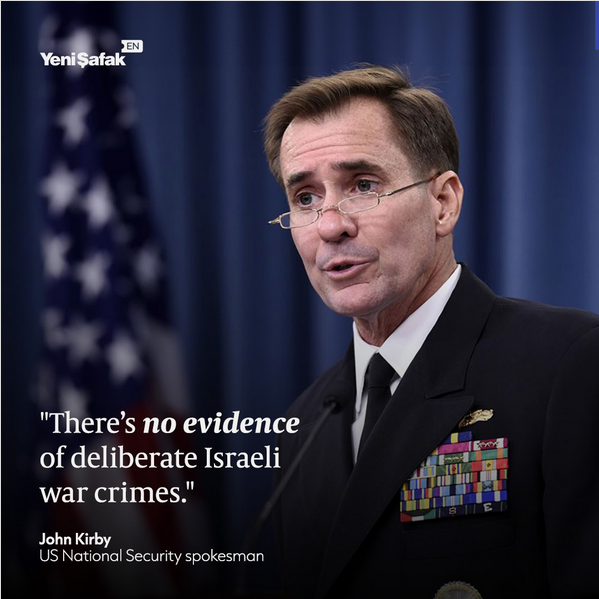
US National Security spokesman John Kirby has said
there is no evidence of “deliberate” Israeli war crimes in Gaza. To paraphrase
Paul Simon’s The Boxer the man sees
what he wants to see and disregards the rest.
The evidence in this case is so clear that anyone who denies what
happened is no different to a holocaust denier. Kirby, Genocide Joe and Slimy
Sunak are genocide deniers.
As Israel pursues its genocidal and ethnic cleansing agenda in Rafah the United
States is show to be morally naked before the world. All it can do is repeat ‘anti-Semitism’ as if it were an
incantation. You'd have to be brain dead to fail to understand
that ‘anti-Semitism’ has been weaponised against those with a conscience.
Moments before invading, Zionist soldiers blast a ram’s horn and chant “Let us destroy Rafah.”
That there are all too many Jewish people who are prepared to provide the
moral alibi for Israel’s genocidal crimes in Palestine is to their eternal discredit.
They more than anyone else have legitimised anti-Semitism by their willingness
to act as cover for the barbaric crimes of Israel’s war mongers.
From left: Hind Rajab, 6, Bashar Hamada, 44, and his daughter Layan, 15, were killed, along with four other family members, as well as paramedics Yousef Zeino and Ahmed al-Madhoun. (Mohammed Hamada and Palestine Red Crescent Society )
The other sick cliché that these war criminals repeat is that ‘Israel has the right to self defence’. Presumably
the butchered 20,000 children of Gaza were a mortal threat to Israel’s safety
and security.
Bezalel Smotrich calls for the wiping out of Gaza’s towns
Only a week ago Israel’s Finance Minister and West Bank Gauleiter,
Bezalel Smotrich, called
for Gaza to be wiped out. There were no hysterical newspaper headlines, no
condemnations from world leaders still less from within Israel. Nor did Board of Deputies or UK Lawyers for Israel have anything to say.
All the pious professions of outrage about Russia's invasion of Ukraine can now be seen for
the hypocritical cant they are.
By 5 March nearly
600 children had been killed in two years of war in Ukraine. In Gaza,
counting those under the rubble, at least 20,000 children have been killed in
just 7 months. Yet the US continues to give Israel unwavering diplomatic
support, financial and military, as the corrupt and repressive Arab regimes look
on, providing Israel with backdoor support through a landline from Abu Dhabi
and the Emirates via Jordan to Israel.
The death
of Hind Rajab was particularly heinous. The article below by the Washington
Post is comprehensive. It exposes Israel’s lies and deceit over the murder of
Hind and the paramedics sent to rescue her.
Both the BBC
and Washington
Post reports make it clear that what occurred was a clear and premeditated war
crime by the Israeli military. Although the BBC won’t be devoting any air time
to this as it is still covering the break-out of October 7. Nevertheless the report
on its website is devastating as Hind phones the Palestinian Red Crescent, who
dispatch two paramedics.
The fact that Israeli tanks fired on a civilian car is evidence in itself
that John Kirby is a liar.But when the
paramedics approached, having been given clearance by the Israeli army, the
tank opened fire killing both Hind and the paramedics. John Kirby however is unable to see anything that contradicts his genocidal denialism.
Slimy Sunak when he exited Downing Street to condemn
George Galloway’s by-election victory mentioned the Israeli casualties, one
third of them military, on October 7th. Somehow this racist creep ‘forgot’
to mention the thousands of civilian casualties since then.
It is clear from the Washington Postarticle that Israel lies, lies and lies again without any shame whatsoever.
Tony Greenstein
For 3½ long hours on Jan. 29, the cellphone in 6-year-old Hind Rajab’s hands was the closest thing she had
to a lifeline. Alone in the back seat of a car outside a Gaza City gas station,
she was drifting in and out of consciousness, surrounded by bodies, as she told
emergency dispatchers that Israeli tanks were rumbling closer.
From the operations room of the Palestine Red Crescent Society (PRCS), roughly 50 miles
away in the city of Ramallah, the team on duty had done their best to save the
child. Paramedics were on their way, the dispatchers kept telling her: Hold on.
Bob Dylan’s Masters of War could have been written with Biden and Sunak in mind
The paramedics were driving to their deaths.
Twelve days later, when a Palestinian civil defense crew finally reached
the area, they found Hind’s body in a car riddled with bullets, according to
her uncle, Samir Hamada, who also arrived at the scene early that morning. The
ambulance lay charredroughly 50 meters (about 164 feet) away from the
car, its destruction consistent with the use of a round fired by Israeli tanks,
according to six munitions experts.
In a statement, the Israel Defense Forces said it had conducted a
preliminary investigation and that its forces were “not present near the vehicle or within the firing range” of the
Hamada family car. Nor, the IDF said, had it been required to provide the
ambulance permission to enter the area. The State Department said it has raised
the case repeatedly with the Israelis.
“The Israelis told us there had,
in fact, been IDF units in the area, but the IDF had no knowledge of or
involvement in the type of strike described,”
spokesman Matthew Miller said.
A Washington Post investigation found that Israeli armored vehicles were
present in the area that afternoon. The Post additionally found that the
gunfire audible as Hind and her cousin Layan begged for help and the extensive
damage caused to the ambulance were consistent with Israeli weapons. The
analysis is based on satellite imagery, contemporaneous dispatcher recordings,
photos and videos of the aftermath, interviews with 13 dispatchers, family
members and rescue workers, and more than a dozen military, satellite,
munitions and audio experts who reviewed the evidence, as well as the IDF’s own
statements.
Murder of Hind Raja and 2 ambulance workers
After this story published, Miller said:
“The death of Hind Rajab is an
unspeakable tragedy — something that never should have occurred and never
should occur. … So what we are going to do is take the information that is
contained in that Washington Post story, we’re going to go back to the
government of Israel and ask them for further information. We would still
welcome a full investigation into this matter, and how it occurred in the first
place.”
PRCS as well as representatives from Euro-Med Human Rights Monitor and
the Civil Defense who visited the scene on Feb. 10 provided visuals to The
Post, which it verified by independently confirming the location using
satellite imagery, open-source maps and eyewitness interviews. (Euro-Med Human
Rights Monitor)
The Post’s review also found that the ambulance was discovered along a
route provided by COGAT, an arm of the Israeli Defense Ministry that generally
coordinates safe passage for medical vehicles with the IDF. COGAT initially
referred specific questions about the ambulance to the IDF. In mid-March, Elad
Goren, head of Coordination and Liaison Administration at COGAT, told The Post
that the agency “coordinated everything …
including the ambulance that wanted to go and find Hind,” but said he was “not aware” of the specifics. COGAT did
not respond to repeated requests to clarify.
The IDF denied that any coordination had taken place, repeating its
assertion that its forces were not in the area. It did not comment on two
detailed timelines of the incident, or on the expert findings, provided by The
Post.
It was not possible to reach Hamas’s military wing for comment on the
incident.
Humanitarian officials have warned that a system of coordination with Israel’s
military, designed to protect their aid deliveries and lifesaving ambulance
maneuvers, is broken. Israeli strikes on a World Central Kitchen convoy that killed seven aid workers
in Gaza on April 1 and stirred global outrage came after failed deconfliction
efforts.
More than 33,000 Palestinians have been killed during
Israeli military operations in Gaza, according to local health authorities.
Amid a war of unyielding horror, Hind’s case touched a nerve around the world,
in large part because her recorded cries for help offered a glimpse into the
terrors faced by civilians.
9:32 a.m.
Generations of the Hamada family had
lived on al-Wahda Street in the northern part of Gaza City for decades.
Everything changed on Oct. 7, 2023, when Hamas militants stormed border
communities in southern Israel, killing about 1,200 people, including civilians
in their homes and young people at a concert, and taking at least 240 hostages
back to Gaza. The assault drew a punishing response from Israel, which insists
its campaign is necessary to destroy Hamas’s military capabilities.
More than 75 percent of Gaza’s
population of 2.2 million has been displaced by the fighting, many residents
multiple times, according to the United Nations Office for the Coordination of
Humanitarian Affairs (OCHA). The Hamada family fled their houses; some went
south, while others sheltered closer to home, in the nearby Tel al-Hawa
neighborhood in western Gaza City.
But late on Jan. 28, Israeli forces
returned to western Gaza City in numbers. Posts on social media show
heavy gunfire and airstrikes in that part of the city just after midnight local
time. At 9:32 a.m., the IDF issued a call in
Arabic on X, the social media platform formerly known as Twitter, asking
residents in the west of Gaza City — including the Tel al-Hawa area — to
evacuate immediately.
Hind’s uncle, Bashar, and his wife
packed her into the car along with her four cousins, Bashar’s brother Samir
said. They planned to drive north, out of the evacuation zone and back toward
the family home in northern Gaza City.
First CNN and
then the Washington Post have conducted investigations which contradict Israel’s
‘explanation’ that she was killed by a Palestinian gunman
Israel has conducted
extra-judicial executions throughout the Occupation of Palestine and it has
never hesitated to murder its political opponents, be they in Palestine or, as
in the case of Ghassan Kanfani, in exile.
Palestinian revolutionary
and novelist Ghassan Kanafani was assassinated
by Mossad 50 years ago, when he was killed in a car bomb explosion along
with his teenage niece in Beirut. Mossad later claimed responsibility for the
attack.
Kanafani was a novelist
who first deployed the notion of “resistance literature” in the context of
Palestine. He was also a leading member of the Popular Front for the Liberation of Palestine.
Shireen’s
reporting was a thorn in Israel’s side as are all journalists who convey what
is happening in Occupied Palestine. Being Palestinian was an extra reason for
her murder.
Forty-five journalists,
the Palestinian Journalist Union claim 55, have been murdered
by Israel since 2000. That is the context for Shireen’s killing.
What is remarkable is
that despite the best efforts of the Biden Administration, Israel has not been
able to get away with murdering yet another journalist.
For one thing Shireen was
a US citizen. Another reason is that people today are far more aware of Israel’s
military occupation and the repression than they were 50 years ago.
Fifty-seven Democrat members
of the US House of Representative have called
for an FBI and State Department Inquiry. In addition two US
senators, Mitt Romney and Jon Ossoff have also added
their voice to calls for an inquiry. Romney is a former Republican Party
Presidential candidate.
Shireen Abu-Akleh
Equally
unprecedented is that two major US news outlets, CNN and now the Washington
Post have investigated the killing of Shireen and found Israel’s explanation to
be wanting. CNN titled its coverage
‘They were shooting directly at the
journalists': New evidence suggests Shireen Abu Akleh was killed in targeted
attack by Israeli forces.’
Anyone
who reads both articles cannot but conclude from the evidence that Shireen’s
death was deliberate.
The
Washington Post’s investigation
concludes that an ‘ analysis of available visuals,
audio and witness statements shows an Israeli soldier likely fired the fatal
shot’. It is therefore reasonable to conclude that the killing
was not random or accidental.
There
are a number of reasons why the Israeli version of events cannot be believed
(apart from the fact that the IDF routinely lie until video evidence contradicts
their version of events).
Israel’s
military has not released any evidence showing the presence of the mythical
gunman who Israel suggests killed Shireen. The first video put out by Israel’s
Foreign Ministry was recorded sometime before 6:41 a.m., the earliest instance that
the Washington Post found it had been shared on social media. A Palestinian
fighter fires two shots down a stairwell, before turning to move down the
street. As they observe:
Open-source
investigators, including B’Tselem, an Israeli human rights group, were quick to identify the location where this video was recorded, noting the geography alone —
including high walls and no sightline to Abu Akleh’s position — makes it
impossible that these shots are the same as those that struck the journalist.
The IDF has
refused to give details of any Israeli footage of the incident be it from
drones or from body cameras.
The IDF
did not say how it arrived at the conclusion that its soldiers did not know
journalists were present, or that they were not deliberately targeted when they
were wearing large visible signs saying ‘Press’.
Despite
this the IDF said it wasn’t investigating because “there is no suspicion of a criminal act.”Which
in one sense is true. Killing Palestinian
civilians is not a criminal offence for Israeli soldiers.
Omar Abdalmajeed As'ad murdered by Israel in January
In
January the Israeli military killed an 80 year old Palestinian/ American
citizen Omar Abdalmajeed As'ad of
Jiljilya. In this case there was no dispute as to who was responsible. As Ha’aretz
reported, ‘Israeli Soldiers Bound, Gagged
80-year-old Palestinian for Over an Hour Before He Died’.
In the case of Omar a
military investigation founda grave "moral
lapse" by the soldiers involved in the incident.
So grave were their moral lapses that one commander was rebuked, and two subordinate commanders
were dismissed. Now imagine that Palestinians had killed an Israeli in the same
way. Their family house would have been demolished and they, if they survived,
would be sentenced to 30+ years in prison.
This in a nutshell demonstrates not only Zionism’s
racism but the callous disregard for Palestinian life. But as the Jerusalem Post
said, ‘As’ad’s death is horrible.
Sadly, it reflects a tragic reality where surprise checkpoints are a harsh and
bitter necessity.’‘A harsh and bitter necessity’ if ‘terrorism’
for which read Palestinian resistance to occupation, it to be minimised.
In their defense, the abusers claimed that they
didn’t notice the signs of distress of the man they had turned into a sack of
potatoes, threw to the ground and left there for over an hour, choked and
cuffed. But what signs of distress can a bound man whose mouth is sealed shut
and whose eyes are covered show? For his ears to shake?
In Omar’s case too Biden and his mouthpiece
Anthony Blinken were content to leave things to Israel.Israel after all is America’s strategic watchdog
in the Middle East. The fact that they killed American citizens was secondary.
One wonders whether, if the Russian military
had murdered an American journalist whether Blinken and Biden would be content
to leave the investigation to Russia?
Tony Greenstein
A memorial now sits at the location where veteran journalist Shireen Abu Akleh was shot and killed. (Osama Hasan/The Washington Post)
How Shireen Abu Akleh was killed
A Washington Post
analysis of available visuals, audio and witness statements shows an Israeli
soldier likely fired the fatal shot
“We are now at the doors of
the Jenin refugee camp,” Ali al-Samoudi, an Al Jazeera news channel producer,
said as he began a
live stream on Facebook early on May 11,
during an Israeli military operation in the camp. Sounds of gunshots rang out
in the distance. “Heavy clashes,”
could be heard, Samoudi said in the video, which was recorded shortly after 6
a.m.
Less than 30 minutes later, the scene was quiet enough that
Samoudi, along with three other journalists, felt safe inching toward a column
of Israeli military vehicles that was involved in one of the early morning
raids. Among the group was Palestinian American journalistShireen Abu Akleh, a veteran correspondent for Al Jazeera who had covered
countless similar operations in a career spanning decades, colleagues said.
The journalists wore helmets and protective vests labeled “PRESS”
in large white letters. They paused for about five minutes in a location where
they thought the Israeli convoy could identify them clearly as members of the
press, Samoudi later said in an interview with The Washington Post.
“We were very sure there were no armed
Palestinians, and no exchange of fire or clashes with the Israelis,” said Samoudi. Then, the journalists headed up
the street, toward the Israeli convoy. “It
was totally calm, there was no gunfire at all.” Suddenly, there was a
barrage of bullets. One struck Samoudi. Another hit and ultimately killed Abu Akleh, as
their colleagues scrambled for cover.
The shots seemed to come from the military vehicles, Samoudi
recalled.
The Washington Post examined more than five dozen videos, social
media posts and photos of the event, conducted two physical inspections of the
area and commissioned two independent acoustic analyses of the gunshots. That
review suggests an Israeli soldier in the convoy likely shot and killed Abu
Akleh. The Israel Defense Forces, or IDF, has said it is possible one of its
soldiers fired the fatal shot, but claimed any gunfire was directed toward a
Palestinian gunman who was standing between the Israeli soldiers and the
journalists, and that the reporters might have been shot unintentionally.
Israel’s military has not released any evidence showing the
presence of a gunman. The available video and audio evidence disputes IDF
claims there was an exchange of fire in the minutes before Abu Akleh was killed
and supports the accounts of multiple eyewitnesses interviewed by The Post, who
said there was no firefight at the time.
The audio analyses ofthe gunfire that likely killed
Abu Akleh point to one person shooting from an estimated distance that nearly
matches the span between the journalists and the IDF convoy. Based on video The
Post filmed in Jenin, Abu Akleh and other journalists identified as press would
likely have been visible from the IDF convoy’s position, which was roughly 182
meters (597 feet) away. At least one soldier in the convoy was using a
telescopic scope, the IDF said later in a news release. A live
stream on TikTok filmed seven minutes before the shooting shows a relatively
calm scene with people milling about. Distant single gunshots are heard on
occasion but there are no signs of a firefight.
Video filmed by The Post from the vantage
point of where the Israeli convoy stood shows the IDF had a largely
unobstructed view of Shireen Abu-Akleh on May 11. (Osama Hasan/The
Washington Post)
The IDF,
in written responses to questions and a summary of The Post’s findings,said
it
“will
continue to responsibly investigate the incident, in order to get to the truth
of this tragic event. The bullet is vital to reaching a conclusion as to the
source of the fire that killed Ms. Abu Akleh, and it is an important source for
reaching an evidence-based conclusion. The Palestinians continue to refuse the
IDF’s offer to conduct a joint forensic examination of the bullet, with
American representation.”
The statement, quoting Lt. Gen. Aviv
Kohavi, the IDF chief of the general staff, repeated Israel’s previous
contention that it was investigating whether the bullet was fired by the IDF or
a Palestinian gunman.
“There
is one thing that can be determined with certainty: no IDF soldier deliberately
fired at a journalist. We investigated this. That is the conclusion and there
is no other,” he said.
The IDF
did not say how it arrived at the conclusion that its soldiers did not know
journalists were present, or that they were not deliberately targeted. An IDF
spokesman directed Post reporters toward statements made by an Israeli military
official, Col. Arik Moel, in a television interview, in which he says there was
a “better chance” Abu Akleh was killed
by Palestinian fire than by “one of the
five bullets” shot by an Israeli soldier who had been present that day. No
evidence was provided for the assertion.
The IDF
did not respond to a question about what, if anything, Israeli footage of the
incident — from drones or body cameras — may show.
The shooting
Shortly
after 6 a.m. Abu Akleh sent
an email to the Al Jazeera assignment desk
saying “occupation forces are breaking
into Jenin’s camp and besieging a house in Jabriyat neighborhood,”
referring to two operations being conducted by the IDF. She wrote that she
would update the network on the situation once she reached the camp. By the
time she arrived around 6:15 a.m., other journalists, including Shatha
Hanaysheh and Samoudi, had gathered at a roundabout at the entrance of the
camp.
“The main road was pseudo living a normal life, there were
vehicles driving by with people going to work, there was normal foot traffic,” Hanaysheh recalled.
Saleem
Awaad, a 27-year-old resident of Jenin, started a live stream on TikTok at
roughly 6:24 a.m. In the video, which was obtained by The Post, someone tells
Awaad that IDF forces are positionedjust to the southwest. At the
same time, the journalists can be seen standing aroundwearing
helmets and protective vests labeled “PRESS.”
In a TikTok live
stream a local man runs past a gaggle of journalists to film an Israeli Defense
Forces convoy in the Jenin refugee camp on May 11. (Saleem Awaad)
“I’m going to film them [the Israeli soldiers],” Awaad is heard saying, as he rushes past the journalists.
As he
approaches an intersection, three rounds of gunfire are heard in the distance.
Roughly two minutes later, he points the camera south revealing Israeli
military vehicles about 182 meters (597 feet) away, according to The Post’s
analysis of the footage. “There’s the
Israeli army,” he says. The vehicles are in the same location and formation
as those seen in body-camera footage of the raid later released by the IDF.
(Israeli Defense Forces) – note that this official video has no
sound.Why would that be?
In
a TikTok live stream, Israeli Defense Forces military vehicles are visible
about 600 feet from where Shireen Abu Akleh was killed on May 11 in
Jenin. (Saleem Awaad)
Over the
next three minutes, the video records distant single gunshots from time to
time, but the scene is relatively calm and the gaggle of people gathered at the
corner seem relaxed, joking and milling about. At about 6:31 a.m., the
journalists start to walk toward the military vehicles. “We decided to move through that street slowly to get closer toward the
army to cover the news,” Samoudi later told The Post.
In the
video, less than 30 seconds after the journalists walked toward the military,
six gunshots erupt. People who were recording the scene scatter.
In a TikTok live stream recorded May 11, 2022, in Jenin, Shireen
Abu Akleh and other journalists walk toward IDF military vehicles before
gunfire erupts. (Saleem Awaad)
A
different video obtained by The Post shows Samoudi moving hurriedly, but
carefully, toward a silver car stopped at the intersection. Just as he reaches
the road, a second burst of seven gunshots comes. The group again scrambles
away from the corner. Someone calls out, “Who
was hit?” Hanaysheh yells for an ambulance, because Abu Akleh had been
shot, she told The Post.
Three more
shots ring out. Then someone shouts,“Shireen! Medic, medic! Stay
where you are, don’t move, don’t move.” The camera pans to show Hanaysheh
crouched behind a tree near Abu Akleh, who is on the ground,facing
down.
A group of
men attempt to reach the two journalists by crossing the street for nearly a
minute, as a fourth burst of at least nine gunshots erupts in rapid fire. One
man, who is already across the street, climbs over a crushed wall to reach Abu
Akleh and Hanaysheh. As the man grabs Abu Akleh’s arm, in what appears to be an
attempt to move her, another shot goes off. He runs back against the wall and
crouches down. He ushers Hanaysheh away from the scene, back over the crumbled
wall before helping to carry Abu Akleh’s body from behind the tree into the
back seat of a car.
The Post
has decided to publish the 8-minute video recorded by Awaadit in
its entirety below.
A TikTok live stream shows the minutes before Shireen Abu Akleh,
an Al Jazeera news channel correspondent, was killed in Jenin on May 11,
2022. (Saleem Awaad)
At The
Post’s request, Steven Beck,an audio
forensic expert who consulted for the FBI for more than a decade, conducted an
analysis on the gunfire heard in the two separate videos. Beck found the first
two bursts of gunfire, 13 shots in total, were shot from between 175-195 meters
(574-640 feet) away from the cameras that recorded the scene — almost exactly
the distance between the journalists and the Israeli military vehicles.
The sound
wave produced by the gunshots for both bursts of gunfire was remarkably
consistent, suggesting a single person “pulling
the trigger of a rifle that fires supersonic bullets almost as fast as they
can,” Beck said, referring to bullets moving faster than the speed of
sound.There are two slight deviations from the pattern of fire,
Beck explained, but the deviations — involving two rounds — are likely causedby
someone re-aiming. Everything else aboutthe audio signature of the
shots is consistent, he added.
It is
likely Abu Akleh was killed by one of these first two bursts of gunfire.
Hanaysheh, who was next to Abu Akleh, can be heard calling for an ambulance
immediately after the second burst of gunfire. She told The Post her call was
for Abu Akleh. The audio analysis of the first two bursts also indicates that
the bullets were fired in the direction of — and very close to — the
journalists. The analysis could not, however, determine the exact point of
origin of the shots.
Palestinian
authorities, who are in possession of the bullet that killed Abu Akleh, said it
was a 5.56x45mm round. Beck said he used a number of different weapons that
fire that caliber of round in his analysis, but there is little significant
difference between them in determining the distance between Abu Akleh and the
shooters.
There are
two subsequent bursts of gunfire after the one believed to have killed Abu
Akleh, but their origin was harder to determine, experts said.
The
bursts, of at least 12 shots in total, point to a shooter in a different
location from the first two bursts, Beck said, estimating they may have been
fired from roughly 10-30 meters (32-99 feet) away from the journalists. The
shooter was firing in the general direction of the journalists, but could have
been shooting at something else because the bullets pass further away from the
group than the first two bursts.
“The gunshot signatures,
the echo signatures, and the timing of these bursts were very different from
the burst that likely killed the journalist, indicating a firing location that
was different and much closer,” Beck told
The Post in an email. “Without knowledge
of the type of round, a more accurate estimate of the shooter distance is not
possible.”
A second
analysis, conducted by aphysics-based computer model built by researchers at Carnegie Mellon University,
similarly found the first two bursts of gunfire were fired 233 meters +/- 46
meters (765 feet +/- 150 feet)from the camera — roughly aligning
with Beck’s analysis and the position of the Israeli military vehicles. The
model did not determine if the first two bursts were fired by one or two
shooters — only that the distance between the gunman and the camera stayed
consistent.Similar to Beck, researchers also used a number of
different weapons in their analysis that could have fired a 5.56x45mm or
similar round.
The
Carnegie Mellon researchers said the third and fourth bursts indicate a second
shooter, but they could not determine this person’s distance from the
journalists because of the videos’ poor audio quality.
The Investigation
An
investigationby the Palestinian Authority concluded that Abu Akleh
was hit by a bullet fired by an Israeli soldier. The Palestinian attorney
general, Akram Al-Khateeb, said at a press briefing last month that she was
shot “directly and deliberately,” a
conclusion he said was based in part on the fact that Abu Akleh and Samoudi
were shot in the upper part of their bodies, and gunfire, he said, continued
after they were shot.
Khateeb
said a decision had been made not to hand over the bullet to the Israelis — or
even to disseminate an image of the round — “to
deprive them of a new lie, a new narrative,” he said, adding that the
Palestinians were capable of conducting a thorough investigation on their own.
The IDF
says its investigation is ongoing, but said it had already concluded that there
was no criminal conduct in Abu Akleh’s killing.
Shifting explanations from
the IDF about the source of gunfire that killed Abu Akleh emerged from the
beginning. IDF spokesperson Ran Kochav first acknowledged the incident in a
tweet at 7:45 a.m., “The possibility that
journalists were injured, possibly by Palestinian gunfire, is being
investigated.” Later in the morning, he told Army Radio that it was “likely” that a Palestinian gunman was
responsible. The Israeli Foreign Ministry tweeted
an edited version of a video filmed hours
earlier with the caption, “Palestinian
terrorists, firing indiscriminately, are likely to have hit Al-Jazeera
journalist Shireen Abu Aqla.”
A video posted to Telegram early May 11 shows a gunman firing down
a stairwell a couple of blocks southeast of where journalist Shireen Abu Akleh
was killed. (Telegram)
The
original video shared by the Israeli Foreign Ministry was recorded sometime
before 6:41 a.m., the earliest instance The Post found the video shared on
social media. A Palestinian fighter fires two shots down a stairwell, before
turning to move down the street. Open-source investigators, including B’Tselem,
an Israeli human rights group, were quick to identify the location where this video was recorded, noting the geography alone —
including high walls and no sightline to Abu Akleh’s position — makes it
impossible that these shots are the same as those that struck the journalist.
The
Israeli government walked
back itsinitial statement on
the incident that Abu Akleh was “likely”
killed by a Palestinian gunman. An Israeli government news release said they
are investigating two possibilities. In one scenario, Abu Akleh was struck by a
stray bullet while Palestinian gunmen shot at Israeli military vehicles from a
number of different directions.
Available
visuals The Post reviewed of armed Palestinian men in Jenin show they were not
between Abu Akleh and the IDF, nor did they have a line of sight to the
journalistsat the time of the shooting.The timestamp
on one photo, labeled No. 6, shows it was taken 14 minutes beforeAbu
Akleh was shot and was recorded far away. Two videos showing Palestinian
gunman,in the same area asNo. 7,were
captured more than 10 minutes after Abu Akleh was shot. The Post could not
confirm the exact time of the video labeled No. 7.Gunshots heard
in one video to the south of the convoy, labeled No. 5, do not match those
heard when Abu Akleh is shot, indicating the video was most likely recorded at
a different time, however, The Post could also not confirm the exact time.
A video posted to
social media on May 11 shows a group of men, some armed, standing south of an
IDF convoy in Jenin. (Twitter)
A Palestinian gunman sits atop an alleyway in the Jenin neighborhood of
the West Bank on May 11, 2022.
Another
possibility presented by Israeli authorities suggests Abu Akleh was hit with a
bullet from a soldier firing at a Palestinian gunman who was positioned
somewhere in the approximately 200 meters (656 feet) between the journalist and
the military vehicles. According to The Post’s analysis of available footage,
the IDF convoy stretched roughly 182 meters to 243 meters (597 feet to 797
feet) away from the group of journalists including Abu Akleh. The IDF declined
to comment on whether the convoy The Post identified was the same one under
investigation.
The IDF
said in a statement that the gunman
fired “multiple barrages” toward the
convoy, before the IDF soldier returned fire. The Post’s analysis, however,
found no evidence of a firefight in the moments before Abu Akleh was killed.
Additional
videos of the convoy were filmed from about halfway between the location of Abu
Akleh and themilitary vehicles. The Post was not able to identify
who recorded these videos or determine precisely when they were recorded.
In a video posted to
Telegram, an IDF convoy is stationed on the same street and south of where
journalist Shireen Abu Akleh was killed on May 11 in Jenin. (Telegram)
“I went to cover the news,” Samoudi
said. “The news and the story, whatever
it is, is not more precious than my life. So when I take precautions, I take
them for the sake of my life.”
Those
precautions, he said, included ensuring that there was no one around him that
could have left the journalists caught in a gunfight — either militants, or
even youth throwing stones at the Israelis. Samoudi, who was released from the
hospital but is still recovering from a bullet wound to his shoulder,called
on the IDF to release any footage it had filmed during the raid.
“We went to cover news,” he said. “Not to die.”
About this story
Editing by Elyse Samuels, Kareem Fahim and Reem Akkad. Video
editing by Sarah Cahlan. Graphics editing by Atthar Mirza. Copy editing by
Jamie Zega. Design editing by Junne Alcantara. Design and development by Irfan
Uraizee.
Osama Hasan in Jenin, Shira Rubin in Tel Aviv, Ellen Francis in
London, Sarah Dadouch and Nader Durghamin Beirut, and Sufian Taha
in the West Bank contributed to this report.
Jerusalem bureau chief Steve Hendrix has written for just about every
section of the paper since coming to the Washington Post 20 years ago,
reporting from the Middle East, Europe, Africa, Asia and most corners of the
United States. Twitter