25 December 2021

The attack on Christian Palestinians as Jerusalem Church leaders warn of “a systematic attempt” to drive out Christianity

Xmas in Palestine as Israel bans Pilgrimages but allows Birthright Tours to Enter

In 1947 as part of Christian Palestinians Resolution 181 partitioning Palestine into Jewish and Arab states, the UN proposed the internationalisation of Jerusalem under a separate regime. The UN sent Count Folk Bernadotte, the Swedish statesman to Jerusalem to make arrangements. The Zionist terrorist group Lehi/Stern Gang, a commanded by future Israeli Prime Minister Yitzhak Shamir, assassinated him on 17 September 1948 with the connivance of the main terrorist group Haganah.

Bernadotte had personally saved 11,000 Jews at the end of the war from Nazi concentration camps. As Donald Macintyre observed ‘no blue Israeli plaque marks the spot, as it does for so many military and Jewish underground exploits of the period’.

The statement by the Patriarchs and Heads of Churches in Jerusalem less than 2 weeks ago, about the harassment of the Church and the threat posed to its continued presence in Jerusalem was met by a predictable Zionist response. ‘What about Christians in other parts of the Middle East’ they cried as if that had anything to do with the treatment of the Christian Church in Jerusalem.

Of course the plight of Christians throughout the Middle East is a subject worthy of discussion in its own right. It might for example have something to do with the Western and Israeli attack on secular regimes throughout the region and their own promotion of fundamentalist Islamic regimes. For example it was the attack on Iraq which led to the demise of Christians in that country. Likewise the Saudi sponsorship of jihadi militias in Syria, aided and abetted by Israel and the United States, also led to attacks on Christians.

Justin Welby

The statement was endorsed in an article by the Archbishop of Canterbury Justin Welby together with the Anglican Archbishop of Jerusalem Hosam Naoum in the Sunday Times.

Naturally the statement was “heavily criticised by the Board of Deputies” as “deeply troubling”even though it’s none of their business. It has nothing to do with British Jews. But the Board’s main function today is to operate as an Israeli propaganda group. What didn’t trouble the Board was the attempt to displace Christians in the Christian Quarter or the attacks on Christian clergy.

The Zionist defence boiled down to the fact that ‘Israel’s 182,000-strong Christian population grew by 1.4 per cent in 2020’. Which was entirely irrelevant since the statement was issued on behalf of the Jerusalem churches in Occupied Jerusalem, where the number of Christians is declining, not on behalf of Israel’s Palestinians.
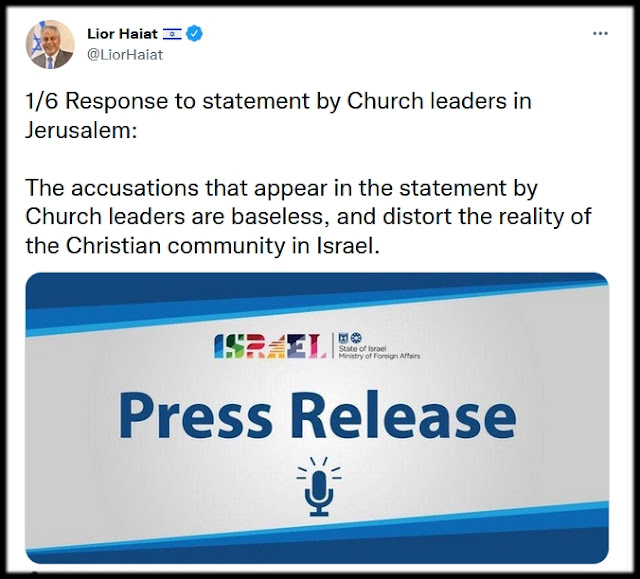

Instead of dealing with the actual complaints of harassment, violence and the expulsion of Christians from the Christian Quarter of Jerusalem, the statement from Israel’s Ministry of Foreign Affairs resorted to the usual blank denials: They termed the statement ‘baseless, and distort the reality of the Christian community in Israel.’ They went on to say that:

The statement by Church leaders in Jerusalem is particularly infuriating given their silence on the plight of many Christian communities in the Middle East suffering from discrimination and persecution.

Israel describes itself as ‘the only democracy in the Middle East’. Why then does it insist on comparing itself with all the dictatorships it’s in alliance with in the region rather than say Europe?

The overall number of Christians in Israel has risen but in east Jerusalem there is a steady decline GETTY IMAGES

What Israel’s defenders did not do was to address any of the points in the statement. It’s worth enumerating them.

Throughout the Holy Land, Christians have become the target of frequent and sustained attacks by fringe radical groups. Since 2012 there have been countless incidents of physical and verbal assaults against priests and other clergy, attacks on Christian churches, with holy sites regularly vandalized and desecrated, and ongoing intimidation of local Christians who simply seek to worship freely and go about their daily lives. These tactics are being used by such radical groups in a systematic attempt to drive the Christian community out of Jerusalem and other parts of the Holy Land.

Arson at the Church of the Multiplication of Loaves & Fishes

There has been a wave of attacks on both churches and moques in Israel. For example the arson attack at the Church of Multiplication of Loaves and Fishes. As the National Geographic reported:

The June assault was the latest and most dramatic sign of tension between Christians in Israel and a growing movement of Jewish extremists who seek to cleanse their nation of religious minorities.

A nun surveys the damage after an arson attack

The Church statement went on to say:

the failure of local politicians, officials and law enforcement agencies to curb the activities of radical groups who regularly intimidate local Christians, assault priests and clergy, and desecrate Holy Sites and church properties.

The statement called on Israel’s leaders to:

1.     Deal with the challenges presented by radical groups in Jerusalem to both the Christian community and the rule of law, so as to ensure that no citizen or institution has to live under threat of violence or intimidation.

2.     Begin dialogue on the creation of a special Christian cultural and heritage zone to safeguard the integrity of the Christian Quarter in Old City Jerusalem and to ensure that its unique character and heritage are preserved for the sake of well-being of the local community, our national life, and the wider world.

Suffice to say there was no response to this call. Responding to the statement, the World Council of Churches (WCC) acting general secretary Rev Dr Ioan Sauca said Christians in the Holy Land were a "threatened minority". They went on to say that:

"The statement issued by the Patriarchs and Heads of Churches in Jerusalem highlights the increasing threat to the Christian presence in the Holy Land posed by attacks and incursions by radical groups who seek to destroy the religious and cultural diversity of the region," he said.

There was no response to this statement either. When they referred to ‘radical groups’ what they meant is the efforts of Ateret Cohanim which aims to build a 3rd Temple in Jerusalem by demolishing the Al Aqsa Mosque and Golden Dome and ethnically cleansing Jerusalem’s Palestinian inhabitants. These settlers are supported by the Israeli state itself. See Warnings of 'systematic attempt' to drive Christianity out of the Holy Land

There is an ongoing threat to evacuate two large buildings in the Christian Quarter, the Imperial Hotel and Petra Hotel. According to Ha’aretz

After a long legal battle, the hotels were transferred to the ownership of a Jewish organization that had bought the buildings, and which is now trying to evict the Palestinians who are running the hotels – and bring in Jewish families to live there. The heads of the Christian communities now fear that the change in ownership of the hotels – which were bought in a controversial deal by Ateret Cohanim 15 years ago using shell companies – could change the character of the Christian Quarter.

Israel’s courts have also played their part. They have consistently upheld the crooked land deals of Ateret Cohanim, often made with intermediaries who hold forged documents. The land deals were riddled with corruption yet Israel’s courts turned a blind eye.

According to Ha’aretz  one of the churches that suffers most from this is the Armenian Church, which is located near the Jewish Quarter of the Old City.’

“I’ve been in Israel since 1995 and never before have there been so many incidents like this,” said Father Koryoun Baghdasaryan, the chancellor of the Armenian Patriarchate of Jerusalem.

“Every day that I leave my home for the Church of the Holy Sepulcher or to visit family, I’m afraid something will happen to me. There were always curses and spitting, in recent years physical violence also started.”

Ha’aretz described how “Christians in the Holy Land want Jews to stop spitting on them”

‘A few weeks ago, a senior Greek Orthodox clergyman in Israel attended a meeting at a government office in Jerusalem's Givat Shaul quarter. When he returned to his car, an elderly man wearing a skullcap came and knocked on the window. When the clergyman let the window down, the passerby spat in his face.’

‘On Sunday, a fracas developed when a yeshiva student spat at the cross being carried by the Armenian Archbishop during a procession near the Holy Sepulchre in the Old City. The archbishop's 17th-century cross was broken during the brawl and he slapped the yeshiva student.’

In February 2018 the Church of the Holy Sepulchre was closed in a standoff with the city's municipality in protest at a proposed land expropriation law. The closure was prompted by two developments: the Jerusalem municipality's plan to tax the church's assets around the city and a bill to expropriate land already sold by the churches to private companies which violated a longstanding status quo.

“The systematic campaign ... reaches now its peak as a discriminatory and racist bill that targets solely the properties of the Christian community in the Holy Land is being promoted. This reminds us all of laws of a similar nature which were enacted against the Jews during dark periods in Europe.”

22 December 2021

Shahar Peretz and Eran Aviv, Gaoled for Refusing to Serve in Israel's Army - These Are the Israelis We Should Be Supporting - Not the Zionists

To Starmer, Lammy and the Jewish Labour Movement Israel’s Refuseniks are the ‘Wrong Sort of Israelis’


In today’s Labour Party Starmer and Evans are expelling anyone who is seen as supporting the Palestinians.  According to Starmer this is because ‘every Jew in the Labour Party matters’ although if you are a Jewish member of the Labour Party you are 5 times more likely to be expelled or suspended.

The reason is because we are ‘the wrong sort of Jew’.  Opposition to Israeli Apartheid and its settlement enterprise is equated with anti-Semitism. That is their justification for opposing BDS, the only means of putting pressure on the Israeli state.

The fact that the same hypocrites are only too eager to support sanctions on Iran, China and a host of other countries points to their selective opposition to sanctions.

To Starmer and Johnson young Israelis who refuse to serve in Israel’s army are the ‘wrong sort of Israeli’. That is why it is important to support them.


We should be under no illusions that these brave young people are a tiny minority, a sliver, of Israel’s Jewish population who come under immense social and political pressures. That is why they need, more than ever, our support.

Shahar has been sentenced to imprisonment for the third time. She described how life is made as difficult as possible for those who break the national concensus. She wasn’t allowed, as of right, to have access to writing materials:

Some days I could only get a pen for 10 minutes; on Saturdays or holidays you don’t get a pen at all. Privacy is a luxury I don’t get to have as a prisoner and I was not allowed to write anything without the rest of the inmates, guards and commanders getting to see what I’m writing.’

In prison, ‘writing is in itself a form of activism’

the prison authorities  hindered my ability to document what goes on behind bars, write articles and develop ideas and plan on how to share my experiences once I am released for a few days. The military does not want me to write, speak or share my thoughts. They are trying to silence me. 

The silencing of political refusers is a small part of a more violent pattern of behavior - The silencing of the Palestinian struggle for human rights in the West Bank and Gaza

Shahar wrote that

‘it is this silencing, this attempt to erase, hide and deny what is really happening, that makes me stand proud and declare my refusal publicly.’

As Amira Hass wrote for female prisoners ‘writing is the rarest of ‘privileges’. The Israeli Army doesn’t allow female soldiers to write. This  has been applied in the new military prison at Neve Tzedek (in Hebrew, Oasis of Justice). ‘They’re not allowed to hold writing implements, except for a half hour or 20 minutes a day at best.’

MK Gaby Lasky (Meretz) asked why this was so and Gali Ofir, an adviser to Defense Minister Benny Gantz, answered that: “The decision to restrict the use of writing implements was made by the commander of the prison base.” Which is no explanation at all.

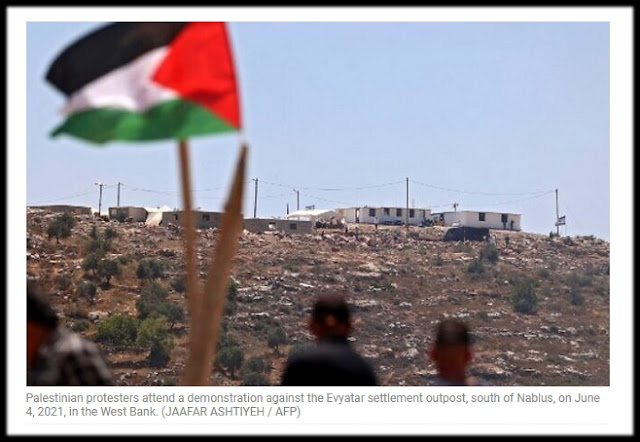
Israeli soldiers help built illegal settlement

Amira Hass was told that there are no restrictions on writing implements. ‘In short, the anonymous military official lied to me.’ In the wings of imprisoned male soldiers, this ban is not enforced. 

Tair Kaminer, who was imprisoned in two different military jails in 2016, said that she and fellow inmates kept using writing implements for painting, writing journals and letters to family and friends, which was essential for breaking the boredom. “We could ask for paper and pens any time of day and the wardens would give it to us,”

The writing ban was not the decision of one governor alone. This decision was a premeditated attempt to prevent detailed descriptions of life inside prison to be circulated outside. 

Peretz spent 58 days in military prison. She told Haaretz:

In my first and second sentences I was told that we could ask for a pen between 1 o’clock and 4 o’clock in the afternoon. But the pen was given according to the commanders’ timetable. Sometimes only for 10 minutes

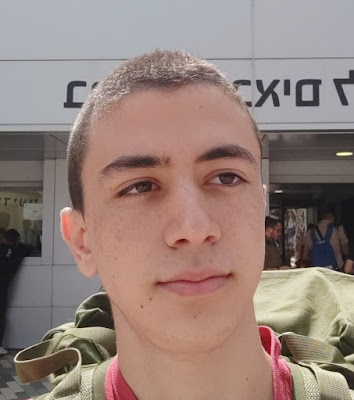
Eran Aviv 

Eran Aviv said that in the men’s wings there were pens on the table all the time for their use. During Peretz’s third term in prison

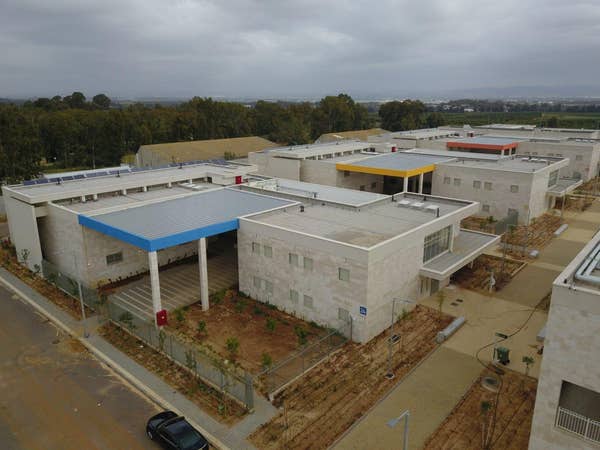
The new military prison Neve Tzedek, near the Sharon Junction in central Israel.

 “it had been decided that there would be a single writing time for all the women. From 20 minutes to half an hour... Every day it was different. Sometimes the commanders told us that today’s writing would be allowed only for women who want to write requests to the prison authorities. And so I didn’t get a pen on Sunday or Monday last week. You can only write in the yard... Sometimes 20 girls come out to write, but there are only five pens. And still everyone has to go back to their cell after the half-hour. The commanders stand over us and read what we write. I wrote a letter to my boyfriend and one of the commanders asked me: ‘What, you have a boyfriend?’”

Afterwards the commander-wardens count the pens to make sure all were returned. Shahar described the regime of petty punishments:

 “We can be in the yard and suddenly the commander says: ‘Who wants to write?’ It’s completely random. And I don’t have time to go back to my cell and get my sudoko booklet. It can be at 3 P.M. or 6 P.M. And it might not happen at all. When one day we mentioned to the commander that we hadn’t received pens, she answered ‘Right, and you won’t get any today.’ I tried to understand the reason for the ban. The main answer is that we might stab one another. So why is there a ban on felt-tip pens, which can’t stab? The commanders bring razor blades to the girls. That’s not dangerous? Another answer is that they don’t want us to scribble on the walls and the uniforms. There are cameras in every cell except in the showers and toilets. In the yard they are listening everywhere. All the time they can see what we’re doing and punish us. One of the commanders told me, angrily, that a pen is a privilege and not a right. I came here with sudoko and writing booklets, with all kinds of plans to document what goes on in prison. And I came home with everything almost empty.”

Lasky was told that it had been decided to lift the ban on writing “as long as the prisoners do not make wrongful use of writing implements.” The mind boggles as to what the Israeli military consider a ‘wrongful use’.

Donate to help the Refusers

Oren Feld

At the end of October a protest was organised by Yesh Gvul (There Is a Limit) and supported by conscientious objector support network Mesarvot and the Communist Party of Israel, Maki, demanding the release of three refuseniks, Eran Aviv, Shachar Perez and Oren Feld — at Tzedek prison, near Netanya. Feld, who is the Hadash (Democratic Front for Peace and Equality) Jerusalem branch secretary, which is part of the Joint List. He was just released after 14 days in military jail. Feld is 29 years old and an MA student.

See Protests to demand release of Israeli communist and other military refuseniks

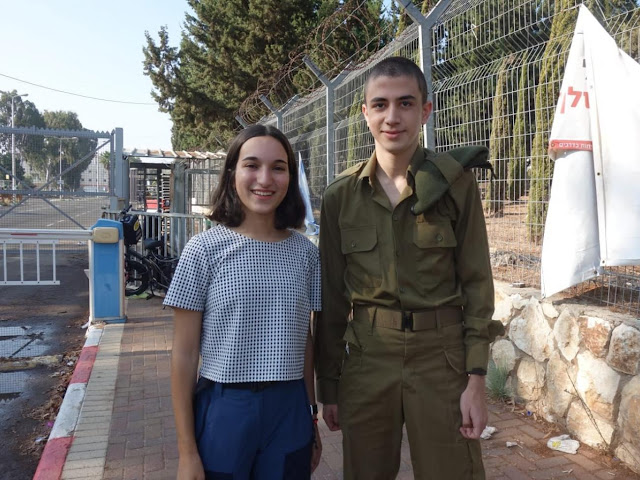
Eran Aviv and Shahar Peretz

On December 16 Eran Aviv wrote a letter ‘as a free man’.

After spending 114 days in military jail for refusing to enlist to the Israeli military and not be complicit in the occupation of the Palestinian territories, I finally received an exemption from military service.

Eran spoke about how

Just a few months back we facilitated the Shministim letter (Shministim meaning high school seniors in Hebrew) that was signed by 120 high school students declaring their intention to refuse to enlist and become soldiers of the occupation.

Eran appealed to people to ‘Join our growing community by donating today to help support our objection to the occupation.’ 

Oren wrote about how, when he was first drafted to the Israeli military as an 18 year old,

‘I did not have the strength to resist it. Now I do. I spent 3 years of my life in a military service I did not believe in and over the years I have witnessed numerous injustices and wrongdoings performed by the army.’

That is why now, at the age of 29 years, I said ENOUGH when I was called to do reserve duty. I will no longer be a part of an institution that oppresses, kills, and exploits innocent people. It is time to speak the truth about the history of our land, - starting with past expulsions of Palestinians and continuing with the multiple present day measures aimed at the ethnic cleansing of Palestinians, that are part of everyday life. Only truth will stop the occupation.

The occupation manifests itself in many forms. It has controls over the Palestinian leadership; It controls transportation routes through the use of lockdowns and blockades; It performs mass arrests; It has the power to prohibit gatherings and demonstrations. The occupation is undeniable, and it is a political choice: there is no justification for an endless, limitless foreign rule over millions of innocent people.

I choose peace. That is why when I received the order to report for reserve duty, I told my army commander that I will not comply. He sentenced me to 14 days in jail for my refusal. I sent a request to the conscientious committee asking them to release me from reserve duty, but they denied my request and I went to military jail. Serving time was a harsh and humiliating experience but I will continue to stand firm in the face of oppression!

Sentenced to 14 days in prison for refusing to serve the occupation

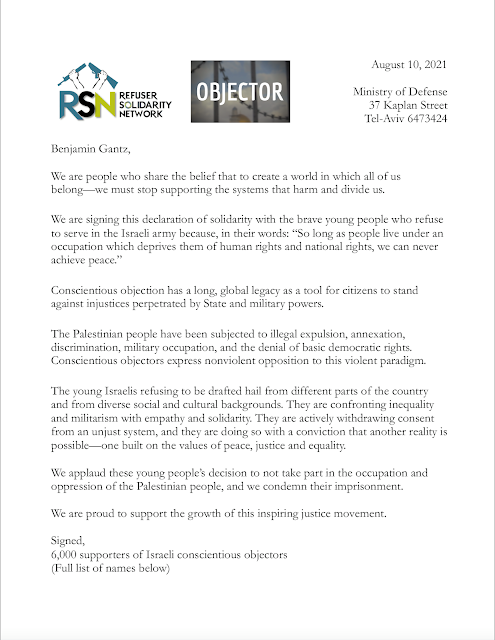
Tom Kearney described how at the end of August 2021 when many students had just left school Shahar Peretz in the town of Kfar Yona, Israel, was drafting a statement to present at the local army induction base. On the 31 August, she attended the Tel Hashomer base, refusing to enlist in the Israeli Defence Force (IDF). Her actions resulted in her being sentenced to be detained in a military prison.

Shahar Peretz - conscientious objector

Shahar, 18, is one of 120 teenagers who signed the “Shministim Letter” (an initiative with the Hebrew nickname given to high school seniors) in January, in which they declared their refusal to serve in the Israeli army in protest of its policies of occupation and apartheid in Gaza and the West Bank.

While Shahar was drafting her statement Eran Aviv, 19 from Tel Aviv, was preparing for his fourth period of imprisonment as a conscientious objector.

In a recent interview, facilitated by the Refuser Solidarity Network both Shahar and Eran described how young people, from an early age, are habituated through school and the wider society to their joining the IDF. They described seeing uniforms or machine guns being carried on buses as a natural part of the public arena, which they argued has resulted in a space that sanctifies soldiers, death, and dead heroes and where streets are named after commanders.

Shahar remarked that she had decided to refuse to join the army after participating in a summer camp between Palestinians and Israelis. She said that she could not become part of system that oppresses them and their families daily.

“I do not want to wear a uniform that symbolises violence and pain. I do not want to become their enemy”

Eran expressed the view that there are two systems in Israel and the Occupied Territories (OTP), Israeli civil law and Israeli military law and that Palestinians live everyday subjected to military law. He described how conscripts in the military service are taught that the only way to protect Jewish people is through force. They are therefore expected to practice violence and of course many Palestinians object and are violent in return.

Shahar concurred with Eran’s view by describing witnessing, whilst volunteering to assist Palestinian farmers in the Hebron hills in the West Bank, Palestinian children being attacked and harassed by Israeli soldiers as they walked to school.

Both Shahar and Eran have found their immediate families supportive of their actions, but many in the local community have expressed criticism accusing them of negating their national and civic duty to undertake military service. Shahar appears to have experienced more verbal abuse through social media and at times has felt fearful for both herself and her family though she has not been threatened with physical violence. Eran expressed the view that he has experienced more criticism whilst in prison than from his community, even though some soldiers he has met in prison were there because they had gone AWOL due to their dislike of the army and their experiences in it.

Both Eran and Shahar admitted that their prospects may be adversely affected by their decision, but 

‘both passionately expressed their need to be an active contributor to the struggle to make conscientious objection a legitimate option and to work towards peace and reconciliation between Israelis and Palestinians.’ 

Shahar Peretz was sentenced to 10 days in a military prison on 1st September after refusing to join the Israeli army. She has subsequently served a second term of imprisonment, during which she had her 19th birthday and on 24th October was imprisoned for a third time for 30 days.

Eran Aviv returned to a military prison on 1st September and was recently sentenced for a 6th term of imprisonment on 24th October. He has now completed a total of 114 days in jail and there are recent concerns expressed by his supporters that he is finding his time in prison increasingly difficult.

You can sign up for monthly updates at https://www.refuser.org Facebook Page for Refusers International

Ha’aretz reported that 60 High School Seniors Refuse to Serve in the Israeli Army Because of the Occupation

Departing from previous letters of this kind, the signatories call out the country’s education system for various issues, such as encouraging enlistment in the Israel Defense Forces and emphasizing the Jewish narrative in Bible and history classes.

They also draw attention to issues they say the curriculum ignores, such as the expulsion of Arabs in 1948 and the current violation of human rights in the occupied territories. The teens wrote:

“The state demands that we enlist into an army that is ostensibly meant to ensure the existence of the state. But in practice, army operations are not directed mainly at defending against enemy armies, but at subjugating a civilian population. Thus, our mobilization has a context and implications.” They say their refusal to enlist is not an act of disengagement or turning away from Israeli society, but rather “the taking of responsibility for our actions and their implications.”

They added:

“We grew up with the ideal of the heroic soldier, we sent them care packages, we visited the tanks they fought in, we dressed up as soldiers in premilitary training camps and we elevated their deaths on memorial days. The fact that this is the reality we’re all used to does not make it a-political. Enlistment is a political act, no less than refusal to do so.”

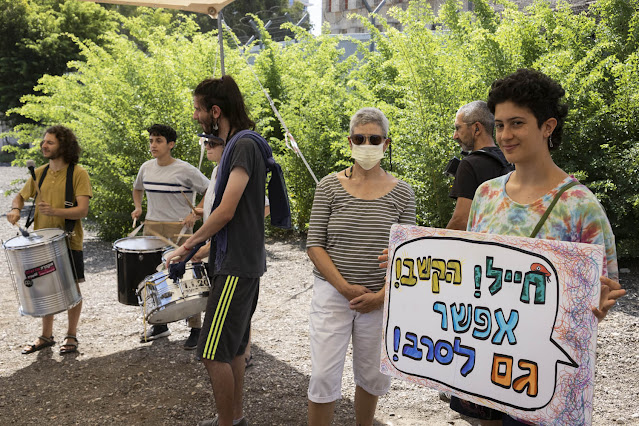
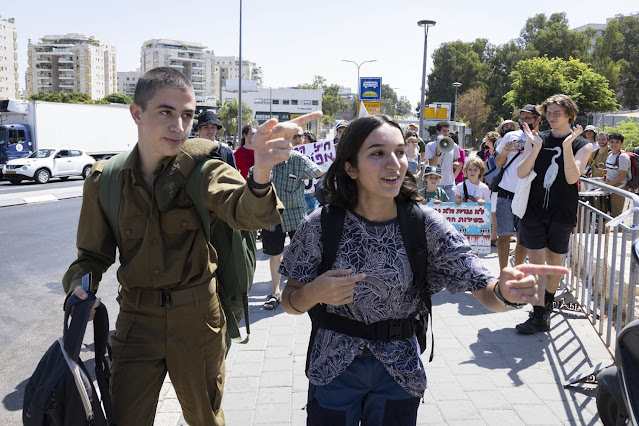
Supporters gather at the IDF induction base

The letter referred to “the policy of apartheid as expressed in two separate legal systems, one for Palestinians and one for Jews” and to the occupation, as expressed in “societal racism, an inflammatory political discourse and police violence.”

One of the signatories, Daniel Paldi of Tel Aviv, said:

“From a very young age we are raised to be soldiers. Civic classes don’t do much to change the one-directional course of the school system, its pinnacle arriving with the preparations for enlistment in high school.”

Paldi added:

“Why is refusal to enlist perceived as a political action, but school activities meant to encourage enlistment seen as self-evident? It starts with school trips to Jerusalem and the Golan Heights, in which no political contexts are discussed. We’re only told about the battles. There’s an elephant in the room that no one is talking about.”

Paldi noted that on a school trip to southern Israel, the guides warned that “If we don’t work the land, someone else will take it.”

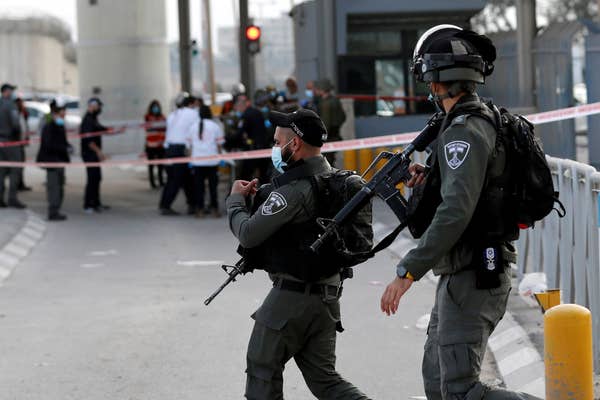
Members of Israeli border police walk at the scene of an incident, at Qalandia checkpoint near Ramallah in the West Bank, December 7, 2020. Credit: Mohamad Torokman / Reuters

“Until we talk about the Nakba in class, how it happened that most of the Palestinians who lived here fled or were expelled, or about the theft of their possessions, we won’t understand how much the problem remains part of our lives. This is sweeping history under the rug. When I began to understand this, I immediately started thinking about what else we were ‘sold’ in school.”

After a struggle lasting months, including spending 56 days in a military prison, one of the signatories of the letter, Hallel Rabin of Kibbutz Harduf, was awarded an exemption from military service as a conscientious objector.

Rabin says the schools only teach the Jewish narrative. In history and civics classes, they present a zero-sum game, in which the right and justification for Jews to live freely automatically denies the rights of the other population.”

Supporters gather at the IDF induction base to show their solidarity with Shahar Perets and Eran Aviv over their refusal to join the Israeli army, Tel Hashomer, central Israel, August 31, 2021. (Oren Ziv)

·         See Israeli woman jailed three times for refusing to join the army

·         Israel: Conscientious objectors Eran Aviv and Shahar Peretz resist for peace